




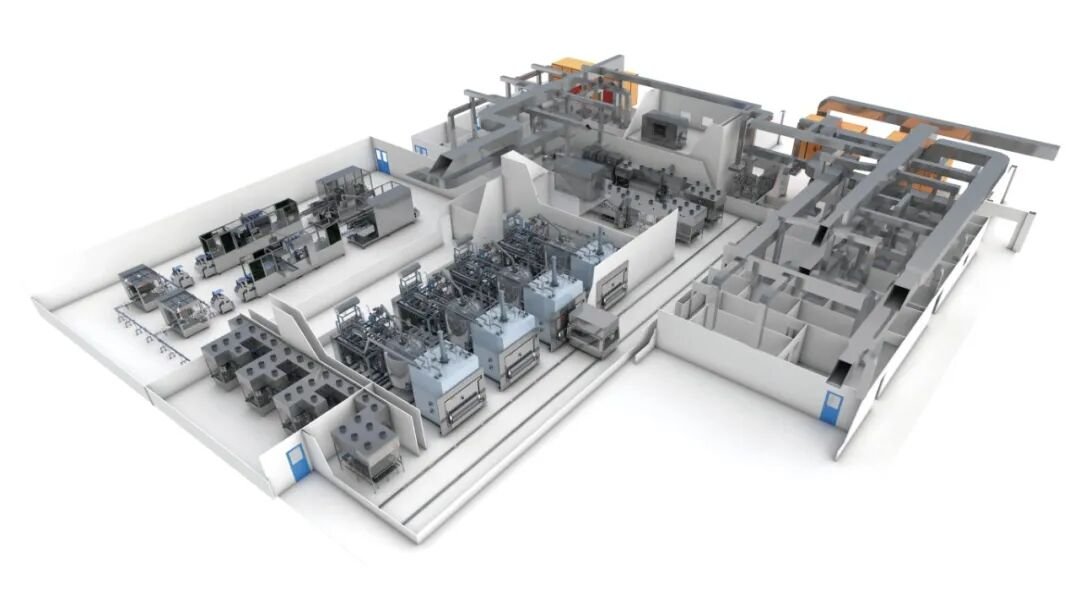

Biopharma 4.0 is underpinned by four definitive attributes: digitalization, intelligent manufacturing, operational continuity, and modularity. End-to-end continuous manufacturing represents a fully integrated systemic manufacturing framework established upon steady-state operation, real-time process analytical technology, automated process regulation, and Quality by Design (QbD) principles. This paradigm enables full physical connectivity and digital synchronization across the entire biomanufacturing spectrum, encompassing cell culture, primary capture, viral inactivation, polishing purification, and final ultrafiltration and formulation. Industrial adoption of continuous manufacturing has been widely validated among leading global biopharmaceutical manufacturers, evolving into a substantive and sustainable competitive advantage. This article delineates the indispensable role of end-to-end continuous manufacturing as a core strategic competency for next-generation biotech innovators, through systematic analysis of enabling technologies, industrial driving mechanisms, and global regulatory evolution.
Manufacturing Paradigm Transition: From Fed-Batch Discrete Processing to Continuous Bioproduction
Conventional biotherapeutic manufacturing has relied predominantly on batch and fed-batch platforms over the past four decades. While technically mature and regulatorily well-established, such discrete production models are inherently constrained by low equipment utilization, excessive facility footprint, elevated buffer consumption, and intractable inter-batch variability. Driven by the rapid expansion of complex biologics pipelines including monoclonal antibodies, fusion proteins, bispecific antibodies, and vaccines, alongside growing industrial demands for personalized small-batch production and robust supply chain resilience, the technical and economic marginal returns of traditional batch manufacturing have progressively diminished.
Defined by the ICH Q13 guideline, continuous manufacturing refers to a regulated production mode featuring uninterrupted material inlet and outlet under sustained process control. End-to-end continuous manufacturing constitutes an advanced, fully integrated form of continuous manufacturing tailored for biologic modalities. It establishes a closed manufacturing ecosystem spanning upstream cell culture, harvest, capture, viral inactivation, downstream polishing, ultrafiltration/diafiltration, drug substance preparation, and seamless formulation filling. This transformative architecture enables fundamental restructuring of biomanufacturing quality systems, process control logic, data governance frameworks, and regulatory science paradigms.
Foundational Technological Enablers of Continuous Biomanufacturing
1. Upstream Continuous Perfusion and High-Density Cell Culture
Perfusion culture serves as the technical cornerstone of upstream continuous bioprocessing. Distinct from conventional fed-batch operations, perfusion systems integrate cell retention apparatuses, including alternating tangential flow (ATF), tangential flow filtration (TFF), acoustic retention modules, and gravitational sedimentation units, to continuously purge metabolic wastes and replenish fresh culture media. Such configuration sustains long-term high-density cell cultivation with stable viability, yielding significantly enhanced volumetric productivity and superior product batch consistency. In-line media dilution, concentrated nutrient feeding, and real-time metabolite surveillance are prerequisite technical controls for maintaining prolonged steady-state cultivation.
2. Downstream Continuous Purification: Multi-Column Chromatography and Continuous Membrane Separation
Traditional discontinuous downstream unit operations are restructured into integrated continuous or semi-continuous workflows, enabling uninterrupted material throughput across capture, viral inactivation, polishing, and ultrafiltration/diafiltration stages. Multi-column chromatography achieves continuous material processing via cyclic loading, elution, and column regeneration. Continuous viral inactivation employs tubular reactors or continuous stirred-tank reactors (CSTRs) to enable precise, reproducible control of low-pH incubation duration. Continuous membrane separation utilizes single-pass tangential flow filtration to accomplish inline concentration and buffer exchange. The core technological advancement lies in the substitution of intermittent batch operations with continuous feed and synchronized multi-unit switching. Consistent with FDA regulatory guidance, continuous chromatography delivers markedly improved resin utilization efficiency and reduced buffer consumption relative to conventional single-column batch chromatography.
3. Process Analytical Technology and Digital Closed-Loop Control
Real-time process monitoring functions as the critical linkage between full-process operational continuity and digital intelligent control. In-line sensors continuously quantify critical process parameters (CPPs) and critical quality attributes (CQAs), including pH, dissolved oxygen, glucose, lactate, and product titer. Coupled with high-resolution spectroscopic techniques such as Raman spectroscopy, multi-dimensional process datasets are transmitted in real time to model predictive control (MPC) systems. Synergized with soft sensing and digital twin technologies, the framework enables proactive deviation prediction, autonomous parameter calibration, and minimized material loss.
Process Analytical Technology (PAT) is a holistic system integrating in-line, on-line, and real-time analytical tools with risk-based process control strategies to enable full-spectrum quality surveillance and dynamic regulation. Within continuous manufacturing ecosystems, PAT facilitates early anomaly identification and timely corrective intervention, preventing deviation propagation across interconnected unit operations and eliminating the limitations of batch-dependent terminal quality testing.
Industrial Driving Forces Underpinning Continuous Manufacturing Implementation
Continuous manufacturing represents a systemic manufacturing upgrade rather than a simplistic technical replacement of batch production. Through miniaturized single-use bioreactor configuration, shortened product residence time, modular capacity scalability, and optimized resource utilization, this paradigm advances biomanufacturing toward higher efficiency, operational robustness, production agility, and environmental sustainability.
1. Capital and Operational Cost Optimization
Continuous manufacturing platforms replace large-scale stainless steel bioreactors with disposable bioreactor systems, substantially reducing facility footprint, cleanroom classification requirements, and intermediate tankage configuration, thereby lowering capital expenditure (CAPEX) for new production infrastructure. Meanwhile, enhanced utilization of consumables, chromatographic resins, and culture media reduces overall operational expenditure (OPEX), achieving dual optimization of capital allocation and operational productivity.
2. Mitigated Molecular Degradation and Improved Quality Consistency
Next-generation biologics, including recombinant enzymes, bispecific antibodies, and fusion proteins, exhibit high susceptibility to thermal degradation, enzymatic hydrolysis, and shear stress-induced structural damage. Continuous manufacturing architecture substantially reduces product residence time within bioreactors, mitigating degradation and aggregation risks inherent to prolonged batch cultivation. Precise steady-state process control further standardizes glycan modification profiles, delivering superior product stability and inter-batch homogeneity.
3. Enhanced Supply Chain Resilience and Accelerated Commercialization
Conventional batch scale-up is constrained by hydrodynamic, mass transfer, and heat transfer variabilities, introducing substantial translational risks. In contrast, continuous manufacturing scales production via extended operational duration or parallel line expansion without requiring geometric modification of bioreactors. This eliminates scale-up uncertainty, compresses the timeline from process development to commercial launch, and strengthens end-to-end supply chain resilience.
Global Regulatory Progression and Institutional Endorsement
Continuous manufacturing reorganizes production floor architecture and revolutionizes the fundamental logic of quality assurance and regulatory compliance. Global regulatory bodies have transitioned from prudent preliminary assessment to proactive policy endorsement and standardized framework establishment, forming a mature governance system for continuous manufacturing technologies.
1. Regulatory Milestone: ICH Q13 Guideline
The official promulgation of ICH Q13: Continuous Manufacturing of Drug Substances and Drug Products by the International Council for Harmonisation (ICH) marks the formal standardization and industrial legitimization of continuous pharmaceutical manufacturing.
2. Cross-Jurisdictional Regulatory Advancement
U.S. FDA: Early-stage regulatory and technical support is consistently provided via the Emerging Technology Program (ETT), with dedicated qualification pathways established for advanced manufacturing modalities. The Center for Drug Evaluation and Research (CDER) has approved multiple small-molecule and biologic products incorporating continuous downstream processing and continuous formulation unit operations.
EU EMA: A dedicated Quality Innovation Group has been established to promote risk-based lifecycle quality management, with regulatory frameworks fully aligned with ICH Q13 principles.
NMPA (China): The National Medical Products Administration has formally adopted ICH Q13, encourages regulatory submissions incorporating advanced manufacturing technologies under the Drug Registration Administration Measures, and iteratively refines technical guidelines for continuous manufacturing inspection and process validation.
Core Strategic Competencies for Future Innovative Biopharma Enterprises
1. Modular Platform Standardization and Replication: Establish versatile, scalable, and replicable continuous manufacturing platforms adaptable to multiple modalities, including monoclonal antibodies, bispecific antibodies, and fusion proteins.
2. Integrated Digital Quality Governance System: Achieve deep fusion of PAT, real-time release testing (RTRT), and digital twin technology with QbD, quality risk management, and pharmaceutical knowledge management frameworks.
3. Modular and Resilient Manufacturing Supply Chain: Deploy distributed, modular, and flexible manufacturing architectures to enhance operational agility and risk mitigation against industrial uncertainties.
4. Interdisciplinary Talent Infrastructure: Cultivate cross-functional teams with integrated expertise in bioprocess engineering, industrial automation, data analytics, and regulatory science.
5. Proactive Regulatory Science Capability: Engage in early regulatory dialogue, participate in ICH Q13 guideline iteration and implementation, and drive methodological innovation in batch definition and real-time release strategies for continuous manufacturing.
