




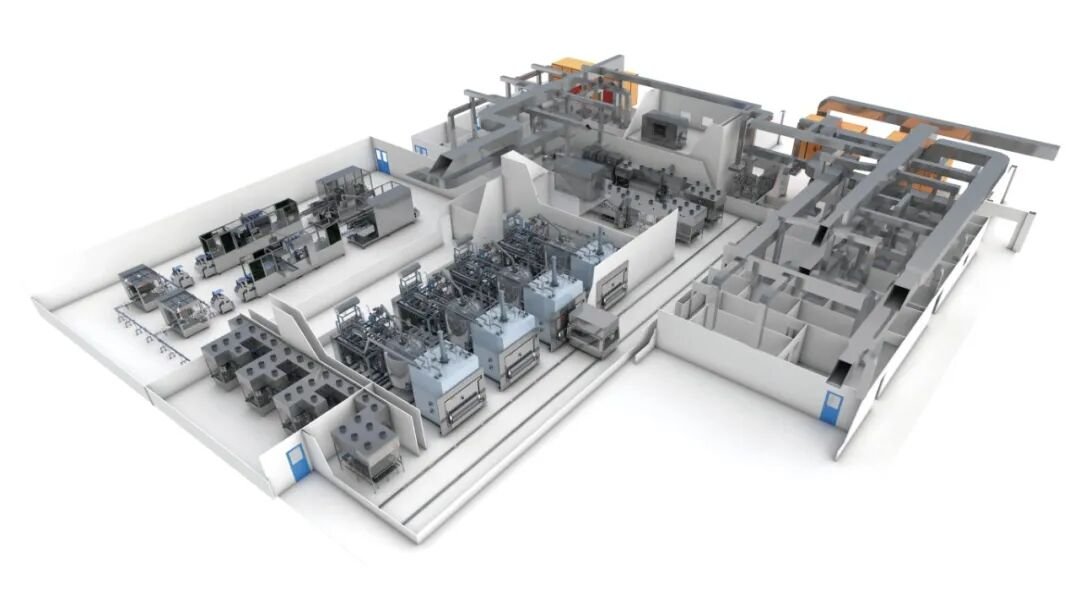

Driven by global population expansion, surging market demand for animal-derived food products, and the large-scale, intensive transformation of livestock breeding models, the strategic value of animal vaccines has been significantly elevated in recent years. As a pivotal component of modern animal disease prevention and control systems, animal vaccines not only determine the operational efficiency of the livestock and poultry industry, but also underpin food safety assurance, public health risk prevention, and the stable development of agricultural industrial chains.
The global livestock sector is currently undergoing a comprehensive transformation from decentralized traditional breeding to standardized, large-scale and intelligent production. The rapid proliferation of large-scale breeding enterprises and modern intensive farms has led to a continuous increase in animal stocking density per unit area, substantially heightening the risk of cross-species and regional disease transmission. Traditional disease prevention and control strategies centered on environmental regulation and empirical management can no longer adapt to the operational characteristics of modern breeding systems. Consequently, establishing systematic herd immune protection barriers via standardized vaccination has become an indispensable core measure to mitigate breeding risks and guarantee industrial operational safety.
Countries worldwide have continuously optimized and improved animal epidemic prevention and control systems, imposing more stringent technical and operational standards for the prevention and elimination of major animal diseases. In particular, the outbreak and spread of high-impact epidemics including African Swine Fever (ASF) and Avian Influenza (AI) have prompted the industry to raise higher requirements for vaccine research and development capabilities, large-scale manufacturing capacity and stable market supply. Meanwhile, the booming pet economy has driven the rapid growth of the companion animal health industry, making canine and feline vaccines a new high-growth track in the animal biopharmaceutical market.
In terms of market application scenarios, animal vaccine demand is mainly concentrated in four core sectors: poultry, swine, ruminant livestock and companion animals. The huge scale of commercial poultry farming generates rigid and sustained market demand for vaccines against Avian Influenza, Newcastle disease and other common poultry epidemics. The swine industry maintains long-term and stable procurement needs for classical swine fever, porcine reproductive and respiratory syndrome, porcine circovirus and other core vaccines. The continuous expansion of standardized cattle and sheep breeding scales also fuels the incremental demand for supporting epidemic prevention products. In addition, with the improvement of residents’ living standards and the continuous enhancement of pet health management awareness, the companion animal vaccine market presents a steady expansion trend.
Driven by the above multi-dimensional industrial trends, animal vaccine manufacturers are actively upgrading their manufacturing systems and iterating production paradigms, aiming to build more efficient, stable and flexible modern production systems to adapt to evolving market demands.
Homologous Technical Foundations Between Animal and Human Vaccine Manufacturing
Animal vaccines and human vaccines share highly consistent core technical principles in manufacturing processes. The production of most viral vaccines relies on host cell culture systems to achieve effective viral proliferation and enrichment. Qualified viral antigens obtained via cell culture undergo a series of standardized processes including harvesting, clarification, purification, inactivation or attenuation, and are finally processed into finished vaccine products that meet official quality and safety standards.
Despite homologous technical logic, animal vaccine manufacturing exhibits distinctive industrial characteristics due to differences in application scenarios, market coverage, cost control thresholds and regulatory specifications. Unlike human vaccines that prioritize extreme safety and batch consistency, animal vaccines face stricter cost sensitivity while covering a broader market landscape. Therefore, their production processes must achieve a dynamic balance between quality compliance, economic efficiency and large-scale sustainable supply capacity.
Live attenuated vaccines remain a mainstream product type in the animal vaccine industry. Such products typically adopt mammalian or avian cell lines as viral replication carriers to construct stable and efficient virus proliferation systems. Based on the biological characteristics of different viruses and vaccine product development requirements, manufacturers can select differentiated technical routes including adherent cell culture, suspension cell culture and microcarrier culture.
For a long time, the animal vaccine industry has relied heavily on conventional adherent culture technologies represented by roller bottle and multi-layer cell culture systems. These traditional processes feature high technical maturity and accumulated rich industrial application experience, which once fully satisfied the basic production needs of the industry. However, with the continuous expansion of market demand and the continuous enrichment of vaccine product lines, the inherent drawbacks of traditional production modes have become prominent, including large plant space occupation, intensive manual intervention, and obvious limitations in large-scale production scaling.
In contrast, human vaccine manufacturing universally adopts highly automated, fully enclosed production configurations, equipped with large-scale bioreactors, high-precision purification systems and rigorous full-process quality control mechanisms, which is derived from the industry’s ultra-high standards for product safety, purity and batch stability. In recent years, the animal vaccine industry has drawn lessons from advanced human biopharmaceutical manufacturing technologies, introducing modern cell culture systems, intelligent automatic control platforms and single-use production technologies to realize the iterative upgrading of traditional production models.
Advancements in Cell Culture Technology Drive Large-Scale Industrial Upgrading of Animal Vaccines
Cell culture serves as the core link in the entire animal vaccine manufacturing workflow, and its technical level directly determines viral proliferation efficiency, final vaccine yield and overall production cost. Conventional adherent culture systems rely on massive discrete culture containers to provide cell growth attachment surfaces. For instance, commercial roller bottle production requires the deployment of a large number of independent culture units in a single production batch. Although this model is technically feasible, it cannot adapt to the large-scale, high-efficiency production needs of the modern industry.
From the perspective of industrial production, traditional culture modes have three prominent bottlenecks. First, they require substantial plant space and supporting equipment, bringing high equipment operation and maintenance costs and management pressure. Second, the production process involves a large number of manual operations, which leads to poor process standardization and unstable batch-to-batch product consistency. Third, the open operational links in the production process increase the risk of exogenous microbial contamination, raising the difficulty of production quality control.
Accordingly, modern animal vaccine manufacturing is gradually shifting toward high-density cell culture and integrated bioreactor production modes. Stirred-tank bioreactors, microcarrier culture and serum-free suspension culture technologies enable manufacturers to achieve higher cell culture density and larger production scale within a limited plant space, and optimize viral proliferation efficiency through precise regulation of cell growth microenvironments.
Modern biomanufacturing systems focus on full-process refined control rather than single-batch output improvement. Real-time online monitoring of core parameters such as culture temperature, pH value, dissolved oxygen concentration, stirring speed and gas flow realizes dynamic and precise regulation of cell growth and viral replication environments, effectively improving the stability and qualification rate of finished vaccine products.
Optimized Culture Media Systems Empower Process Iteration of Animal Vaccine Manufacturing
Cell culture media is a key core factor affecting cell growth activity and viral replication efficiency, which determines the upper limit of vaccine production efficiency and product quality. For decades, animal vaccine production has widely adopted serum-containing culture systems, with fetal bovine serum (FBS) as the core nutritional additive. FBS can provide a variety of essential nutrients, growth factors and adhesion factors for cell proliferation, making it the core component of traditional cell culture systems.
With the continuous upgrading of biomanufacturing standards, the industry has put forward higher requirements for the stability, safety and batch consistency of culture systems. The batch differences and source uncertainty of animal serum easily lead to fluctuations in cell culture effects, and there are potential risks of exogenous pathogen contamination. To solve these pain points, serum-free media and fully chemically defined culture systems have become the mainstream development direction of modern animal vaccine production technology.
Serum-free culture systems eliminate the dependence on animal-derived raw materials, effectively avoid batch differences caused by serum fluctuations, significantly improve the controllability and repeatability of the production process, and are more suitable for industrial large-scale scaling production. Highly standardized culture systems help enterprises build unified and standardized production workflows, fundamentally improving the consistency of finished products across different batches.
Nevertheless, cost control remains a core constraint for the animal vaccine industry. Most veterinary vaccine products serve large-scale breeding scenarios, and the market has extremely high sensitivity to unit dosage production costs. Therefore, the iterative upgrading of future culture media and production platforms needs to achieve a comprehensive balance among production efficiency, product quality stability and industrial economic benefits.
New Industrial Challenges Facing Global Animal Vaccine Biomanufacturing
Sustained growth in market demand has brought new technical and operational challenges to global animal vaccine manufacturers. Traditional capacity expansion relies on increasing the number of production lines and equipment to realize output growth, namely extensive capacity expansion. However, this development model is increasingly restricted by plant space, human resource allocation and overall operational costs, and can no longer support the long-term high-quality development of the industry.
Future animal vaccine manufacturing must shift from extensive capacity expansion to intensive process scale-up, improving the single-line production capacity and operational efficiency of individual production systems through technical optimization, so as to achieve efficient capacity expansion, reduce plant space occupancy, simplify production management links, and maximize resource utilization efficiency.
In addition, the continuous improvement of China’s veterinary drug GMP system and global industry regulatory standards has raised higher thresholds for product quality and production consistency. Animal vaccine enterprises need to strengthen full-process standardized management, including refined production process control, complete production data traceability and systematic production risk assessment and prevention.
Meanwhile, microbial contamination control has become a key difficulty in large-scale modern production. The open operational links of traditional processes will significantly increase the contamination risk under large-batch production conditions, making fully closed production systems and single-use bioprocess technologies the key upgrading direction for industrial production safety.
Single-Use Technology and Intelligent Automation Lead Manufacturing Paradigm Innovation
Single-use bioprocess technologies have been widely applied in the field of biopharmaceuticals, and have gradually penetrated the commercial production link of animal vaccines. Compared with traditional stainless steel production equipment, single-use systems omit complex cleaning, disinfection and verification procedures, effectively reduce the risk of cross-contamination between production batches, and greatly improve production line switching efficiency. For multi-variety vaccine manufacturers, this technology significantly enhances the flexible production capacity of production lines.
The popularization of intelligent automatic control systems further promotes the intelligent transformation of animal vaccine production. Based on digital real-time monitoring and closed-loop process control, enterprises can accurately grasp the dynamic state of cell culture and viral proliferation in the production process, eliminate production fluctuations caused by human operation errors, and realize standardized and intelligent whole-process production management.
With the further integration of intelligent manufacturing and biomanufacturing technology, the animal vaccine industry will fully enter the data-driven refined production era, realizing more accurate, efficient and low-risk modern manufacturing.
Customized Process Development Meets Differentiated Production Needs of Enterprises
Although the mainstream production routes of animal vaccines in the industry tend to be unified, the optimal process parameters of different manufacturers show significant differentiation characteristics. Even for the same vaccine product produced with the same host cell line, differences in cell source, subculture history, media formula and supporting production equipment will lead to completely matched optimal culture and proliferation parameters.
Therefore, modern animal vaccine manufacturing upgrading requires not only standardized general production equipment and public technical platforms, but also personalized customized process development services, including targeted optimization of culture conditions, adaptive adjustment of production workflows and customized design of scale-up strategies. Tailored process optimization based on enterprises’ actual production conditions can effectively reduce technical risks in production scaling, improve overall operational efficiency, and strengthen the core market competitiveness of enterprises.
Summary and Outlook
The global animal vaccine industry is evolving toward large-scale intensification, intelligent refinement and high-quality standardization. The traditional empirical and labor-dependent production mode is being phased out, replaced by automated, digital and standardized modern manufacturing systems. Core technologies including high-density cell culture, industrial bioreactor manufacturing, single-use production systems and intelligent process control platforms will become the core support for the iterative upgrading of the animal vaccine industry.
Facing the dynamic changes in animal epidemic prevention demands and diversified market needs, vaccine manufacturers need to build highly flexible and responsive manufacturing systems to quickly adapt to market changes and meet customized epidemic prevention needs. As an important barrier for livestock industry safety and a key application scenario of modern biomanufacturing technology, the animal vaccine industry will further improve production efficiency and product quality through advanced technology iteration, full-process process optimization and upstream and downstream industrial chain collaboration. This will provide solid technical support for animal health protection, food safety guarantee and sustainable development of modern agriculture. Overall, animal vaccine manufacturing is stepping into a new stage of scientific, efficient and high-quality modernization from traditional empirical production, and this industrial transformation will continue to drive technological innovation and industrial upgrading of the entire biomanufacturing sector.
Against the backdrop of booming market demand and accelerated industrial modernization of animal vaccines, Sino Bioengineering builds a one-stop integrated bioprocess platform, providing full-life-cycle technical solutions for animal vaccine research and development, process optimization and commercial mass production. The platform covers all core links of biomanufacturing, including upstream customized cell culture media, intelligent bioreactor systems, fluid management, high-precision filtration and purification, and systematic verification services, helping clients build efficient, stable and scalable modern vaccine production systems.
Targeting core industrial pain points in vaccine production such as stable cell amplification, reliable process scale-up, full-process contamination control and consistent batch quality, Sino Bioengineering provides flexible and combined technical solutions. It supports seamless technical transformation from laboratory basic research and small-scale process development to large-scale commercial production, realizing rapid docking of R&D and production. Relying on advanced biomanufacturing technologies and professional industrial service capabilities, Sino Bioengineering empowers animal vaccine enterprises to improve production efficiency, optimize cost structure, and accelerate the industrialization and marketization of innovative animal vaccine products.
