




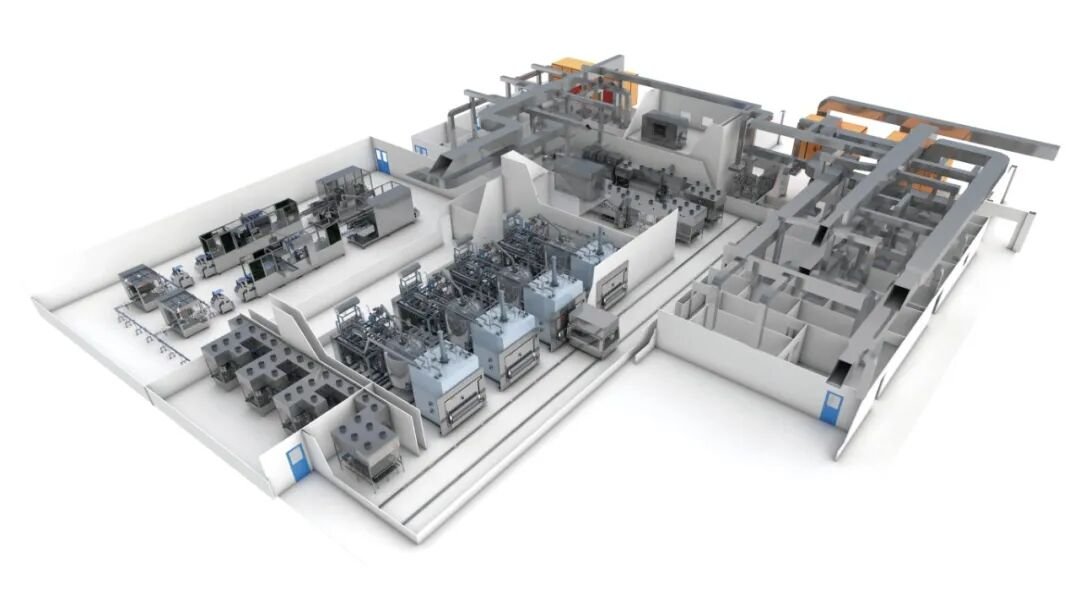

The landscape of oncological therapy is undergoing profound transformation, with precision-targeted and individualized treatment modalities emerging as the core trend of innovative pharmaceutical research and development. Antibody-drug conjugates (ADCs), as a novel class of bifunctional biotherapeutics, integrate the precise tumor-targeting capability of monoclonal antibodies and the potent cytotoxicity of small-molecule payloads, occupying a pivotal position in contemporary oncology innovation. To date, numerous ADC products have secured global marketing authorization, while a large pipeline of candidate molecules is advancing through clinical trials, covering a wide spectrum of malignancies including breast cancer, lung cancer, gastric cancer and hematological tumors. Despite the groundbreaking therapeutic potential of ADCs, their structurally sophisticated conjugated architecture poses unprecedented technical barriers to standardized manufacturing, distinguishing them from conventional biopharmaceuticals.
ADC production encompasses a full suite of complex unit operations, including recombinant antibody expression and purification, small-molecule payload synthesis, site-specific conjugation, post-conjugation purification and comprehensive quality characterization, rather than a simple physical combination of antibody and drug moieties. As hybrid molecules comprising protein biomacromolecules and highly potent chemical active ingredients, ADCs impose dual manufacturing constraints: the maintenance of protein structural stability and the rigorous containment of toxic high-potency components. This dual nature raises stringent requirements for process development, specialized production infrastructure, occupational safety protection and standardized quality management systems.
Subtle process fluctuations constitute the primary source of manufacturing variability in ADC production. Antibody frameworks are highly susceptible to external environmental perturbations, including temperature deviation, mechanical shear force, pH oscillation and redox potential changes, all of which may trigger protein denaturation, aggregation and diminished biological efficacy.
Furthermore, conjugation process robustness hinges on the precise regulation of critical quality attributes (CQAs), including drug-to-antibody ratio (DAR), conjugation site distribution and reaction homogeneity. Insufficient control of these core parameters will exacerbate inter-batch heterogeneity, severely hindering clinical progression and commercial-scale production scalability.
Another prominent manufacturing challenge stems from the handling of highly potent active pharmaceutical ingredients (HPAPIs). The production, transfer and storage of HPAPIs demand specialized closed production environments, dedicated contamination control strategies and enhanced occupational safety protocols. Traditional biomanufacturing platforms designed for conventional monoclonal antibodies lack targeted technical configurations for ADC-specific production demands. Accordingly, biomanufacturing service providers and in-house production facilities must be rigorously evaluated in terms of specialized ADC process expertise, customized equipment deployment and tailored quality control systems.
To address the multifaceted bottlenecks in ADC manufacturing, systematic and holistic optimization strategies covering process development, production infrastructure, quality assurance and supply chain operation are imperative:
Refine mechanistic process development and parametric control: Elucidate the molecular mechanism of conjugation reactions to establish robust, wide-ranging process windows, minimize batch-to-batch variability and enhance overall product consistency.
Upgrade production infrastructure and environmental control systems: Adopt customized reaction, purification and closed-loop operation workflows adapted to the structural characteristics of ADC molecules, ensuring dual compliance with product quality specifications and occupational safety standards.
Establish a comprehensive analytical quality evaluation system: Develop validated quantitative detection methods for key CQAs, including DAR distribution, protein aggregates, free residual drugs and process-related impurities.
Build scalable and translatable manufacturing capabilities: Realize seamless and stable process transfer across laboratory-scale research, clinical-grade sample production and large-scale commercial manufacturing to support full industrial chain development.
As ADC industrialization matures, the industry focus is shifting from molecular innovation capability to high-quality, stable and scalable manufacturing capacity. In-depth identification of manufacturing pain points and implementation of targeted optimization strategies are critical to facilitating the safe, standardized and large-scale clinical translation of ADC therapeutics.
Risk Mitigation of ADC Manufacturing via Single-Use System Deployment
The rapid clinical and commercial progression of ADCs has raised elevated industrial standards for manufacturing safety, operational flexibility and risk management. In this context, single-use systems (SUS) have evolved from auxiliary production equipment to core infrastructure for modern complex biotherapeutic manufacturing. Particularly for ADC production featuring high potency, low batch dosage and high molecular sensitivity, SUS effectively mitigates inherent production risks through optimized material transfer workflows and enclosed environmental management.
Different from traditional reusable stainless-steel production equipment, SUS adopts pre-sterilized, disposable components including bioprocess bags, customized tubing assemblies, depth/sterile filters and sterile connection fittings, which are discarded after single-batch or single-campaign operation. This operational mode completely eliminates cross-contamination risks caused by shared equipment residues, delivering unparalleled flexibility for multi-product, small-batch and complex biopharmaceutical production. For ADCs with dual biological and chemical properties, SUS plays a vital role in isolating production risks, safeguarding operator safety and maintaining product quality uniformity.
The application value of SUS in standardized ADC manufacturing is reflected in four core dimensions:
Cross-contamination risk isolation: Independent disposable fluid pipelines eliminate residual material cross-talk between different production batches and product lines, which is especially suitable for multi-product production facilities involving high-potency toxic components.
Operational efficiency improvement: SUS exempts manufacturers from repetitive equipment cleaning, disinfection and residue validation procedures, significantly reducing validation workload and shortening production line switching cycle.
Occupational safety enhancement: Fully enclosed SUS architectures isolate operators from direct contact with HPAPI materials, constructing a highly controlled and safe production environment.
Process adaptability optimization: SUS components support flexible modular assembly, with customizable pipeline layout, container volume and connection modes to match diversified production scales and stage-specific process requirements.
Beyond physical risk isolation, SUS also empowers refined in-process quality monitoring. Modern modular single-use components can be integrated with disposable real-time sensors for temperature, pressure, pH, conductivity and dissolved oxygen, enabling continuous dynamic monitoring of critical process parameters (CPPs). Given the high structural sensitivity of ADC molecules, minor process deviations may lead to irreversible product quality degradation. Real-time data acquisition and closed-loop process regulation effectively improve process stability and batch consistency.
Notably, SUS deployment represents a systematic manufacturing optimization strategy centered on quality risk management, rather than simple equipment replacement. Rational SUS workflow design, combined with standardized process control and GMP-compliant quality systems, enables enterprises to achieve flexible production, shortened setup cycles and enhanced risk control capabilities, fully adapting to the rapid iterative development of innovative ADC drugs. Currently, single-use technology has become an indispensable core support for the safe, stable and scalable industrial production of ADCs and other next-generation complex biotherapeutics.
Key Modulation of Filtration Process on ADC Molecular Stability
Sterile filtration serves as a definitive downstream unit operation for microbial and particulate removal in ADC final formulation. Due to its mature technical route and downstream process location, its profound impact on final product quality is frequently underestimated. In fact, for structurally intricate and environment-sensitive ADC molecules, filtration is a sophisticated precision process requiring systematic matching of product characteristics, parametric conditions and equipment performance, rather than a routine sterile purification step.
ADC molecular stability is constrained by multiple extrinsic factors. In the formulation filtration stage, product viscosity, molecular hydrodynamic size, protein concentration, filter membrane compatibility and operating parameters collectively determine final product quality. High-concentration and high-viscosity characteristics of partial ADC formulations will increase fluid transmembrane resistance during filtration. Unregulated transmembrane pressure, abnormal flow velocity or excessive mechanical shear force will induce antibody conformational changes, exacerbate protein aggregation and impair the structural integrity and biological activity of conjugated products.
Accordingly, ADC filtration process development requires a balanced optimization between product stability protection and manufacturing efficiency. The process must meet stringent sterile production specifications while avoiding molecular damage caused by extreme process conditions. The core controllable parameters for standardized ADC filtration are summarized as follows:
Transmembrane pressure regulation: Excessively high pressure imposes intense mechanical stress on protein molecules, triggering aggregation and denaturation. A validated pressure operating window must be established to maintain process mildness.
Flow rate optimization: Optimized steady flow rates balance production throughput and molecular protection, eliminating quality risks induced by rapid, turbulent filtration.
Filter material compatibility verification: Systematic evaluation of membrane material compatibility with ADC formulation systems is mandatory to prevent non-specific adsorption, component precipitation and interfacial adverse reactions.
Full-cycle system integrity validation: Conduct pre-use and post-operation integrity testing of filter assemblies to ensure the reliability and effectiveness of the entire filtration process.
With the widespread penetration of single-use technology, filtration systems have evolved toward integrated and enclosed modular design. The integration of disposable filter units into SUS closed-loop workflows reduces product exposure risks during material transfer and minimizes manual operational variability. Meanwhile, in-situ filter integrity testing enables pre-process system status confirmation and post-process effectiveness verification, further upgrading the overall sterility assurance level.
In conclusion, the establishment of a robust, verifiable and scalable filtration process is not only the core guarantee of product sterility, but also a key determinant of manufacturing efficiency and batch consistency. Systematic optimization of filtration parameters, equipment matching and quality control strategies can effectively support the seamless scale-up of ADC products from laboratory research to industrial production.
Aseptic Filling Process Control for Stability-Sensitive ADC Molecules
Aseptic filling is the final core procedure in the ADC manufacturing workflow, directly determining the final product quality and clinical supply stability. Characterized by high biological potency, high economic value and high molecular complexity, ADCs require customized filling process design, which must simultaneously meet sterile production specifications, molecular stability protection, high-precision dosing and batch consistency requirements, rather than adopting universal conventional formulation production protocols.
In industrial manufacturing practices, filtered sterile ADC bulk solution is transferred to enclosed intermediate storage vessels under classified aseptic environments, with subsequent filling operations completed via isolator-based fully closed systems. This enclosed production mode minimizes solution exposure to the external environment, reduces microbial contamination probability, and provides reliable occupational safety protection for operators handling high-potency ADC products.
Most ADC formulations are produced in high-concentration and low-volume forms, where vial-to-vial filling accuracy directly determines clinical dosage safety and efficacy consistency. Fine-grained parametric control is therefore required throughout the filling process:
High-precision filling calibration: Adopt real-time in-line weighing and dynamic monitoring technologies to calibrate single-vial filling volume, ensuring full compliance with product specification standards.
Product-tailored process optimization: Adjust filling speed, equipment operating parameters and material residence strategies based on the unique stability characteristics of different ADC molecules, to mitigate molecular degradation caused by mechanical shear and environmental fluctuations.
Closed aseptic environment management: Realize full-process sterile control via isolator systems, sterile closed connections and standardized operating procedures to eliminate potential contamination risks.
Different ADC molecules exhibit distinct variability in environmental sensitivity, degradation pathways and structural stability. Thus, filling process development and validation must be personalized based on product-specific attributes. For molecules sensitive to temperature fluctuation, light irradiation, shear force and prolonged residence time, targeted process optimization is essential to preserve molecular structural integrity and biological activity.
Stable filling process capability is particularly critical for ADC products in clinical development stages. Tiny batch-to-batch differences may interfere with clinical sample consistency and subsequent efficacy and safety evaluation. The establishment of a repeatable, fully validated and highly stable aseptic filling workflow, supported by rigorous in-process monitoring and complete quality management systems, can effectively facilitate the smooth transition of ADC products from clinical research to commercial mass production.
Sino Bioengineering provides full-process single-use integrated solutions covering material storage, solution preparation, conjugation reaction and aseptic filling to tackle core technical challenges in ADC manufacturing. Tailored to the high-potency components and organic solvent application characteristics of ADC processes, the company supplies chemically compatible disposable bioprocess bags, customized tubing assemblies and dedicated single-use conjugation reactors, with standardized extractables and leachables (E&L) assessment services to provide reliable data support for product quality control. In addition, customized ultrafiltration, chromatography and PUPSIT tubing assemblies, as well as high-precision peristaltic pump integrated single-use filling systems, are available to meet diversified process demands. These customized solutions effectively reduce production contamination risks, improve filling accuracy and process reproducibility, and support the full-stage process transformation of ADC drugs from laboratory R&D, clinical trials to large-scale commercial production.
