




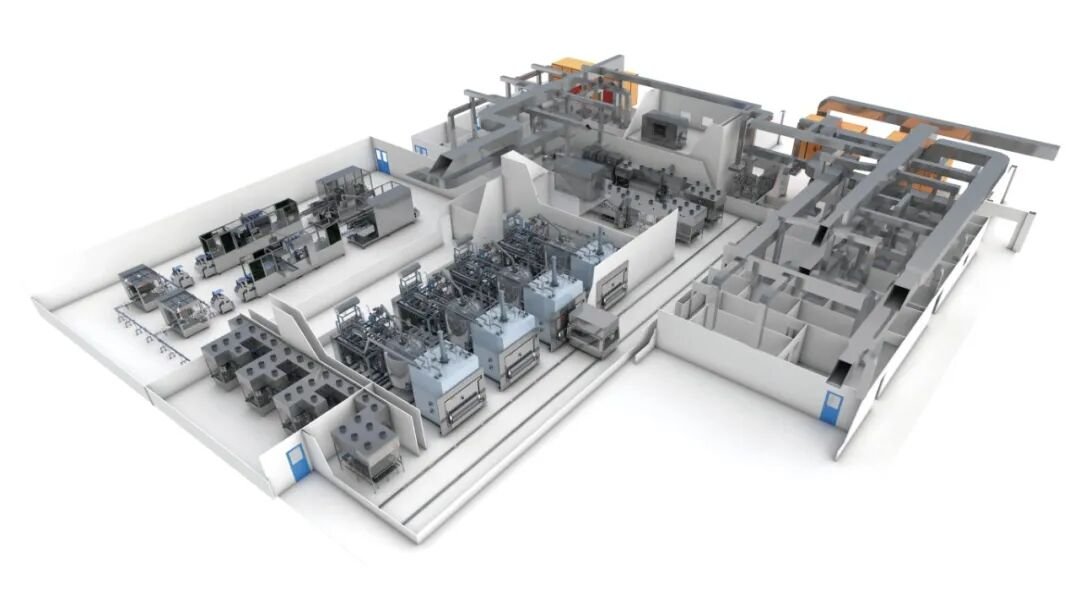

CPHI Milan was a major talking point in the pharmaceutical industry over the past week. Numerous posts and news coverage about the exhibition circulated across social media and WeChat Moments. I held in-depth discussions with many pharmaceutical and equipment exhibitors. A growing consensus has emerged among them. The competition among pharmaceutical suppliers has undergone a fundamental shift. It has moved beyond the traditional single-dimensional rivalry of technical parameters and product performance, and evolved into a comprehensive competition centered on in-depth understanding and practical mastery of pharma processes.
Against the backdrop of increasingly stringent global pharmaceutical regulations, intensifying market homogeneity and escalating corporate cost-control demands, process-centric comprehensive capabilities have become the core barrier and core competitiveness for outstanding pharmaceutical suppliers. The key dimensional capabilities that define the new round of industry competition are summarized as follows:
1. Process Adaptation and Customized Design Capabilities
Modern pharmaceutical production features diversified product pipelines, differentiated production scales and personalized process requirements. Superior suppliers are no longer limited to providing standardized equipment and products. Instead, they are capable of conducting targeted process analysis based on customers’ R&D scenarios, production conditions and product characteristics, delivering tailored solution design. This full-scenario adaptation capability effectively solves the pain points of mismatched standardized equipment and fragmented production processes, laying a solid foundation for stable and efficient customer production.
2. Process Scaling and Engineering Transformation Capabilities
The transformation from laboratory small-batch R&D to industrial large-scale production has long been a key bottleneck in the pharmaceutical industry. Many technical formulas that perform well in laboratory environments often face problems such as unstable yield, inconsistent product quality and unfeasible mass production after scale-up. Core suppliers possess mature process scaling and engineering conversion capabilities. They can accurately identify and resolve process amplification effects, realize seamless docking from lab-scale exploration, pilot test verification to commercial mass production, and complete the efficient translation of pharmaceutical technology from theoretical research to industrial application.
3. Process Optimization and Cost-Efficiency Improvement Capabilities
Profitability and sustainable operation are essential for pharmaceutical enterprises’ long-term development. Excellent suppliers can conduct systematic diagnosis and iterative optimization of customers’ existing production processes, covering raw material utilization, production cycle control, energy consumption management and personnel operation efficiency. Through refined process adjustment and technological upgrading, they help customers reduce production and operational costs, improve overall production efficiency and product yield, and create tangible economic value for industrial production.
4. In-depth Understanding of Compliance and Validation Systems
The pharmaceutical industry is one of the most heavily regulated sectors worldwide, with rigorous compliance and validation requirements running through the entire production chain. Leading suppliers have a thorough grasp of global mainstream regulatory standards including cGMP, FDA and EMA specifications. They can embed compliance logic into process design, equipment configuration and production scheme formulation, and provide standardized whole-process validation support. This helps customers effectively avoid regulatory risks, ensure full compliance of production links, and guarantee the traceability, stability and safety of pharmaceutical products.
5. Cross-disciplinary Process Knowledge Accumulation
Pharmaceutical manufacturing is a comprehensive discipline integrating chemistry, biology, materials science, engineering and regulatory science. High-end supplier competition relies on systematic cross-disciplinary knowledge reserves rather than single technical advantages. By accumulating in-depth process experience in different pharmaceutical segments, dosage forms and production scenarios, suppliers can break through technical and process boundaries, provide more comprehensive, innovative and feasible process solutions, and better adapt to the iterative upgrading and diversified development needs of the modern pharmaceutical industry.
To sum up, the pharmaceutical industry has entered a new era of process-driven competition. In the future, core competitiveness will no longer be defined by simple technical superiority, but by the full-chain process service capability that integrates adaptation, transformation, optimization, compliance and cross-domain empowerment. This industry shift will also further accelerate the upgrading and high-quality development of the global pharmaceutical supply chain.
