





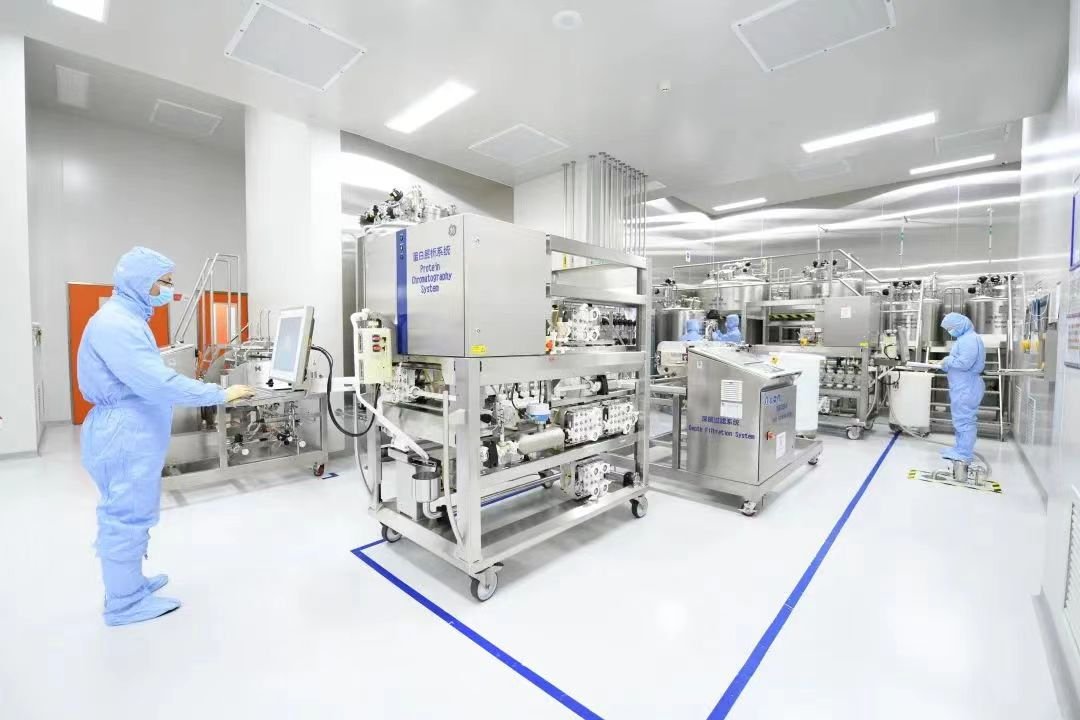
In the landscape of recombinant biopharmaceutical production, Escherichia coli stands as one of the most widely adopted host systems for recombinant protein expression worldwide, supported by decades of technical accumulation, well-characterized genetic background and low-cost fermentation platforms. Industry statistics indicate that over 25% of marketed recombinant biotherapeutics are produced using E. coli expression systems. Nevertheless, inherent limitations of this prokaryotic host persistently constrain production efficiency: lacking molecular chaperones, oxidative-reductive environments and other essential factors required for correct folding of eukaryotic proteins, highly expressed recombinant proteins tend to assemble into insoluble, biologically inactive aggregates termed inclusion bodies.
These protein aggregates with a density of approximately 1.3 g/mL can be preliminarily enriched and purified via high-pressure homogenization coupled with differential centrifugation, substantially lowering impurity loads in the initial purification stage. However, efficiently converting misfolded denatured protein aggregates into soluble proteins with intact tertiary structures and biological activity remains a core bottleneck in downstream bioprocess development. The design and optimization of refolding processes directly determine the final yield and commercial viability of the entire inclusion body-based production workflow.
I. Kinetic Underlying Principles of Protein Refolding
The nucleation-condensation model has become a universally recognized mechanistic framework describing protein refolding. This theory applies not only to two-state kinetic folding of small proteins with no accumulation of folding intermediates, but also to the refolding of multi-domain complex proteins. By resolving the folding behavior of each independent domain, the model fully delineates stepwise folding pathways for multi-domain proteins. Visualized via the folding funnel energy landscape, the entire refolding system presents a multi-state energy distribution: numerous high-energy unfolded conformations reside at the funnel periphery, while low-energy native active conformations concentrate at the funnel bottom. Proteins gradually transit from heterogeneous unfolded states toward thermodynamically stable native states.
Among various refolding kinetic models, the competitive mechanism model proposed by Kiefhaber is the most extensively adopted guiding theory for industrial process development. Its core logic states that correct folding and off-pathway aggregation constitute two kinetically competing pathways during in vitro refolding. The reaction pathway can be simplified as a progressive sequence: Unfolded state (U) → Intermediate state (I) → Native active state (N). This theory explicitly demonstrates that elevated protein concentration exerts an exponentially amplified effect on aggregate formation, directly reducing final refolding yields. For difficult-to-fold proteins whose aggregation rate far exceeds the folding rate, only stringent control of the local concentration of unfolded protein can achieve economically viable refolding productivity. This principle serves as the fundamental basis for designing all subsequent industrial refolding strategies.
II. Construction of Refolding Process Systems for Modern Biopharmaceutical Manufacturing
The complete production chain for recombinant proteins in E. coli covers molecular cloning construction, high-cell-density fermentation, inclusion body isolation and purification, protein refolding, multi-step chromatographic polishing, and final formulation filling. As a critical node connecting upstream crude inclusion bodies and downstream high-purity active proteins, refolding governs the economic performance of the whole manufacturing process.
2.1 Standard Industrial Workflow for Inclusion Body Processing
Industrial processing of inclusion bodies has evolved into a highly standardized four-stage procedure:
1.Inclusion Body Isolation: Industrial production commonly combines mechanical lysis (high-pressure homogenization / sonication) and enzymatic lysis (lysozyme treatment). Sonication alone generates excessive cellular debris, whereas enzymatic lysis delivers insufficient efficiency. The combined approach enables recovery of crude inclusion body precipitates with improved purity.
2.Inclusion Body Solubilization: Denaturants or detergents disrupt intramolecular hydrophobic interactions to fully unfold misfolded protein tertiary structures. Widely used reagents include urea, guanidine hydrochloride, as well as strong detergents such as sodium dodecyl sulfate (SDS) and sodium lauroyl sarcosinate.
3.Refolding of Solubilized Protein: Modulation of buffer environments guides refolding of denatured polypeptide chains to form active proteins with native conformations.
4.Post-refolding Polishing: A combination of liquid chromatography technologies removes aggregates, misfolded species and residual impurities from the refolding mixture, yielding high-purity target active protein.
2.2 Environmental Modulation Logic for Refolding Buffers
Target proteins (Proteins of Interest, POIs) differ drastically in amino acid sequences, disulfide bond counts and spatial architectures; therefore, no universal refolding buffer formulation exists. Systematic screening is generally implemented in industrial settings to identify optimal conditions, with the primary objective of establishing a chemical microenvironment that accelerates native protein formation while maximally suppressing aggregation and stabilization of non-native conformations.
Industrial refolding additives are classified into five major categories with defined functional roles:
Denaturants: Represented by urea and guanidine hydrochloride, used to fully disrupt higher-order protein structures and achieve complete solubilization of inclusion bodies.
Stabilizers: Comprising saccharides and polyols, which increase protein unfolding free energy and reduce intermolecular association free energy to diminish exposed hydrophobic surfaces; typically applied alongside aggregation inhibitors to balance performance.
Aggregation Inhibitors: L-arginine is the archetypal candidate. It partially binds hydrophobic regions on protein surfaces and exerts dual functions of mild denaturation and enhanced solvation, significantly inhibiting intermolecular aggregation.
pH Modulators: Buffering systems including citrate, phosphate, succinate and glycine maintain pH away from the protein isoelectric point (pI). Extreme pH that causes irreversible protein denaturation is avoided, fundamentally lowering aggregation propensity.
Oxidation-Reduction Agents: For disulfide bond-containing proteins, a mixture of oxidized and reduced glutathione is adopted. Compared with simple air oxidation, this system markedly accelerates formation of correct disulfide pairings, resolves mismatched non-native disulfide bonds, and improves the efficiency of native disulfide formation and refolding kinetics.
In line with the industry trend toward green biomanufacturing, screening of industrial refolding reagents no longer focuses solely on refolding performance. Toxicity, procurement costs and downstream waste liquid treatment challenges are simultaneously evaluated to balance environmental sustainability and overall production economics.
2.3 Selection of Industrial-Scale Refolding Technology Strategies
Selection of refolding approaches must match both the aggregation propensity of the target protein and manufacturing scale. Each process route has distinct applicable scenarios. Dilution and dialysis methods are straightforward for laboratory-scale applications yet generate massive volumes of refolding buffer upon scale-up, driving up material and tank costs. Technologies such as cross-flow ultrafiltration refolding and on-column refolding (including size-exclusion refolding and adsorptive resin-based refolding) gradually reduce denaturant concentration in continuous operations, drastically cutting buffer consumption and better satisfying cost control requirements for large-scale industrial production.
III. Development Roadmap for Fully Integrated Industrial Refolding Processes
For novel target proteins with only known amino acid sequences, refolding process development essentially constitutes a workflow to resolve a “black box” system. To meet dual demands of rapid delivery of preclinical material and long-term robustness of commercial manufacturing, the modern biopharmaceutical industry has established a standardized development framework integrating platform workflows, scale-down models and in silico modeling, which greatly shortens process development timelines.
3.1 High-Throughput Screening of Buffer Conditions
Traditional single-factor variable screening is time-consuming and labor-intensive. Currently, the industry widely adopts high-throughput screening workflows combining Design of Experiments (DOE) and automated liquid handling stations. Broad-range primary screening first defines parameter windows for core refolding buffer variables, followed by fine-tuning of critical influencing factors to optimize the refolding microenvironment and elevate final refolding yields.
3.2 Integrated Process Design
Conventional serial process optimization only imports optimal parameters from preceding unit operations as inputs for subsequent steps, ignoring coupling effects between upstream and downstream processes, which frequently prevents achievement of global process optima. The industry is increasingly adopting integrated process models and machine learning to establish parameter correlations across unit operations. Meanwhile, fishbone diagrams are applied to comprehensively map potential impacts of mechanical and chemical parameters on refolding, enabling early identification of process risks and construction of robust end-to-end manufacturing workflows.
3.3 Scientific Implementation of Process Scale-Up
Industrial experience demonstrates that over 80% of opportunities for process improvement emerge at the early lab-scale development phase, where experimental costs remain low and adjustments are flexible, enabling root-cause mitigation of potential scale-up challenges. Prior to full industrial production, process validation is performed at representative pilot scale. Computational Fluid Dynamics (CFD) simulations are deployed to predict mixing efficiency and reaction distribution within large-volume bioreactors and pipelines, preventing extensive aggregation triggered by local overconcentration of protein and inadequate mixing during scale translation.
3.4 Digital Monitoring of Refolding Processes
Refolding processes have long relied on off-line sampling and testing, and data lag tends to induce inter-batch quality variability. Process Analytical Technology (PAT), strongly promoted by global regulatory authorities, is addressing this limitation. One category consists of soft-sensing platforms equipped with on-line sensors for real-time monitoring of dynamic changes in redox potential, pH and temperature, enabling timely detection of process deviations. The second category comprises spectroscopic monitoring technologies that capture dynamic shifts in protein secondary and tertiary structures. Combined with auxiliary tools such as Differential Scanning Fluorimetry (DSF), these techniques rapidly distinguish unfolded, misfolded and native folded states, realizing closed-loop control over the entire refolding workflow.
IV. Conclusion
Despite persistent challenges in refolding process development, inclusion body-based production routes retain prominent cost advantages for recombinant biopharmaceuticals, supported by inherent strengths including facile isolation, high stability and elevated expression levels. With advancing research on protein folding mechanisms, alongside widespread adoption of high-throughput screening, machine learning modeling, PAT on-line monitoring and other digital technologies, refolding process development cycles will be substantially shortened, while process robustness and refolding yields will reach new benchmarks. These advances will further accelerate low-cost commercialization of recombinant protein therapeutics.
