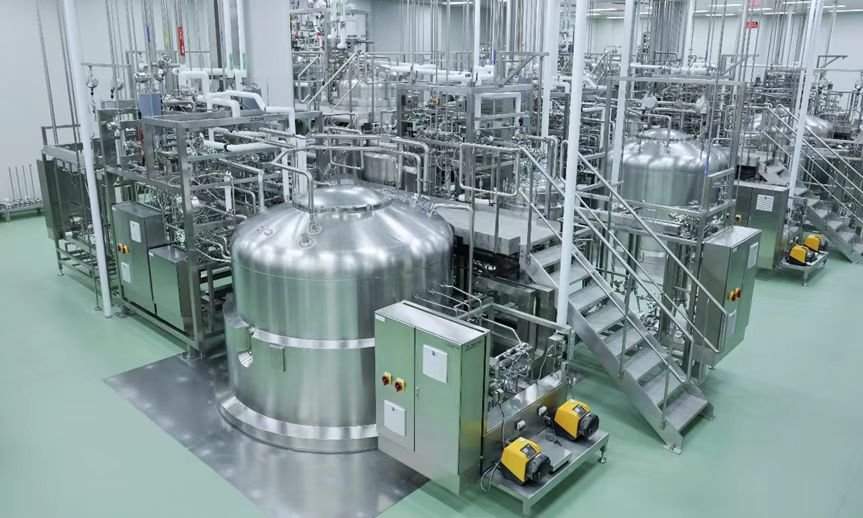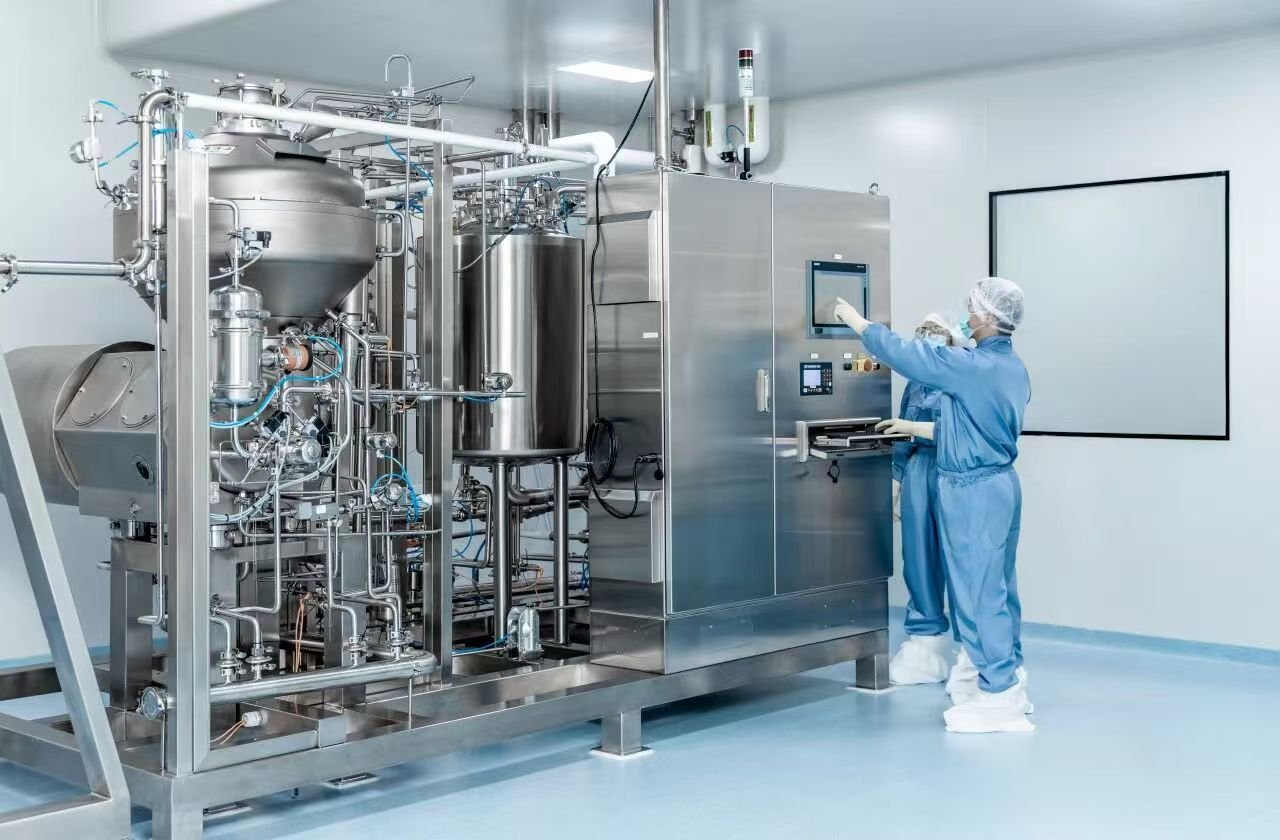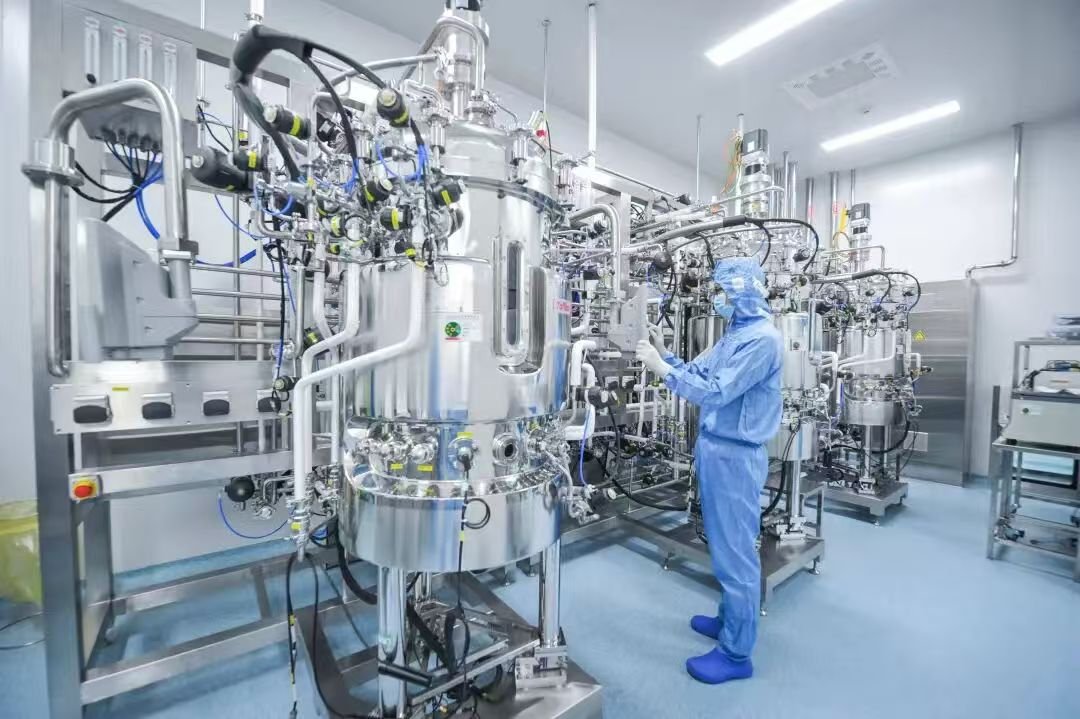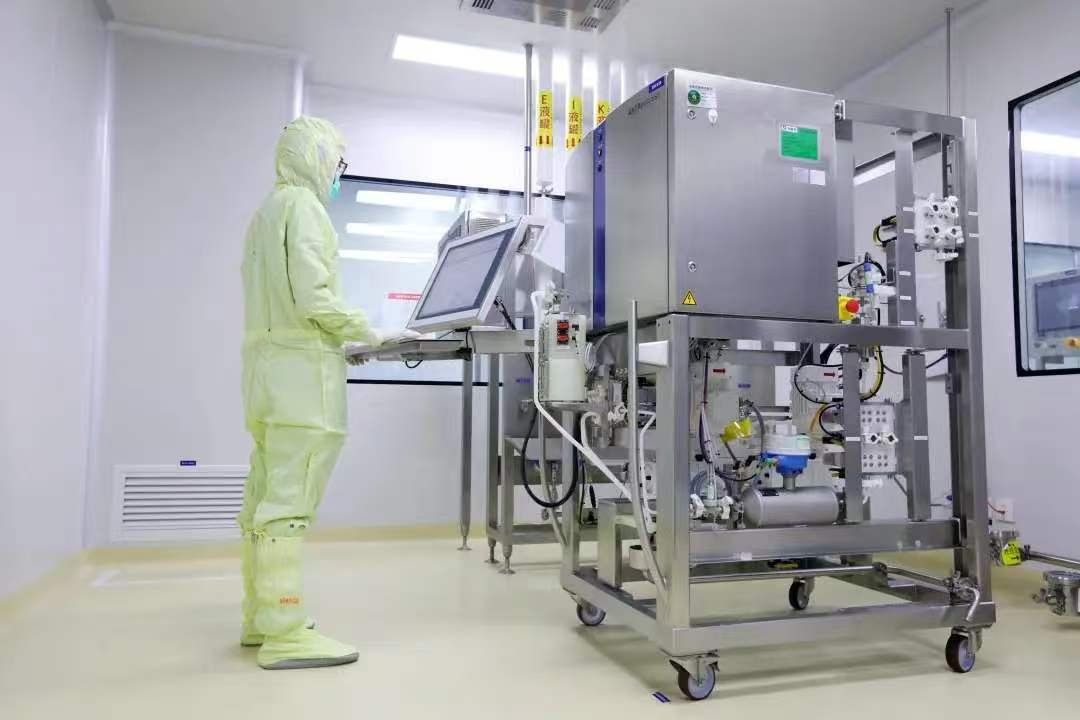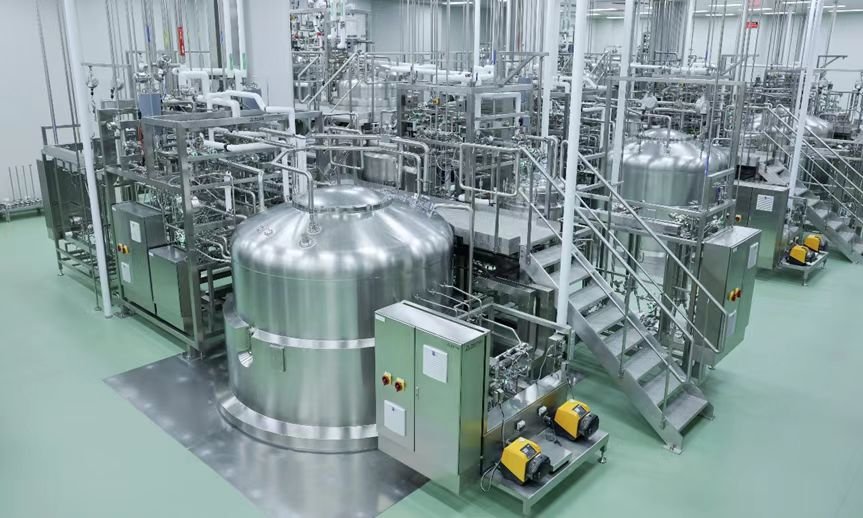
To establish a robust and efficient upstream production process, apart from host cells, culture media and process parameters themselves, superior engineering design of bioreactors plays a decisive role. When scaling up mammalian cell culture from laboratory-scale to large-scale production bioreactors, a host of common technical issues and operational risks will emerge. Combining the key structural features of bioreactors, this article discusses the design considerations and process challenges for large-scale production bioreactors.
Driven by the surging clinical demand for antibody-based biopharmaceuticals and the industry’s pursuit of cost reduction and efficiency improvement, large-scale cell culture processes have been widely developed and applied. Nevertheless, process scale-up for cell culture is often accompanied by declines in viable cell density and protein titer, as well as alterations to product quality attributes. To address these challenges, it is essential to first understand how agitation, aeration and mass transfer impact cell culture performance.
1. Agitation and Aeration
Mammalian cells lack cell walls and are therefore highly susceptible to mechanical stress from agitation and aeration in large-scale cultivation. Two primary sources of shear damage exist in large bioreactors: hydrodynamic shear induced by stirring, and bubble shear generated by bottom sparging. These factors affect three core aspects of the process:
Cell damage caused by shear force
Heterogeneity of culture medium
Insufficient gas-liquid mass transfer
Accordingly, agitation and aeration are critical to stable process operation. Additionally, shear tolerance of cultured cells varies with cell line categories, concentrations of key nutrients and metabolic inhibitors, as well as cultivation phase. Cells generally exhibit higher sensitivity to shear stress during lag phase and stationary phase.
As bioreactor scale increases and liquid volume expands, the time required to achieve homogeneous mixing is prolonged. This poses a major challenge for cell culture processes. Intense agitation shortens mixing time yet inflicts severe shear damage on cells; insufficient stirring, by contrast, leads to medium heterogeneity, including concentration gradients of nutrients, pH and dissolved oxygen (DO). Therefore, a balanced design is required to reconcile stirring speed, shear stress and medium homogeneity.
Oxygen is an essential substrate for aerobic cell metabolism and must be continuously supplied to maintain normal cell growth. Unlike microbial fermentation, mammalian cells feature much lower oxygen uptake rates and greater shear sensitivity, which imposes strict limitations on oxygen delivery efficiency. Furthermore, oxygen mass transfer becomes increasingly difficult upon scale-up, since the mass transfer efficiency of stirred-tank bioreactors typically declines with larger working volumes. Meanwhile, the capacity to strip carbon dioxide generated by cellular respiration is also compromised in large-scale systems.
A comprehensive understanding of mass transfer in large-scale cell culture cannot be achieved without addressing bubble-induced shear damage. Bubble shear is widely recognized as the predominant cause of cell injury in mammalian cell cultures using serum-free media. It is hypothesized that cells tend to accumulate at the gas-liquid interface as bubbles rise in the bioreactor. When bubbles rupture at the liquid surface, entrapped cells are exposed to destructive mechanical forces. Studies also indicate that cells trapped in the foam layer by sparged bubbles sustain shear damage. Physical damage from bubbles is detectable at a gas flow rate of 0.05 vvm, and a linear correlation has been established between gas flow rate (vvm) and cell mortality.
The extent of cell damage depends on bioreactor design, operational parameters, cell line characteristics, medium formulation and physiological state of cells. A common mitigation strategy is the addition of 0.5 to 3 g/L Pluronic F-68, a nonionic copolymer of polyoxyethylene and polyoxypropylene. This surfactant adsorbs onto cell surfaces to form a protective layer and mitigate adverse bubble effects. However, its foaming property restricts application, bringing notable challenges to downstream processing and oxygen mass transfer efficiency.
Another mass transfer-related issue in large-scale cultivation is the continuous accumulation of carbon dioxide, which elevates partial pressure of CO₂ (pCO₂). Excessively high pCO₂ inhibits cell proliferation and increases carbonic acid concentration, leading to acidic pH shift. A prevailing solution is to raise headspace or bottom sparging airflow to reduce dissolved CO₂ levels.
Large-scale production bioreactors shall be designed with oxygen transfer capacity matching the oxygen consumption rate at the maximum viable cell density at the end of cultivation. Oxygen transfer capacity is positively correlated with the volumetric mass transfer coefficient (k_La), which is governed by bioreactor geometry, sparger configuration, headspace pressure and agitation speed. The k_La value generally decreases upon scale-up, and the k_La of production-scale bioreactors is normally half that of lab or pilot-scale counterparts.
Multiple strategies can be adopted to compensate for reduced k_La during scale-up, including oxygen enrichment, increased aeration rate and elevated agitation speed. Based on the formula OTR = k_La (C⁎ − C), oxygen transfer rate (OTR) is proportional to k_La, where C denotes dissolved oxygen concentration and C⁎ represents oxygen concentration at gas-liquid equilibrium. Aeration rate, quantified as vvm (vessel volumes per minute), determines bubble quantity and gas-liquid interfacial area; higher airflow expands interfacial area and boosts k_La.
Under a sparger pore size of 0.5 mm, an airflow rate of 1 L/min generates far more bubbles and larger gas-liquid interfacial area than 50 mL/min. At the same airflow rate, a 20 μm pore size delivers superior bubble distribution and interfacial area compared with 0.5 mm pores.
Nevertheless, increased airflow and bubble quantity will exacerbate bubble-associated shear damage, setting a practical upper limit for aeration adjustment. Mechanical stirring serves as an effective alternative. Agitation prevents bubble coalescence, extends bubble residence time in liquid phase and significantly improves k_La. For the XDR2000 bioreactor with a working volume of 1,200 L, equipped with a 20 μm sparger and airflow of 11 L/min, the k_La rises from 4 h⁻¹ to 10 h⁻¹ as agitation speed increases from 25 rpm to 115 rpm. A linear relationship exists between aeration, agitation and k_La, making them core considerations in bioreactor design and process execution. Notably, the shear energy released by bursting bubbles is at least an order of magnitude higher than that induced by stirring in most large-scale cell culture systems, which means bubble shear shall be prioritized in process operation.
Turbine impellers generate intensive shear force and are therefore unsuitable for mammalian cell culture. Early cell culture bioreactors adopted marine impellers. Since both marine and turbine impellers belong to radial-flow impellers, axial-flow impellers such as elephant ear impellers and rectangular impellers were subsequently developed. Compared with radial-flow designs, axial-flow impellers deliver superior bulk mixing and effectively eliminate medium stratification and concentration gradients.
While agitation enables efficient medium mixing, it also induces cell damage via local turbulence characterized by Kolmogorov eddy length. The eddy length is defined by the formula:
\(\lambda = \sqrt[4]{\nu^3/\varepsilon}\)
where \(\lambda\) = Kolmogorov eddy length, \(\nu\) = fluid viscosity, and \(\varepsilon\) = local energy dissipation rate per unit mass. Significant shear damage occurs when the eddy length is 1/2 to 2/3 of cell diameter.
Mammalian cells typically range from 10 μm to 30 μm in diameter, and the eddy length generated by standard stirring is generally much larger than cell size. In contrast, microcarriers for adherent culture measure 100–200 μm, so eddy length control is particularly critical for microcarrier-based suspension culture.
According to the power per unit volume formula for stirred systems:
\(P/V = N_p N^3 D_i^5 \rho / V\)
where \(N_p\) = impeller power number, N = agitation speed, \(D_i\) = impeller diameter, \(\rho\) = medium density and V = liquid volume. Mixing power is highly sensitive to stirring speed and impeller dimension. \(N_p\) correlates with eddy length and power-to-volume ratio (P/V). Under turbulent flow conditions, \(N_p\) remains constant. A low P/V value indicates mild stirring and low shear stress, while a high P/V value represents intense agitation and elevated shear risk. Hence, mixing performance and shear damage must be carefully balanced.
Besides geometric similarity scale-up, cell culture process scale-up is commonly performed based on vvm and impeller tip speed.
Each target cell density corresponds to a minimum k_La value and a defined Oxygen Transfer Threshold (OTT). At a constant k_La, aeration rate and agitation speed show an inversely proportional curvilinear relationship with OTT. OTT reflects bioreactor design characteristics and parametric correlations among aeration rate, stirring speed and k_La.
During scale-up, the operational window gradually narrows as cell density increases, until certain process constraints become limiting factors. The core goal of scale-up is to maximize the operational window and the adjustable range of each process parameter. The boundaries of the operational window must be determined experimentally.
Common bottom sparger designs include point spargers (coarse bubble / fine bubble), ring spargers (coarse bubble) and frit spargers (fine bubble). Despite different design principles, an ideal sparger shall uniformly distribute gas, prevent bubble coalescence during rising, extend bubble residence time and maximize mass transfer efficiency while meeting minimum mass transfer requirements.
Special attention shall be paid to extra turbulence and shear damage caused by high-velocity gas jetting from spargers. Empirically, the sparging pressure shall be maintained within 0.5–2.5 psi throughout the operational range to avoid abrupt pressure fluctuations and jet-induced turbulence. Coaxial and codirectional layout of sparger and agitator facilitates uniform bubble distribution across the tank, enhances mixing and mass transfer, raises k_La and reduces foaming. Sparger plates with four standard pore sizes (2 μm, 20 μm, 0.5 mm and 1.0 mm) are available to accommodate diverse process requirements.
The diameter of impellers is typically designed to be 1/3 to 1/2 of the tank diameter. Two main installation configurations are adopted for agitators: central mounting and eccentric mounting at an angle.
Centrally mounted agitators allow installation of multiple impellers on a single shaft and achieve short mixing time. However, the impellers may approach the gas-liquid interface during operation, forming surface vortices that entrain bubbles. Bubble rupture inside vortices leads to severe shear damage.
Eccentric mounting, with the agitator shaft tilted approximately 15° from the vertical centerline, effectively eliminates surface vortices. Due to fluid dynamic loading on tilted shafts, multiple impellers cannot be installed, yet this configuration creates a baffle effect at the tank bottom.
In addition to impeller type and installation position, baffles are installed inside bioreactors to further improve mixing homogeneity. Baffle width is set to 1/10 to 1/12 of tank diameter, with a quantity of 2 to 4 pieces.
As discussed above, the engineering design of large-scale cell culture bioreactors must fully address unique process risks and constraints. Beyond the aforementioned aspects, bioreactor design also covers Process Analytical Technology (PAT), online monitoring and automation systems, which will not be elaborated here due to limited space.
As a leading process-oriented engineering company, Sino Bioengineering delivers professional bioengineering solutions and comprehensive technical services to clients worldwide.
For more products and solutions: https://sinobioengg.com/category/solution/
For more service: https://sinobioengg.com/category/service/