

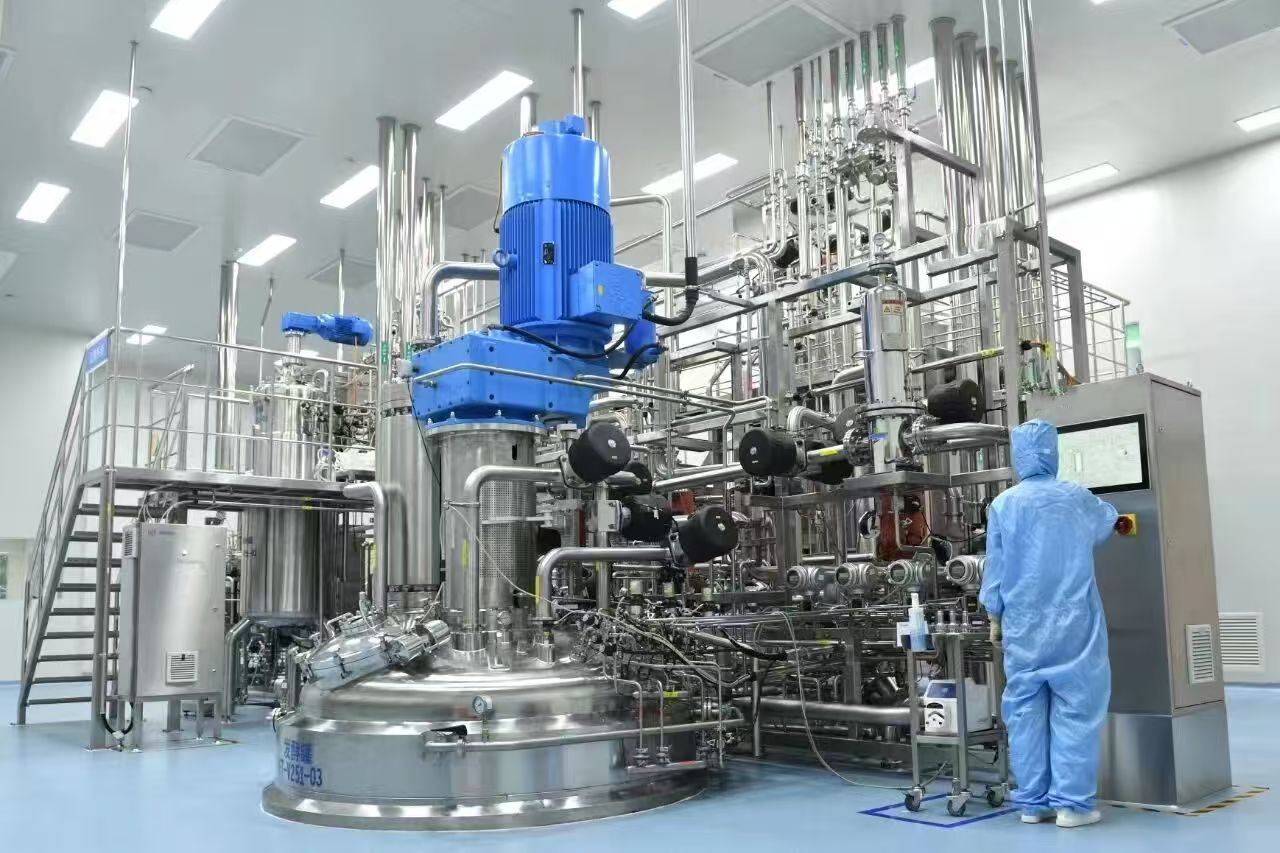
The growing global demand for pharmaceuticals has driven steady expansion of the pharmaceutical equipment market. Public statistics indicate that the global market size of pharmaceutical equipment rose from approximately 146.7 billion yuan in 2015 to 335.7 billion yuan in 2025, representing a compound annual growth rate (CAGR) of 8.32% between 2020 and 2025. China’s pharmaceutical equipment market has outpaced the global average in growth, with its market size projected to increase from 29.9 billion yuan in 2015 to 87.5 billion yuan in 2025, at a CAGR of 10.22% over the 2020–2025 period.
The rapidly expanding market has spurred rising demand for high-efficiency novel bioreactors and deeper insights into industrial-scale bioprocess development. Over the past decades, a wide array of advanced process monitoring technologies have been deployed across the biopharmaceutical industry, enabling simultaneous monitoring and analysis of numerous parameters, as well as predictive guidance for process transfer and scaling-up via modeling. Meanwhile, the International Council for Harmonisation of Technical Requirements for Pharmaceuticals for Human Use (ICH) has incorporated Quality by Design (QbD) into the quality management system. Collectively, these advances have facilitated comprehensive understanding of the critical factors governing bioprocess development, transfer and scaling-up in bioreactors, ultimately helping achieve targeted quality objectives.
Challenges in QbD-Based Bioprocess Development
As defined in ICH Q8, QbD is a systematic approach to pharmaceutical development. It starts with predefined quality targets, and leverages robust scientific principles and quality risk management to enhance understanding of products and manufacturing processes, as well as improve process control.
Bioprocess development, transfer and scaling-up using bioreactors face substantial challenges, attributed to variable cell growth characteristics and the complexity and instability of the culture microenvironment.
Complex and Hard-to-Control Microenvironmental Parameters
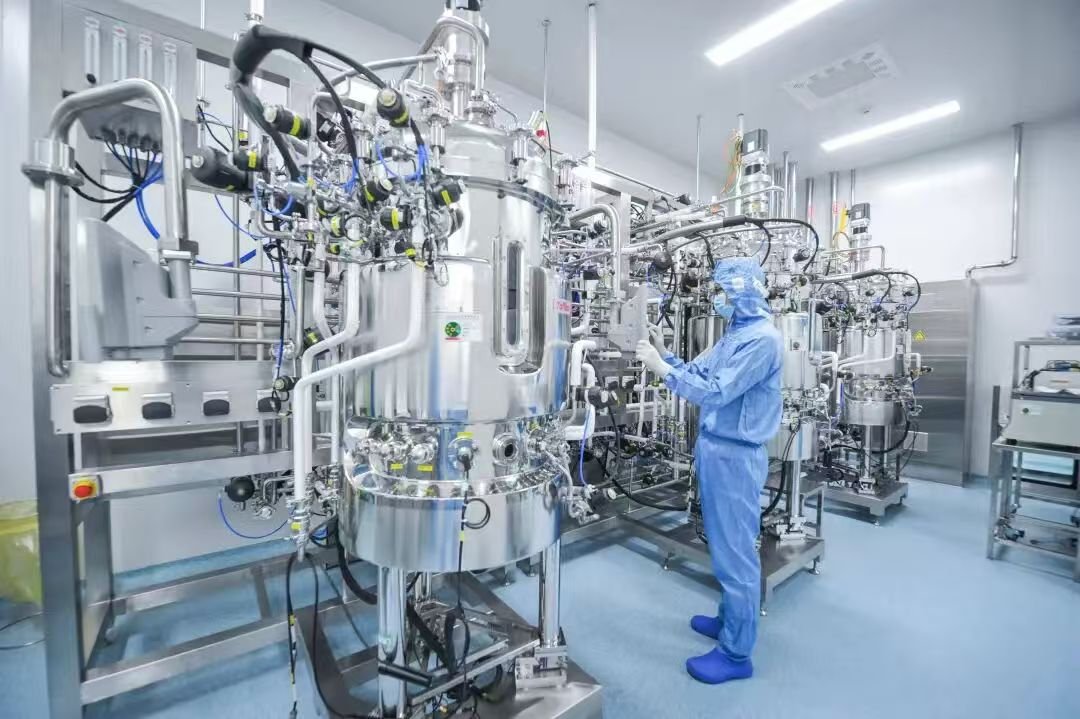
A typical bioreactor consists of an agitation system, gas delivery system, as well as dedicated control units for foam, temperature and pH, alongside cleaning and sterilization subsystems. The inherent complexity of bioreactors leads to inconsistent culture microenvironments across different scales. The microenvironment is governed by multiple interacting parameters, posing major obstacles to process development and making it difficult to maintain process consistency during transfer and scaling-up.
Mixing Efficiency
Bioreactor scale exerts a profound impact on mixing performance, with the dimensionless mixing time serving as a key evaluation index. Mixing efficiency is a core determinant of industrial-scale bioreactor performance. Poor mixing gives rise to concentration gradients of substrates in fed-batch fermentation, dissolved oxygen gradients in aerobic cultivation, as well as temperature and pH gradients throughout the bioreactor. Heterogeneous distribution of these parameters may trigger unpredictable changes in microbial metabolism.
Agitation speed regulates mixing performance and gas-liquid mass transfer, and further affects cell suspension and gas exchange. As bioreactor volume increases during scaling-up, uniform mixing becomes far more challenging, and precise parameter regulation to sustain process consistency is difficult to realize.
Gas-Liquid Mass Transfer
Oxygen has low solubility in fermentation broth and requires continuous supplementation for aerobic cultivation, while the gas-liquid interface imposes limitations on mass transfer capacity. Scale enlargement reduces volumetric power input, which in turn lowers the volumetric liquid-phase mass transfer coefficient. If the overall oxygen transfer rate fails to meet the oxygen consumption of cultured microbes, oxygen-limited metabolism will occur. Maintaining a constant volumetric oxygen transfer coefficient across scales remains a key consideration throughout process scaling-up.
Shear Stress
Shear stress generated by agitation significantly impacts cultured cells and their morphology, which directly influences the productivity of target products. Shear strain, calculated as the product of fluid viscosity and shear rate, is adopted to quantify shear stress within bioreactors. Quantitative assessment of the critical shear stress threshold for shear-sensitive cells is essential for bioreactor design and scaling-up. Trial-and-error scaling-up carries high costs and risks, making shear stress a persistent concern in bioprocess scale translation.
Difficulties in Establishing Accurate Kinetic Models
Changes in microenvironmental parameters profoundly affect cellular metabolism. To evaluate and predict cell status and target product formation rates in scaled-up bioreactors, an accurate kinetic model is required to correlate nutrient concentrations with reaction rates. However, discrepancies between in vitro and in vivo cellular data obtained from bioreactors of different scales compromise model accuracy.
Limitations of Mechanistic Models
Experimental variability and incomplete comprehension of intrinsic bioprocess mechanisms hinder the development of precise kinetic models for bioreactor performance prediction, and undermine the accuracy of process transfer across scales. Mechanistic models are categorized into structured models and unstructured models. Structured models take both intracellular and extracellular factors into account, whereas unstructured models only focus on extracellular metabolites and nutrient concentrations.
Large-scale bioreactors commonly feature heterogeneous zones with uneven distribution of pH, dissolved oxygen, carbon dioxide and nutrients. Dynamic shifts of kinetic parameters caused by scale differences render model parameters derived from lab-scale bioreactors inapplicable to scaled-up systems.
Complicated Parameter Calculation
Kinetic models are highly parameterized and nonlinear. The intricate intracellular metabolic networks limit their predictive capability, necessitating extensive measurement of intracellular and extracellular metabolites and nutrients to estimate unknown parameter variations. Measurement errors inevitably reduce model prediction accuracy. Establishing and optimizing such models requires massive datasets and sophisticated computational methods, which substantially increase operational costs.
Interdependency of Multiple Parameters
Design parameters, process parameters and hydrodynamic characteristics of bioreactors are highly intercorrelated, representing another major bottleneck for process scaling-up. Multiple studies have confirmed that a great number of variables are indirectly linked to agitation settings and jointly affect cell culture performance. Such complex correlations further complicate kinetic modeling and prediction.
Evidently, bioreactor process development, transfer and scaling-up present a host of technical hurdles as vital links in the biotechnology industrial chain. Accordingly, process characterization for bioreactors of varying scales, and the establishment of reliable scale-up and scale-down models while guaranteeing product quality, have become urgent priorities for the industry.
Strategies for Bioreactor Process Development, Transfer and Scaling-Up
Bioprocess scaling-up is a sophisticated and critical stage, where the regulation of microenvironmental parameters and the stability of automatic control systems may become unpredictable. Traditionally, the industry adopted geometric similarity and kinetic similarity as core criteria for the transition from lab-scale development to commercial manufacturing. With technological advances, current mainstream solutions focus on exploring correlations among microenvironmental parameters and building digital prediction model-based automatic control systems.
Real-time monitoring of process parameters is therefore indispensable. Online sensors and probes are deployed to track pH, dissolved oxygen and temperature. Optical sensors, ultrasonic detectors, UV-visible spectroscopy, fluorescence spectroscopy and Raman spectroscopy are applied for real-time quantification of nutrient concentrations. In-situ microscopes with fixed viewing angles are also used to capture cellular images inside bioreactors.
Massive process data acquired via biosensors are analyzed and organized into databases to clarify correlations and trends among process parameters, enabling in-depth understanding of cellular micro-metabolism throughout cultivation.
Combined with cell kinetics and computational fluid dynamics (CFD), a coupled CFD-CRD prediction model is constructed based on the database. Simulation and prediction of microenvironmental parameters facilitate parameter optimization, cut down labor-intensive trial-and-error tests, shorten development cycles and provide solid guidance for process scaling-up.
Research on microenvironmental parameters lays the foundation for bioprocess scaling-up, while automatic control systems serve as the core for practical implementation. A complete automatic control system consists of process models, physical models and program control models. The process model relies on real-time monitoring and timely feedback loops to adjust key microenvironmental parameters and maintain process stability during scaling-up.
General equipment modules within the physical model integrate the CFD-CRD prediction model with the automatic control system. Once parameter deviations are detected, embedded control strategies are activated to adjust process parameters automatically. This automated regulation eliminates human error, enhances operational stability, and improves production efficiency and product quality.
Conclusion
Advancements in cell line engineering and culture medium development have dramatically increased viable cell densities, bringing new challenges to large-scale cell culture. Domestic manufacturers of bioprocess equipment have made remarkable progress in addressing scaling-up challenges through technological innovation, novel equipment development and interdisciplinary collaboration. Debates still persist regarding the key influencing factors for bioreactor scaling-up, calling for further in-depth research and industry exchanges. With continuous technological innovation and accumulated practical experience, bioprocess scaling-up will unlock broad prospects for efficient and stable industrial biomanufacturing.
As a leading process-oriented engineering company, Sino Bioengineering delivers professional bioengineering solutions and comprehensive technical services to clients worldwide.
For more products and solutions: https://sinobioengg.com/category/solution/
For more service: https://sinobioengg.com/category/service/