

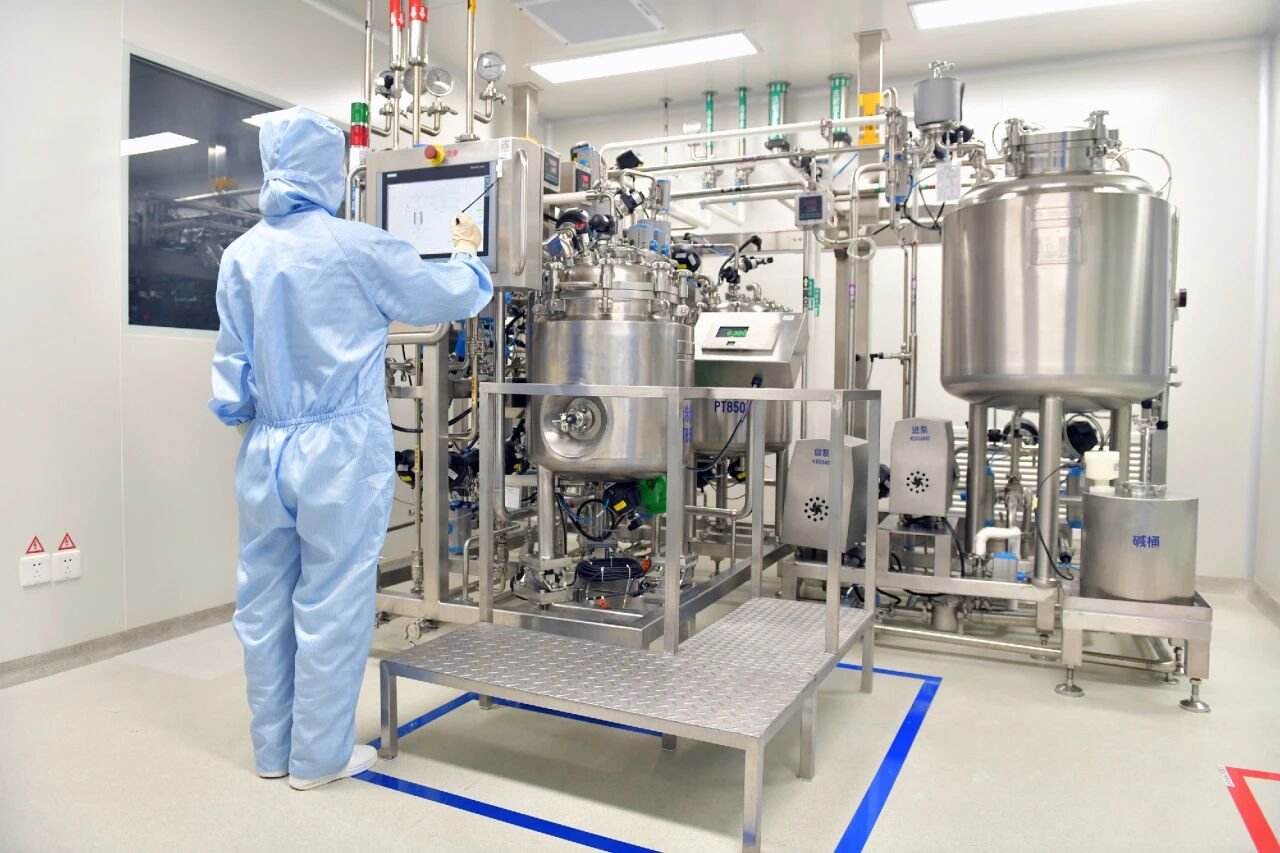
Continuous perfusion cell culture has been well established for many years in the production of biologics. In the past, this production mode was most desirable for labile products that benefit from immediate removal from the cell culture fluid. Recent advancements have made this production mode more attractive for high productivity applications. The discussion will be limited to aspects of cell culture that affect subsequent downstream processing and process design. A critical factor for overall process efficiency is the consistency of product output both with respect to product mass and stream volume per time. Consistent product quality over the duration of continuous production is paramount, as only then can a continuous process integrate both upstream and downstream. If there is meaningful variability in product quality over the production duration, the cell culture product can be collected into a homogeneous pool before further processing, negating most of the benefit of a fully integrated continuous process, or continuous monitoring and control of in-process quality attributes must be established. However, there may still be some benefits in having a combined pool further downstream from the initial harvest stream, when the product is in a more concentrated and stable solution condition.
With consistent product quality, the focus can shift to the operational variabilities of the cell culture process. The main factors affecting consistency of mass and volume of the product stream from the reactor are cell retention and cell density control. A primary objective of the continuous culture production is to retain all viable cells in the reactor for continued growth while simultaneously producing a clarified product stream that can be loaded directly on a capture operation, which for monoclonal antibodies is typically a Protein A capture chromatography step. The choice of cell retention and cell bleed technology has a significant effect on the product stream.
Currently, microfiltration is a very popular choice for cell retention. With this technology, usually substantial membrane fouling is observed such that one membrane cannot support the entire continuous process duration without declines in product sieving. Over time this leads to decreasing product concentration in the membrane permeate and product accumulation in the reactor. If membranes are replaced over the course of the production duration, large swings in product concentration in the permeate stream must be expected; peaks when accumulated product is released through a new membrane and valleys towards the end of use of a fouled membrane. The capture process design needs to decide if the column will be sized for the average cell culture output or if the column has to be able to capture all product, even during short term peak release of accumulated mass.
Other cell retention technologies like inclined settlers, acoustic wave separators, or continuous centrifuges may avoid this particular challenge, but all these technologies are similarly challenged by the high cell densities that are targeted to achieve the high productivities desired.
Another key objective in continuous cell culture is maintaining consistent viable cell density in the production reactor. While the cell culture is targeted to minimize further cell growth and maximize product formation, there is always ongoing cell growth that needs to be counteracted with targeted removal of cells and cell debris. This cell removal is frequently accomplished with a small bleed of culture fluid containing both cells and product. Typically, product in the cell bleed stream is discarded. Even with perfectly consistent cell growth rates there must be an expectation of varying product loss in the bleed stream and consequently added variability in the amount of product harvested for further processing. Additionally, any variability in cell growth can also affect the volumetric output of the reactor unless the perfusion control strategy is designed to compensate for this variability. Usually though the reactor control strategy is focused on maximizing productivity and minimizing media requirements while also maintaining a stable cell culture and product quality.
Continuous Cycling Capture Chromatography
In monoclonal antibody production, the capture step is a very capital intensive operation due to high cost of Protein A resin. Alternative nonaffinity separation technologies like aqueous two-phase extraction or traditional ion-exchange chromatography can be used but have largely not been able to outperform the extremely high selectivity of a Protein A separation and the convenience and efficiency of being able to utilize one unit operation with only minor adjustments for multiple products.
For that reason, recent focus has been on maximizing the productivity of the Protein A operation instead of replacing it outright. There have been numerous studies and reports on the use of continuous cycling operations for a more efficient Protein A chromatography capture step. Columns can be loaded beyond their capacity and any product breakthrough will be captured in a subsequent Protein A column while, simultaneously, a fully loaded column from the previous cycle is washed, eluted, and regenerated for its next cycle. The focus of this discussion is on process design and control aspects of these periodic cycling approaches. Alternative operating modes to packed chromatographic columns based on TFF systems have been proposed to integrate harvest and capture processes into a periodic cycling operation. The general points to consider relating to operational robustness, design for feed variability, and resin and buffer savings are unchanged. While the term “column” is used in the following discussion, general principles will apply to periodic cycling approaches independent of format.
As highlighted in the previous section, there is an expectation of variability in volume and product concentration of the incoming load stream. However, there is also significant variability in the Protein A operation itself that needs to be accounted for. There should be an understanding that resin lot-to-lot variability and variability between column packs could affect the operation of multiple columns operating in concert in a periodic cycling operation. Yet the largest known variability that must be addressed in the design of a continuous chromatography process is the decline in resin capacity and process performance with extended lifetime use. Since increasing the number of resin reuses favorably counterbalances the high costs of Protein A resin, there must be robust controls and process understanding of process performance throughout the resin’s lifetime. Similar to microfiltration as discussed in the previous section, the peaks and valleys over the lifecycle must be comprehensively understood and accounted for in the process design.
In traditional batch operation, the resin is loaded to a target level that has a safety factor from the real known binding capacity. This safety factor is chosen in combination with the maximum allowable resin use such that the performance decline over extended resin use is acceptable. With periodic column cycling operations, the objective is to fully load one column before targeting the load stream to the next column in the sequence. This has multiple implications on process design and control. It has been shown that binding capacity is not necessarily a good measure of resin performance. Recoverable product can decline faster with extended use than a decrease in binding capacity due to increasing product loss during postload washes. Increasing wash losses would be detrimental to the productivity of the periodic column cycling process design. In most cases, lower process yield will outweigh any benefits of resin cost savings. This problem can be overcome by collecting the product containing wash stream on another column in the cycling design, but it will negatively affect process efficiency by extending the nonloading duration for each column. There are potential implications to the removal of viruses and other impurities that must be considered in cases where the wash fraction is loaded onto a protein A column.
Another aspect of declining resin performance is that the system must be designed for resin performance at the last load cycle. The implications are manifold: If the system is designed to accommodate resin performance at the last use cycle and variabilities expected from the upstream process, the system must be significantly oversized for early resin use cycles and will only rarely operate at its capacity. During early resin use cycles the load duration can be significantly longer than required for parallel column turnaround of a nonloading column leading to columns waiting idle. Therefore, a design choice must be made between two fundamental objectives: robust simplicity or minimization of buffer use.
The first process design objective is having the simplest robust operation which always targets a nominal load volume. This allows for the simplest process control with predefined and never changing process operation. The consequence of never actually overloading columns is that the full benefits of resin and buffer saving cannot be achieved and the only benefit is in the continuous load stream integrated with the cell culture process.
The second process design objective is to always maximize column loading and in turn maximize resin and buffer savings. This requires some form of product detection in the effluent of the first column in the periodic cycling design. A solution utilizing multiple UV detectors with fully synchronized calibration has been proposed. This approach requires more sophisticated operations planning and scheduling as it leads to varying load durations, buffer demand, cycle numbers and elution pools per day. When designing the subsequent process operations, variable product concentration over the reuse lifetime of the Protein A resin must be accounted for. Due to changes in resin capacity, the pool concentration from a column’s first cycle will likely be higher than the pool concentration from a column’s last cycle. Additionally, the aforementioned faster decline in recoverable capacity compared to binding capacity over the lifetime of the resin highlights the need for careful evaluation of step yields when using this approach to load to the maximum binding capacity.
For both approaches, there must be awareness that levels of host cell protein impurities have the potential to be negatively affected by overloading Protein A capture columns. In the first case, while maintaining the same load effectively the column only gets overloaded late in the resin use cycles. In the second case, the resin is loaded to its capacity in each cycle and there is little available information on how this operating mode affects product purity. In both cases this has to overcome by comprehensive characterization work and by designing sufficient redundancy and robustness in subsequent unit operations to ensure overall process robustness and reliability.
Alternative operations have proposed the use of Protein A membrane adsorbers or monoliths for their better flow properties. This would give an advantage in the continuous cycling operation where low pressure drop and high flow rates are achievable and with favorable product yield. However, in most cases either the binding capacities or the wash out characteristics are insufficient. Poor wash-out characteristics when changing from one buffer to the next leads to increases in buffer volume requirements that are detrimental to large scale production. Similar considerations apply to proposed operations of suspended affinity resin in tangential flow operations. Also, there, the buffer volumes required only allow for small scale operations.
Virus Inactivation
In most current biological therapeutic protein purification processes, there is a batch virus inactivation step. These batch inactivation steps are comprised of a low pH hold or a solvent/detergent treatment of the process stream for a defined incubation duration and temperature. Virus inactivation by low pH has proven to be an extremely robust virus clearance strategy. The low pH treatment is so robust and reliable that an ASTM standard has been developed that ensures at least 5 logs of xMuLV clearance. To preserve the history and experience with this step, the simplest implementation for continuous manufacturing is to duplicate the inactivation equipment for two parallel operations. The tanks should be sized sufficiently to allow collection of an incoming process stream in one tank while the parallel tank performs all pH adjustment steps, including the hold duration, the feeding of the subsequent operation, and tank turnaround. This approach would not raise any regulatory concerns as it is robust and well defined. The duplicate tanks would each be significantly smaller than a tank utilized in typical batch operation. This semicontinuous approach is merely a duplication of traditional batch operations.
Several alternative approaches to continuous virus inactivation have been proposed that have not yet been proven at manufacturing scale or tested with regulatory agencies. These approaches will be briefly discussed.
One general approach is centered on combining the inactivation treatment with the capture column operation. Exposing the product to a low pH/high salt condition for a similar duration to traditional batch low pH inactivation while bound to the protein A resin provides clearance results comparable to the traditional approach. This coupled operation can be implemented into the periodic column cycling capture operation. The negative of including virus inactivation into the column cycling operation is the additional 1–2 h of column hold duration required. Longer hold times during turnaround can significantly lower the productivity of the Protein A operation, unless the load concentration of the capture step is sufficiently low, making the load duration suitably long for coupling viral inactivation with the periodic capture operation.
Therefore, the objective for this approach must focus on minimizing the required hold duration for virus inactivation to maintain high productivity of the combined operations.
An alternative approach is to develop a true flow through reactor with control of a minimum residence time (MRT) at the target low pH or solvent detergent exposure condition. Coiled flow inverter designs have been shown by modeling as near plug-flow reactors, ensuring well defined MRT. The theoretical understanding of this approach still needs to be validated through virus clearance studies. Ensuring sufficiently long exposure duration to compensate for uncertainties about MRT will define the overall required piping length of the reactor.
A methodology investigated for many years for its virus inactivation performance is ultraviolet-C (UV-C) irradiation. This method is used in continuous mode in other applications but has not been widely used in biologic manufacturing due to the risk of product damage. Limitations of penetration depth have largely been overcome using spiral tube continuous reactors. Product specific studies will be required to understand and define the target UV-C exposure to ensure adequate virus inactivation while minimizing negative effects on product quality.
Continuous Polishing Chromatography
One or two polishing steps are typically performed to ensure robustness and control of removal of product and host cell related impurities. The traditional polishing steps are mostly ion-exchange or hydrophobic interaction chromatography. More recently, mixed mode steps combining both ion-exchange and hydrophobic interactions in single unit operations have become increasingly widespread. For the development of a continuous polishing operation the most important aspect is not necessarily the mode of chromatography, but rather the mode of operation: bind-and-elute (B&E) or flow-through (FT).
It is possible for B&E operations to be implemented in continuous mode, but they are much more difficult to implement than FT operations. B&E operations with step elution of the product can be implemented analogous to the Protein A operations discussed above, but the expectation of a significantly higher load concentration at this point of the process, due to the large concentration effect over the Protein A capture operation, makes the design much less productive. Load durations are likely very short and do not provide sufficient column turnaround time for periodic cycling. There are two approaches which could enable continuous operation: (1) an additional column in the turnaround phase to allow for faster readiness of the next load column, or (2) increasing the column diameter and slowing the load flow rate to provide sufficient turnaround time. Both approaches affect productivity of the operation negatively.
For B&E operations that require a linear gradient elution, a sophisticated multicolumn, countercurrent solvent gradient purification (MCSGP) approach has been developed [40,41]. Unfortunately, the aforementioned limitations of turnaround time are further amplified for this design. The linear gradient portion of the MCSGP process cycle adds even more turnaround time. However, the same two operational mitigations mentioned above can be applied. One attractive aspect of the MCSGP approach is the ability to reprocess product containing side fractions that did not satisfy product purity requirements. With that, the MCSGP method can improve the yield versus purity relationship, i.e., enable higher yield for a given target purity than what is possible in batch operation. On the other hand, applying this aspect of the technology will make the operation almost certainly not available for the overall virus clearance claim of the process. It will be practically impossible to perform an analogous continuous small-scale operation required for virus clearance validation.
FT operations are strongly preferred for implementation as a polishing step in continuous operation. The comparatively long load times and short turnaround times allow much simpler designs with two alternating columns. One column will be loaded to its normal load target while the second column is turned around for the next use. The FT operation also creates not just a continuous load flow but, with only minor interruptions, a continuous product output stream with constant concentration. Since the development of a continuous FT operation is identical to batch operation, FT process characterization and viral clearance validation can be performed with a small-scale batch study, utilizing a single column.
Virus Filtration
Filtration based virus clearance is a critical step for any biological therapeutic manufacturing process. In principle, they must be implemented very similarly to FT chromatography designs. These filtration steps are limited by fouling and load volumes that are determined in the small-scale validation studies. The difference versus the FT chromatography designs is that the filters are not regenerated and recycled, but swapped out for new units after each use. This causes the operation to be inherently less automated, although having oversized filters lessens the need for manual interaction. For a continuous
For continuous FT operations, alternative adsorber formats like membrane devices or monoliths can be attractive as they allow for faster flow rate. High binding capacity is usually not required in these cases as the membrane adsorbers bind low concentration impurities.
operation, typically the flow through of the filter will be maintained at a constant rate until a certain pressure threshold is reached. At this point, the flow rate must be lowered to maintain the pressure below the operating limit or flow has to be diverted to a parallel filter while the spent filter has to be changed. The frequency of change out could be minimized by using additional filtration area. The main equipment design challenge is the preservation of a closed system. Environmental controls post virus filtration are typically very stringent and the repeated connection and disconnection of new filter units poses a significant risk to process integrity. Operational design must be focused on these aspects of process integrity, as well as operational and procedural controls.
Continuous Concentration and Formulation
In most biologics manufacturing processes, the purified product is formulated to its final concentration and into its final excipients by a TFF operation called ultrafiltration and diafiltration (UF/DF). In batch operation, the TFF process typically starts with a concentration phase (UF), where the product is retained and buffer passes the membrane as permeate. This is followed by a buffer exchange where the product concentration is held constant and excipient concentrations are defined in a DF step. This is finally followed by an UF overconcentration operation to allow product recovery from the system at the target product concentration.
Implementing a continuous multistage TFF operation is possible with a series of steps analogous to single-pass tangential flow filtration (SPTFF) and is well established technology. Instead of passing the product multiple times through one filter cassette in batch operation, the product is passed once through a series of filter cassettes. To achieve buffer exchange continuous cascade DF can be employed; the concentrated product stream exiting each filter cassette of the series can be combined with formulation buffer. There is significantly greater complexity in a continuous TFF than in a batch design due to the multiple membrane cassettes, which each require individual pumps, flow meters, pressure sensors, and pressure control valves. Additionally, each stage of the DF phase needs capability to dose formulation buffer at the right ratio.
An additional design consideration for continuous TFF will be the consumption requirements of formulation buffer. If every membrane stage is fed with fresh buffer, buffer consumption of a continuous system will be considerably larger than for batch operation. Frequently, formulation buffer costs contribute sizably to overall manufacturing cost due to the high grade of excipient components. Therefore, this is a disadvantage of the continuous design that must be mitigated. To maintain buffer consumption comparable to batch operation, the system has to be designed in a counter current mode, where only the last membrane stage receives fresh formulation buffer and all other stages receive the permeate of the next stage. This lowers the efficiency of buffer exchange and will increase the number of membrane stages. Therefore, system complexity and buffer consumption need to be balanced to satisfy the operational objectives of continuous processing.
As a leading process-oriented engineering company, Sino Bioengineering delivers professional bioengineering solutions and comprehensive technical services to clients worldwide.
For more products and solutions: https://sinobioengg.com/category/solution/
For more service: https://sinobioengg.com/category/service/