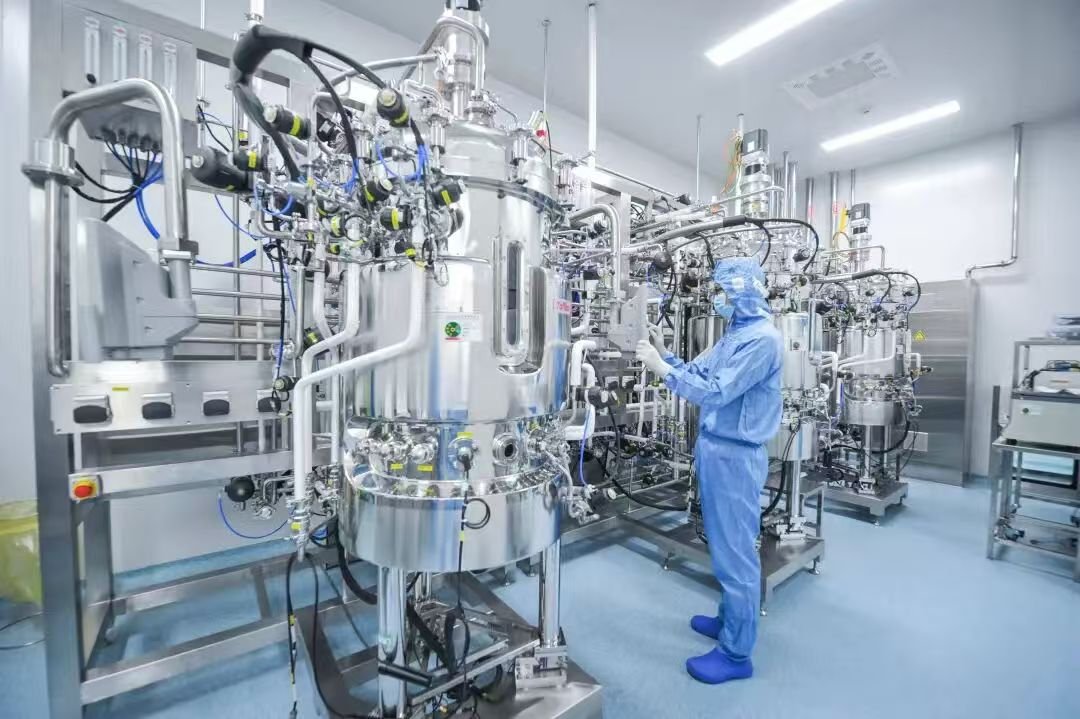
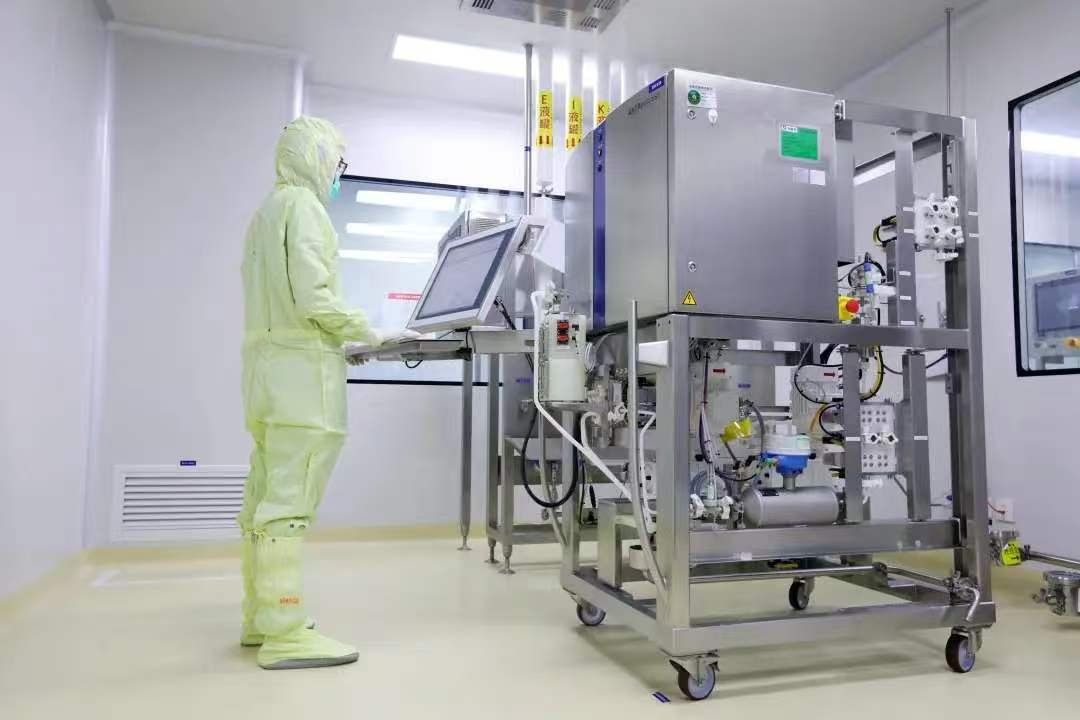
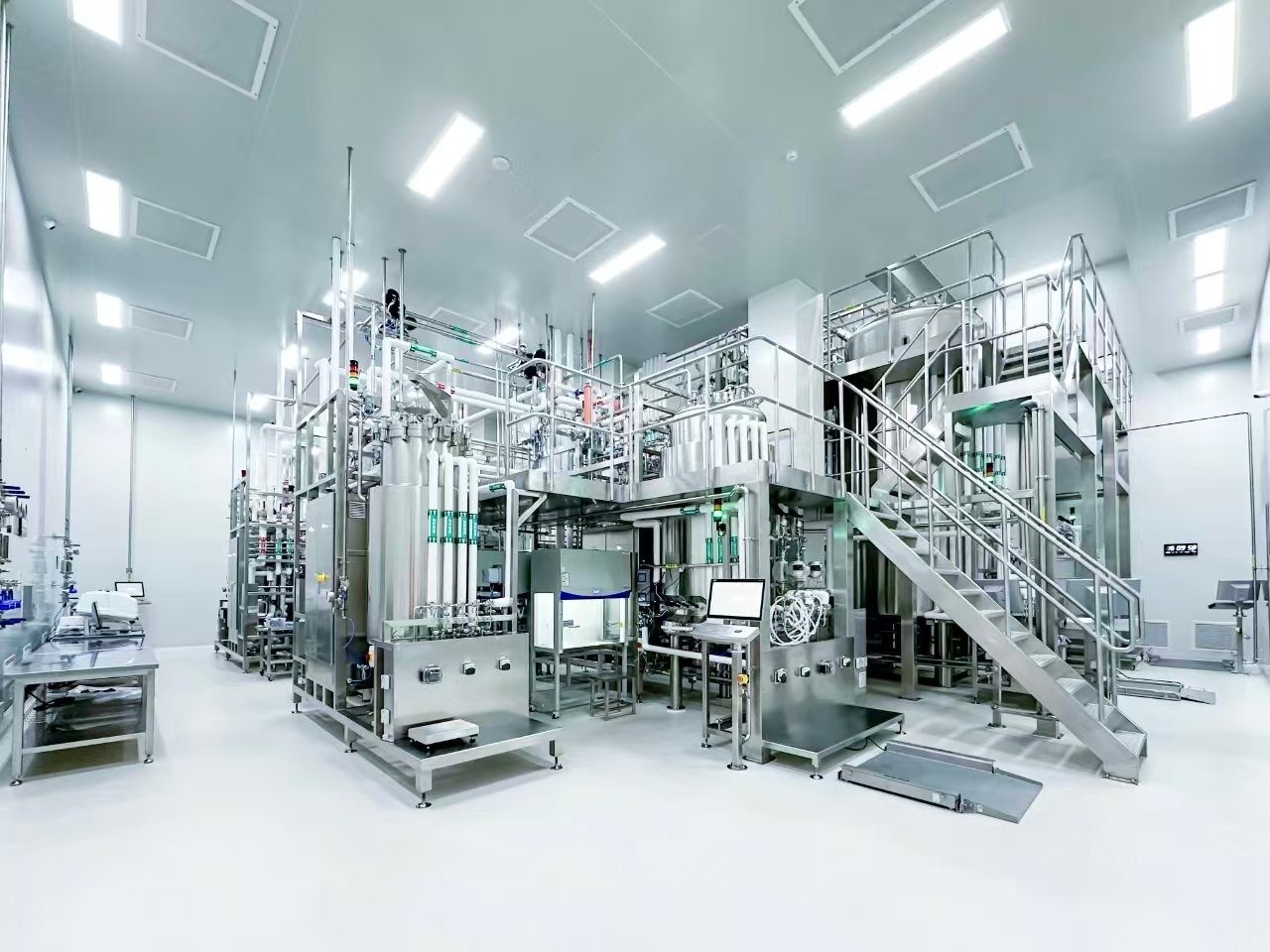
Many factors influence the choice of expression system for production of recombinant proteins. These include the complexity of the target protein, the intended use of the product, and whether posttranslational modifications are needed, and often, the impacts on the scale and complexity of downstream operations. Although the production of functional recombinant proteins in E. coli is frequently challenging, it is still the most commonly used microorganism for the production of nonglycosylated proteins. This is due to its rapid growth rate, ease of process scale-up, advances in genetic modifications and potential for high-level protein expression.
Many heterologous proteins expressed in E. coli accumulate in the cytoplasm as IBs. High yield production, and protection from protease activities are advantages associated with IB formation. The separation of IB material from the rest of the cell proteins is relatively easy and offers an advantage for purification. However, the refolding process can be challenging to develop. An alternative route to obtaining folded proteins from E. coli is to secrete them into the periplasmic space or express them in mutant E. coli strains that allow formation of disulfide bonds in the cytoplasm. Secretion to the periplasm offers several advantages. Its oxidizing environment facilitates the folding of proteins. In addition, cleavage of the signal peptide during secretion is likely to yield the authentic N-terminus of the protein. In contrast to the cytoplasm, the periplasm contains fewer host proteins. This can provide an effective concentration of the recombinant protein thereby leading to a simplified purification process. However, productivity is often lower compared to the IB expression.
Despite many advances in understanding the secretory pathways of E. coli for production of recombinant proteins, this system presents many challenges for industrial production processes. As will be demonstrated in this chapter, cell line development and culture process optimization are critical for a high-productivity, high-yielding production process. They also define the scope and set the goals for downstream process development.
The production cost ($/g) of both E. coli and CHO (Chinese Hamster Ovary Cells, another popular production system) is highly dependent upon a number of factors. These include the capital cost of the facility, the operating costs of the facility (including release and QA), as well as the raw material and resin costs. The capital cost of the facility will be fixed, the operating and resin costs are semivariable (some dependency upon the number of batches being run), while the raw material (RM) costs are completely variable. Together these (and a few other smaller costs) generate the numerator. Note that while the acquisition costs for the resins used for mammalian purification are generally significantly higher than those for microbial purification (especially protein A), the recyclability of this resin is very good, and when per-batch costs amortized over the lifetime of the resin, these costs can become very close.
The denominator, the output of the facility, will depend upon the bottleneck in the facility. Usually that is deliberately chosen to be the bioreactor, but sometimes can become the downstream (in cases where a new process is brought into an existing facility). Note that to achieve the downstream cycle time listed above some downstream unit operations will likely need to be occurring at the same time. With the bioreactor as the bottleneck, the efficient facility will attempt to match upstream and downstream cycle times by having the appropriate multiples of bioreactors per downstream (having 4–6 bioreactors per downstream is common for mammalian commercial facilities, while microbial facilities are more often built with a 2–1 ratio). This means that even though the mammalian fermentation time is much longer, the g/day coming out of the facility can be close to equal (if yield/batch is equivalent).
Scale is the other critical factor in facility throughput. Given the infrastructure required around a bioprocessing facility accounts for the majority of the capital cost of a facility, going with larger bioreactors means that ultimate cost/gram could be reduced, but only if that capacity can actually be utilized. If volumes do not materialize, and there is significant idle capacity in the facility, each gram of product that is produced has to carry the cost of the underutilized capital.
Scale also influences the relative weight of these costs in the overall cost calculation. At small scale the capital and operating costs tend to dominate, whereas in larger, more efficient facilities, the RM costs can become a significant (30%) component, especially if the process requires any unusual materials or resins with poor recyclability.
A typical downstream process for a recombinant protein involves isolation and solubilizatoin of IBs, refolding, and purification. After harvest, cell lysis is often achieved by mechanical means such as high pressure homogenization. Subsequently, the IBs can be isolated from soluble cellular components, host cell impurities, membrane vesicles, and cell-wall fragments based on size and density differences. Centrifugation is commonly employed for IB recovery. As an alternative, cross-flow filtration has been used. To further remove contaminants, the crude IBs may be subjected to multiple washes, which involve re-suspending the IBs into wash buffer and then recovering them by centrifugation (or alternative methods). The wash buffer may contain salt, chelating reagent, low concentrations of denaturant, surfactant, additives or the combination thereof It is known from both the literature and our in-house experiences, that the formation and the “quality” (size and density) of IBs, which are comprised predominantly of the misfolded, aggregated protein being expressed, are influenced by the properties of the protein, the expression system and the culture process. Characteristics of the IBs and the level of associated impurities have direct impact on the IB wash protocol, recovery yield, and may impact refolding or chromatography resin capacity and hence must be taken into account when designing the downstream operations.
The refolding protocol is well established and successfully scaled for the production of a number of recombinant proteins including insulin and bovine growth hormone. Generally, in vitro refolding of a disulfide containing protein is achieved by solubilization of the IBs with high concentration of chaotrope (typically urea and guanidine) and complete reduction of the protein disulfide bonds, followed by dilution into a refolding buffer. The dilution reduces chaotrope concentration to allow conformational refolding. The refolding buffer, which typically contains redox reagents [e.g., reduced and oxidized glutathione, cysteine/cystine, dithiothreitol (DTT)], provides the appropriate pH and redox condition for disulfide bond formation and reshuffling. Various chaperones and chemical additives such as arginine and sucrose have also been used to supress aggregation and enhance the refolding efficiency and yield. In laboratory settings, dialysis-based and dilution-based refolding protocols have been used extensively to elucidate refolding pathways and study refolding kinetics. Chromatography column and microfluidic chips have also been utilized to enhance refolding efficiency. The in vitro refolding efficiency is dictated by both the intrinsic properties of the protein and the refolding conditions. Optimizing protein concentration, chaotrope concentration, redox conditions, pH, temperature, and adding refolding modulators can significantly improve the refolding efficiency and yield. Optimal refolding conditions are often protein specific, however, acceptable yields can usually be achieved using established general protocols.
Product capture can be before or after refolding, depending on the protein of interest. At least one chromatography polishing step is usually needed to achieve the purity target.
As a leading process-oriented engineering company, Sino Bioengineering delivers professional bioengineering solutions and comprehensive technical services to clients worldwide.
For more products and solutions: https://sinobioengg.com/category/solution/
For more service: https://sinobioengg.com/category/service/