

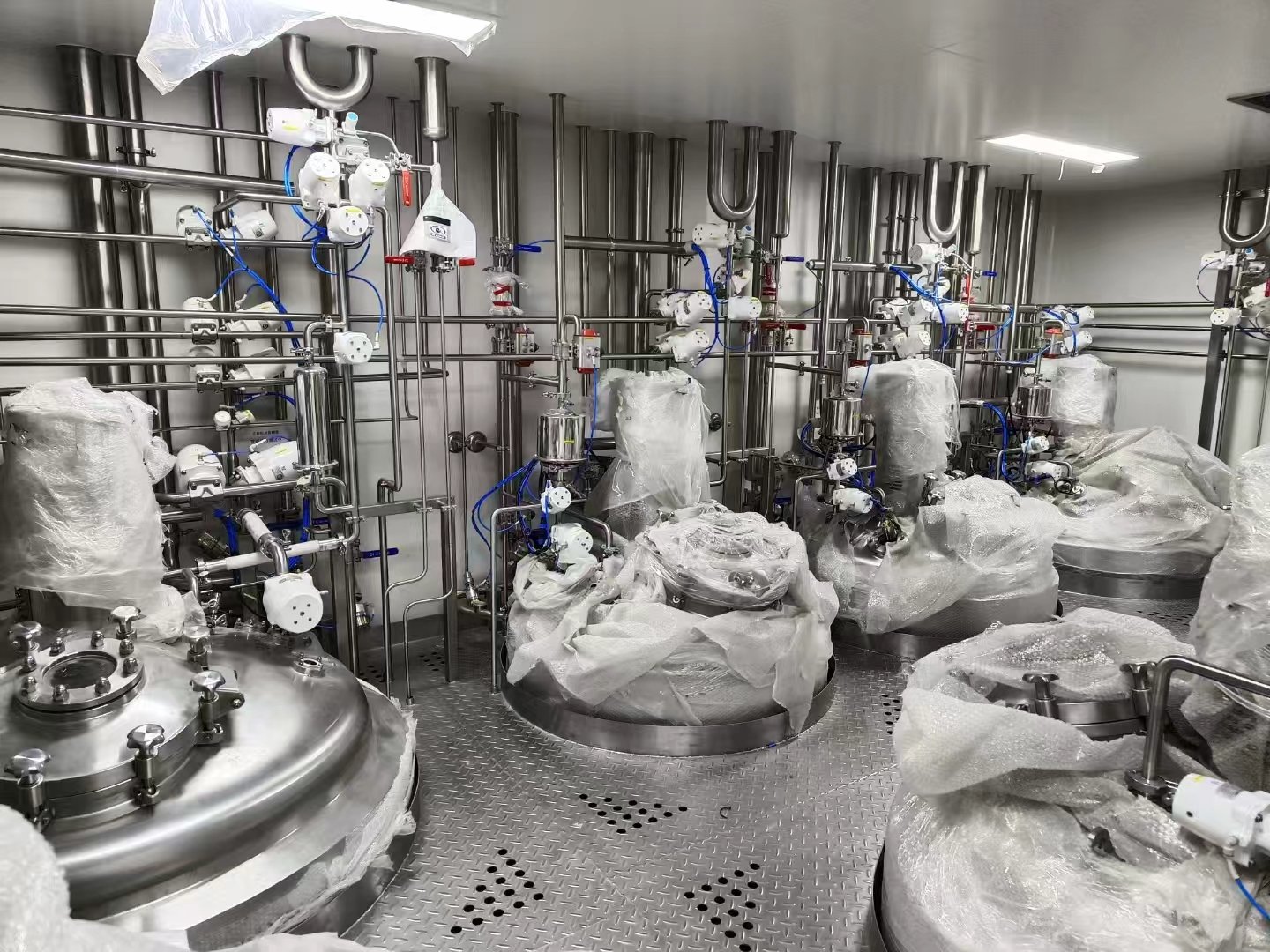
In the competitive landscape of antibody drug manufacturing, titer and quality are the dual pillars determining ultimate success. As the core production stage, mammalian cell culture acts as a precise conductor, profoundly influencing these two critical metrics. This paper systematically investigates two mainstream culture modes — Perfusion Culture and Fed-Batch Culture — together with three key modulation strategies: Temperature Shift, Uridine supplementation, and Trehalose supplementation. We elaborate on how these approaches dictate antibody production, aggregation status, and charge heterogeneity from an intracellular mechanistic perspective.
Perfusion vs. Fed-Batch: Paradigm Shift from High Titer to High Quality
Conventionally, Fed-Batch culture is widely adopted owing to its simple operation and controllable cost. Nevertheless, when manufacturing structurally complex, aggregation-prone molecules such as Bispecific Antibodies (BisAb), perfusion culture demonstrates revolutionary advantages in quality control.
Key Finding
A comprehensive study published in 2020 revealed the underlying mechanism: compared with Fed-Batch culture, perfusion culture significantly reduces aggregate levels of bispecific antibodies. This effect does not arise from simple physical dilution, but from fundamental improvements to the intracellular microenvironment induced by perfusion processing.
Intracellular Mechanism Elaboration: How Perfusion Achieves Quality Improvement
1. Alleviation of Mitochondrial Dysfunction and Oxidative Stress
In Fed-Batch culture, high cell-specific productivity imposes severe metabolic stress on host cells, triggering mitochondrial dysfunction and excessive reactive oxygen species (ROS) generation.
Perfusion culture continuously supplies fresh medium and removes metabolic waste, maintaining a healthier cellular physiological state, reducing mitochondrial burden, and thereby substantially decreasing ROS production.
2. Improvement of Intracellular Redox Homeostasis
Excessive ROS oxidizes glutathione, the primary intracellular antioxidant, converting reduced glutathione (GSH) into oxidized glutathione (GSSG), resulting in an oxidized intracellular environment.
Studies show that perfusion culture maintains a markedly higher GSH/GSSG ratio (~3-fold higher than Fed-Batch), representing a healthier, more reductive intracellular environment. This is essential for correct disulfide bond formation within antibody molecules.
3. Attenuation of Endoplasmic Reticulum (ER) Stress
Antibody folding and assembly occur in the ER. High productivity and oxidative stress induce ER stress and activate the Unfolded Protein Response (UPR).
Persistent ER stress in Fed-Batch culture causes misfolding and disulfide bond mismatching, ultimately leading to aggregate formation. By optimizing overall cellular status, perfusion culture effectively mitigates ER stress and establishes an optimal environment for proper antibody folding [1].
By establishing a low-stress cellular environment, perfusion culture eliminates the primary intracellular drivers of antibody aggregation at the source, achieving superior product quality. Although perfusion yields lower specific productivity, it achieves higher cumulative titer and dramatically reduced harmful aggregates by sustaining elevated viable cell density and viability.
Temperature Shift: A Precision Regulator for Charge Heterogeneity
Besides aggregates, charge heterogeneity is another critical quality attribute (CQA). Elevated acidic charge variants are associated with altered efficacy and increased immunogenicity risks.
Key Finding
A 2015 study employed Plackett-Burman screening design to evaluate eight critical process parameters (including pH, dissolved oxygen, seeding density, etc.), and identified temperature shift as the most influential factor affecting acidic charge variant levels.
Effects of Temperature Downshift
1. Significant reduction in acidic variants: Lowering culture temperature from 37 °C to 33 °C reduces acidic charge variant content by approximately 46% (from 40% to 22%).
2. Critical timing effect: Earlier temperature downshift (e.g., from day 5 to day 3) further enhances acidic variant reduction.
3. Titer-quality trade-off: While improving quality, temperature downshift generally reduces antibody titer, representing the classic titer-quality trade-off in bioprocess development.
Proposed Mechanism
Temperature reduction slows cellular metabolism and protein translation rates, providing sufficient time for proper protein folding and post-translational modifications. This reduces deleterious modifications responsible for acidic variants, including deamidation and glycation.
Uridine Supplementation: A Metabolic Regulator Simultaneously Enhancing Titer and Modulating Quality
Conventionally, Fed-Batch culture is widely adopted owing to its simple operation and controllable cost. Nevertheless, when manufacturing structurally complex, aggregation-prone molecules such as Bispecific Antibodies (BisAb), perfusion culture demonstrates revolutionary advantages in quality control.
Key Finding
Supplementation of uridine (total concentration 6 mM) in Fed-Batch culture achieves the following:
1. Significantly promotes cell growth and maintains high viability: Integral Viable Cell Concentration (IVCC) increases by 50%, and final antibody titer improves by 64%.
2. Dramatically reshapes charge variant distribution: Acidic variants decrease markedly from 28.9% to 20.0%, while basic variants increase from 22.6% to 28.7%.
Mechanism of Action
Uridine reduces acidic variants via two primary pathways:
1. Reduced aggregate formation: Aggregate levels decrease by 48%.
2. Reduced glycation: Antibody glycation levels decline from 25.0% to 19.3%.
Trade-offs and Optimization Opportunities
Despite outstanding benefits in cell growth, titer improvement and acidic variant reduction, uridine induces elevated basic variants. Mechanistic studies confirm this increase does not originate from C-terminal lysine residues (lysine variants are actually decreased), but from other basic modifications such as proline amidation. Nevertheless, optimization of uridine dosage and addition timing (e.g., late-stage supplementation) can retain its advantages while mitigating excessive basic variant formation.
Trehalose Supplementation: A Molecular Guardian Against Antibody Aggregation
As a well-characterized chemical chaperone and protein stabilizer, trehalose has been proven to directly and effectively inhibit antibody aggregation during cell culture.
Key Finding
Supplementation of 150 mM trehalose into CHO cell culture medium for bispecific antibody expression results in:
1. Approximately two-thirds reduction in high-molecular-weight (HMW) aggregate content;
2. Improved cell-specific productivity and overall volumetric antibody titer.
Mechanism Elaboration
1. Direct aggregation inhibition: Kinetic analysis demonstrates trehalose does not affect aggregation nucleation, but markedly delays subsequent spontaneous polymerization and aggregate growth. Via its amphipathic properties, trehalose binds exposed hydrophobic regions of antibody molecules, suppressing intermolecular interactions responsible for large aggregates with non-native β-sheet structures.
2. Potential transcriptional regulation: Trehalose increases target antibody mRNA levels by 6-fold, which underlies its titer-enhancing effect.
Implementation Considerations
Trehalose supplementation increases medium osmolarity, requiring gradual cellular adaptation to avoid osmotic shock. Published research confirms cells can be successfully adapted to grow and produce antibody in medium containing 150 mM trehalose via stepwise acclimation.