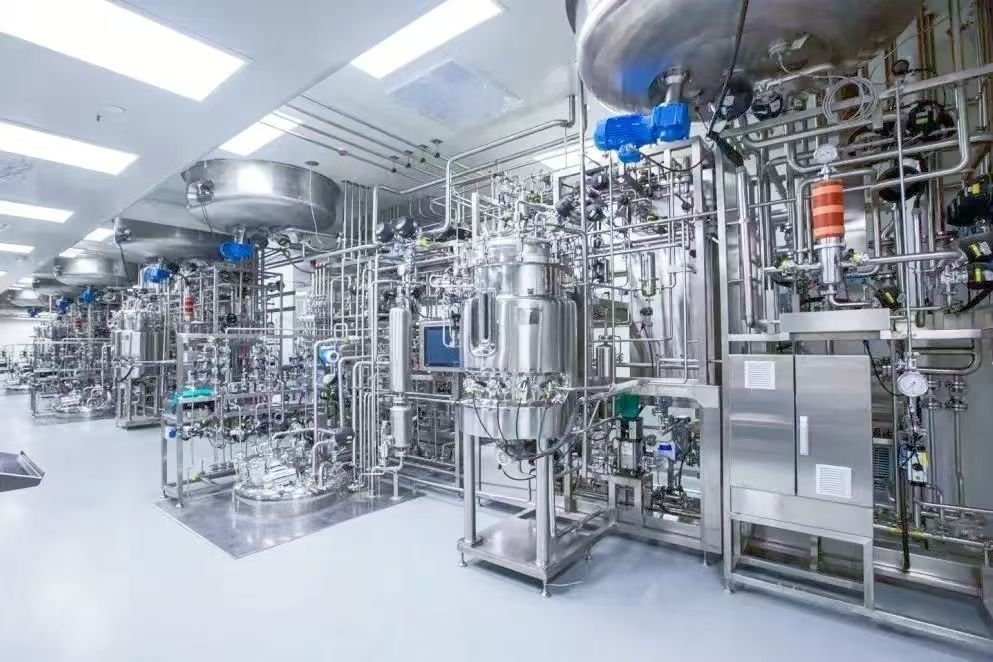
Global biopharma groups commonly deploy distributed production sites across multiple regions to expand manufacturing capacity, shorten delivery cycles and meet local regulatory requirements. However, one pervasive pain point emerges gradually: each facility adopts independent, disparate automation hardware, control software and proprietary recipe management systems for bioreactor upstream workflows.
Inconsistent programming logic, parameter definition rules and execution sequences inevitably trigger obvious batch-to-batch deviations between factories, even when theoretically identical cell lines, culture media and seed expansion protocols are adopted. Such inconsistencies bring tremendous challenges to global technology transfer, unified quality control and multi-site regulatory filing. This article analyzes the risks of fragmented site-level automation systems and introduces how Sino Bioengineering deploys unified ISA-88 compliant automation architecture to realize full bioprocess recipe standardization across geographically dispersed production bases.
1. Core Risks Brought by Non-Standardized Disparate Automation Platforms
Many multinational biotech firms inherit different automation vendors and customized local control programs during capacity expansion, merger and acquisition or phased plant construction. These isolated control systems operate with independent recipe structures and execution logics, creating multiple tangible drawbacks for global biomanufacturing operations.
First, identical written process SOPs cannot be executed identically on different bioreactor lines. Minor gaps in PID parameter tuning, feeding trigger thresholds, DO/pH cascade control strategies and agitation segment curves will alter actual culture environments, resulting in fluctuating cell peak density, protein titre and product quality attributes among sites. Global quality alignment becomes extremely difficult.
Second, technology transfer workload surges sharply. Process development teams must rework, rewrite and revalidate recipes separately for each facility rather than deploying a single master recipe package directly. The whole scale-up and site replication cycle is greatly prolonged, delaying clinical material supply and commercial launch schedules.
Third, centralized batch data aggregation and remote monitoring become unfeasible. Heterogeneous data formats, tag naming conventions and log structures cannot be seamlessly integrated into group-level MES or LIMS platforms, blocking unified production dashboard visualization and global production scheduling optimization.
Fourth, multi-site regulatory submission and inspection face extra obstacles. Each factory has unique audit trail generation rules and electronic signature frameworks, requiring separate validation documents and compliance packages, which substantially raises global QA and regulatory operating costs.
2. Standardized Solution: Global Unified ISA-88 Compliant Automation Architecture
ISA-88 (S88) batch control standard defines modular equipment models, unit procedure, operation and phase hierarchical structures for batch manufacturing, offering a universal framework for bioprocess recipe portability. Sino Bioengineering delivers consistent ISA-88 aligned automation deployment for all bioreactor production lines across the customer’s global facility network, breaking automation silos and realizing one-master-recipe multi-site synchronous rollout.
2.1 Hierarchical Modular Recipe Structure Consistent Across All Sites
Following the S88 layered architecture, every bioprocess is split into fixed standardized layers: recipe header, unit procedure, operation and elemental phase. Reusable phases such as vessel pre-check, inoculation, temperature ramp-up, pH closed-loop regulation, fed-batch feeding strategy, gas blending control and harvest sequence are pre-programmed, validated and locked as standard library modules.
All facilities share exactly the same phase logic, parameter mapping rules and equipment tag definitions. Process engineers compile a single master master recipe at the headquarters R&D center; the recipe can be exported and directly imported into bioreactor control systems at any overseas or domestic manufacturing plant without secondary programming modification.
2.2 Unified Automation Hardware & Software Deployment Framework
We implement uniform PLC, HMI, sensor signal configuration and I/O mapping standards site-wide, eliminating proprietary custom codes unique to individual factories. Even for existing legacy bioreactor lines at older facilities, we conduct standardized control system retrofitting to align with the global S88 framework.
Centralized recipe version management is enabled: any authorized revision to the master recipe is synchronized to all connected production lines via the plant network, avoiding inconsistent local manual edits and unauthorized parameter changes. Version tracking and change logs are automatically archived for QA review.
2.3 Consistent Data Integrity & Audit Trail Rules Globally
All control nodes adopt identical data recording frequency, timestamp format, electronic signature mechanism and batch report templates complying with 21 CFR Part 11. Batch records generated at different sites possess fully comparable structures, which can be automatically summarized into group-level unified batch databases, supporting cross-factory performance benchmarking, yield comparison and deviation analysis.
3. Tangible Operational & Compliance Benefits
1.Eliminate inter-factory batch variability: Identical recipe execution logic ensures consistent cell culture environment and product quality across geographically separated facilities, realizing unified global quality specifications.
2.Dramatically accelerate technology transfer: A single validated master recipe can be deployed to new production lines within days, cutting repeated process redevelopment and revalidation cycles.
3.Simplify centralised production management: Standardized data formats support seamless connection to group MES systems, enabling real-time remote monitoring, capacity scheduling and yield statistics for all global workshops.
4.Reduce multi-site compliance costs: Uniform audit trails, electronic signatures and control architectures lower repetitive validation workloads for FDA, EMA and local authority inspections across multiple regions.
5.Lower maintenance and training costs: Global operation and maintenance teams share identical operation manuals and troubleshooting logic; staff rotation between facilities requires minimal re-training.
Fragmented, site-specific automation systems have become a major obstacle for global biopharma enterprises to replicate mature upstream bioprocesses rapidly and maintain consistent product quality worldwide. Simple copying of process documents cannot offset deviations induced by inconsistent underlying control execution logic.
By rolling out a unified ISA-88 compliant automation architecture across all dispersed manufacturing facilities, Sino Bioengineering delivers reliable full bioprocess recipe standardization and seamless cross-site recipe migration. This solution unifies global production quality, shortens new factory capacity ramp-up timelines, optimizes group-level asset utilization and brings long-term compliance and operational efficiency advantages to multinational biologics manufacturers.