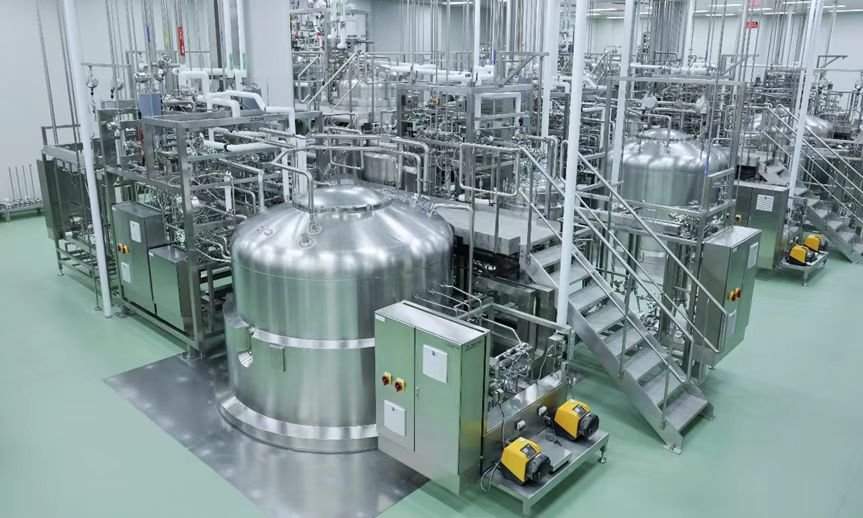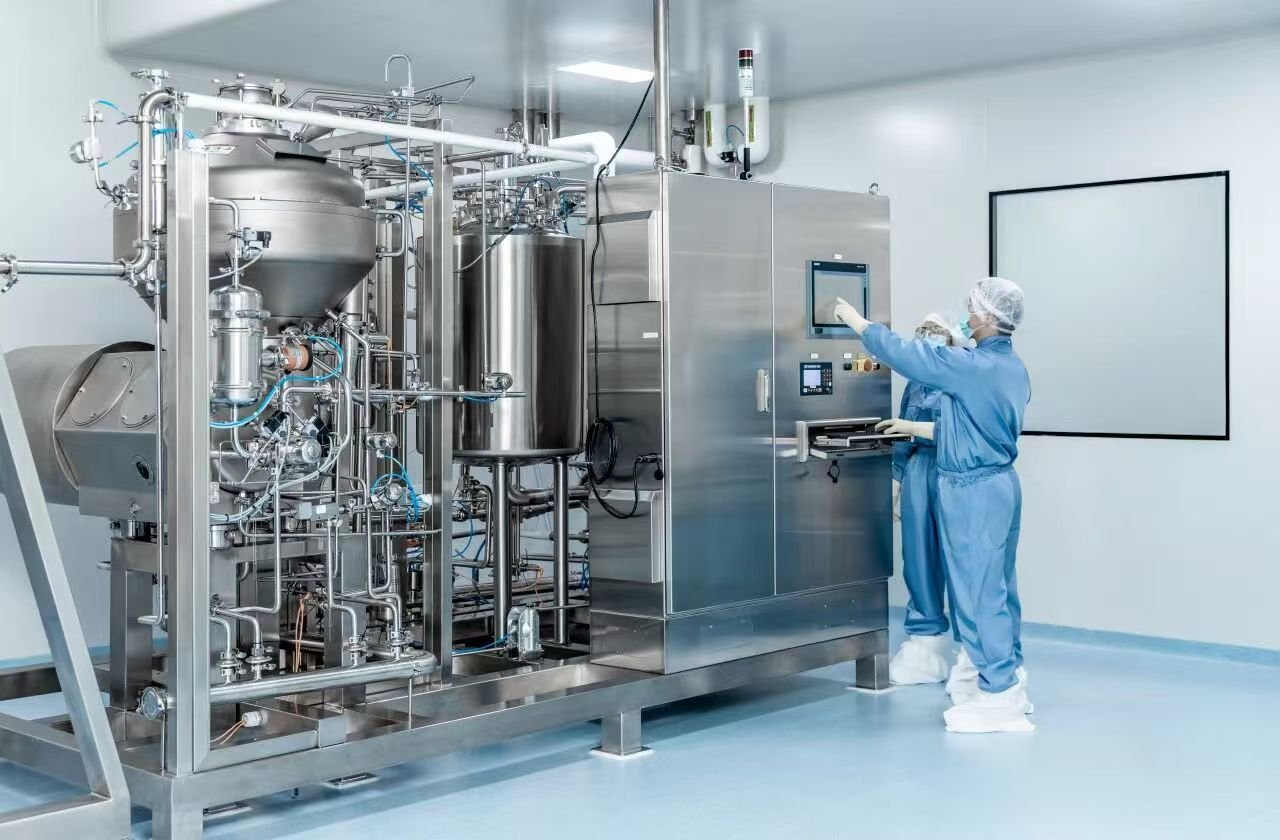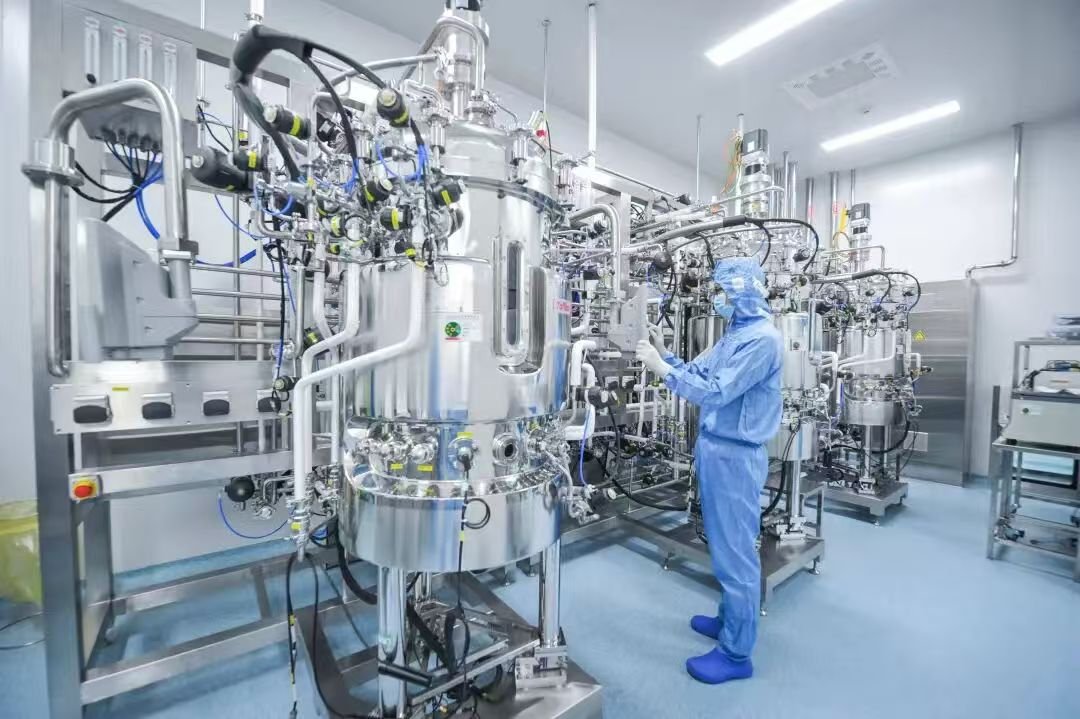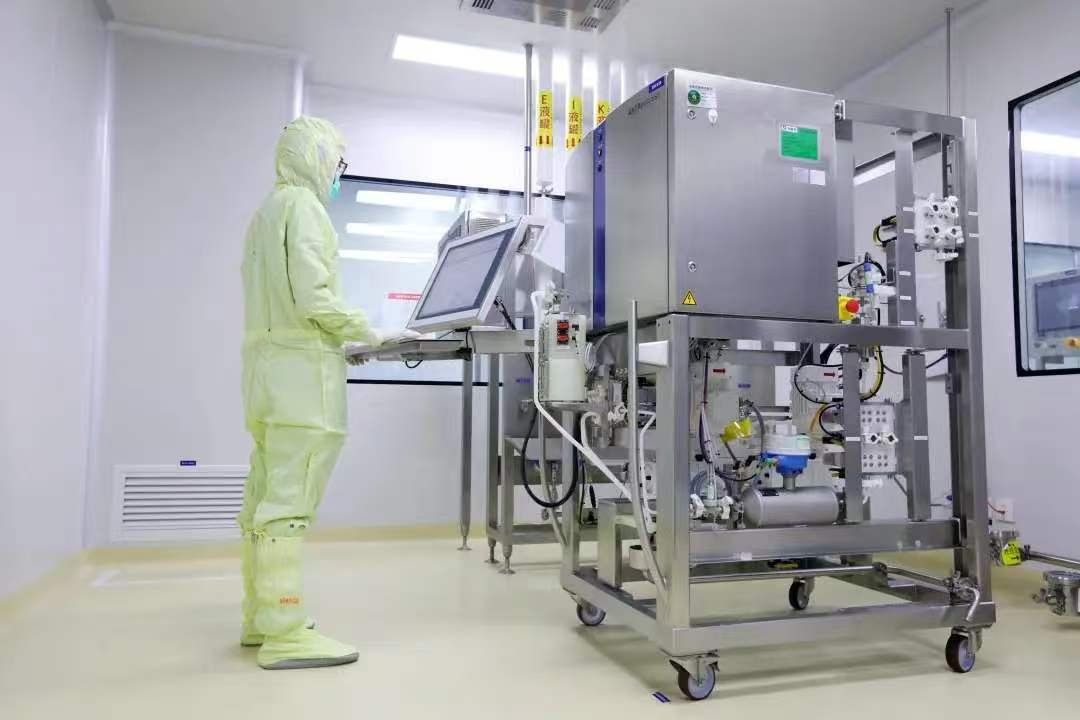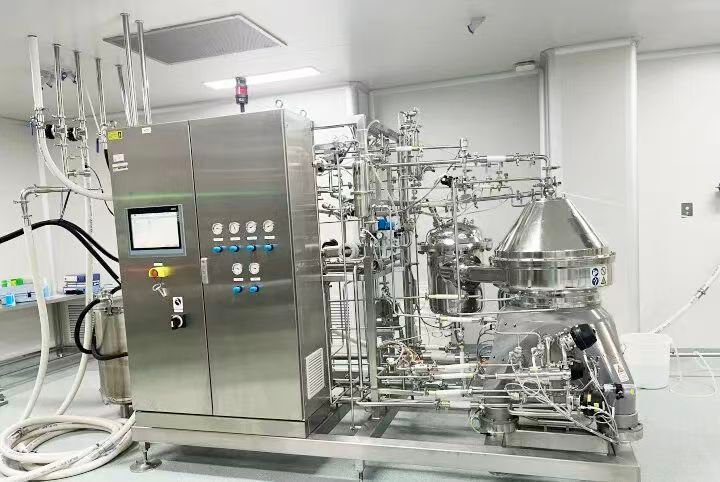
Disc stack centrifuges play a pivotal role in antibody purification. They separate cells from culture broth by centrifugal force and efficiently remove cell debris, delivering high-quality feedstock for downstream purification processes. Featuring fully sealed structure and gentle separation mode, the equipment preserves antibody activity and minimizes protein denaturation. Industrial application data proves that disc stack centrifuges boost antibody recovery rate by 10%-20%, achieve product purity over 98%, and cut production costs by 20%-30%. Leading manufacturers including Alfa Laval and Siemens continuously upgrade products to enhance separation efficiency, intelligent control performance, energy conservation and environmental friendliness. Despite existing challenges such as shear force risk and complex cleaning & maintenance, these issues can be resolved via structural optimization and process parameter adjustment. Practical cases from domestic monoclonal antibody manufacturers verify the tremendous value of disc stack centrifuges. With broad application prospects, the equipment facilitates high-efficiency and cost-effective manufacturing of antibody drugs in biopharmaceutical industry.
1 Overview of Antibody Purification Process
1.1 Objectives and Requirements of Antibody Purification
The core objective of antibody purification is to isolate high-purity and high-activity target antibodies from complex bioreactor harvest liquor, while eliminating process-related and product-related impurities. Process contaminants consist of intact cells, cell debris, host cell protein (HCP), host cell DNA (HCD) and residual culture medium components. Product-related impurities mainly include antibody fragments and aggregates. Additionally, the purification workflow must possess robust virus removal and inactivation capacity to guarantee drug safety. In accordance with FDA regulations, antibody purity shall exceed 95%, and HCP residual level must be controlled below 1 ppm to secure therapeutic efficacy and medication safety.
1.2 Introduction to Purification Workflow
Standard antibody purification comprises five core procedures:
1.2.1 Primary Clarification
This stage eliminates intact cells and large-sized cell debris. Centrifugation and depth filtration are mainstream techniques. Centrifugation realizes efficient solid-liquid separation yet has limited processing capacity, while depth filtration suits large-scale production, removing solid contaminants and partial HCP/HCD through physical retention and adsorption.
1.2.2 Affinity Capture
As the core purification step, affinity chromatography captures target antibodies. Protein A affinity chromatography is the most prevailing technology, which specifically binds to the Fc segment of antibodies and extracts target substances from crude samples, yielding products with purity above 90%. This technique features simple operation and high recovery efficiency.
1.2.3 Intermediate Purification
Further impurity elimination is conducted to elevate antibody purity. Ion exchange chromatography separates substances based on charge discrepancy; cation exchange removes positively charged contaminants, whereas anion exchange eliminates negatively charged impurities. Hydrophobic interaction chromatography differentiates components by hydrophobicity variation under high-salt conditions, removing stubborn impurities hard to separate via ion exchange methods.
1.2.4 Polishing
Serving as the final refining stage, polishing removes residual contaminants to meet final purity specifications. Hydroxyapatite chromatography eliminates antibody aggregates and fragments to improve product homogeneity. Size-exclusion chromatography removes small molecular impurities and completes buffer exchange to adjust antibody concentration and solution system.
1.2.5 Viral Clearance and Inactivation
Virus contamination risk exists throughout antibody manufacturing, making viral clearance an indispensable procedure. Low pH incubation inactivates viral particles, and viral filtration physically intercepts pathogens. Combined application of both methods effectively lowers contamination risks and ensures drug safety.
Antibody purification is an elaborate integrated process. Process parameters are optimized according to antibody characteristics and production standards to achieve efficient and economical purification.
2 Basic Working Principle of Disc Stack Centrifuges
2.1 Generation Mechanism of Centrifugal Force Field
The operation of disc stack centrifuges follows Newtonian mechanics. High-speed rotation of the drum drives internal materials to move toward the drum wall under centripetal force. Based on Newton’s second law \(F=ma\), centripetal acceleration is calculated as \(a=\omega^2r\), and centrifugal force formula is \(F_c=m\omega^2r\). Materials with larger mass, higher rotational speed and longer distance from the rotating axis bear greater centrifugal force. Denser particles settle on the drum wall, while light liquid phases converge to the center, realizing solid-liquid or liquid-liquid separation.
2.2 Influencing Factors of Separation Performance
2.2.1 Material Properties
Density difference acts as the decisive factor; larger density gap brings superior separation effect. Particle size also affects separation efficiency, and particles larger than 1 μm can be effectively separated by disc stack centrifuges.
2.2.2 Operational Parameters
Rotational speed ranges from 3000 rpm to 10000 rpm, determining centrifugal intensity. Feed flow rate balances processing throughput and separation retention time. Disc spacing is set between 0.5 mm and 2 mm, adjusting separation area and fluid resistance.
2.2.3 Equipment Design and Maintenance
Optimized disc profile and surface coating reduce material adsorption and improve cleaning performance. Regular maintenance including wearing part replacement, sensor calibration and internal cleaning stabilizes separation consistency and extends service life.
3 Specific Applications in Antibody Purification
3.1 Clarification of Cell Culture Broth
Disc stack centrifuges generate high multiple gravity centrifugal field to remove over 90% cells and debris, providing clarified feedstock for downstream processes. Adopting patented bottom-feed design, Alfa Laval CF series centrifuges deliver mild acceleration and shear force, maintaining cell integrity and removing autolysis-derived debris.
The fully sealed structure avoids air bubble formation and temperature rise, restricting antibody activity loss within 5%. In practical production, the equipment cuts depth filter membrane consumption by 60%, lowering operational cost and reducing material waste.
3.2 Connection with Downstream Purification Steps
Pre-clarified broth significantly enhances subsequent processing efficiency. Pretreatment improves Protein A affinity capture recovery by 10%-15% and shortens column equilibration and cleaning duration. Reduced impurities boost selectivity of ion exchange chromatography and preserve antibody charge characteristics. For viral filtration, clarified feed increases membrane flux by 20%-30% and maintains viral removal rate above 99.9%.
4 Advantages and Existing Challenges
4.1 Core Advantages
Superior separation capacity: Removes over 90% cellular contaminants and provides qualified raw materials.
Excellent activity retention: Mild separation environment limits protein activity loss below 5%.
Cost reduction: Greatly decreases filter material consumption and production expenditure.
High process compatibility: Smoothly connects with all downstream purification units to elevate overall productivity and product quality.
4.2 Challenges and Countermeasures
Shear force damage risk: Low-shear structural design protects fragile cells from rupture and impurity release.
Complicated cleaning and maintenance: CIP and SIP systems achieve full-range sterile cleaning and simplify daily maintenance.
Throughput-efficiency balance: Optimize rotational speed, feed flow and disc spacing to match actual production demands.
Multi-process collaborative optimization: Integrate centrifugation with chromatography and viral clearance procedures to form streamlined production workflows.
5 Product and Technological Development of Disc Stack Centrifuges
5.1 Mainstream Brands and Product Characteristics
Alfa Laval: Featured with high efficiency, low shear force and full sealing. CF series supports CIP/SIP sterilization, widely applied in biopharmaceutical broth clarification.
Siemens: Equipped with automatic intelligent control system, realizing unattended feeding, slag discharge and cleaning, highlighting energy saving and large-scale continuous production.
GEA: Delivers high separation factor and operational stability, suitable for long-term continuous solid-liquid separation and product concentration.
Hitachi: Adopts high-precision manufacturing technology, featuring stable operation, friendly human-machine interface and strong equipment compatibility.
5.2 Technological Innovation Trends
High-efficiency separation technology: Optimize disc structure and develop novel anti-adsorption materials to promote separation efficiency and product yield.
Intelligent monitoring and control: Real-time parameter monitoring and automatic operational adjustment with fault early warning function.
Energy conservation and eco-friendliness: Variable frequency speed regulation and energy recycling technologies reduce power consumption, complying with GMP environmental standards.
Miniaturized portable design: Meet laboratory small-sample separation and on-site rapid detection requirements.
Cross-technology integration: Combine with membrane separation and chromatographic detection to build integrated purification solutions, realizing automated biomanufacturing.
6 Case Study on Domestic Monoclonal Antibody Manufacturers
6.1 Typical Industrial Cases
Chia Tai Tianqing: Alfa Laval CF centrifuges increase antibody recovery by 15%, reach purity over 98% and reduce manufacturing cost by 20% in therapeutic antibody production.
Shiyao Ouyi: Debris removal rate exceeds 95%, antibody activity loss is controlled within 3%, satisfying large-scale production demands.
Henlius: Centrifugal pretreatment raises viral filtration flux by 25% with viral removal rate above 99.95%, ensuring medication safety.
6.2 Practical Application Feedback
Manufacturers achieve 10%-20% higher antibody recovery and 20%-30% shorter purification cycle. Antibody activity loss stays under 5%, final product purity exceeds 98% with HCP residue conforming to FDA criteria. Filter membrane consumption drops by 50%-70%, bringing remarkable economic benefits. Equipment runs steadily with low failure rate, and professional after-sales technical support minimizes production downtime.
7 Conclusion
Disc stack centrifuges serve as indispensable core equipment in antibody purification. Their outstanding separation performance, protein protection capability and economic benefits create great practical value for biopharmaceutical production. With continuous technological iteration and upgrading, disc stack centrifuges will further drive the high-quality, low-cost development of antibody drug manufacturing industry.
As a leading process-oriented engineering company, Sino Bioengineering delivers professional bioengineering solutions and comprehensive technical services to clients worldwide.
For more products and solutions: https://sinobioengg.com/category/solution/
For more service: https://sinobioengg.com/category/service/