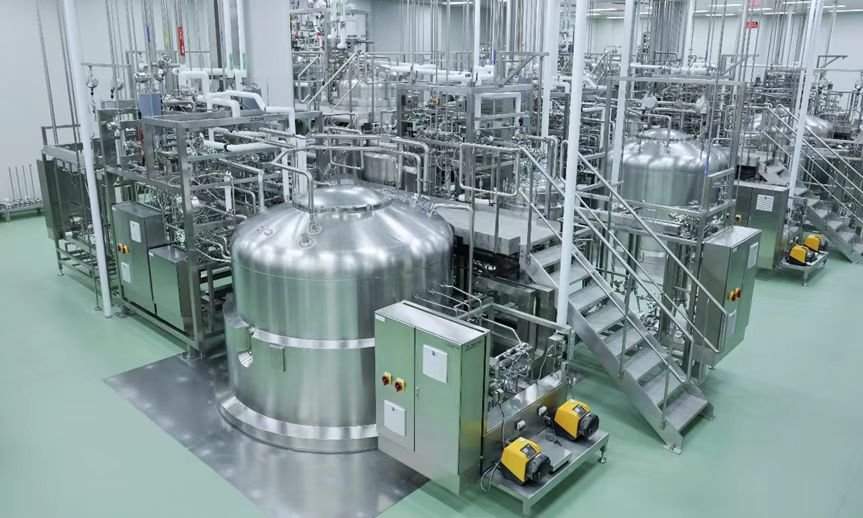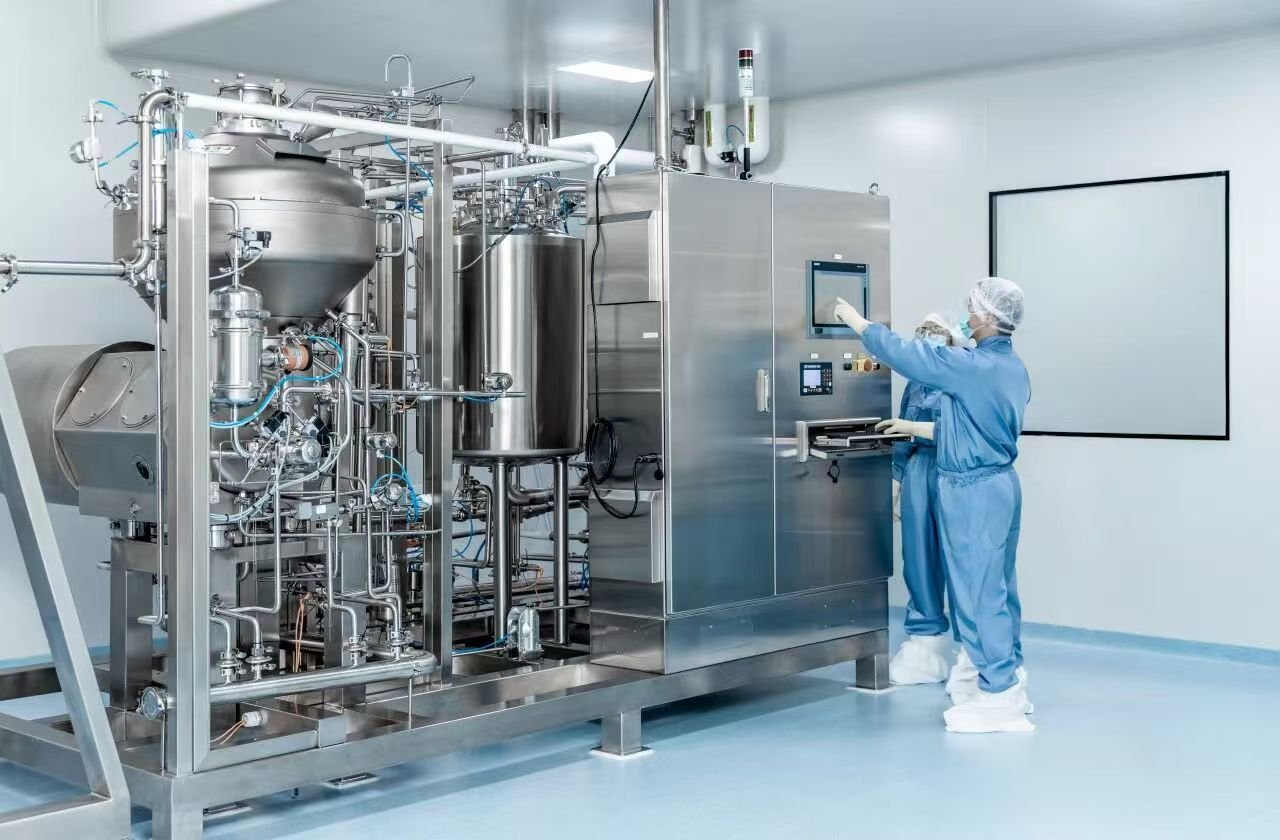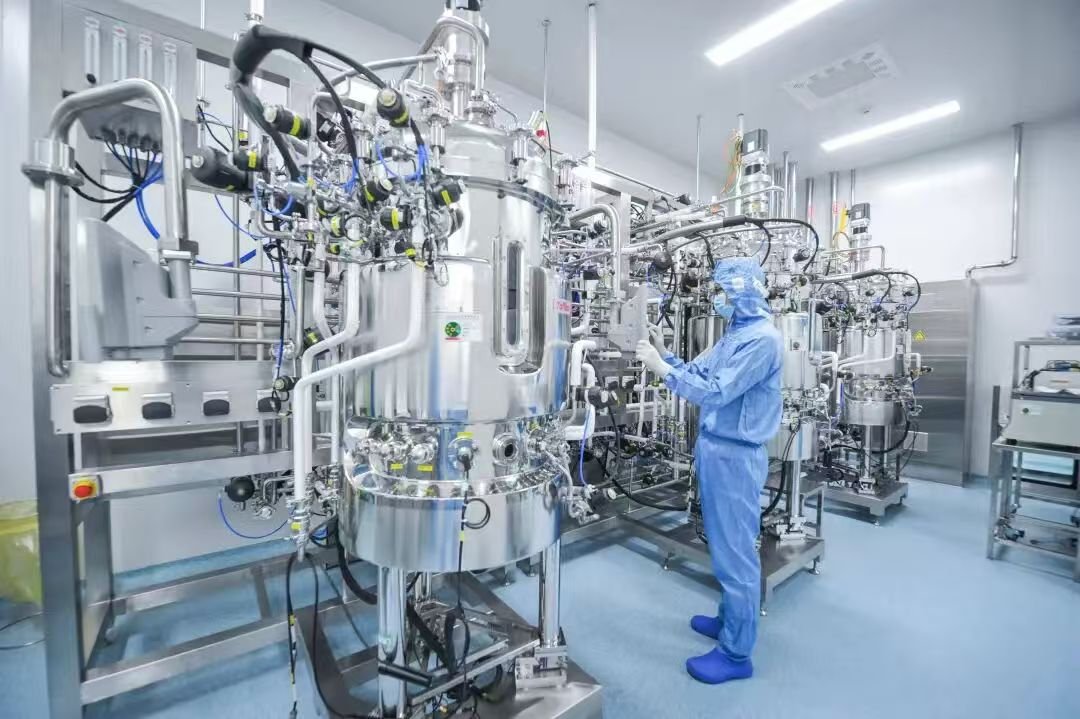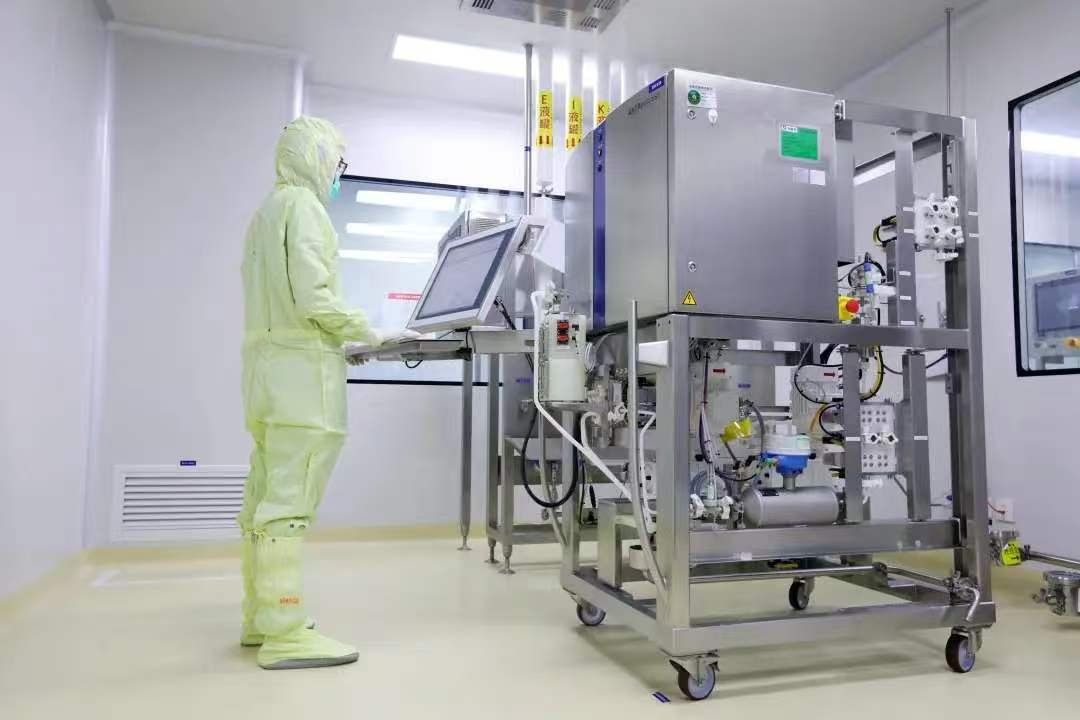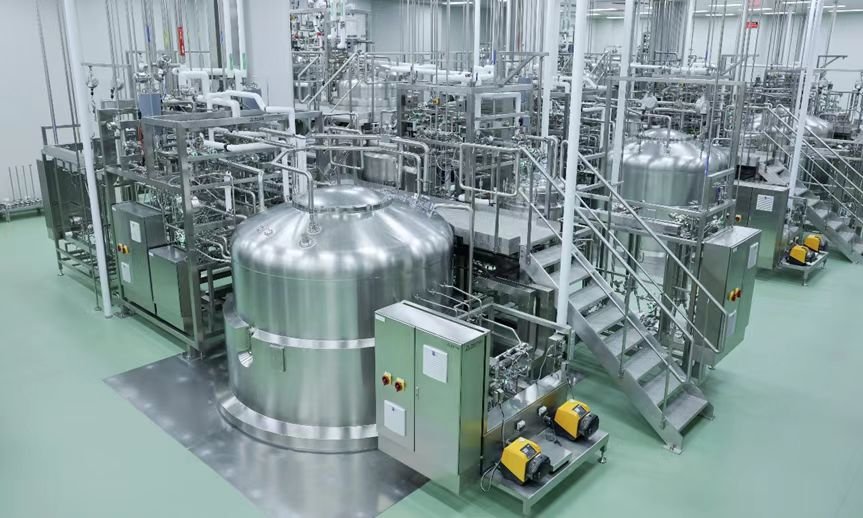
Large-volume deep stirred-tank fermenters (20,000L and above) are the core production hardware for commercial-scale biomanufacturing, widely deployed for mammalian cell fed-batch culture, microbial fermentation, vaccine seed expansion and recombinant protein mass production. Compared with lab-scale and pilot bioreactors, tall full-liquid deep tanks generate severe vertical liquid column hydrostatic pressure gradients, which trigger irreversible hydrostatic pressure shock at the tank bottom. This long-standing scale-up pain point damages fragile suspended cells, disturbs dissolved oxygen (DO) and dissolved carbon dioxide (dCO₂) equilibrium across the entire vessel, destabilizes cell metabolism and drastically cuts final target product yield.
Traditional single-bottom sparging and fixed single-point feeding cannot offset vertical pressure differences, forcing process teams to compromise cell loading density or extend cultivation cycles to offset losses. This article dissects the hazards of hydrostatic pressure shock in 20,000L deep fermenters and elaborates on the engineering solution combining multi-tier graded gas injection and variable-height distributed feed pipelines to flatten vertical pressure and concentration gradients fundamentally.
1. Root Causes and Process Hazards of Hydrostatic Pressure Shock in Deep 20,000L Fermenters
Hydrostatic pressure rises linearly with liquid depth. In a fully filled 20,000L tall fermenter, the liquid column height creates substantial extra static pressure at the tank bottom, forming an obvious vertical pressure stratification from liquid surface to bottom zone.
1.1 Direct Cell Damage from Bottom Pressure Shock
Mammalian cells, hybridoma cell lines and sensitive microbial strains cannot withstand long-term elevated static pressure at the tank bottom. Persistent high compressive stress damages cell membrane integrity, suppresses cell division and proliferation, elevates apoptosis ratio, lowers peak viable cell density, and forms a large low-viability cell accumulation zone at the tank bottom. Even mild pressure shock changes intracellular metabolic pathways, raising protein aggregation rate and degrading product quality consistency.
1.2 Dissolved Gas Balance Distortion Caused by Vertical Pressure Gradients
Gas solubility follows Henry’s Law: higher local pressure greatly increases saturation solubility of O₂ and CO₂.
1.The tank bottom features excessively high DO, triggering oxidative stress and cell toxicity;
2.Metabolically generated CO₂ cannot escape upward efficiently, accumulating severely at lower layers to form local hypercapnia, leading to regional pH collapse;
3.Vertical stratification of DO, dCO₂ and pH creates multiple distinct microenvironments in one fermenter. Cells circulate repeatedly between low-pressure upper zones and high-pressure bottom zones, enduring cyclic pressure shocks and unstable nutrient supply, leading to obvious batch-to-batch divergence in large-scale production.
1.3 Limitations of Conventional Mitigation Attempts
Engineers often try higher agitation speed or increased bottom sparge flow to strengthen mixing, yet these adjustments bring new problems:
1.Higher impeller speed introduces severe fluid shear stress, causing additional cell rupture;
2.Single-point bottom gas injection only stirs local bottom fluid, unable to break vertical gradient stratification across the full tank height;
3.Single fixed feed pipe injects concentrated nutrient feed at one height, aggravating substrate stratification and worsening vertical inhomogeneity further.
All these passive remedies only relieve partial symptoms rather than tackling the vertical gradient root cause, severely restricting stable high-density operation of 20,000L commercial fermenters.
2. Integrated Solution: Multi-Tier Gas Injection + Variable-Height Feed Lines for Vertical Gradient Equalization
The core design idea is to break the unified pressure and mass transfer environment of the traditional single-point layout, partition the deep fermenter vertically into multiple independent control zones, and implement zone-targeted gas supply and feeding to balance hydrostatic pressure difference and homogenize dissolved gas & substrate distribution simultaneously.
2.1 Multi-Tier Graded Gas Injection System
Multiple layers of ring spargers are installed at different vertical heights (upper, middle, lower and near-bottom zones) inside the fermenter, rather than one single sparger only at the tank bottom:
1.Bottom low-flow stripping gas injection: Low-flow nitrogen or air is supplied to offset excessive hydrostatic pressure, carry away accumulated CO₂ and avoid oversaturated dissolved oxygen at the tank bottom;
2.Middle-tier oxygen enrichment sparging: Precision aeration matches oxygen consumption of mid-tank high-density cell clusters, avoiding upward gas bubble accumulation;
3.Upper-layer headspace auxiliary gas distribution: Supplement overlay gas to stabilize surface pressure and reduce vertical pressure differential between liquid surface and middle layers.
Each tier adopts independent flow closed-loop control linked to local DO and dCO₂ online sensors. Bubbles generated by layered spargers drive orderly vertical liquid circulation, disrupt static liquid layering, equalize local hydrostatic pressure from top to bottom, and eliminate pressure shock hotspots at the fermenter bottom. The multi-tier design avoids large single bubble clusters and extra shear damage caused by full-volume high-flow sparging.
2.2 Variable-Height Distributed Feed Pipelines
Correspondingly matched with multi-tier gas zones, multiple feed pipelines are arranged at staggered vertical elevations, delivering concentrated nutrient feeds, pH regulators and trace element solutions separately to upper, middle and lower culture zones according to real-time local consumption rates:
1.High-metabolic bottom zone receives proportional matched feeding to prevent substrate depletion;
2.Upper and middle zones are supplemented with low-rate feed to avoid local glucose excess and overflow metabolism.
Variable-height feeding eliminates concentrated feed local accumulation near a single injection point, synchronizes nutrient supply with cell distribution across vertical layers, removes concentration gradients superimposed on hydrostatic pressure gradients, and further stabilizes the whole-tank culture microenvironment.
3. Core Application Advantages for 20,000L Commercial Fermentation Lines
1.Eliminate hydrostatic pressure shock fundamentally: Layered gas flow breaks static liquid column stratification, reduces bottom excess compressive stress, recovers full-tank uniform pressure distribution, significantly lifts cell viability and peak cell density.
2.Rebalance dissolved gas vertical distribution: Targeted zone aeration eliminates bottom hypercapnia and DO oversaturation, stabilizes full-tank pH and gas parameters, unifies cell metabolic state across all vertical positions.
3.No extra shear damage: Avoids raising agitation speed or excessive single-point sparge flow; low-shear layered gas circulation protects sensitive cells without sacrificing mixing performance.
4.Improve batch reproducibility & GMP compliance: Consistent homogeneous culture conditions reduce OOS results and deviation records, simplify validation documents and regulatory audit preparation for commercial production.
5.Unlock higher volumetric productivity: Stable microenvironment supports extended high-density perfusion and fed-batch cycles, maximizing single 20,000L fermenter output and cutting unit production cost per gram of target product.
Vertical hydrostatic pressure shock and accompanying dissolved gas imbalance are inherent scale-up bottlenecks restricting stable operation of 20,000L deep large-volume fermenters. Traditional single-point gas sparging and fixed-position feeding cannot resolve vertical gradient heterogeneity, continuously causing cell loss and yield decline in industrial biomanufacturing.
The combined technical scheme of multi-tier graded gas injection and variable-height distributed feed lines partitions the tall fermenter into independent control zones, actively equalizes vertical hydrostatic pressure difference and eliminates pressure shock hotspots, while synchronously homogenizing nutrient and dissolved gas distribution throughout the vessel. This scalable engineering upgrade fully adapts to GMP-compliant commercial production, reliably stabilizes culture performance of large deep-tank fermenters, and provides a mature replicable scale-up solution for biopharma upstream mass production lines.