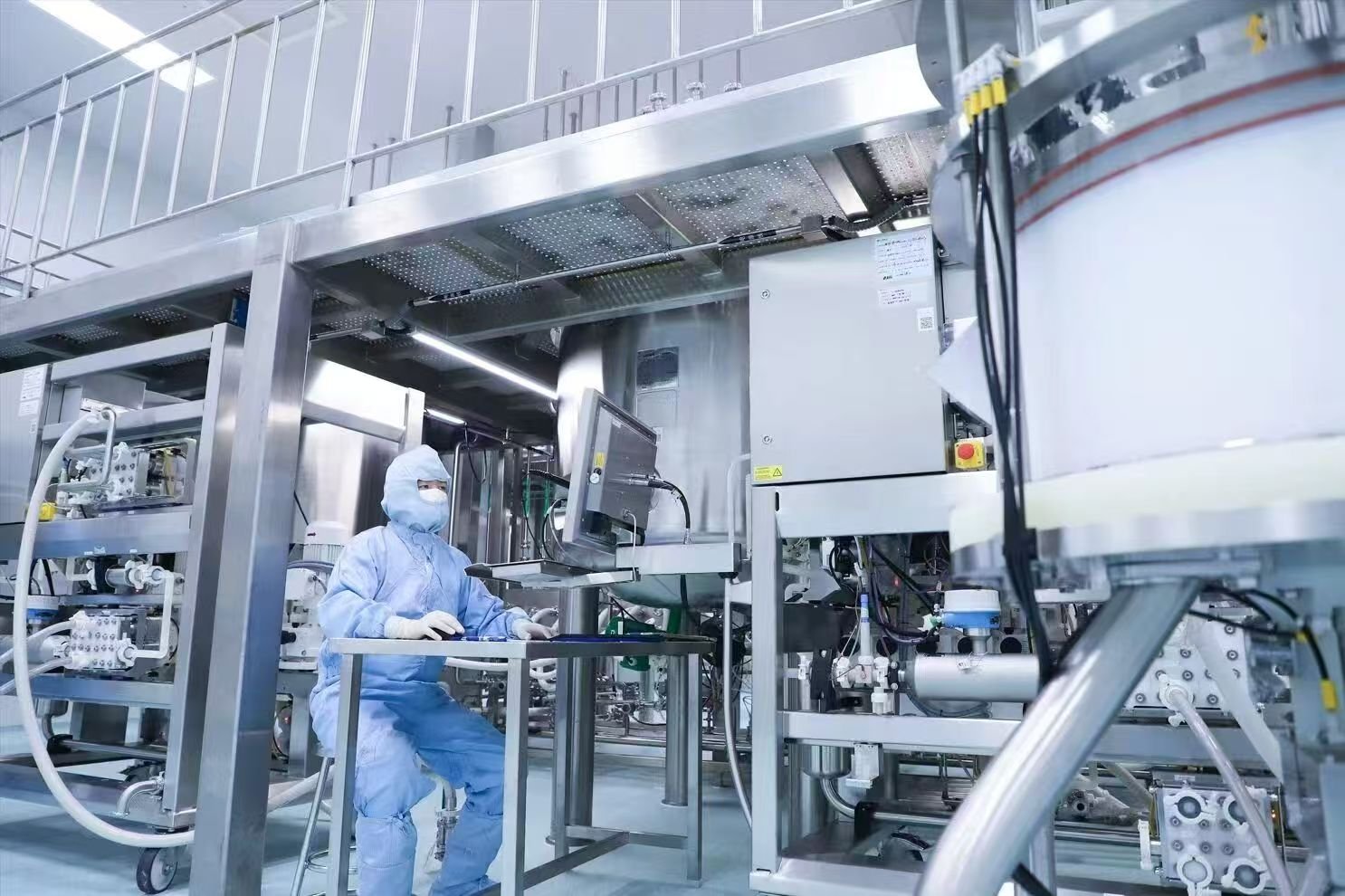
Tangential Flow Filtration (TFF) has become a core unit operation for bioprocess downstream purification, widely applied in cell retention, perfusion harvest, concentration, buffer exchange and viral clarification steps for monoclonal antibodies, recombinant proteins, viral vectors and cell therapy products. Continuous TFF systems run uninterruptedly for long cycles to boost process throughput and reduce intermediate hold steps, yet they face a prominent operational hazard: uncontrolled transmembrane pressure (TMP) runaway.
Traditional continuous TFF setups adopt fixed-speed harvest pumps for steady flow delivery without dynamic adjustment mechanisms. As filtration proceeds, accumulated biomass, protein aggregates and fine particles gradually deposit on the membrane surface and inside cassette flow channels, triggering progressive membrane fouling. The rising flow resistance pushes actual TMP far beyond the predefined safe operating window, frequently activating safety interlock shutdowns. In severe cases, excessive differential pressure ruptures filter cassettes, causes process fluid leakage, results in entire batch discard, substantial raw material loss and costly production downtime. This article analyzes the root causes and consequences of TMP runaway in continuous TFF workflows, and elaborates on a real-time sensor-feedback automatic valve regulation control loop as a definitive solution.
1. Root Causes and Consequences of TMP Runaway with Fixed Pump Speed Operation
TMP serves as the core driving force of tangential flow filtration, defined by the pressure difference across the filter membrane, directly governing filtration flux and fouling progression. In continuous biomanufacturing scenarios requiring stable long-run TFF operation, fixed-speed pump control exhibits inherent structural defects.
With unchanged pump rotational speed, the crossflow rate remains theoretically constant. However, irreversible concentration polarization and cake layer formation occur on the membrane surface over runtime:
1.Flow channel blockage elevates retentate-side backpressure continuously;
2.The system cannot actively counteract pressure build-up, leading to continuous TMP upward drift, known as TMP runaway;
3.Once TMP exceeds the upper safety threshold, the system triggers emergency cut-off.
The tangible losses brought by this issue are multi-dimensional:
Process loss: Cassette rupture leads to valuable cell culture supernatant, target protein or viral material leakage, complete batch scrappage;
Equipment damage: Broken filter cassettes are consumables with high procurement costs, and pressure shocks may also damage pressure sensors, piping joints and diaphragm pumps;
Schedule delay: Unplanned shutdowns interrupt continuous perfusion or downstream serial processing, disrupt production scheduling and delay product delivery timelines;
GMP compliance risks: Unexpected batch failure generates additional deviation investigations, out-of-spec (OOS) records and extra regulatory documentation workload, raising audit non-conformity risks.
Many operators mitigate fouling by manually reducing pump speed or partially closing retentate valves at intervals. This manual intervention relies heavily on operator experience, introduces human error, fails to realize closed-loop automatic regulation, and cannot guarantee consistent batch-to-batch process reproducibility required for commercial GMP production.
2. Core Solution: Closed-Loop Automated Control with Real-Time TMP Feedback
The fundamental fix abandons rigid fixed pump speed operation, establishing a full automatic control architecture that takes real-time TMP sensor readings as the setpoint input to dynamically adjust retentate valve opening positions, stabilizing TMP within the target narrow operating range throughout the entire continuous TFF cycle.
2.1 System Hardware Configuration
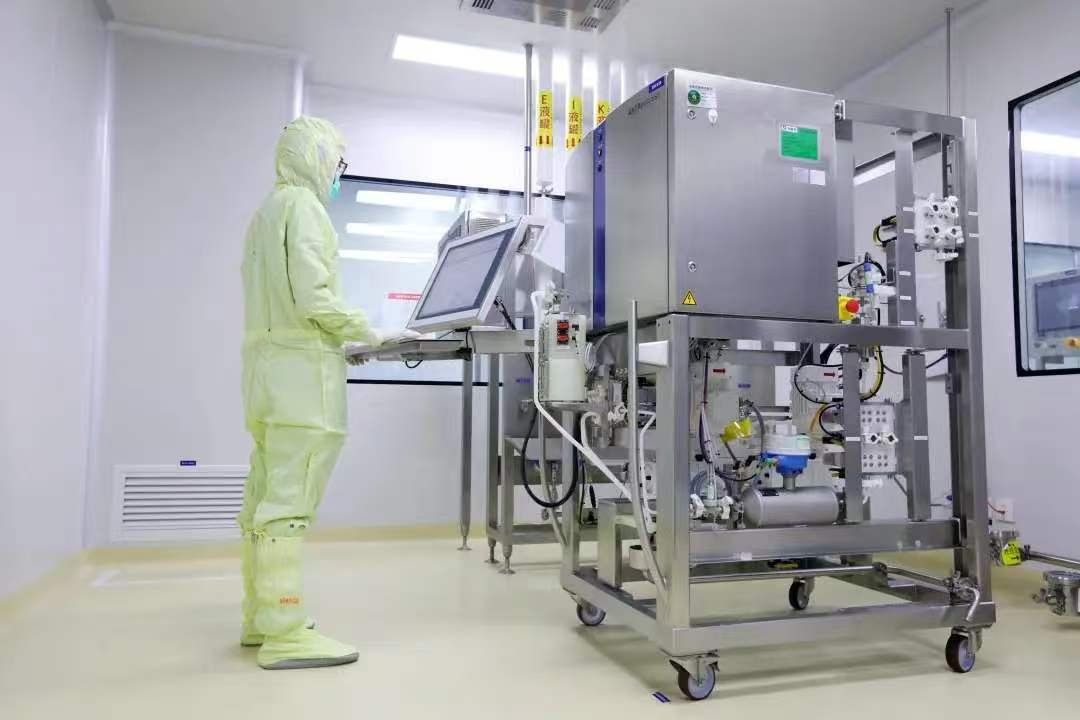
High-precision inline pressure transmitters are installed at feed and retentate sides of the TFF cassette assembly to calculate actual real-time TMP value continuously. An electric modulating control valve is mounted on the retentate return line, supporting stepless adjustment of flow resistance with high response accuracy. All sensors and actuators connect to the bioprocess PLC control platform to form a complete feedback control loop.
2.2 Working Principle of the TMP Closed-Loop Regulation
1.Operators input the target stable TMP setpoint and upper/lower alarm limits into the control HMI at process startup;
2.Pressure sensors transmit instantaneous feed and retentate pressure data to the PLC, which computes the real-time actual TMP;
3.If measured TMP rises above the set value due to membrane fouling, the control logic automatically increases the opening of the retentate valve to reduce backpressure on the retentate side, lowering TMP back to the predefined target band;
4.If TMP drifts below the set threshold, the controller slightly throttles the retentate valve to raise system backpressure and restore target TMP;
5.The harvest pump maintains a stable rotational speed to sustain design crossflow velocity, avoiding excessive shear stress that damages fragile target biomolecules or cells.
This control logic directly targets pressure fluctuations induced by gradual membrane fouling, conducting continuous dynamic trimming rather than passive emergency protection after pressure overload.
2.3 Auxiliary Optimization for Long-Run Continuous Operation
The control loop can be further coupled with flux trending recording and fouling trend prediction modules: the system logs valve opening variation over runtime to quantify fouling accumulation rate, reminds operators to execute online flushing or CIP cycles proactively before severe fouling forms, further extending the continuous operation window of TFF cassettes.
3. Key Application Advantages for Biomanufacturing
1.Eliminate TMP runaway completely: Real-time closed-loop regulation offsets pressure elevation from membrane fouling proactively, avoiding safety interlock trips and cassette rupture fundamentally;
2.Protect high-value consumables and batches: No unexpected pressure spikes prevent filter cassette damage and valuable bioproduct loss, greatly cutting consumable replacement and batch failure costs;
3.Enable true unattended continuous operation: No frequent manual valve tuning or pump speed adjustment is needed, lowering labor intensity and human operation errors;
4.Guarantee high process reproducibility: Fixed TMP setpoint operation delivers identical filtration conditions across batches, meeting strict GMP data integrity and process validation requirements;
5.Stabilize filtration performance: Consistent TMP maintains stable permeate flux, avoids sharp flux decline caused by pressure oscillation, and standardizes subsequent downstream purification loading consistency.
Fixed-speed harvest pump control is no longer compatible with long-cycle continuous TFF bioprocesses, as progressive membrane fouling inevitably triggers TMP runaway, bringing equipment damage, batch loss and compliance hidden troubles.
Adopting a fully automated closed-loop control system that modulates retentate valve positions based on real-time TMP sensor feedback provides a robust, easy-to-implement upgrade scheme. The solution stabilizes transmembrane pressure throughout the whole filtration run, safeguards filter cassettes and intact product batches, realizes stable unattended continuous tangential flow filtration, and delivers reliable, reproducible downstream processing support for commercial-scale GMP biomanufacturing lines.