

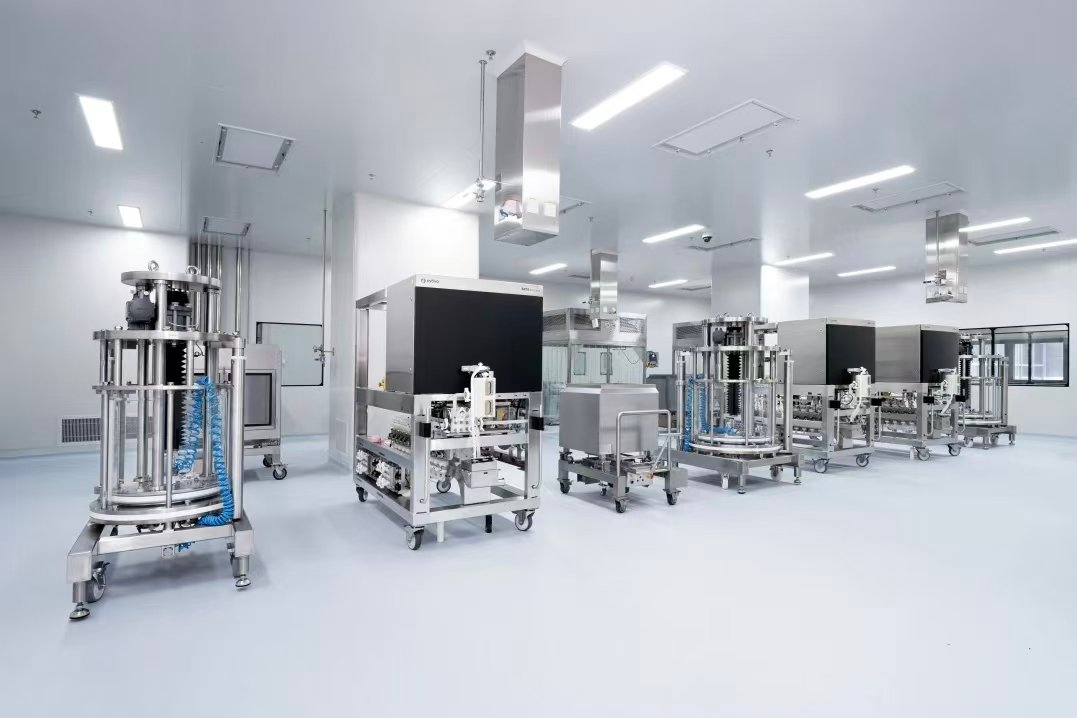
Recombinant proteins play a pivotal role in modern biopharmaceuticals (including therapeutic antibodies, enzymes, vaccines, and cytokines), diagnostic reagents, and industrial enzyme preparations. Their production typically involves expressing target proteins in genetically engineered host cells such as Escherichia coli, CHO cells, yeast, and insect cells, followed by isolation and purification of the target protein from complex cell culture supernatants or lysates. As a separation technology with high resolution, excellent selectivity, and outstanding scalability, chromatography serves as the cornerstone of recombinant protein purification process development. Establishing a robust, high-efficiency, cost-effective, and regulatory-compliant chromatographic purification process requires a systematic strategic framework.
Core Objectives of Process Development
High Purity: Effectively remove host cell proteins (HCPs), nucleic acids (DNA/RNA), endotoxins, viruses (where applicable), medium components, and product-related impurities including aggregates, degraded fragments, misfolded isoforms, and post-translational modification variants.
High Recovery Yield: Maximize the recovery of target proteins to reduce production costs.
Robustness: Enable the process to tolerate minor variations in raw materials (e.g., buffers, chromatography resins) and fluctuations in operational parameters.
Scalability: Ensure laboratory-scale processes can be seamlessly scaled up to pilot and commercial production scales.
Cost-Effectiveness: Optimize process workflows, minimize chromatographic steps, enhance resin binding capacity and service life, and reduce buffer consumption.
Regulatory Compliance: Meet GMP (Good Manufacturing Practice) requirements, lay a solid foundation for Process Characterization (PC) and Process Validation (PV), and guarantee product quality and biosafety, especially viral clearance capability.
Process Efficiency: Shorten purification cycle time and improve overall production throughput.
Strategic Framework for Chromatographic Process Development
Stage 1: Pre-Study and Target Definition
In-Depth Characterization of Target Proteins
Physicochemical Properties: Molecular weight, isoelectric point (pI), hydrophobicity, stability profiles (pH tolerance, temperature sensitivity, redox stability, shear force resistance), and post-translational modifications (glycosylation, phosphorylation, etc.).
Biological Activity: Establish functional bioassay methods for activity quantification.
Critical Quality Attributes (CQAs): Identify attributes directly impacting product safety and efficacy, including purity, biological activity, aggregate content, charge heterogeneity, glycan distribution, residual host impurities, endotoxin levels, and viral particles.
Characteristics of Expression System and Harvested Feedstream
Host cell type (determining the primary impurity profile), expression pattern (intracellular expression, secretory expression, inclusion body formation), composition of culture supernatant/lysate, viscosity, and particulate content.
Definition of Process Targets
Set predefined benchmarks for purity and yield, cost ceilings, process timeline, scale-up targets, and regulatory requirements (e.g., viral clearance specifications).
Literature Research and Platform Technology Benchmarking
Reference purification strategies for homologous proteins and leverage mature platform technologies (e.g., Protein A-based monoclonal antibody purification platform).
Stage 2: Capture Stage Development
Core Goal: Rapidly concentrate target proteins, remove bulk liquid volume and major impurities (cell debris, nucleic acids, lipids, most HCPs), and stabilize target protein conformation.
Preferred Core Technologies
Affinity chromatography is the gold standard for capture stages when technically feasible and economically viable:
Monoclonal Antibodies / Fc Fusion Proteins: Protein A/G/L affinity chromatography. Key development focuses: optimization of binding and elution conditions (pH, ionic strength, additives), dynamic binding capacity optimization, cleaning and regeneration protocols, aggregate control, and mitigation of Protein A ligand leakage.
Tag-Fused Recombinant Proteins: His-Tag (IMAC), GST-Tag, FLAG-Tag, and other affinity systems. Key development focuses: binding specificity optimization, elution condition screening (imidazole concentration, reducing agents, pH), tag cleavage and removal strategies, and control of tag-associated impurities.
Alternative Technologies (When Affinity Chromatography Is Not Applicable)
Ion Exchange Chromatography (IEX): Strong anion exchange is commonly used to capture negatively charged impurities (nucleic acids, acidic HCPs) with target proteins in flow-through mode; selection of IEX mode is also based on protein pI characteristics.
Hydrophobic Interaction Chromatography (HIC): Binds target proteins or impurities under high-salt conditions, suitable for salt-tolerant protein purification workflows.
Precipitation/Flocculation: Occasionally applied for initial concentration and nucleic acid impurity removal as a pre-chromatography pretreatment step.
Case 1: The recombinant subunit herpes zoster vaccine process adopted bind-elute mode in the capture stage, with 20% buffer B for impurity washing and 35% buffer B for target protein elution.
Chromatography column & resin: 2.6 cm inner diameter, 20 cm bed height
Feedstream: Cell culture supernatant; target protein concentration: 0.7 mg/mL
Loading volume: 804 mL
Buffer A: 20 mM PB, pH 6.8
Buffer B: 20 mM PB + 1 M NaCl, pH 6.8
Linear flow velocity: 120 cm/h
Gradient protocol: 20% buffer B for impurity wash, 35% buffer B for target elution
Key Development Principles for Capture Stage
Prioritize high binding capacity and high flow velocity with large-particle resins resistant to high linear flow; optimize depth filtration, centrifugation or Tangential Flow Filtration (TFF) for feedstream clarification and particulate removal to protect chromatography columns; adjust feedstream pH, conductivity and additives (protease inhibitors, reducing agents) to enhance protein binding and stability; select either flow-through or bind-elute mode based on impurity profiles and protein physicochemical properties.
Stage 3: Intermediate Purification Stage Development
Core Goal: Remove critical impurities with physicochemical properties highly similar to target proteins, including residual HCPs, aggregates, isoform mismatches, leaked affinity ligands, and host DNA.
Core Technologies
Ion Exchange Chromatography (IEX) and Hydrophobic Interaction Chromatography (HIC) are the most widely used intermediate polishing steps, achieving separation via charge or hydrophobicity differences, and following the orthogonality principle with the capture stage by adopting distinct separation mechanisms.
IEX Chromatography: Fine-tune operating pH near the target protein’s pI to maximize charge differentiation; optimize gradient/step elution protocols, buffer formulations and ionic strength; select cation or anion exchange resins according to protein pI and impurity characteristics.
HIC Chromatography: Optimize salt type (ammonium sulfate is commonly used), initial salt concentration, gradient/step elution parameters and buffer additives; operate with high-salt binding and low-salt elution, demonstrating excellent performance in aggregate removal.
Supplementary Technologies
Mixed-Mode Chromatography (MMC): Integrate multiple interaction forces (ion exchange + hydrophobic interaction/hydrogen bonding) for superior selectivity, with more complex interaction mechanisms and moderate development difficulty.
Hydroxyapatite Chromatography (HAP): Exhibits unique separation performance for challenging impurities such as leaked Protein A, residual DNA and protein aggregates.
Case 2: The second intermediate purification step of the recombinant subunit herpes zoster vaccine adopted Phenyl Chromstar® HP resin in bind-elute mode, with 30% buffer B for impurity washing and 70% buffer B for target protein elution.
Chromatography column & resin: 2.6 cm inner diameter, 13.8 cm bed height
Feedstream: Eluate from capture stage; ammonium sulfate supplemented to adjust conductivity to 98–105 mS/cm; protein concentration: 1.86 mg/mL
Loading volume: 218 mL
Buffer A: 0.6 M (NH₄)₂SO₄ in PBS
Buffer B: Purified water
Linear flow velocity: 120 cm/h
Gradient protocol: 30% buffer B for impurity wash, 70% buffer B for target elution
Stage 4: Final Polishing Stage Development
Core Goal: Eliminate trace-level impurities with nearly identical physicochemical properties to target proteins, including residual trace HCPs, product-related variants, dimers and oligomers, to meet final high-purity specifications. This stage also serves as a critical viral clearance step for mammalian cell-expressed biotherapeutics.
Core Technologies
High-Resolution IEX Chromatography: Perform final polishing with refined operating conditions (shallow elution gradients, high-resolution resins) to separate charge isoforms.
Size Exclusion Chromatography (SEC): Achieve separation based on molecular weight differences, regarded as the gold standard for removing high-molecular-weight aggregates and degraded fragments, while enabling buffer exchange. Limitations include low throughput, low binding capacity and sample dilution; commonly applied as a final polishing or analytical step.
Anion Exchange Chromatography (Flow-Through Mode): Widely adopted in final polishing; most HCPs and viral particles are negatively charged. Under elevated pH (above protein pI), target proteins flow through while impurities bind to the resin.
Case 3: The third final polishing step of the recombinant subunit herpes zoster vaccine adopted flow-through mode for further trace impurity removal.
Chromatography column & resin: 2.6 cm inner diameter, 10 cm bed height
Feedstream: Ultrafiltered solution; protein concentration: 0.9 mg/mL
Loading volume: 178 mL
Buffer A: 20 mM PB, pH 5.8
Buffer B: 20 mM PB + 1 M NaCl
Linear flow velocity: 60 cm/h
Operation mode: Flow-through
Key Success Factors and Technical Challenges
In-Depth Profiling of Target Protein and Impurity Spectrum: The fundamental premise for rational selection of separation methodologies. Deploy analytical techniques including HPLC, CE, SDS-PAGE, Western Blot, MS and SEC-MALS for full-process quality monitoring.
Orthogonality Principle: Combination of chromatographic steps with distinct separation mechanisms is essential to achieve ultra-high product purity.
Platform-Based Process Strategy: Standardized platform workflows for homologous products (e.g., monoclonal antibodies) significantly accelerate process development cycles.
Quality by Design (QbD): Integrate QbD concepts in early process development, focus on Critical Quality Attributes (CQAs), conduct risk assessment (e.g., FMEA), apply Design of Experiments (DoE) for parameter optimization, and define the design space.
Viral Biosafety Control: Processes for mammalian cell-derived products must incorporate and validate at least two robust viral clearance/inactivation steps with independent mechanisms (typically low-pH incubation + AEX flow-through chromatography + nanofiltration).
Cost Optimization: Chromatography resins and consumables constitute major production costs. Optimize binding capacity, flow velocity, buffer consumption and resin service life; explore emerging technologies such as continuous chromatography.
Data Analysis and Mechanistic Modeling: Leverage advanced analytical tools and mechanistic/statistical models to accelerate process development and parameter optimization.
Conclusion
Recombinant protein chromatographic process development is a complex, iterative and goal-oriented systematic engineering discipline. Successful process design originates from profound understanding of target protein characteristics and impurity profiles, as well as rational selection and systematic optimization of capture, intermediate purification and final polishing steps. Core development principles including purity, yield, process robustness, scalability, cost-effectiveness, regulatory compliance and viral biosafety must be consistently implemented throughout the workflow. The adoption of QbD philosophies, DoE methodologies, platform strategies and cutting-edge technologies (e.g., continuous chromatography), combined with comprehensive process characterization, enables the development of high-quality, high-efficiency and sustainable chromatographic purification processes that meet commercial manufacturing requirements.
As a leading process-oriented engineering company, Sino Bioengineering delivers professional bioengineering solutions and comprehensive technical services to clients worldwide.
For more products and solutions: https://sinobioengg.com/category/solution/
For more service: https://sinobioengg.com/category/service/