
Driven by the rapid advancement of gene therapy and cell therapy in recent years, lentiviral vectors have emerged as core tools for diverse therapeutic strategies owing to their capacity for long-term, stable gene expression. From genetically modified cell therapy to in vivo gene delivery, lentiviral vectors are gaining continuously growing importance in clinical research and commercialized applications.
Meanwhile, corresponding challenges are becoming increasingly prominent. Achieving high-efficiency, large-scale purification of lentiviral vectors while preserving biological activity has become a pivotal issue in process development.
Why Is Lentiviral Vector Purification So Demanding?
Unlike conventional recombinant proteins or antibodies, lentiviral vectors are complex, highly environment-sensitive biological macromolecular systems:
1. Susceptible to shear stress and pressure fluctuations
2. Prone to interfacial adsorption and membrane fouling
3. Purification must remove host cell proteins, residual DNA and other impurities, while preventing viral inactivation or loss
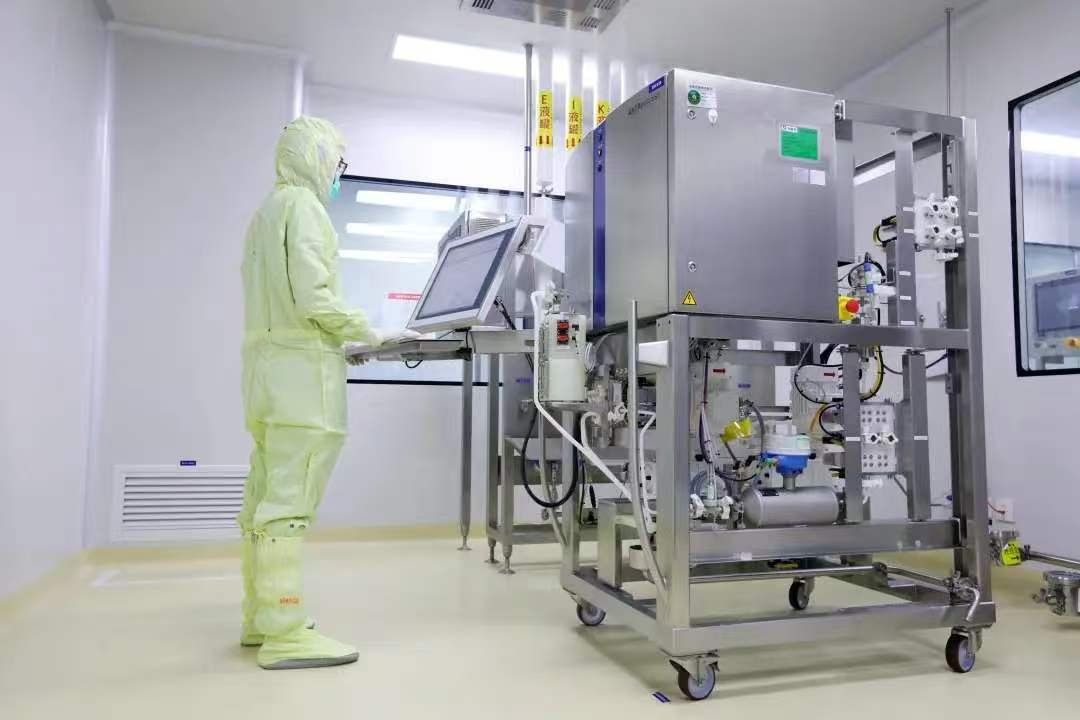
Accordingly, lentiviral vector purification processes adopt streamlined, highly integrated unit operations, among which tangential flow filtration (TFF) and chromatography constitute the core workflow.
The Role of TFF in Lentiviral Vector Manufacturing
In lentiviral vector processes, TFF performs three core functions:
1. Concentrating viral particles to improve downstream process efficiency
2. Removing small-molecule impurities including media components and metabolites
3. Performing buffer exchange to establish optimal conditions for chromatography or final formulation
TFF can be implemented either upstream or downstream of chromatography, with its specific position determined by comprehensive evaluation of the overall process design and product characteristics.
Membrane Module Selection: Trade-off Between Shear Risk and Process Efficiency
Membrane module selection is critical for lentiviral vector TFF processes. Widely adopted options currently include:
Hollow fiber membranes
Flat sheet membrane cassettes
As the shear tolerance of lentiviral vectors remains not fully elucidated, process development requires striking a balance between vector protection and processing efficiency.
Membrane Pore Size & Material: Higher Pore Size Does Not Equal Better Performance
Common molecular weight cut-off (MWCO) ranges for lentiviral vector TFF membranes are approximately 100–750 kDa. Larger pore sizes deliver:
1. Enhanced impurity clearance efficiency
2. Reduced processing time
However, larger pores also elevate the risk of viral loss. Membrane pore size must therefore be validated experimentally, rather than simply maximizing flux.
Regarding membrane materials, process developers must focus on:
1. Hydrophilicity and non-specific adsorption
2. Anti-fouling performance
3. Chemical and mechanical stability
All these factors directly impact lentiviral vector recovery rate and process robustness.
Process Parameter Optimization: Critical Details Determining Process Success
Beyond membrane properties, TFF performance is highly dependent on operational parameters, including:
1. Transmembrane pressure (TMP)
2. Tangential flow velocity
3. Feed composition and viscosity
Inappropriate parameter settings will aggravate membrane fouling, reduce flux, prolong processing duration and increase hold-up volume. In practice, post-process membrane flushing, rational flow rate control and viscosity modifiers can effectively minimize vector loss and improve overall recovery.
Conclusion
TFF has become a standard core subject in lentiviral vector process development.
As therapeutic modalities diversify, lentiviral vector manufacturing is evolving from exploratory research toward engineering and large-scale industrialization. During this transition, TFF is no longer a generic unit operation, but a key step requiring customized refinement and optimization for individual products.
In the future, enterprises that better understand vector properties, rationally select membrane modules and finely regulate process parameters will gain a competitive edge in the industrialization of lentiviral vector therapeutics.
As a leading process-oriented engineering company, Sino Bioengineering delivers professional bioengineering solutions and comprehensive technical services to clients worldwide.
For more products and solutions: https://sinobioengg.com/category/solution/
For more service: https://sinobioengg.com/category/service/