
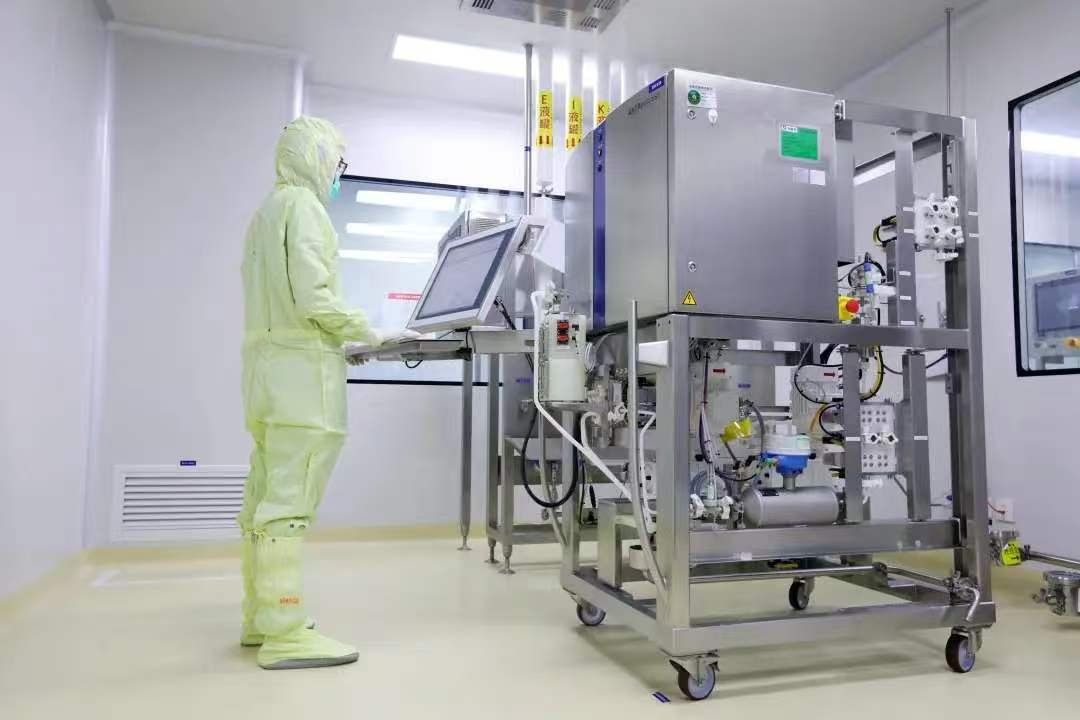
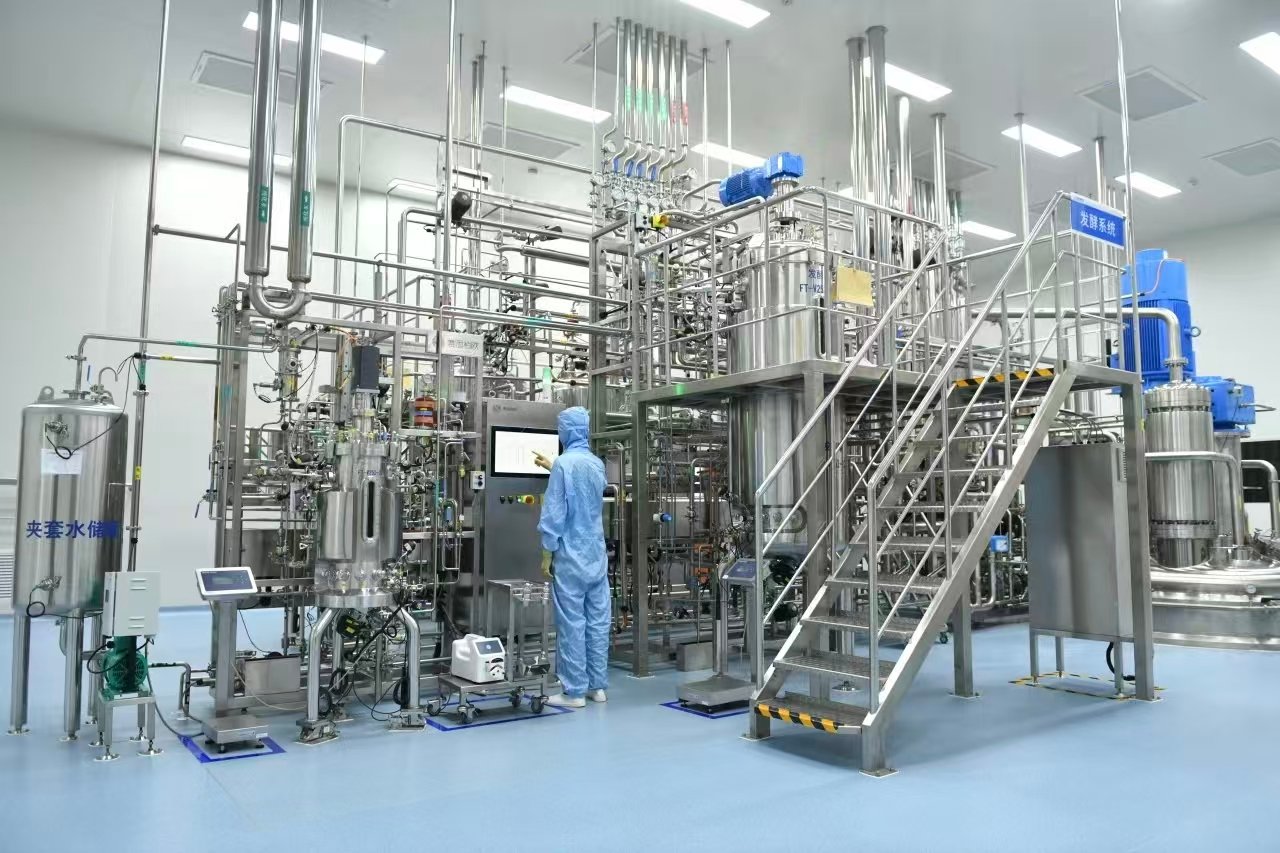
In the broader landscape of biopharmaceutical manufacturing, downstream processing is responsible for extracting and purifying target biomolecules from complex cell culture broth. If upstream production is akin to cultivating seeds, downstream processing represents refined gold refining. Among all unit operations in this workflow, filtration stands as one of the most core processes.
From primary clarification at cell harvest, buffer exchange between chromatographic steps, to terminal sterile filtration of final drug substances and drug products, filtration technology ensures drug purity, safety and sterility through physical barrier effects and chemical interactions. This paper provides an in-depth review of mainstream filtration technologies adopted in biopharmaceutical downstream processing, elaborating on their working principles, application scenarios and industrial-scale challenges.
The Watershed of Filtration Technology: Separation Mechanisms & Modes
The fundamental principle of filtration relies on selective separation based on particle size differences. In practical industrial applications, filtration is categorized into three primary modes according to fluid flow direction and filter media structure:
Normal Flow Filtration (NFF): Also known as dead-end filtration. Fluid flows perpendicularly through the filter medium, with retentates retained on the surface or inside the medium. It is commonly used for sterilization and pre-filtration.
Tangential Flow Filtration (TFF): Also referred to as Cross-Flow Filtration (CFF). Fluid flows parallel to the membrane surface; high shear force effectively minimizes filter cake accumulation. It is widely applied for concentration and diafiltration.
Depth Filtration (DF): Captures impurities via tortuous internal pathways and adsorption effects of filter media, serving as the preferred technology for clarification processes.
Depth Filtration: The Frontline of Downstream Processing
The initial step following cell culture termination is always cell harvest and clarification. At this stage, the feed stream contains abundant viable cells, cell debris, nucleic acids and host cell proteins (HCPs).
Structure & Separation Mechanisms
Depth filters are not simple sieves. They consist of complex three-dimensional porous networks made from materials including cellulose, diatomaceous earth and synthetic polymers. Their separation mechanisms include:
1. Mechanical interception: Large particles are trapped within intricate pore channels.
2. Adsorption: Most depth filters are positively charged, enabling electrostatic adsorption of negatively charged DNA, endotoxins and fine particles.
Industrial Scale Challenges
In large-scale commercial manufacturing, depth filtration faces major challenges including high required filter area and large hold-up volume.
Filter clogging and fouling intensify rapidly with increasing processing volume, leading to rising operating pressure. To address this issue, the industry commonly combines depth filtration with centrifugation technology: centrifugation first removes the majority of cells, followed by terminal clarification via depth filtration, achieving a balanced trade-off between cost and efficiency.
Membrane Filtration: The Precision Gatekeeper
Unlike depth filters, membrane filters feature well-defined rated pore sizes (micrometer or nanometer scale). Functioning like a precision barrier, they only allow molecules smaller than the pore size to pass through.
Dead-End Filtration vs. Tangential Flow Filtration
1. Dead-end mode: Retained particles accumulate on the membrane surface and form a filter cake. Flow resistance increases and flux decreases as the cake layer thickens. With a simple structure, this mode is suitable for clarifying feeds with low impurity content.
2. Tangential flow mode: Circulation pumps generate transverse shear force to continuously sweep the membrane surface. This mode significantly suppresses concentration polarization and gel layer formation, making it ideal for processing high-concentration samples.
Tangential Flow Filtration (TFF): Core Technology for Concentration & Buffer Exchange
TFF is one of the most versatile downstream technologies, primarily adopting ultrafiltration and microfiltration membranes.
Core Applications
1. Product concentration: Target biomolecules are usually low-concentration at the late purification stage. TFF removes excess water and small-molecule solvents to concentrate products to the concentration requirements for subsequent processes or formulation.
2. Diafiltration: A solvent exchange process involving continuous addition of fresh buffer and removal of old solvent. It gently adjusts the chemical environment of products (e.g. pH and ionic strength), preparing materials for subsequent chromatography steps.
Technical Limitations
Despite high efficiency, ultrafiltration exhibits low resolution for impurity proteins with similar molecular weights to the target product, mainly due to the pore size distribution bandwidth of membranes. Accordingly, TFF is primarily utilized for volume reduction and solvent exchange, rather than as a refined purification technique.
Sterile Filtration: The Final Safeguard for Drug Safety
Bioburden control is critical to patient safety in biopharmaceutical manufacturing.
Sterile-grade filters are dead-end membranes with pore sizes ranging from 0.1 μm to 0.45 μm. Featuring extremely narrow pore size distribution, they efficiently remove bacteria and other microorganisms.
1. Application scenarios: Deployed across the entire manufacturing process, including culture medium filtration, intermediate storage filtration and terminal filtration prior to drug filling.
2. Compliance requirements: Every sterile filter membrane must undergo rigorous integrity testing before and after use to verify intact barrier performance.
Viral Filtration: The Nanoscale Ultimate Challenge
Biological products, especially those derived from mammalian cells, are subject to risks of endogenous and exogenous viral contamination. Viral inactivation and removal are mandatory procedures stipulated by regulatory authorities.
Nanofiltration represents an elegant and highly effective physical viral removal technology.
1. Mechanism: Specially designed membranes with 15 nm pores can retain even tiny non-enveloped viruses (e.g. parvovirus, ~15–20 nm in diameter).
2. Cost considerations: Nanofiltration membranes involve highly complex manufacturing processes and extremely high unit costs, constituting a major portion of purification process expenses. Therefore, optimizing viral filtration capacity and maximizing single-batch throughput are key priorities for process development scientists.
Charged Membranes: A Competitive Alternative to Chromatography Technology
In recent years, charged membranes, also known as membrane chromatography, have emerged as a disruptive technology in the biopharma industry.
Structural Advantages
Functional groups (e.g. strong anion exchange Q, strong cation exchange S) are immobilized on porous membrane surfaces, endowing membranes with ion exchange chromatography functionality.
Compared with traditional chromatography resins, charged membranes possess an open porous structure. Mass transfer relies mainly on convection rather than slow diffusion.
Flow-Through Mode Applications
The most successful application of charged membranes lies in monoclonal antibody (mAb) manufacturing. While target antibodies flow through the membrane, host cell DNA, viruses and acidic host proteins are efficiently captured via electrostatic interactions on membrane surfaces.
Although their binding capacity is generally lower than chromatography columns, charged membranes deliver extremely high processing throughput and are disposable consumables, eliminating expensive cleaning and validation procedures. They have replaced traditional Q anion exchange columns in numerous modern manufacturing processes.
Conclusion & Outlook
Filtration technologies in biopharmaceutical downstream processing do not operate independently, but form an interdependent and complementary technology matrix.
1. Depth filtration addresses high-complexity, high-particulate feed clarification;
2. TFF handles dilute product concentration and buffer exchange;
3. Viral & sterile filtration ensures product biosafety;
4. Charged membranes demonstrate tremendous potential in improving process flexibility.
Driven by the booming biopharmaceutical market, the industry imposes increasingly stringent requirements on filtration technologies: higher binding capacity, lower protein adsorption, enhanced chemical resistance, and full transition to single-use systems. In the future, filtration will evolve beyond simple physical separation toward intelligent and customized solutions, continuously safeguarding the safe production of every biopharmaceutical product.