

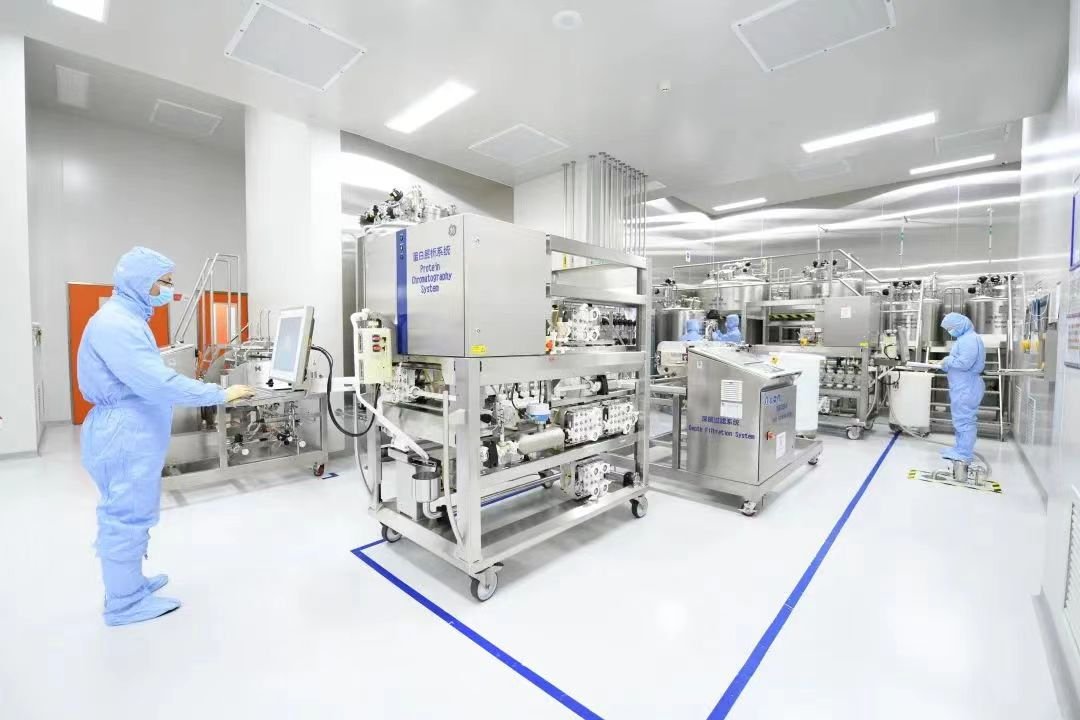
In biopharmaceutical manufacturing, tangential flow filtration (TFF) is a core unit operation widely applied in buffer exchange, sample concentration, impurity removal and formulation desalting. Hollow-fiber cartridges and flat-sheet cassettes are the two dominant consumable types for TFF systems. R&D and process engineers frequently face selection challenges: while both adopt tangential flow filtration principles, they differ substantially in inherent characteristics. It remains critical to clarify their discrepancies and select the optimal consumable tailored to specific feed properties and process requirements.
Leveraging extensive industrial application and process validation experience, Sino Bioengineering delivers a systematic performance comparison between hollow-fiber cartridges and flat-sheet cassettes across seven core dimensions, including filtration flux, process efficiency, shear force, fouling resistance, concentration capability, service life and sterile scalability. This guide enables precise, cost-effective TFF consumable selection and minimizes trial-and-error risks in bioprocess development.
1. Structural and Working Principles of Two Core TFF Consumables
Structural differences constitute the fundamental cause of performance variations between the two consumables, serving as the primary basis for scientific selection.
Hollow-fiber cartridge: The filtration unit consists of bundled hollow membrane fibers. Feed liquid flows axially along the inner lumen of each fiber. Small-molecule substances and permeate pass radially through the membrane wall, while target biomolecules are retained inside the fiber lumen. The overall design features an open, straight-through flow channel with unobstructed fluid passage.
Flat-sheet cassette: Assembled by stacking multiple layers of flat filtration membranes, with customized mesh screens and flow guide structures embedded between membrane layers. These structural designs force feed liquid to generate high-velocity tangential cross-flow, effectively enhancing fluid turbulence and membrane surface mass transfer efficiency.
2. In-Depth Performance Comparison Across Seven Core Dimensions
2.1 Filtration Flux and Mass Transfer Efficiency
Flat-sheet cassettes deliver higher flux and process efficiency for high-throughput commercial production. The built-in mesh flow guide continuously agitates fluid on the membrane surface, effectively disrupting concentration polarization, eliminating boundary layer accumulation, and inhibiting the formation of protein or colloid gel layers. Such optimized mass transfer enables higher filtration flux under identical operating conditions, significantly shortening production cycle time and making cassettes the preferred choice for high-efficiency large-scale manufacturing.
Hollow-fiber cartridges provide stable and consistent flux for complex feed systems. The open, barrier-free flow channel reduces overall fluid resistance, with a slightly lower ultimate flux compared to cassettes. However, it exhibits exceptional flux stability during operation. When processing complex, high-impurity feedstocks, it avoids abrupt flux decline and membrane blockage, offering superior process tolerance and robustness.
Field Application Case: In LNP-mRNA ultrafiltration and diafiltration (UF/DF) processes with controlled TMP ≤ 5 psi and consistent inlet conditions, flat-sheet cassettes present obvious flux advantages. Hollow-fiber cartridges, despite marginally lower flux, provide a much gentler shear environment for fragile products.
2.2 Shear Force Performance and Sensitive Product Protection
Hollow-fiber cartridges feature low, precisely tunable shear force, ideal for shear-labile biomaterials. The smooth and continuous flow lumen forms stable laminar pipe flow without random turbulent disturbance. Shear intensity can be accurately quantified and adjusted by modifying fiber inner diameter and cross-flow velocity. This capability effectively protects structurally fragile and biologically active substances, including viral vectors, active proteins, large nucleic acids and liposomes, preventing product denaturation, structural fragmentation and activity loss.
Flat-sheet cassettes generate relatively higher shear force, unsuitable for ultra-sensitive bioprocess systems. The mesh-induced turbulent flow that underpins its high mass transfer performance also creates localized high-shear zones. While this has no adverse impact on conventional feed purification, it may damage high-activity, easily fragmented biomolecular products.
2.3 Fouling Resistance and Adaptability to Complex Feeds
Hollow-fiber cartridges possess excellent anti-fouling capability, tailored for high-viscosity and high-solid-content feeds. The large-diameter open straight-through flow channel eliminates fluid dead zones, enabling high tolerance for feed liquids with high solid content, high viscosity and trace particulate impurities. It maintains stable long-term filtration flux with minimal scale deposition and membrane fouling.
Flat-sheet cassettes are optimized for conventional feeds with low to medium cleanliness. They perform best in homogeneous feed systems with low solid content and low viscosity. When handling high-viscosity or high-solid feeds, gel layers rapidly accumulate on the membrane surface, causing accelerated flux attenuation and compromised process stability. Relevant performance can be partially optimized by adjusting membrane material, MWCO and process parameters.
2.4 Pressure Drop and Process Operating Window
Hollow-fiber cartridges offer superior process flexibility with fully tunable pressure drop and shear force. Increasing fiber inner diameter and shortening flow paths reduce system pressure drop and shear force, while reducing fiber diameter achieves the opposite effect. Mature TMP calculation formulas support systematic process debugging, parameter optimization and scalable technology transfer, ensuring outstanding process controllability and reproducibility.
Flat-sheet cassettes have relatively fixed pressure drop characteristics with a narrow adjustable operating window. Their operational performance is predominantly determined by pre-set equipment conditions and cassette specifications, leaving limited room for flexible parameter optimization.
2.5 Concentration Multiple and Material Recovery Rate
Flat-sheet cassettes support high-fold concentration and high material recovery for high-titer product preparation. Industrial process consensus confirms cassettes as the optimal choice for high-fold concentration scenarios. Their compact mechanical structure delivers excellent pressure resistance with minimal membrane deformation under high pressure, enabling ultra-high-fold concentration. Meanwhile, the low system holdup volume of cassettes minimizes residual loss of high-value biomaterials, achieving superior product recovery.
Hollow-fiber cartridges are limited in small-batch ultra-high-fold concentration applications. Restricted by the inherent structural volume of fiber lumens and matching pipelines, hollow-fiber systems have larger holdup volume, resulting in relatively higher material loss during small-batch, high-value ultra-high-concentration processes, with a lower achievable concentration ceiling compared to cassettes.
2.6 Mechanical Reliability and Service Life
Flat-sheet cassettes deliver robust mechanical stability and long service life. With no fragile filament structures, cassettes effectively avoid membrane rupture and liquid leakage. Under standardized cleaning, maintenance and light-proof wet storage conditions, they can withstand dozens of cycling reuse, achieving reliable long-term operational stability. Service life is only compromised by improper dry storage or extreme acid-base cleaning conditions.
Hollow-fiber cartridges carry inherent fiber breakage risks. The core filtration unit consists of delicate hollow membrane fibers. Membranes with finger-like micro-pore structures have limited toughness, and fiber fracture or leakage may occur under high-pressure, high-flow or cyclic impact conditions. Thus, hollow-fiber systems require stricter process pressure control and standardized operational specifications.
2.7 Sterile Process Compatibility and Industrial Scalability
Both consumable types support full-process scale-up from laboratory R&D and pilot testing to industrial mass production.
Hollow-fiber cartridges are predominantly supplied as pre-sterilized single-use products, treated with gamma irradiation and ready for direct use. They eliminate complex cleaning and validation procedures, perfectly adapting to high-standard sterile bioprocesses and greatly reducing regulatory compliance costs.
Flat-sheet cassettes are available in both single-use and reusable formats. Fixture-type reusable cassettes are widely adopted in industrial mass production, supporting low-cost and continuous large-scale manufacturing.
3. Comprehensive Performance Overview (Text Summary)
In terms of filtration flux and processing speed, hollow-fiber cartridges feature slightly lower flux but exceptional operational stability, making them highly suitable for high-solid and high-viscosity complex feeds. In contrast, flat-sheet cassettes utilize mesh-induced turbulent flow to strengthen mass transfer, delivering higher flux and faster processing efficiency under conventional working conditions.
In terms of shear force adaptability, hollow-fiber cartridges provide adjustable, low-shear operating conditions, which are uniquely suited for processing shear-sensitive biomolecules. Flat-sheet cassettes, by virtue of their internal mesh structure, generate localized high shear stress, which poses risks to fragile active products.
For high-fold concentration and final product titer, hollow-fiber cartridges are constrained by system holdup volume and structural limitations, showing poor performance in ultra-high-fold concentration scenarios. Flat-sheet cassettes, with their compact and pressure-resistant structure, excel in high-fold concentration and achieve higher product recovery rates.
In the treatment of high-solid and high-viscosity feeds, hollow-fiber cartridges demonstrate prominent anti-fouling advantages and stable operation. Flat-sheet cassettes are prone to rapid flux decay when processing such complex feedstocks, with performance varying according to specific system conditions.
In terms of mechanical reliability and durability, hollow-fiber cartridges face potential fiber breakage risks related to membrane material and operating parameters. Flat-sheet cassettes feature more robust mechanical properties and can achieve long cycle life with standardized maintenance.
4. Conclusion: Core Selection Principles
Choose hollow-fiber cartridges for the following scenarios: processing shear-sensitive biomaterials, treating high-viscosity and high-solid complex feeds, prioritizing process operational stability, implementing single-use sterile processes, and laboratory/pilot-scale R&D projects.
Choose flat-sheet cassettes for the following scenarios: pursuing high flux and high processing efficiency, conducting ultra-high-fold concentration and high-recovery preparation, large-scale industrial mass production, and purification/desalting of homogeneous, low-impurity conventional feeds.
There is no absolute superior or inferior TFF consumable, only optimal matching for specific application scenarios. Accurate selection based on feed characteristics and process objectives effectively balances production efficiency, product biological activity and overall manufacturing costs, maximizing process value for biopharmaceutical production.