

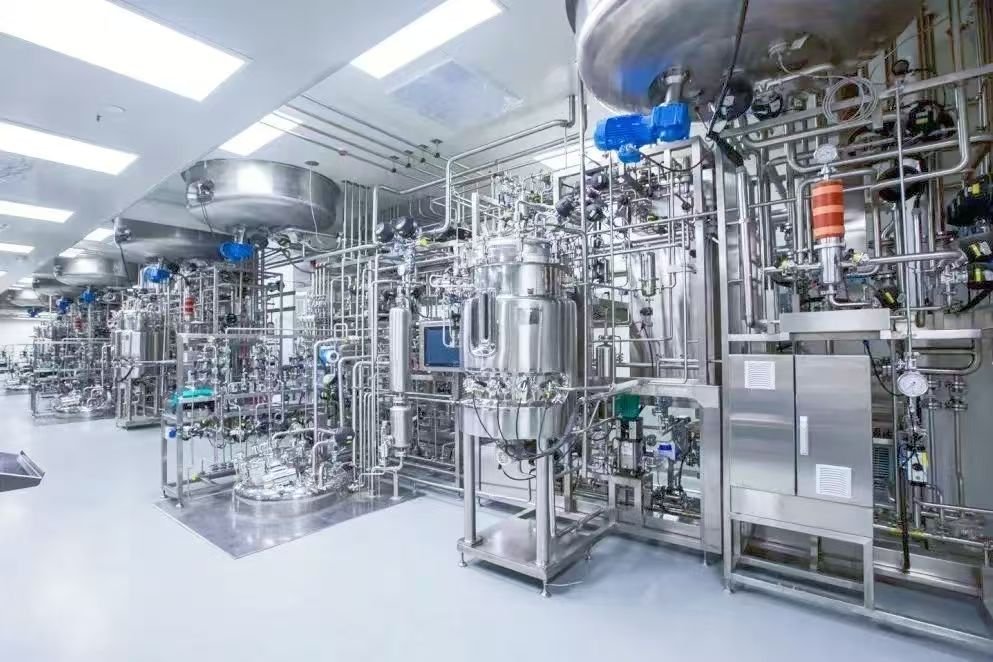
Virus-like particles (VLPs) are nanoscale multimers self-assembled from viral structural proteins. Devoid of viral genomes and non-infectious, they hold tremendous potential across vaccine development, drug delivery, gene editing and other fields. Capable of presenting native antigens and exerting an intrinsic self-adjuvant effect, VLPs exhibit superior biocompatibility compared with synthetic delivery vehicles, rendering them a high-profile subject in biopharmaceutical research and manufacturing.
VLPs can be mass-produced via diverse expression hosts including microorganisms, plant and mammalian cells. Nevertheless, downstream purification remains the core bottleneck restricting their industrial translation. Distinct from conventional monomeric proteins, VLPs feature large particle sizes, intricate architectures and high susceptibility to aggregation or degradation. Coupled with abundant host-derived impurities, pronounced product heterogeneity and the absence of a universal purification workflow, process development faces formidable technical hurdles. Accordingly, customized purification engineering frameworks must be established tailored to distinct expression systems and product attributes, with balanced consideration of structural integrity, purity and safety guided by Critical Quality Attributes (CQAs). This manuscript systematically elaborates how to construct a rigorous integrated downstream purification workflow for VLPs anchored in CQAs following sequential unit operations, addressing this sophisticated and challenging engineering challenge.
1. Clarification
Clarification constitutes the primary critical gateway of VLP downstream processing, targeting the removal of cell debris and oversized particulate contaminants to lay a solid foundation for high-resolution subsequent purification. Clarification performance directly dictates process robustness and product recovery; inadequate clarification inevitably triggers membrane fouling and deteriorated chromatographic medium performance.
Process design is predicated on the intracellular or extracellular localization of VLPs. Intracellular expression necessitates prior cell lysis: high-pressure homogenization is predominantly adopted for microbial hosts, whereas mild chemical lysis is preferred for mammalian and insect cell substrates. Protease inhibitors are supplemented throughout lysis to mitigate product proteolytic degradation.
Industrial-scale clarification relies on two mainstream technologies: centrifugation and depth filtration, with depth filtration gradually superseding centrifugation as the industry standard. Integrating size exclusion, electrostatic adsorption and hydrophobic interaction mechanisms, depth filters incorporate filter aids and charged resin media within filter beds to efficiently eliminate host cell proteins (HCPs), residual host DNA and endotoxins.
Furthermore, nuclease digestion serves as an indispensable auxiliary step post-clarification. Nucleases fragment high-molecular-weight host DNA into short oligonucleotides, reducing feedstock viscosity and eliminating DNA interference with downstream chromatographic separations. The synergistic combination of clarification and nuclease treatment generates a clean, homogeneous feed stream, drastically enhancing manufacturing consistency and scalability.
2. Ultrafiltration/Diafiltration (UF/DF)
UF/DF acts as an indispensable integrated unit operation within VLP downstream workflows. Leveraging size sieving via defined-molecular-weight-cutoff (MWCO) membranes, this unit accomplishes product concentration, buffer exchange and partial impurity clearance simultaneously. Across the full purification train, UF/DF functions as either a front-end volume-reduction module to alleviate loading pressure on subsequent chromatography, or a central process hub enabling precise modulation of solution environments for controlled disassembly and reassembly of VLP subunits.
Technically, ultrafiltration membranes feature an asymmetric architecture where separation performance is governed by a thin, dense selective skin layer. Common industrial membrane materials include polyethersulfone (PES), regenerated cellulose and polyvinylidene difluoride (PVDF), configured as flat-sheet membrane cassettes or hollow-fiber modules. Given the substantially larger hydrodynamic diameter of intact VLPs relative to HCPs, residual DNA and small-molecule process additives, rational MWCO selection achieves selective retention of target VLPs while permeating low-molecular-weight impurities. Modulation of solution ionic strength further augments impurity clearance, delivering higher-purity feedstock for polishing chromatographic steps.
Nonetheless, fluid shear stress represents a prominent risk factor during UF/DF execution. As delicate supramolecular nanostructures, VLPs are highly sensitive to environmental perturbations. Improper operating parameters under high recirculation shear readily induce particle aggregation, structural distortion or irreversible loss of biological functionality. Balancing separation throughput and VLP structural integrity demands systematic process screening covering membrane material selection, module geometry (hollow-fiber configurations typically generate lower shear stress than flat cassettes owing to streamlined flow channels), trans-membrane pressure and crossflow shear rate control. Empirical studies validate that low-shear optimized operation effectively preserves the structural and functional integrity of enveloped VLPs; conversely, neglected shear-induced damage may trigger irreversible particle agglomeration even under mild ambient storage conditions. Consequently, UF/DF development extends beyond physical separation to a tailor-made structural preservation workflow optimized for unique particulate characteristics of each VLP construct.
3. Chromatography
High-resolution chromatographic separation is mandatory to attain VLPs with stringent purity and quality specifications. Exploiting subtle disparities in surface charge, hydrophobicity, hydrodynamic size and biospecific affinity between target particles and impurities, chromatography operates under mild aqueous conditions to preserve maximal VLP bioactivity. Industrial VLP purification routinely combines orthogonal chromatographic modes to establish a three-stage purification cascade comprising capture, intermediate purification and polishing.
Size-Exclusion Chromatography (SEC)
SEC separates analytes based on hydrodynamic radius differences. Given the markedly larger particle size of fully assembled VLPs relative to unassembled protein monomers, oligomers and small soluble impurities, SEC delivers exceptional resolution for separating intact VLPs from product-related variants during polishing. Its key limitations, however, include low volumetric throughput, prolonged run times and poor scalability, restricting its industrial deployment primarily to analytical characterization or final polishing stages.
Ion-Exchange Chromatography (IEX)
Boasting superior resolution and operational versatility, IEX represents the workhorse core technology for VLP purification. Separation relies on disparities in net surface charge between VLPs and contaminants. Anion-exchange chromatography, for instance, is widely deployed to remove negatively charged residual host DNA; precise tuning of feed pH and conductivity enables flexible operational modes including flow-through capture of target VLPs or bind-elute retention of anionic impurities. Beyond nucleic acid clearance, IEX exhibits broad-spectrum capability in eliminating HCPs, extracellular vesicles and high-molecular-weight VLP aggregates, serving as an ideal bridging step between crude capture and fine polishing.
Hydrophobic Interaction Chromatography (HIC)
HIC provides an orthogonal separation strategy when target VLPs and co-eluting impurities display nearly identical surface charge properties. The highly ordered surface topology of assembled VLPs confers elevated overall hydrophobicity relative to dissociated monomers or fragmented particle species. Under high-salt loading conditions, VLPs selectively bind to hydrophobic ligands immobilized on stationary phases while hydrophilic impurities flow through; subsequent linear salt gradient elution recovers highly purified intact VLPs.
Affinity Chromatography
Affinity chromatography delivers the highest achievable selectivity via biospecific molecular recognition mechanisms such as antigen-antibody or receptor-ligand interactions. Heparin affinity media, for example, specifically captures VLPs displaying cognate surface binding domains, enabling efficient segregation from unrelated process impurities. Despite outstanding purification fold, affinity media exhibit strong construct-dependent specificity. Genetic fusion of affinity tags to VLP structural subunits is occasionally implemented to facilitate streamlined capture, though such engineering modifications require rigorous risk assessment regarding compromised self-assembly efficiency and biological potency.
Mixed-Mode Chromatography
The rapid evolution of mixed-mode chromatography offers a powerful solution for challenging separation scenarios involving impurities with near-identical size or charge profiles to target VLPs. Single stationary-phase ligands integrate synergistic charge, hydrophobic and hydrogen-bonding interactions to simultaneously clear recalcitrant co-eluting contaminants. Amid expanding diversification of VLP pipeline candidates, multi-interaction mixed-mode media are poised to assume an increasingly central role in advanced polishing workflows moving forward.
4. Disassembly and Reassembly
A pervasive technical challenge in VLP manufacturing stems from endogenous encapsulation contaminants: host proteins, nucleic acids and lipids trapped within the hollow core of assembled particles during in vivo self-assembly. Physically sequestered internal impurities evade conventional separation modalities including chromatography and ultrafiltration, necessitating the development of controlled disassembly-reassembly workflows built upon a core “disintegrate-purify-reconstruct” logic.
Process execution proceeds via controlled modulation of pH, ionic strength or supplementation of reducing agents to reversibly dissociate intact VLPs into constituent protein subunits, fully releasing encapsulated core impurities. Liberated contaminants are subsequently eliminated via orthogonal chromatographic or tangential flow filtration steps, followed by buffer re-equilibration to optimized assembly conditions that trigger spontaneous subunit refolding and reconstitution into homogeneous, impurity-free VLPs.
This dual-stage strategy delivers two pivotal benefits: profound reduction of endogenous encapsulated impurities to elevate overall product purity, and marked improvement in particle morphological homogeneity. Heterologously expressed VLPs frequently accumulate high-molecular-weight aggregated species; disassembly-reassembly treatment efficiently mitigates aberrant aggregate formation and narrows particle size distribution profiles. For complex multi-layered VLPs, this approach further rectifies structural assembly defects, enhancing final product integrity and shelf-life stability.
Nevertheless, disassembly-reassembly constitutes an extremely precise unit operation whose success hinges on stringent control of structural assembly driving forces. Dissociated protein subunits expose extensive hydrophobic surface domains; suboptimal solution conditions readily trigger irreversible non-specific subunit aggregation, permanently ablating self-assembly capacity post-purification. Comprehensive screening and fine-tuning of solvent composition, temperature, ionic strength and chemical additive concentrations are therefore mandatory during process characterization. While this technology is currently predominantly applicable to non-enveloped VLP platforms, advancing mechanistic understanding of protein supramolecular assembly will expand its scope as a fundamental structural purification tool enabling high-quality biotherapeutic production.
5. Buffer Formulation and Management Throughout Downstream Processing
Within VLP downstream workflows, buffer design transcends trivial formulation optimization to emerge as a core engineering lever safeguarding supramolecular structural integrity and biological functionality across sequential unit operations. VLP stability is governed by a delicate equilibrium of electrostatic repulsion, hydrophobic intermolecular forces, inter-subunit binding affinity and enveloped membrane integrity. Buffer development therefore necessitates a systematic science-driven framework, departing from empirical trial-and-error methodologies.
Key design parameters encompass: pH-dependent protein ionization and conformational stability; ionic strength and specific counterion modulation of non-specific molecular interactions; and supplementation of surfactants, saccharides and polyol excipients to reinforce interfacial stability and thermal/mechanical stress tolerance of particulate assemblies. Process characterization prioritizes identification of dominant VLP failure modes induced by manufacturing stressors including pH drift, conductivity shifts, mechanical shear and freeze-thaw cycling. Orthogonal analytical tools such as dynamic light scattering (DLS), transmission electron microscopy (TEM) and functional potency assays enable sensitive detection of particle aggregation, subunit dissociation or loss of antigenic activity. This stress-test-guided characterization paradigm is critical, as VLP stability profiles shift dynamically with solution conditions and single-variable testing fails to recapitulate full-process operational stress.
Buffer optimization must span the entire downstream sequence rather than being confined solely to final drug product formulation. Intermediate process pools subjected to concentration, hold-time storage and chromatographic separation exhibit distinct tolerability windows to solution perturbations. Enveloped VLPs, in particular, possess extremely narrow stable operating ranges; generic phosphate-buffered saline (PBS) formulations, seemingly mild under standard conditions, frequently induce severe particle aggregation during long-term hold storage.
Notably, buffer design strategies exhibit strong dependency on the overarching manufacturing train architecture. Purification workflows adopting in-situ particle preservation demand conservative buffer conditions to maintain full structural integrity from cell harvest through final bulk product. Conversely, disassembly-reassembly workflows utilize buffers as active modulators: controlled shifts in pH, redox potential and ionic strength direct reversible conformational transformation between assembled VLPs and dissociated subunit states.
Conclusion
Owing to their inherent architectural complexity, VLP purification cannot rely on isolated single-step separation techniques but demands integrated multi-modal workflows guided by CQA principles. The overarching process objective lies in tripartite balance: sustained structural and biological functionality, rigorous control of product-related heterogeneity, and comprehensive assurance of drug substance safety. Orthogonal integration of clarification, UF/DF and tiered chromatographic separation, complemented by conditionally deployed disassembly-reassembly technology, enables exhaustive clearance of both host-derived and product-associated impurities.
Looking ahead, Quality by Design (QbD)-enabled continuous biomanufacturing workflows and Process Analytical Technology (PAT) implementation will drastically elevate production throughput, consistency and economic efficiency. Concurrent maturation of VLP-specific regulatory science will further standardize global quality evaluation frameworks. Deep mechanistic comprehension of VLP biophysical properties coupled with flexible integrated process engineering constitutes the decisive pathway to overcome current manufacturing capacity bottlenecks and accelerate clinical translation of high-purity, well-characterized VLP vaccine and therapeutic candidates.