

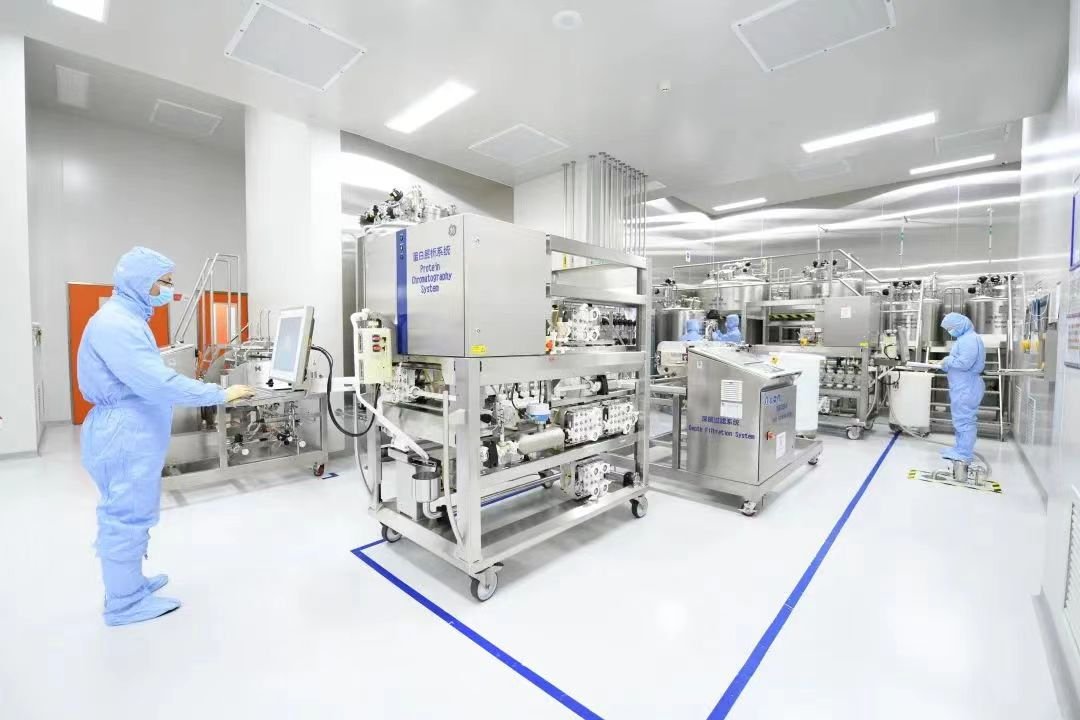
In downstream biopharmaceutical processes, depth filtration leverages high dirt-holding capacity and multi-mechanism retention (mechanical sieving/size exclusion, electrostatic adsorption, filter aid adsorption, etc.), making it the preferred clarification method for cell culture fluid and fermentation broth. Nevertheless, manufacturers frequently encounter a common pain point in routine production: the recovery of target products after depth filtration often fails to meet expectations, resulting in substantial product loss. This article systematically analyzes key factors responsible for compromised recovery in depth filtration from the core dimensions outlined below.
1 Excessive Shear Stress Induced by High Throughput / High Pressure
During primary depth filtration, elevated throughput or transmembrane pressure generates excessive shear stress, which may trigger the following adverse outcomes:
Damage to shear-sensitive proteins (e.g., certain fusion proteins and virus-like particles), triggering conformational changes, aggregation and even precipitation. The newly formed aggregates are directly retained by filters.
Impaired cell membrane integrity, leading to cell lysis and release of intracellular contaminants including cell debris, host cell proteins (HCPs) and host cell DNA (HCD). These contaminants increase the turbidity and viscosity of feed material and impose greater burden on secondary depth filtration. Given the generally smaller pore size of secondary depth filter media, contaminants released from cell lysis rapidly form a compact filter cake on the surface of secondary depth filter sheets. This causes rapid flux decay and pressure differential build-up, leading to incomplete target protein recovery during chase flushing.
Proteolytic degradation of target proteins. Certain enzymes such as thioredoxin reductase and glucose-6-phosphate dehydrogenase (G6PDH) are critical mediators of disulfide bond reduction in target proteins (e.g., monoclonal antibodies), ultimately resulting in substandard product recovery.
Optimization Recommendations
During experimental trials, control the flux of primary depth filters within 50–120 LMH, and secondary depth filter flux within 150–300 LMH. Maintain the pressure differential across both filter stages below 1 bar.
2 Non-Specific Adsorption via Electrostatic or Hydrophobic Interactions
Depth filter media are typically positively charged to facilitate adsorption of negatively charged impurities such as HCD and HCP. Several scenarios may occur:
When the protein carries a net negative charge (feed pH > protein pI), the target protein can be adsorbed onto positively charged depth filter media. Although impurity clearance can be improved, non-specific adsorption of negatively charged target proteins occurs and causes recovery loss.
When the protein carries a net positive charge (feed pH < protein pI), electrostatic repulsion arises between the protein and positively charged filter media. This repulsion effectively reduces non-specific adsorption of target proteins and improves recovery.
When the net surface charge of the protein is minimal (feed pH ≈ protein pI), hydrophobic interactions dominate. The solubility of the target protein reaches its minimum under this condition, rendering it prone to aggregation and precipitation. Aggregates are subsequently trapped or adsorbed by depth filters, resulting in reduced recovery.
Optimization Recommendations
pH adjustment: Adjust feed pH to below the pI of the target protein to render the protein positively charged. Electrostatic repulsion minimizes protein adsorption on positively charged filters and improves recovery.
Modulation of filtration flow rate: For negatively charged target proteins, low flow rates extend contact time between feed and filter media, which generally enhances impurity removal yet elevates the risk of target product loss. Higher flow rates shorten contact duration between feed and filter media and can moderately boost recovery, albeit at the potential cost of reduced impurity clearance.
3 Additional Contributing Factors
(1) Insufficient chase volume
Buffer chase is commonly implemented post depth filtration to recover target product retained within system dead volume. Inadequate chase volume leads to incomplete target product recovery and low overall yield.
Recommendation: Perform chase with buffer equivalent to 2–3 times the system dead volume.
(2) Inadequate filter wetting
Insufficient wetting of depth filters reduces the effective filtration area, causing localized excessive flow velocity. A compact filter cake rapidly forms on filter surfaces, resulting in premature filter fouling and incomplete target product recovery.
Recommendation: Ensure thorough wetting of depth filters prior to use.
(3) Filter fouling induced by high solids and high turbidity feed
Feed streams with high turbidity, high solids loading or abundant fine particulates rapidly form dense filter cakes, triggering sharp flux decline and filter clogging, which prevents complete product recovery.
Recommendation: Implement pre-treatment of feed material such as centrifugation; terminate filtration and initiate chase flushing before severe filter fouling occurs.
Conclusion
Optimization of product recovery in depth filtration constitutes a systematic engineering task with no universal solution. It requires in-depth understanding of protein characteristics, filter performance and fluid dynamics. Every incremental percentage improvement in recovery can translate into considerable economic benefits for commercial manufacturing.