

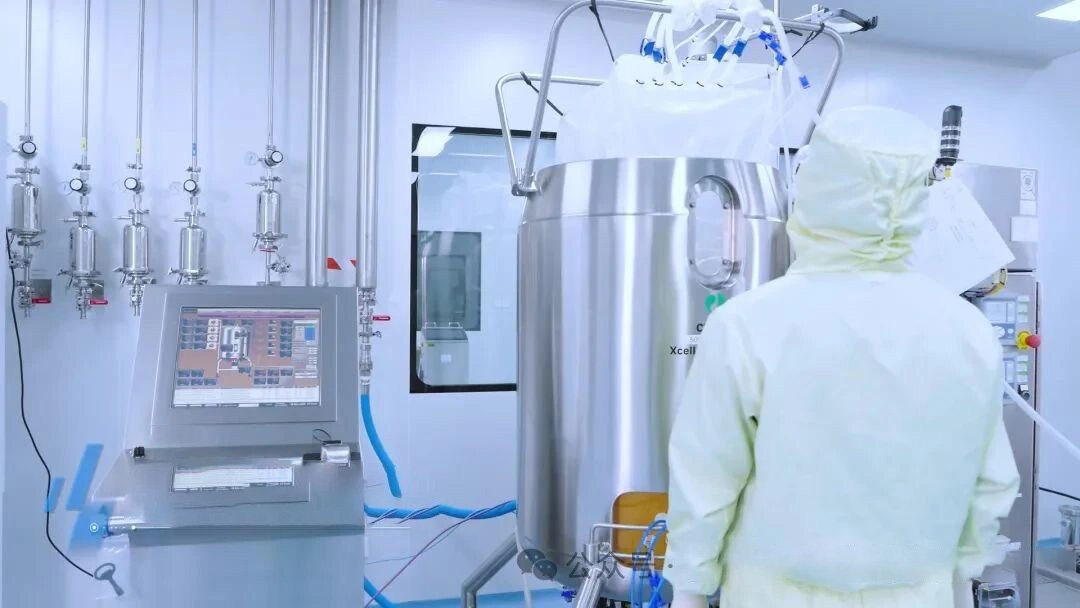
In the biopharmaceutical industry, mounting cost pressures and scale-up risks for upstream processing are driving unprecedented technological transformation. As candidate molecules advance into late-stage clinical development and commercialization, upstream teams face dual challenges. On one hand, drastic shifts in mixing, mass transfer and shear environments during process scale-up may trigger deviations in titer and product quality at any moment. On the other hand, substantial costs incurred by cell culture media, single-use consumables, facility infrastructure and production timelines have turned “cost reduction and efficiency improvement” from a slogan into an existential imperative.
The Dilemmas of Process Scale-Up and Cost Control
On the surface, scale-up challenges manifest as deviations in engineering parameters. Fundamentally, they arise from the conflict between cells’ extreme sensitivity to microenvironments and inevitable heterogeneity within large-scale bioreactors. Dissolved oxygen fluctuations that remain manageable at small scales can evolve into localized oxygen-depleted zones in 10,000-liter bioreactors; mild shear forces observed in lab-scale vessels may induce cellular apoptosis within baffle zones of large tanks. Such heterogeneity directly leads to metabolic shifts, glycosylation heterogeneity and even batch failures. To mitigate risks, manufacturers adopt over-engineered strategies – conservative feeding profiles, excessive scale-up safety margins and additional engineering batches – which in turn severely erode profit margins.
Cost challenges are deeply intertwined with scale-up risks. To avoid scale-up failures, companies are forced to construct multiple large stainless steel production lines, incurring heavy capital expenditure. Once product development stalls or market demand changes, these dedicated facilities become idle assets. Even with single-use bioreactors, consumable costs rise linearly with scale. Combined with the high price of serum, growth factors and animal-component-free chemically defined media, alongside downtime and validation costs from repeated cleaning and sterilization, upstream costs permeate every segment of manufacturing.
Scale-up and cost difficulties in upstream processing are not isolated issues. Collectively, they point to a core deficiency: insufficient process understanding, narrow design spaces, and siloed unit operations. The path forward lies in systematically integrating process intensification, model-based prediction, automated control and innovative manufacturing paradigms.
Pathway 1: Process Intensification – Restructuring Economic Models via Space-Time Yield
Process intensification serves as a powerful lever to resolve both scale-up and cost bottlenecks simultaneously. Conventional low-cell-density, long-duration fed-batch culture can be transformed into high-cell-density perfusion or concentrated fed-batch platforms, boosting volumetric productivity severalfold to tens of times higher. A more transformative approach is N-1 perfusion seed expansion. Traditional sequential seed train expansion requires lengthy timelines and imposes limits on inoculation density. By implementing perfusion at the late stage of seed cultivation, ultra-high-density, high-viability seed cultures can be rapidly generated for direct inoculation of production bioreactors. This shortens production duration, cuts overall media consumption and optimizes per-batch costs. The savings generated by intensification can fully offset extra expenditure on perfusion media and even deliver net economic gains.
Pathway 2: Digital Model-Driven Scale-Up to Replace Empirical Trial-and-Error
Scale-up failures frequently stem from inadequate forecasting of large-scale operational conditions. Systematic breakthroughs require predictive capabilities spanning microscale to macroscale phenomena. Using scale-down models and computational fluid dynamics (CFD) simulation, oxygen-depleted zones, high-shear regions and concentration gradients representative of production-scale bioreactors can be replicated in bench-scale bioreactors to characterize cellular responses. Design space exploration defines feasible ranges for critical parameters, rather than locking operations into a single “golden batch” setpoint. Furthermore, scale-up criteria built upon mixing time, oxygen mass transfer and shear frequency are being redefined by digital twins. Coupling CFD with metabolic flux models enables prediction of metabolic fluxes across distinct zones within large bioreactors, allowing virtual evaluation of feeding and agitation strategies.
This “virtual-first, physical-second” framework condenses iterative trials that previously required multiple 2,000-liter engineering batches into several rounds of model simulation. It drastically reduces expenditure and schedule delay risks, establishes tangible foundations for technology transfer, and eliminates reliance on individual empirical know-how.
Pathway 3: Mitigating Scale-Up Sensitivity at the Source
Scale-up resilience can be embedded from the earliest stages of cell line construction and media design, by engineering cells with intrinsic tolerance to hypoxia and ammonia accumulation. CRISPR-mediated knockout of lactate dehydrogenase, inhibition of apoptotic pathways and remodelling of glycosylation networks enable development of robust “super host cell lines” with minimal metabolite byproducts. Paired with chemically defined media, metabolic flux analysis supports dynamic nutrient tuning to sustain cells in a highly productive state and prevent accumulation of cytotoxic metabolites. This co-engineering strategy embeds enhanced process tolerance at the genetic level of cells and culture media. Cell culture becomes less labour-intensive; feeding regimens are simplified to deliver rugged, consistent processes, alleviating burdens on operator training and concerns over batch-to-batch variability. Meanwhile, reduced byproduct formation eases downstream purification loads, creating cascading cost benefits across the full manufacturing value chain driven by upstream optimization.
Pathway 4: Implementation of PAT and Automated Systems
A major contributor to scale-up and cost challenges is the “black-box” nature of traditional processes. Reliance on offline sampling and delayed detection amplifies intra-batch variability, with corrective interventions always lagging behind process deviations. Embedding process analytical technology (PAT) including Raman spectroscopy, capacitance probes and off-gas mass spectrometry into upstream workflows enables real-time online monitoring of glucose, lactate, ammonia, viable cell density and even product titer. Combined with multivariate data analysis and advanced process control algorithms, feeding rates, temperature shift timing and harvest endpoints can be autonomously adjusted according to metabolic trends.
PAT elevates process control from passive error correction to proactive regulation. Upon environmental perturbations, the system delivers automatic compensation to maintain operation within the centre of the design space, significantly improving batch-to-batch consistency.
For scale-up: even with variations in agitation and aeration conditions, the automated control system buffers impacts from physical field heterogeneity by modulating substrate supply. For cost control: precise automated regulation reduces raw material waste from over-feeding and lowers the incidence of failed batches caused by metabolic drift. In addition, compliant, high-efficiency data architecture lays the groundwork for real-time release testing, substantially shortening batch release lead times and inventory holding costs.