





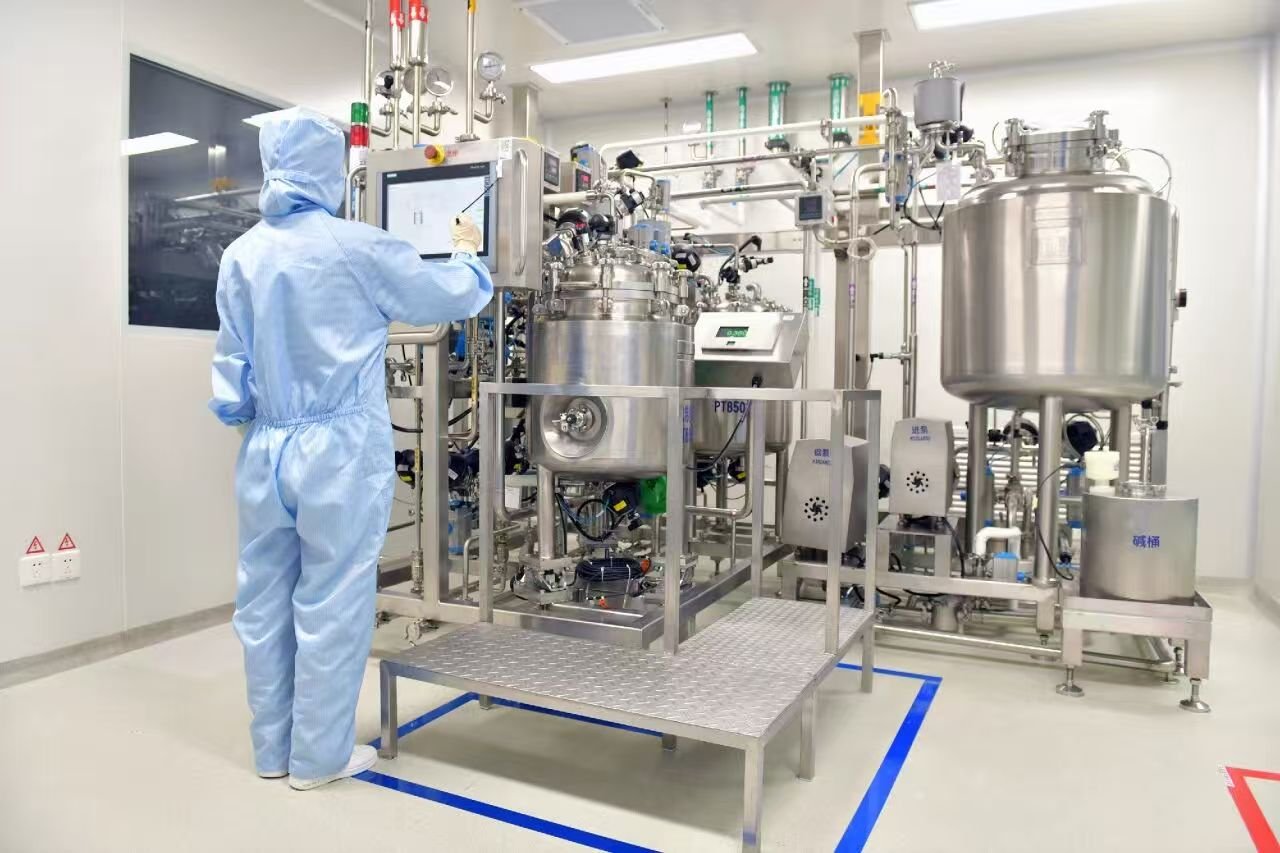
I. Exosomes as Clinical Therapeutic Products or Technologies: Multi‑Dimensional Purity Requirements and Regulatory Evidence Packages
When products enter clinical research and pharmaceutical development, the complexity of purification processes increases substantially. The Guidelines for Filing of New Cell‑Component‑ and Derivative‑Based Therapeutic Technologies for Clinical Research (Version 1) issued by the National Health Commission of the People’s Republic of China in 2026 imposes substantive requirements on purification processes in Chapters 5.3 (Process Research) and 5.5 (Quality Research): developers shall systematically describe each step of the purification process, define process parameters and implement in‑process controls, and provide study data demonstrating the process’s capacity to remove impurities such as host‑cell proteins, nucleic acids, and endotoxins as well as process‑derived residuals (National Health Commission of China, 2026). Meanwhile, the Minimal Information for Studies of Extracellular Vesicles 2023 (MISEV2023) published by the International Society for Extracellular Vesicles (ISEV) explicitly states in the MISEV‑P (preparation reporting) section that all EV‑related research must truthfully report isolation and purification methods, including applied technologies, operating parameters, step sequences, and basic characterization results of final products, to ensure research reproducibility and cross‑study comparability (Welsh et al., 2024). Furthermore, Na et al. (2026), in a stem‑cell‑derived EV quality‑assessment framework published in the Journal of Extracellular Vesicles, clarify that purification‑related impurities — host‑cell proteins (HCP), residual nucleic acids, and process‑derived contaminants — constitute critical components for safety evaluation of EV products and shall be systematically documented in CMC dossiers.
Accordingly, purification objectives for rigorous medical scenarios can be summarized into four dimensions:
- High particle recovery: guarantee sufficient product potency;
- High purity: maximally eliminate process‑related impurities;
- Preservation of functional integrity: retain biological activity of EVs;
- Batch‑to‑batch consistency: support quality release decisions.
Inherent trade‑offs exist among these four objectives. Achieving an optimal balance aligned with specific product positioning represents the core challenge in purification‑process development.
II. Mainstream Exosome Purification Technologies: Principles, Performance and Application Boundaries
Multiple mature and emerging technical routes have been established for exosome and extracellular‑vesicle purification, each with distinct physicochemical principles and performance characteristics. Seven mainstream technologies are systematically analyzed below.
2.1 Differential Ultracentrifugation (UC)
Differential ultracentrifugation is the most widely adopted traditional isolation method for exosomes. Its core workflow includes low‑speed centrifugation (300–2 000 × g) to remove cells and large cellular debris, intermediate‑speed centrifugation (10 000–20 000 × g) to deplete large vesicles (microvesicles and apoptotic bodies), and final high‑speed ultracentrifugation (100 000–120 000 × g, 60–90 min) to pellet and collect small vesicles. The primary strengths of UC lie in its high versatility — implementable in nearly any laboratory equipped with an ultracentrifuge — and low marginal cost owing to no requirement for special consumables.
Nevertheless, fundamental technical limitations constrain its applicability as a GMP‑compliant manufacturing platform. First, centrifugal forces of 100 000–120 000 × g inflict substantial mechanical damage on vesicle membrane structures, triggering aggregate formation. Pellets contain genuine vesicles co‑precipitated with abundant protein aggregates, compromising product purity and functional integrity (Visan et al., 2022). Second, UC relies on closed centrifuge tubes with typical single‑run processing volumes of only several hundred millilitres, offering virtually no scalability for industrial‑scale production with feedstock above 10 L.
In a head‑to‑head systematic comparison published in the Journal of Extracellular Vesicles, Visan et al. (2022) contrasted TFF‑SEC and UC‑SEC workflows. Results demonstrated that the TFF‑SEC route outperformed UC‑SEC in vesicle particle yield, protein purity, and retention of vesicle functional markers. For developers aiming to build sustainable GMP manufacturing platforms, UC is better suited as an exploratory tool for early‑stage research rather than a core step in final manufacturing processes.
2.2 Density‑Gradient Ultracentrifugation (DG‑UC)
Density‑gradient ultracentrifugation incorporates density‑gradient media (most commonly iodixanol / OptiPrep) into conventional UC. It achieves high‑resolution separation based on differences in buoyant density among vesicle subpopulations within sucrose or iodixanol gradients. Exosomes typically exhibit a characteristic buoyant‑density range of 1.10–1.20 g/mL, distinctly separated from cellular debris and protein aggregates. Consequently, DG‑UC delivers higher purity than standard UC and enables fractionated collection of density‑resolved vesicle subpopulations, making it suitable for fundamental research requiring refined subpopulation profiling.
However, DG‑UC entails extremely labor‑intensive operations: gradient preparation demands strict technical reproducibility, full workflows (gradient centrifugation plus fraction collection) usually exceed 5 h, and per‑tube processing volumes range from only a few millilitres to tens of millilitres, resulting in very low throughput. Moreover, high concentrations of iodixanol carry certain cytotoxic potential, and residual media must be removed in downstream steps. Collectively, DG‑UC is oriented toward research‑driven subpopulation separation rather than mainstream manufacturing of clinical‑grade products.
2.3 Tangential‑Flow Filtration (TFF)
Tangential‑flow filtration represents one of the most industrially promising core technologies for GMP‑grade exosome manufacturing. Distinct from dead‑end filtration (DEF), feedstock flows tangentially across hollow‑fibre membrane surfaces. Transmembrane pressure drives permeation of solvent and small‑molecular species including small proteins, free nucleotides, and culture‑media components through membrane pores, while vesicles are retained and recirculated along the tangential flow direction. By selecting appropriate molecular‑weight cut‑off (MWCO) membranes (typically 100–500 kDa or corresponding pore sizes), TFF accomplishes sample concentration, buffer exchange (diafiltration), and partial removal of soluble proteins in a single unit‑operation.
The most prominent advantages of TFF are its capacity for large‑volume sample handling and linear scalability. Scale‑up from laboratory scale (10–100 mL) to GMP manufacturing scale (10–1 000 L) is realised by increasing hollow‑fibre membrane area, while key process parameters (transmembrane pressure, cross‑flow velocity, diafiltration volume) remain relatively stable during scale‑up, ensuring predictable process transfer and validation. Closed‑system configurations enable sterile connections between TFF devices and upstream/downstream equipment, complying with strict GMP enclosure requirements. Across multiple human and murine cancer cell lines, Visan et al. (2022) demonstrated that the TFF‑SEC workflow exhibits superior particle yield, batch‑to‑batch reproducibility, processing time efficiency, and scalability compared with UC‑SEC, representing one of the most representative head‑to‑head comparative studies of this combinatorial scheme.
Major technical challenges for TFF centre on membrane fouling: prolonged operation or processing of high‑protein feedstock may cause pore blockage by proteins or aggregates, reducing flux and altering vesicle retention efficiency. In addition, TFF alone generally cannot attain the high‑purity benchmarks demanded for clinical‑grade products, necessitating coupling with downstream SEC for further removal of size‑matched protein aggregates that TFF cannot efficiently eliminate.
2.4 Size‑Exclusion Chromatography (SEC)
Size‑exclusion chromatography exploits molecular‑sieving effects of porous stationary‑phase beads (e.g., Sepharose CL‑2B, qEV series) to separate vesicles from soluble proteins. Vesicles substantially larger than column pore sizes cannot enter bead pores and elute first in the void volume, whereas smaller soluble proteins permeate internal pores and display longer retention times, achieving temporal separation during elution. SEC operates under mild conditions (ambient temperature, isotonic buffers, negligible mechanical shear stress), offering superior preservation of vesicle‑membrane integrity and biological functionality relative to ultracentrifugation‑based methods.
Under standard operating procedures, SEC commonly employs 1 × PBS or suitable GMP‑grade buffers as mobile phase. Small‑format columns (e.g., qEV original, 35 nm pore size) accept loading volumes of 0.5–1 mL per run; industrial‑scale preparative columns (e.g., ÄKTA systems paired with XK 50‑series or custom large‑format columns) achieve single‑run capacities of tens to hundreds of millilitres of concentrated feedstock.
Notably, SEC is conventionally implemented post‑TFF concentration. On one hand, TFF reduces large‑volume conditioned media to loading‑compatible volumes and markedly improves overall process efficiency. On the other hand, TFF removes most soluble proteins, allowing SEC columns to operate under reduced protein load, extending column lifetime and enhancing resolution. SEC delivers fine clearance of size‑matched protein aggregates (e.g., albumin aggregates, lipoprotein particles) that persist after TFF, serving as the key purity‑enhancing unit‑operation within the TFF + SEC combinatorial workflow (Visan et al., 2022).
2.5 PEG Precipitation
Polyethylene glycol (PEG, typically 6 000–8 000 Da) induces co‑precipitation of vesicles via competitive hydration that reduces free water activity in solution, enabling recovery under relatively low centrifugal forces. The procedure is technically simple, requiring only conventional low‑speed centrifuges, and commercial kits are available.
Nevertheless, PEG precipitation bears significant purity drawbacks: substantial co‑sedimentation of proteins and lipoproteins occurs alongside vesicles, yielding final products with high protein impurity levels. Furthermore, residual PEG at high concentrations may interfere with biological assays and necessitates additional washing steps.
Considering purity and safety constraints, PEG precipitation is inappropriate for purification workflows intended for rigorous medical applications. Its utility is largely confined to rapid crude enrichment or pre‑processing of non‑clinical samples.
2.6 Affinity Purification and Immunoaffinity Capture
Marker‑based affinity‑purification strategies utilise immobilised specific ligands (e.g., anti‑CD63, anti‑CD81, anti‑CD9 antibodies or cognate natural ligands) for highly selective capture of target vesicle subpopulations, followed by gentle elution to release desired EVs. This approach achieves subpopulation‑purification resolution unattainable by alternative methods, offering unique value for high‑end research into functional subsets and engineered‑EV product development.
However, substantial commercialisation bottlenecks persist. Immobilised antibodies incur extremely high production costs; single‑run consumable expenses may reach thousands to tens of thousands of Renminbi. Batch‑to‑batch variability in antibody affinity directly modulates capture efficiency and final quality, introducing extra challenges for batch‑consistency management. Elution conditions (frequently low‑pH or high‑salt environments) may impair vesicle‑membrane architecture and functional cargo payloads. At present, affinity purification is mainly applied for research‑oriented EV‑subpopulation profiling and lacks economic feasibility for large‑scale commercial manufacturing.
2.7 Microfluidics and Emerging Physical Sorting Technologies
Novel microscale hydrodynamic sorting technologies including acoustofluidics, inertial microfluidics, Deterministic Lateral Displacement (DLD), and Dielectrophoresis have attracted widespread research interest for exosome purification. These approaches separate particles based on differential behaviours within physical fields, in principle enabling continuous‑flow sample processing under mild conditions while avoiding vesicle damage caused by centrifugal forces or chemical reagents.
Even so, fundamental scalability bottlenecks remain. Current microfluidic chips deliver throughputs ranging from microlitres to several millilitres per minute, multiple orders‑of‑magnitude below industrial‑manufacturing requirements. Although acoustofluidics shows certain engineering potential for throughput improvement, no GMP‑validated EV‑purification microfluidic platform has yet entered commercial production. Accordingly, these technologies represent forward‑looking research directions rather than near‑term industrially adoptable mainstream options.
III. Technical Combination Strategies: Purification Logic for Rigorous Medical Applications and Early‑Stage Lock‑in of Process Routes
No single purification technology can simultaneously satisfy the combined rigorous‑medical requirements for high purity, high recovery, functional integrity, and batch‑to‑batch consistency. This stems not from isolated technical defects but intrinsic physicochemical limitations of each method. Recognising this fundamental constraint forms the starting‑point for constructing multi‑step combinatorial purification strategies. Before discussing specific schemes, two prevalent industry misconceptions must be clarified, converging on one critical conclusion: the purification‑process route for exosome products shall be locked in early development according to commercial objectives and shall not be arbitrarily switched across development phases.
3.1 Complementarity Analysis of Individual Technologies
UC/DG‑UC exhibit limited capacity for protein‑contaminant removal from solution; abundant proteins co‑precipitate with vesicles and create “apparent high purity”: particle counts may appear adequate, yet protein‑impurity levels can exceed acceptable safety thresholds. TFF enables efficient concentration and preliminary protein depletion yet cannot discriminate lipoprotein particles and protein aggregates of similar sizes. SEC excels at soluble‑protein removal but possesses limited single‑run loading capacity and cannot directly process large‑volume raw conditioned media. Such complementarity dictates that multi‑step serial workflows are indispensable for building high‑quality, scalable EV‑purification schemes (Liangsupree et al., 2021).
3.2 Dominant GMP‑Compliant Route: Pre‑clarification, TFF, SEC
Among reported clinical‑grade EV manufacturing workflows, the three‑step serial scheme of pre‑clarification → TFF → SEC has emerged as the most widely accepted GMP‑oriented route. Process logic and functional allocation of each unit‑operation are described below.
Step 1: Pre‑clarification
This step sufficiently removes large particulate matter and constitutes a major source of EV loss. Its purpose is to prevent subsequent fouling of TFF hollow‑fibre membranes or excessive occupancy of SEC column bed volume.
Option A — Low‑speed centrifugation: Most published EV‑purification protocols describe initial low‑/intermediate‑speed centrifugation for cellular‑debris removal, succeeded by TFF concentration and SEC polishing. This workflow is fully workable for research‑scale batches of several litres. For instance, Li et al. (2025), in Cytotherapy, reported GMP‑grade sEV production from umbilical‑cord MSCs adopting low‑speed centrifugation for pre‑clarification of 2 L conditioned media followed by TFF‑SEC purification, establishing standard operating procedures for clinical‑grade manufacture and providing well‑documented clinical‑translation evidence for this route. Nevertheless, upon scale‑up to tens‑ or hundreds‑litre batches, pre‑clarification centrifugation becomes a hidden scalability bottleneck for overall processes. Large‑volume centrifuges typically process only several to over ten litres per run, requiring serial cycles for larger feedstock volumes. Critically, centrifugation represents open‑batch handling that is difficult to integrate with closed continuous‑flow workflows of TFF and SEC, introducing notable contamination‑control risks under stringent GMP enclosure requirements.
Option B — Dead‑end depth filtration: Feedstock passes perpendicularly through multi‑layer depth‑filter media, retaining cells and large debris within filter matrices. Operation is straightforward with low capital‑equipment costs and performs satisfactorily at small‑to‑medium scales. Studies indicate dead‑end filtration achieves ~50 % clarification efficiency with ~70 % EV recovery. Subsequent TFF and chromatographic polishing yield overall recoveries exceeding 85 %, while preserving EV tetraspanin markers (CD63, CD9, CD81) and CD73 enzymatic activity (Jung et al., 2025). However, as processing volumes increase, filter‑cake formation over membrane surfaces rapidly reduces flux, and membrane clogging compromises recovery, representing an inherent limitation for large‑scale deployment.
Option C — Tangential‑flow depth filtration (TFDF): Depth‑filtration is combined with tangential‑flow patterns; feedstock flows tangentially along inner lumens of tubular depth filters. Tangential flow continuously sweeps accumulated particulates from filter surfaces, mitigating fouling and sustaining stable throughput. TFDF is well‑validated for large‑scale GMP harvest clarification of lentiviral and AAV vectors, supporting credible cross‑domain adaptation to EV manufacturing (Challenger, 2024). Nonetheless, clarification cycles require 2–3 h irrespective of feedstock volume, and equipment costs are high; TFDF delivers superior cost‑effectiveness primarily for high‑volume feeds of hundreds of litres.
In summary, scalability boundaries for the three clarification approaches are as follows: dead‑end depth filtration suits medium‑scale batches ranging from several litres up to 100 L; TFDF is appropriate for continuous‑flow processing of hundreds‑litre high‑volume feedstocks; pre‑clarification centrifugation remains viable for research and early‑clinical batches ≤ several litres but should be treated as a transitional measure prior to adoption of filter‑based workflows rather than a core step for long‑term commercial manufacture.
Step 2: TFF Concentration and Diafiltration
Clarified supernatant is processed by TFF systems using hollow‑fibre membranes typically with 100–500 kDa MWCO. TFF fulfils two key objectives:
1.Concentrate raw supernatant of up to tens of litres down to SEC‑compatible loading volumes of several millilitres to tens of millilitres (concentration factors 10‑ to 1 000‑fold);
2.Perform diafiltration with 5–10 volumes of PBS or appropriate buffer to eliminate abundant soluble small‑molecular species (free nucleotides, amino acids, small cytokines) and proteins below membrane MWCO, reducing protein burden for downstream SEC.
Step 3: SEC Polishing
TFF‑concentrated feedstock undergoes final purification via preparative‑grade SEC columns. Vesicles (30–200 nm diameter) elute in the void volume, whereas residual soluble proteins including albumin and lipoprotein contaminants penetrate bead pores and elute later, accomplishing fine separation. Introduction of SEC delivers qualitative improvement in final‑product protein purity, quantitatively validated in comparative investigations by Visan et al. (2022).
A defining feature of this three‑step workflow is linear scalability: TFF serves as the core bulk‑processing module supporting scale‑up from laboratory to industrial scales; downstream SEC polishing is matched to TFF throughput by increasing column diameter or operating columns in parallel. This process philosophy aligns well with regulatory expectations stipulated in the Guidelines Chapter 5.3 demanding process reproducibility, scalability, and validatability.
3.2 Different Development Phases May Adopt Distinct Purification Routes
This constitutes a prevalent yet hazardous industry misconception that merits explicit correction.
EVs isolated via different purification workflows may intrinsically represent distinct products in terms of compositional profiles. Starting from identical MSC conditioned media: ultracentrifugation enriches density‑range vesicle subpopulations through sedimentation forces while co‑precipitating abundant protein aggregates; the TFF + SEC workflow selects by particle size and molecular weight, preserving broader vesicle‑size distributions and drastically reducing protein contamination; filters of varying pore sizes and matrix types systematically alter subpopulation profiles entering downstream processing. Therefore, purification‑method selection itself defines “what the product is”. Vesicle subpopulations enriched by different workflows may exhibit systematic differences in proteome, miRNA cargo, and lipid composition, directly linked to therapeutic efficacy and safety profiles.
This perspective leads to important regulatory realities. According to ICH Q5E guidance on comparability studies for biotechnological products, post‑process‑change biologic products must demonstrate high similarity to pre‑change material, and existing knowledge must adequately predict that any quality‑attribute differences exert no adverse impact on safety and efficacy (ICH, 2004). Given the high compositional complexity of EV products, switching core purification routes mid‑development — for instance from ultracentrifugation to TFF + SEC, or from dead‑end filtration to TFDF — demands not only similarity of physicochemical parameters (particle‑size distribution, zeta potential, marker expression), but also equivalence of biological potency‑assay outputs, safety‑relevant compositional profiles (e.g., oncogenic miRNA signatures), and immunogenicity. Given current technical capabilities, fulfilling such equivalence‑proof requirements for EV products is extremely difficult and sometimes scientifically unfeasible.
Consequently, sound development logic dictates that purification‑process routes shall be defined early‑stage according to commercial‑isation goals and treated as core components of product definition throughout the entire development lifecycle. Rational phased‑process evolution does not mean replacing core purification technologies; instead, it represents linear scale‑up within the same core technical framework. For example, scaling a laboratory‑scale dead‑end depth‑filtration + TFF + SEC workflow to GMP scale while preserving core‑parameter logic, and conducting comparability studies to confirm scale‑up does not alter product‑quality attributes. This is fundamentally different from switching from ultracentrifugation to TFF + SEC: the former constitutes scalability validation of a single technical route; the latter constitutes a fundamental product‑composition redefinition that triggers full comparability obligations under regulatory frameworks, whose equivalence‑proof thresholds are currently technically challenging for EV products.
3.4 Process‑Route‑Selection Framework Based on Commercial Objectives
Downstream‑process‑selection logic for exosome products should revolve around one central question: at what scale, to what purity standards, and under which regulatory pathway will this product be commercialised? The answer determines both process starting‑points and end‑points.
For developers targeting rigorous medical applications with projected commercial batch sizes of several to tens of litres, constrained by early‑stage resources, dead‑end depth‑filtration + TFF + SEC may serve as the starting workflow — provided this scheme is designed from inception for GMP compatibility, and core‑process‑parameter continuity is maintained during subsequent scale‑up, rather than treated as a disposable transitional solution. For developers anticipating batch sizes of hundreds of litres with clear industrial‑manufacturing roadmaps, TFDF + TFF + SEC should constitute the foundational framework from early‑product‑development, avoiding substantial comparability‑study regulatory risks and cost burdens stemming from later‑stage route changes.
Practical implications of this selection logic are that process‑route decisions must precede immediate research‑phase requirements, enabling end‑to‑end‑oriented CMC‑system design. Projects adopting ultracentrifugation in early‑stage research purely for operational convenience rather than strategic planning, and forced to switch workflows upon entering clinical development, often incur multiple‑fold higher avoidable development costs and face irreparable evidentiary gaps during regulatory review.
3.5 Process‑Parameter Control and Batch‑to‑Batch‑Consistency Assurance
After process‑route definition, each unit‑operation contains critical process parameters (CPPs) whose deviations directly impact critical quality attributes (CQAs). For TFF, for example, transmembrane‑pressure operating windows, cross‑flow velocity, temperature, and diafiltration volumes must be optimised and characterised during process development and maintained within validated ranges during scaled‑up manufacture. Na et al. (2026), within their EV‑product quality‑assessment framework, emphasise that purification‑process parameter records and in‑process‑monitoring datasets form core evidence chains supporting batch‑consistency claims. Downstream‑purification workflows themselves represent CMC sub‑systems requiring design‑space exploration, parameter locking, and continuous monitoring, consistent with process‑research requirements stipulated in Chapter 5.3 of the Guidelines (National Health Commission of China, 2026).
IV. Scalability Feasibility and Cost Structure: Core Considerations for Commercialisation Pathways
For commercially‑oriented exosome‑product developers, technical feasibility represents only the starting‑point for process‑scheme evaluation. Scalability and end‑to‑end cost‑structure ultimately determine business‑model viability.
4.1 Processing Bottlenecks for Large‑Volume Supernatants
Taking clinical‑grade manufacturing of MSC‑derived EVs as an example: when upstream production employs 3D FloTrix® bioreactor platforms, single batches yield 10–100 L harvest supernatant with pre‑purification exosome concentrations up to 10¹⁰ particles/mL. Conventional ultracentrifugation is physically impractical for feedstock of such magnitude. Even high‑capacity preparative ultracentrifuges possess typical maximum tube volumes ≤ 100 mL; processing 100 L feedstock demands hundreds of consecutive runs spanning weeks, and cumulative mechanical damage severely impairs product quality. By contrast, appropriately‑sized TFF systems accomplish concentration and diafiltration of 100 L feedstock within several hours, with processing time exhibiting favourable linear correlation with material volume, fully demonstrating scalability advantages.
4.2 Capital‑Equipment Investment and Operational‑Cost Structural Analysis
Capital‑expenditure for constructing a GMP‑compliant integrated pre‑clarification + TFF + SEC purification platform (including hollow‑fibre membrane assemblies, peristaltic‑pump systems, on‑line sensors and data‑acquisition systems, preparative‑scale chromatography hardware, and associated consumables) typically ranges from several millions to tens‑of‑millions Renminbi, contingent on processing scale and automation levels. This capital outlay is substantially lower than requirements for building standalone ultracentrifuge‑based manufacturing lines with multiple high‑speed centrifuges and dedicated facility footprints. Regarding per‑batch operating costs, TFF membrane assemblies may be reused following validated cleaning procedures, and SEC columns can be cycled under rigorous regeneration standard operating procedures, enabling well‑controllable per‑batch consumable expenses for both unit‑operations.
Synthesising preceding technical, regulatory, and commercial‑dimension analyses, a practice‑oriented process‑selection decision framework can be summarised: product positioning defines purity targets and regulatory‑evidence requirements; commercial‑scale objectives (batch size and production frequency) determine applicable scope for core purification technologies; cost‑structure constraints define economically feasible boundaries for multi‑step combinations. The intersection of these three dimensions constitutes the optimal process‑selection space for individual development projects.
For developers targeting rigorous‑medical applications with clear clinical‑translation goals, GMP‑compatible purification platforms centred on TFF + SEC should be established as early as practicable, ensuring adequate technical maturity and supporting validation datasets are available at filing. For developers initially entering non‑rigorous‑medical markets, simplified workflows of microfiltration plus ultrafiltration concentration offer accelerated market‑entry while satisfying baseline safety‑quality requirements. However, if mid‑to‑long‑term strategies include potential expansion into rigorous‑medical fields, technology‑platform selections should preserve upgrade compatibility toward GMP‑compliant workflows, avoiding major downstream‑process reconstruction in future.
Competitive dynamics within the exosome industry are evolving from differentiation anchored in upstream cellular sources and efficacy research toward systematic competition across full‑chain process capabilities. Under this trend, downstream‑purification‑technology accumulation and platform construction will constitute core barriers for the few enterprises capable of crossing both thresholds: from research to clinical development, and from clinical development to commercialisation.
