I. Introduction: Unique Attributes of Radiopharmaceuticals and Core Design Principles
As specialized formulations incorporating radionuclides, radiopharmaceuticals occupy an irreplaceable position in the diagnosis and treatment of thyroid disorders, myocardial perfusion imaging, tumor differentiation and other nuclear medicine applications. The 36 officially documented radiopharmaceuticals in the Chinese Pharmacopoeia are manufactured from 14 types of radionuclides, including iodine-131, technetium-99m and gallium-67. Given the inherent ionizing radiation hazards throughout production workflows, radiopharmaceutical plant design necessitates the establishment of a full-process safety control system centered on systematic radiation protection.
Unlike conventional pharmaceutical manufacturing facilities, radiopharmaceutical plants confront dual technical constraints: complying with GMP specifications for environmental cleanliness and process standardization, and achieving minimal occupational radiation exposure as well as zero environmental radioactive contamination via spatial isolation, radiation shielding, directional airflow regulation and other engineered interventions. China has established a rigorous regulatory framework based on the Pharmaceutical Administration Law of the People’s Republic of China and the Measures for the Administration of Radiopharmaceuticals, mandating multi-layered defensive barriers in site selection, general layout and auxiliary system configuration. Combining practical engineering experience, this paper systematically summarizes the key design and control criteria across multiple functional systems, aiming to provide professional technical references for the safety-oriented construction of radiopharmaceutical production facilities.
II. Site Selection and General Layout: Spatial Barriers for Radiation Risk Prevention
2.1 Radiation Isolation Criteria for Site Selection
A three-tiered spatial protection principle is implemented for radiopharmaceutical plant site selection to eliminate superimposed pollution and radiation diffusion risks:
External environmental isolation: The plant site shall maintain a minimum distance of 500 meters from railways, airports, major traffic arteries, industrial pollution sources and water-contaminated zones, avoiding the superposition of radioactive radiation and chemical pollutants.
Wind field optimization: The production area is arranged on the downwind side of the annual minimum frequency wind direction, utilizing natural ventilation to mitigate the atmospheric diffusion of radioactive aerosols. For instance, most cyclotron centers deploy core production zones on the northwest side of the plant site corresponding to local meteorological characteristics.
Functional zoning isolation: A minimum spacing of 30 meters is reserved between production areas handling different radionuclides and general pharmaceutical workshops, with physical isolation formed by solid enclosures and green buffer zones to eliminate cross-radiation interference.
2.2 Hierarchical Zoning and Layout Management
The entire plant area is classified into three functional zones based on graded radiation risk assessment, realizing targeted risk control:
High-risk radiation-controlled area: Encompassing cyclotron rooms, radionuclide generator rooms and hot-cell radiolabeling laboratories. This core zone is equipped with independent dedicated access and high-standard shielding facilities with a lead equivalent of no less than 10 mm to block intense ionizing radiation.
Medium-risk supervised area: Covering ligand synthesis workshops and semi-finished product testing rooms. Access is strictly limited to authorized personnel, with real-time online radiation dose monitoring implemented throughout the zone.
Low-risk unrestricted area: Including administrative offices and general warehousing areas. The ambient dose rate at the boundary adjacent to the radiation-controlled area is controlled below 0.5 μSv/h.
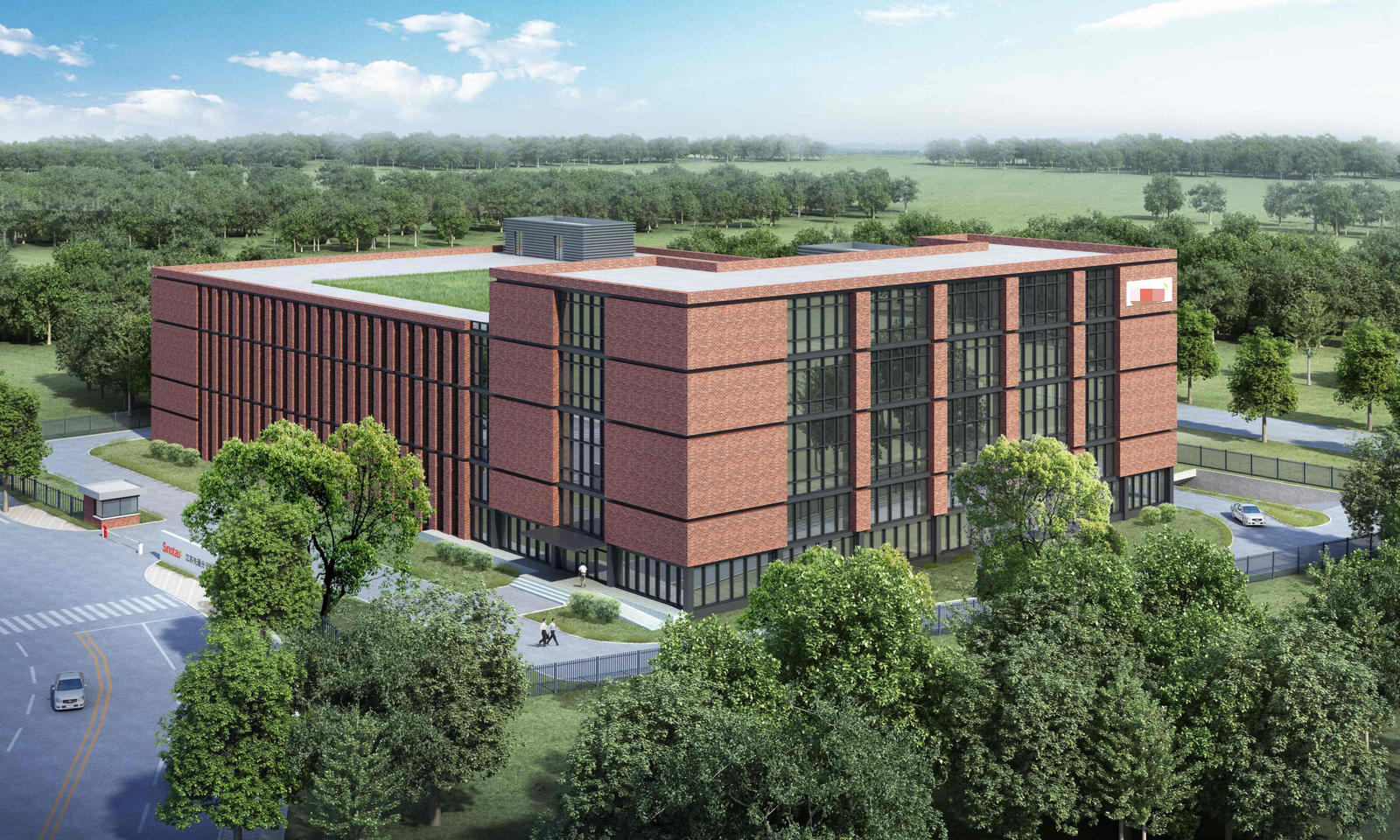
A hollow-square nested layout is adopted for optimal spatial safety: the core radiation-controlled area is centrally arranged, surrounded by the intermediate supervised buffer zone, with auxiliary functional facilities distributed on the periphery. Air locks and buffer rooms are installed at zone junctions to achieve gradual environmental transition, which has been widely applied in domestic PET center construction by placing cyclotron equipment in the building core with enclosed shielding and monitoring systems surrounding it.
III. Personnel and Material Flow System Design: Cross-Contamination Prevention via Directional Path Management
3.1 Graded Protection and One-Way Personnel Circulation
A standardized unidirectional personnel access and decontamination workflow is established with full-process radiation monitoring:
Entry route: Unrestricted area → primary changing room (outer garment and shoe replacement) → secondary changing room (clean protective gowning) → air shower chamber → buffer room → clean corridor → operating area. Radiation dose detectors are installed at each transition node with an alarm threshold of 2.5 μSv/h to intercept abnormal radiation exposure risks.
Exit route: Operating area → whole-body surface contamination monitoring room → constant-temperature decontamination shower room → degowning room → unrestricted area. The access channel will be automatically locked once excessive surface contamination is detected, triggering emergency decontamination procedures.
Engineering practice verifies that independent personnel exit and decontamination passages can reduce the detection rate of personnel radioactive surface contamination by 60%, effectively preventing the outward migration of radioactive pollutants.
3.2 Dual-Track Material Flow Isolation System
A differentiated dual-track logistics management mechanism is adopted for radioactive and non-radioactive materials to achieve thorough risk isolation:
Radioactive material transportation: Radionuclide raw materials and intermediate products are transported through dedicated shielded channels with γ-ray shielding containers of 50 mm lead equivalent. The transportation route avoids high-personnel-density areas, and fully enclosed underground pipelines are deployed for material delivery between cyclotron rooms and radiolabeling workshops.
Non-radioactive material delivery: Purified raw materials and auxiliary supplies enter the clean synthesis area through interlocked clean pass-through windows, which are equipped with 30-minute ultraviolet disinfection cycles and positive pressure control (15 Pa relative to the atmospheric environment) to isolate external pollutants.
Radioactive waste disposal: Contaminated solid waste such as used syringes and dressing wastes is transported via dedicated closed passages to independent decay storage vaults. The vaults are partitioned for classified storage of α and β nuclide wastes, and the decay retention period strictly complies with GB 18871 specifications (e.g., a minimum 60-day decay cycle for iodine-131 waste).
IV. HVAC System Design: Directional Airflow Barrier for Radioactive Diffusion Control
4.1 Precision Control of Negative Pressure Gradient
A hierarchical negative pressure gradient and unidirectional airflow organization are designed to completely block the outward diffusion of radioactive aerosols:
The radiation-controlled area maintains a negative pressure of 10 Pa relative to the clean corridor, and the corridor maintains a 5 Pa negative pressure relative to the supervised area, forming a stable pressure decay sequence from the core operating zone to the buffer zone and the unrestricted area. Variable air volume valves are deployed to ensure a pressure control accuracy of ±2 Pa.
A full fresh air once-through system is adopted for all radioactive operating rooms without air recirculation. The supply air is treated by three-stage filtration (primary, medium and high-efficiency), with the terminal HEPA filter achieving a particle removal efficiency of ≥99.97% for 0.3 μm particles. The exhaust air volume is 1.2 times the supply air volume to guarantee consistent unidirectional airflow.
Targeted enhanced ventilation measures are applied for special zones: hot-cell operating rooms are equipped with local fume hoods with a surface wind speed of 0.5–0.6 m/s; iodine radiolabeling rooms are fitted with high-efficiency activated carbon adsorption devices with an iodine removal efficiency of over 99%; exhaust air from α nuclide operating areas undergoes two-stage high-efficiency filtration before high-altitude discharge via chimneys with a height of no less than 15 meters.
4.2 Integrated Air Purification and Disinfection Strategy
Differentiated exhaust gas purification technologies are adopted based on nuclide characteristics: iodine-containing waste gas is treated via silver mesh adsorption combined with high-efficiency filtration, while tritium-containing waste gas is processed by condensation recovery, ensuring that the annual public radiation dose from exhaust emissions is controlled below 10 μSv, fully meeting national environmental safety limits.
A composite disinfection mode combining daily wiping sterilization and regular ozone disinfection is implemented for indoor environments. Ozone disinfection is performed at a concentration of 20–30 mg/m³ with a duration of no less than 1 hour. The HVAC system interlocks to close fresh air valves for internal circulation during disinfection, followed by forced ventilation with an air change rate of over 10 times per hour to complete environmental replacement.
V. Water Supply and Drainage System: Closed-Loop Whole-Process Management of Radioactive Wastewater
5.1 Tiered Decay Treatment and Standard Discharge
A three-stage closed-loop wastewater treatment system is constructed to realize zero leakage and standard discharge of radioactive wastewater:
Source centralized collection: All contaminated wastewater generated in the radiation-controlled area, including equipment flushing water and ground decontamination wastewater, is collected through dedicated thickened UPVC pipelines (wall thickness ≥6 mm) and delivered to special decay tanks. The tanks adopt reinforced concrete structures with 5 mm lead lining to prevent radioactive penetration and leakage.
Static and dynamic decay regulation: The tank residence time is designed based on the half-life characteristics of different nuclides (e.g., no less than 8 half-lives for iodine-131 wastewater). A 3–4 compartment series tank structure is adopted, equipped with uniform stirring devices to ensure full and homogeneous radioactive decay.
Terminal advanced treatment: After sufficient decay, wastewater that meets the discharge standards (total α ≤0.1 Bq/L, total β ≤1 Bq/L) is delivered to the plant wastewater treatment station for further activated carbon adsorption and fine filtration. The exhaust gas generated during wastewater treatment is purified by high-efficiency filtration (efficiency ≥99.99%) before discharge.
5.2 Specialized Auxiliary Water System Facilities
Foot-operated purified water hand washing sinks are installed in the radiation-controlled area, with real-time β-ray radiation monitoring probes equipped at all drainage outlets to achieve online early warning of radioactive contamination.
Constant-temperature (38±2℃) decontamination shower systems are deployed in personnel exit channels. All shower wastewater is directly connected to the radioactive decay tank system to avoid secondary pollution caused by personnel carrying residual radioactive contaminants.
VI. Electrical and Automatic Control System: Intelligent Early Warning and Safety Defense Line
6.1 Redundant Electrical Safety Guarantee
Core functional zones including cyclotron rooms and hot-cell laboratories are designed as first-class power load areas, equipped with UPS uninterruptible power supply systems with a standby duration of no less than 30 minutes, ensuring the continuous and stable operation of key safety equipment such as radiation monitoring systems and emergency ventilation systems under power failure conditions.
The illumination intensity of operating areas is maintained above 300 lux, with explosion-proof emergency lighting devices providing continuous illumination for more than 90 minutes. Key risk points such as lead shielding warehouses and radiolabeling workshops are equipped with infrared monitoring cameras and high-sensitivity radiation dose sensors, with all operational data uploaded to the central control room in real time for 24-hour uninterrupted monitoring.
The entrance of the radiation-controlled area adopts biometric access control interlocked with radiation detection. Unauthorized entry or abnormal radiation signals will trigger audible and visual alarms and automatic channel locking, realizing active safety prevention and control.
6.2 Linked Automatic Control and Emergency Response Logic
The HVAC system adopts a priority start-stop interlock logic: exhaust fans start 30 seconds in advance of supply fans and stop later than supply fans, permanently maintaining the negative pressure gradient of the core zone. Once accidental positive pressure persists for 10 seconds, the system automatically starts standby emergency exhaust equipment and issues fault alarms.
A graded radiation emergency response mechanism is established: when the real-time monitored dose rate exceeds 5 μSv/h, the system automatically closes the fresh air supply valve of the abnormal zone, activates double-capacity emergency exhaust, cuts off non-essential power loads, and locks all access channels to prevent personnel from entering the hazardous area, realizing rapid isolation of radiation risks.
VII. Process Piping System: Whole-Process Contamination Prevention for Material Transmission
7.1 Standardized Configuration of Clean Utility Systems
Purified water and water for injection (WFI) systems adopt continuous circulating designs: purified water circulates at ambient temperature, while WFI maintains a thermal circulation state above 70℃. All process pipelines are designed with a slope of no less than 2%, and all valves and joints comply with the 3D design principle (branch pipe length ≤ 3 times pipe diameter), eliminating dead water zones and preventing microbial breeding and cross-contamination.
The pure steam system takes purified water as the feed water source, with high-precision purity monitors (conductivity ≤1.3 μS/cm) installed at the generator outlet. Steam pipelines are equipped with efficient steam traps to discharge condensate water in a timely manner, effectively avoiding the migration of radioactive contaminants through steam media.
7.2 Enhanced Protection for Special Process Pipelines
Radioactive nuclide delivery pipelines (e.g., fluorine-18 transmission pipelines) are made of 316L medical stainless steel, with customized lead shielding layers wrapped externally. The shielding thickness is calculated based on nuclide radiation energy, with a minimum lead equivalent of 10 mm for fluorine-18 pipelines.
Terminal 0.22 μm sterilizing filters are installed on compressed air pipelines to prevent aerosol impurities from contaminating ligand reagents. All pipelines connected to radiation-controlled areas are equipped with check valves to completely avoid reverse flow and cross-contamination risks.
VIII. Conclusion: Construction of Full-Life-Cycle Radiation Safety Operation System
The safety design of radiopharmaceutical manufacturing plants relies on the integrated construction of a three-in-one system covering protective isolation, real-time monitoring and emergency response. The core design philosophy is to build multi-level redundant safety barriers through spatial zoning isolation, systematic process control and intelligent digital monitoring. The key optimization points in engineering practice are summarized as follows:
First, in the preliminary design stage, radiation protection optimization analysis shall be carried out in strict accordance with the ALARA (As Low As Reasonably Achievable) principle based on the radiation characteristics of α, β and γ nuclides, realizing precise matching of shielding standards and avoiding excessive engineering investment or insufficient protection.
Second, in the construction and acceptance stage, full-standard inspection of shielding works shall be implemented, including a minimum lap width of 50 mm for lead plates and compactness detection of shielding concrete, to ensure that all protective facilities meet design specifications.
Third, in the long-term operation and maintenance stage, a regular performance verification mechanism shall be established: annual ventilation system pressure gradient calibration and quarterly radiation monitor accuracy verification, to sustain the long-term stable and effective operation of the safety protection system.
With the rapid development of PET-CT imaging and targeted radiotherapy technologies, the market demand for high-quality radiopharmaceuticals continues to expand. Standardized and refined plant safety design is not only a basic requirement for regulatory compliance, but also a core guarantee for protecting the occupational safety of staff, the medical safety of patients and the ecological safety of the surrounding environment. Through scientific layout optimization and systematic facility configuration, the coordinated development of production safety and operational efficiency of radiopharmaceutical manufacturing can be realized, providing solid engineering support for the standardized and high-quality development of the nuclear medicine industry.