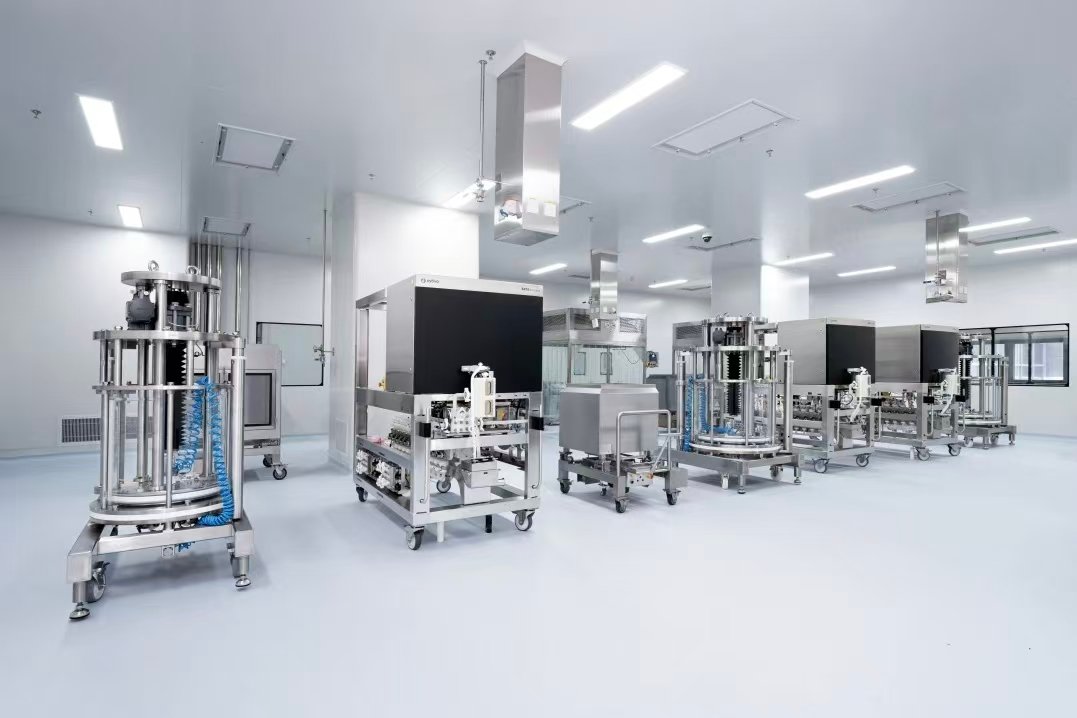
Monoclonal antibodies (mAbs) represent one of the most mature and widely commercialized categories of biopharmaceuticals, with extensive clinical applications in tumor therapy, autoimmune disease intervention, anti-infection treatment and other fields. The industrial manufacturing of mAb drugs consists of two core stages: upstream cell culture and downstream purification. The cell culture supernatant harvested from upstream processes is not a qualified drug intermediate, but a highly complex biological mixture. In addition to the target functional mAbs, the supernatant contains diverse impurities including host cell proteins (HCPs), residual host DNA, cellular metabolic byproducts, unconsumed medium residues, endotoxins, and trace viral particles.
These impurities severely compromise the purity, bioactivity, safety and stability of mAb drugs. Certain trace impurities may trigger immunogenic reactions in humans, posing substantial clinical medication risks. Accordingly, the fundamental essence of mAb downstream purification is to establish a systematic separation and purification framework characterized by highly selective impurity removal, high recovery of target products, and multi-level risk prevention and control, while completely preserving the spatial conformation and biological activity of antibody molecules.
Industrial mAb purification is not a simple superposition of discrete separation operations, but a sophisticated technological process connected in series with standardized unit operations including affinity chromatography, viral inactivation, polishing chromatography, viral filtration, ultrafiltration/diafiltration (UF/DF), and terminal sterile filtration. Each unit operation undertakes distinct and complementary quality control functions, enabling gradient impurity removal, target product enrichment, and progressive risk mitigation. Ultimately, high-purity mAb intermediates that meet pharmacopoeia standards and clinical quality requirements are obtained. This paper systematically elaborates the technical principles, process characteristics, key risks and industrial control points of each core downstream purification unit, and analyzes the core industrialization challenges and technological development trends of the industry.
1. Affinity Chromatography: The Primary High-selectivity Capture Barrier for mAb Purification
As the initial core unit of mAb downstream purification, affinity chromatography enables rapid separation and enrichment of target antibodies from complex supernatant systems. Different from conventional separation technologies based on physicochemical property differences, it achieves precise capture and primary purification of antibodies relying on specific biomolecular recognition and binding interactions.
Protein A affinity chromatography is the most mature and versatile platform widely adopted in industrial mAb production. Derived from the cell wall of Staphylococcus aureus, Protein A specifically and reversibly binds to the Fc region of IgG-type mAbs with high affinity. In contrast, host proteins, nucleic acids, metabolic residues and other impurities lack specific binding sites and directly flow through the chromatographic column with the mobile phase, realizing crude purification via targeted antibody immobilization and automatic impurity removal.
This unit operation possesses three core advantages. First, it delivers exceptionally high selectivity, enabling one-step specific capture of target antibodies, drastically reducing system impurity complexity and significantly improving purification efficiency. Second, the process operates under mild conditions. The binding, washing and elution procedures are performed in neutral, room-temperature buffer systems compatible with physiological conditions, which maximally protects the spatial conformation and bioactivity of antibodies and prevents protein denaturation. Third, it exhibits excellent process universality, applicable to most IgG subtypes with high standardization and favorable scalability for mass production.
Nevertheless, Protein A affinity chromatography has non-negligible industrial risks and cost limitations. Firstly, trace leakage of Protein A ligands may occur, and residual ligands carry potential immunogenicity. Strict washing protocols and cleaning validation systems are required to control residual levels in compliance with pharmacopoeia specifications. Secondly, the high cost of Protein A resins constitutes a major expenditure in mAb purification. Industrial-scale production requires optimized strategies for resin recycling, regeneration validation and service life management to reduce manufacturing costs. Thirdly, long-term cyclic use may lead to resin aging and decreased binding capacity, necessitating routine resin performance monitoring to ensure process stability.
2. Viral Inactivation and Polishing Chromatography: Construction of a Multi-level Drug Safety and Purification System
Despite the substantial improvement in bulk purity after affinity capture, the antibody solution still contains trace impurities and potential viral risks that fail to meet clinical safety standards. Therefore, the process enters a stage of safety enhancement and deep polishing, where low-pH viral inactivation is combined with anion and cation exchange chromatography to eliminate viral hazards and remove critical trace impurities, forming a double-layered quality and safety barrier.
2.1 Low-pH Viral Inactivation: Targeted Elimination of Biosafety Risks
Viral inactivation is a statutory core unit for mAb biosafety control. Low-pH incubation inactivation stands out as the most stable, scalable and widely applied industrial strategy. Its core mechanism lies in the pH sensitivity of enveloped viruses: controlled acidic conditions induce irreversible conformational destruction of viral proteins, rendering viral particles completely inactivated and non-infectious. In contrast, IgG antibodies maintain intact molecular structure and stable bioactivity under precisely regulated low-pH and short-term incubation conditions, achieving selective inactivation of hazardous factors and complete retention of target products.
As a key regulatory-audited module for mAb viral safety assurance, this unit effectively eliminates potential endogenous and exogenous viral contamination risks throughout production, providing fundamental biosafety guarantee. It features simple operation, high stability and excellent scale-up consistency without complex equipment requirements. Precise control of critical parameters including incubation pH, duration and temperature is essential to avoid antibody aggregation or incomplete viral inactivation caused by parameter fluctuations.
2.2 Ion Exchange Polishing Chromatography: Deep Removal of Trace Impurities
Post affinity capture and viral inactivation, the antibody solution still contains trace but hazardous impurities at ppm levels, including residual HCPs, host DNA, antibody aggregates and charge variants. These trace contaminants are primary factors compromising drug purity, inducing adverse clinical reactions and restricting product release. Different from bulk antibody capture, polishing chromatography focuses on precise removal of critical trace impurities to achieve high-end product polishing.
Industrial polishing processes predominantly adopt a combined platform of anion exchange chromatography (AEX) and cation exchange chromatography (CEX), based on the differential charge characteristics of protein molecules. The net charge of a protein is determined by the relative relationship between solution pH and its isoelectric point (pI): proteins carry negative charges when solution pH > pI and positive charges when solution pH < pI. Precise regulation of buffer pH and salinity enables efficient separation of target antibodies from impurities.
Two mainstream operational modes are applied in polishing chromatography. The flow-through mode adsorbs charged impurities onto resins while allowing antibodies to pass through, suitable for the removal of most trace charged contaminants. The bind-and-elute mode immobilizes target antibodies on resins while impurities flow through, followed by gradient elution to recover high-purity antibodies, which is applicable for deep purification of complex impurity systems.
Polishing chromatography represents one of the core bottlenecks in mAb purification. The precise control of ppm-level trace impurities imposes extremely high requirements on process stability, equipment accuracy and operational standardization, as minor fluctuations in pH, salinity, temperature or flow rate may lead to insufficient impurity removal and substandard product purity.
3. Viral Filtration and UF/DF: Closure of Safety Barriers and Formulation System Adaptation
After deep polishing, the antibody product achieves substantially improved purity and safety. Subsequent viral filtration realizes ultimate prevention and control of viral risks, while ultrafiltration/diafiltration achieves product concentration and buffer exchange, completing process conditioning from purified intermediates to formulation-adapted systems and laying a foundation for terminal formulation preparation.
3.1 Viral Filtration: The Ultimate Viral Safety Barrier
Viral filtration, also defined as nanofiltration, serves as the final physical barrier for mAb viral safety control. It operates based on the nanoscale size sieving mechanism. Utilizing precision nanoporous membranes, viral particles (both enveloped and non-enveloped viruses) are physically intercepted via size differentiation from antibody molecules, compensating for the limitations of low-pH viral inactivation and establishing a closed-loop viral safety prevention system.
Adopting a pure physical interception mechanism without chemical reagent involvement, viral filtration preserves the structural integrity and bioactivity of antibodies with superior safety, making it a mandatory unit for compliant industrial mAb production. However, the process is highly sensitive to operational parameters. Minor fluctuations in feed flux, transmembrane pressure and solution viscosity may cause flux attenuation, reduced filtration efficiency and unstable viral interception performance, requiring strict control of fluid parameters to ensure batch consistency in industrial production.
3.2 Ultrafiltration/Diafiltration (UF/DF): Product Conditioning and Formulation Adaptation
UF/DF is a critical end-stage process conditioning unit in mAb purification, with core functions of product concentration and buffer exchange, which directly determine key formulation attributes including product concentration, osmotic pressure and storage stability. Ultrafiltration (UF) concentrates antibody solutions to meet specification requirements of final formulations, while diafiltration (DF) completely replaces residual purification buffers with clinically compatible formulation buffers and further removes small-molecule impurities and residual salts.
The core design principle relies on the selection of appropriate molecular weight cutoff (MWCO). Industrially, membranes with MWCO of 1/3 to 1/6 of the target antibody molecular weight are commonly used. This configuration completely retains target antibodies to prevent product leakage while allowing full penetration of small-molecule impurities and salts, achieving efficient buffer exchange and secondary purification.
The main industrial challenges of UF/DF include membrane fouling, concentration polarization and scale-up effects. Protein adsorption and deposition on membrane surfaces cause pore blockage and continuous flux decline. Concentration polarization arising from the concentration gradient between membrane surfaces and bulk solution severely reduces separation efficiency. Additionally, the transformation from laboratory bench scale to industrial large-scale production leads to significant changes in fluid dynamics and mass transfer behaviors, resulting in inter-batch stability differences that require process modeling and parameter optimization for reliable scale-up.
4. Terminal Filtration and Pre-formulation Processing: The Final Quality Barrier for Product Release
After UF/DF treatment, high-purity antibody solutions enter pre-formulation processing. As a critical final-stage unit ensuring drug sterility, long-term storage stability and batch consistency, this procedure consists of terminal sterile filtration and aseptic filling and cryopreservation. Despite its seemingly simple operation, it serves as a key vulnerable node in industrial quality control.
Terminal 0.2 μm precision sterile filtration physically intercepts bacterial, fungal and other microbial contaminants, acting as a statutory procedure to guarantee mAb sterility for product release. The entire filtration process requires strict aseptic operation and complete filter integrity testing to eliminate microbial contamination risks caused by filter failure.
Sterilized antibody solutions are immediately filled into sterile pharmaceutical containers and sealed for low-temperature cryopreservation. Key control points include: suppressing antibody aggregation and denaturation by limiting fluid shear force; ensuring material compatibility of pipelines and containers to avoid substance precipitation and product adsorption; standardizing filling and cryopreservation protocols to prevent temperature fluctuations and contamination, so as to maintain stable activity and purity of products during long-term storage.
5. Core Industrial Challenges and Systematic Quality Control System
Although individual mAb purification unit technologies are highly mature and standardized, the transformation from laboratory processes to large-scale industrial production still faces systematic structural challenges, mainly including upstream fluctuation transmission, coupled process parameters and scale-up effects. Traditional single-unit quality control modes are insufficient to meet the requirements of stable industrial production.
5.1 Cascading Transmission of Upstream Process Fluctuations
Minor variations in upstream cell culture parameters (cell viability, expression titer, culture cycle and medium composition) directly alter the impurity profile, antibody concentration and physicochemical properties of harvested supernatants. These changes further induce fluctuations in downstream chromatographic binding efficiency, impurity removal load and filtration flux, ultimately leading to inter-batch quality differences. The cascading transmission of quality fluctuations between upstream and downstream processes constitutes a primary cause of poor industrial batch stability.
5.2 High Coupling Characteristics of Process Parameters
Key purification parameters (pH, temperature, flow rate, salinity and residence time) are not independent but form a highly coupled system. Adjustment of a single parameter triggers chained changes in other parameters. For instance, salinity variation alters protein charge binding capacity, thereby affecting the optimal pH range and elution flow rate of chromatography. Such parameter coupling increases process regulation difficulty and demands refined and systematic parameter control strategies.
5.3 Fluid and Mass Transfer Differences in Process Scale-up
Successful laboratory-scale processes cannot be directly replicated in large-scale industrial production. Changes in equipment dimensions, fluid volume and flow patterns lead to significant differences in mass transfer efficiency, material exchange rate, membrane fouling behavior and material residence distribution. These differences frequently result in unstable process performance, substandard purity and reduced recovery after scale-up, which are core bottlenecks restricting industrial transformation.
5.4 Modern Industrial Quality Control Trend: From Empirical Process to Quality by Design
To address the aforementioned industrial challenges, the global biopharmaceutical industry has fully implemented the Quality by Design (QbD) philosophy, establishing a full-process systematic quality control system based on Critical Process Parameters (CPPs) and Critical Quality Attributes (CQAs). Through precise correlation analysis of CPPs and CQAs and full-process risk assessment and mitigation, the traditional empirical mode of post-inspection and remedial adjustment is completely replaced by a scientific manufacturing system featuring pre-design, full-process control and systematic stability. The core transformation realizes upgrading from accurate single-step operation to stable system design.
6. Conclusion and Industry Development Outlook
Chromatography and membrane filtration serve as the invisible technical framework supporting the entire manufacturing and quality control system of mAb drugs. mAb downstream purification is far more than a combination of discrete separation operations, but a sophisticated biomolecular control engineering system integrating molecular recognition, physicochemical separation, fluid mechanics, membrane technology and biosafety prevention. Layered purification and progressive quality control are implemented via specific capture by Protein A affinity chromatography, trace impurity polishing by ion exchange chromatography, multi-level viral safety barrier construction, and final membrane-based conditioning and terminal quality control, enabling stable and reproducible manufacturing of high-purity, high-activity and high-safety mAb drugs from complex biological systems.