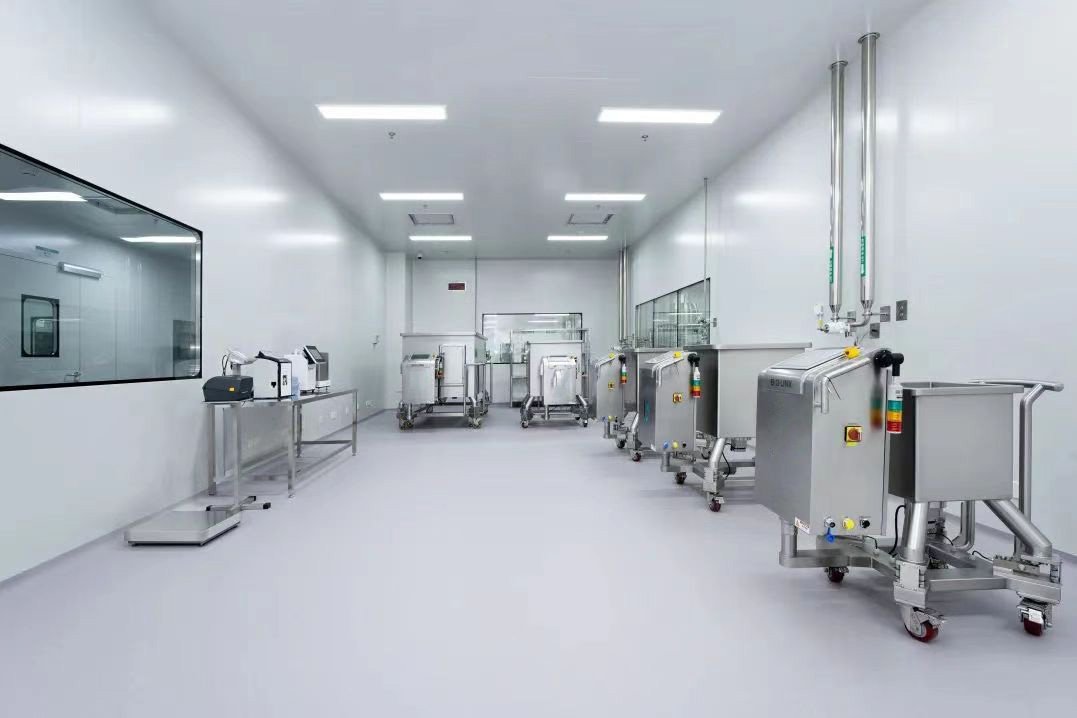
HEPA filters serve as terminal air filtration units for processing and purifying supply air in pharmaceutical production facilities. They are mandatory for aseptic manufacturing areas and occasionally deployed for solid and semi-solid dosage form production. Per DIN 1822 standard, HEPA filters are classified as H13 and H14 grades, with H14 delivering a particle retention efficiency of 99.995%. However, there exists no universal regulatory mandate specifying a fixed mandatory replacement interval.
Many internal corporate documents enforce annual HEPA filter replacement regardless of periodic integrity test results, a practice whose rationality remains debatable. Current GMP guidelines do not stipulate a definitive maximum service life for HEPA filters; the core regulatory requirement dictates filters must remain leak-free, verified via routine leak testing in compliance with ISO 14644-3, an obligatory procedure for aseptic cleanrooms.
Per the technical interpretation of Annex 1 (PIC/S PI032-2), leak testing shall be conducted every six months for Grade A/B clean zones and annually for Grade C/D zones. The FDA Aseptic Processing Guide also mandates periodic filter inspections, with Annex 1 requirements fully applicable to US pharmaceutical operations. Minor leaks may be repaired, provided the total patched area does not exceed 0.5% of the total filter face area.
Filter management extends beyond integrity verification alone. Filter media loading and differential pressure (ΔP) across the filter are critical performance indicators. Elevated differential pressure increases the energy consumption of air handling systems to maintain design air change rates, potentially pushing HVAC systems to their operational performance limits. Pre-filters (typically F7 and F9 grades under EN 779 standard) are installed upstream to protect HEPA filters from premature clogging and shall be replaced on a scheduled basis.
From operational practice, the maximum usable service life of a HEPA filter is primarily governed by its differential pressure. Replacement becomes economically and operationally justified once the differential pressure rises to a threshold that impairs HVAC performance or escalates energy costs beyond filter replacement expenses. Concurrently, the filter must consistently pass mandatory leak testing as specified above. Empirical industry practice rarely retains HEPA filters for more than eight years, though this figure is derived from field experience rather than statutory regulation.
Frequently Asked Questions Regarding HEPA Filter Replacement
Q1: Is scheduled periodic HEPA filter replacement mandatory for the HVAC system in small-volume injection workshops? May operators only replace HEPA units at the time of HVAC qualification if air volume fails acceptance criteria or leak testing yields non-conformances?
CFDI Response: HEPA filter replacement is compulsory upon detection of substandard air volume or failed leak testing during HVAC qualification. Facilities shall also establish a defined maximum service life for all HEPA filters, necessitating a formal periodic replacement schedule. Routine filter integrity testing shall be implemented in parallel.
Q2: May a portable particle counter be used for scanning leak testing of HEPA filters in Grade A clean zones? If permitted, what is the pass/fail criterion for zero detectable leakage?
CFDI Response: Particle counters may be adopted for leak scanning in non-critical zones, but this method is not recommended for HEPA filters installed in Grade A clean areas.
Trigger Criteria for HEPA Filter Replacement
1. Excessive Pressure Drop (Resistance)
- Terminal pressure drop threshold: Replacement is required when the differential pressure across the filter doubles its initial clean resistance. For instance, a HEPA filter with an initial resistance of 160 Pa shall be replaced once the differential pressure reaches approximately 320 Pa.
- Abnormally rapid pressure rise: Early replacement is warranted if differential pressure surges sharply within a short timeframe, even if the double initial resistance threshold is not met, indicating severe clogging or physical damage to the filter medium.
2. Degraded Air Volume, Air Change Rate & Face Velocity
- Air volume attenuation: Replace filters when actual airflow drops to 75% of the rated design volume. As an example, a filter rated for 1,000 m³/h requires replacement if real airflow falls below 750 m³/h.
- Uncorrectable air change or pressure abnormalities: Replace HEPA filters at affected air outlets if target air change rates or room pressure differentials cannot be restored via supply/return air damper adjustment.
- Substandard face velocity: For Grade A environments, filters shall be replaced when face velocity drops below 0.36 m/s.
3. Production Environment Load
- High-dust environments: HEPA filters installed in high-particulate areas (weighing, dispensing, filling zones) often require annual or even more frequent replacement.
- Low-contamination environments: Operating rooms, biosafety laboratories and other relatively low-pollution spaces typically support a 2–3 year filter service life. Early replacement is required if laboratory workflows generate substantial particulate contaminants.
4. Routine Integrity Leak Testing
Leak testing frequency: Every 6 months for Grade A/B zones; every 12 months for Grade C/D zones. Immediate replacement is mandatory for any filter failing leak testing.
5. Empirically Derived Cyclic Replacement Schedules
No standardized replacement interval exists globally due to variable filter manufacturers, production processes and on-site operating conditions. Facilities may establish robust site-specific maximum service lives by compiling historical performance data (including installation dates, time to PAO leak failure or doubled initial pressure drop) across all classified zones (Grades A/B/C/D), with a built-in safety buffer.
The 2023 Chinese GMP Guideline – Facilities and Equipment outlines additional scenarios requiring immediate HEPA filter replacement:
1.Persistent out-of-spec environmental monitoring (suspended particulate levels) traceable to HEPA filter failure;
2.Visible physical damage, media saturation or irreversible discoloration of filter media;
3.Total patched leak area exceeding the permissible repair limit.
High-Temperature Resistant HEPA Filters for Sterilizing Tunnels
Each manufacturer provides validated cycle limits for high-temperature HEPA filters to define recommended replacement intervals. For example, Camfil Absolute™ D-Pyro high-temperature filters maintain leak-tight integrity for up to 200 thermal sterilization cycles and must be replaced upon completion of the 200-cycle service limit.






