

Domestic and International Regulatory Requirements
PIC/S and EU GMP
Industry Guidance Documents
Core Foundational Principles
1.Science- and Risk-Based Approach
CCS formulation must be grounded in in-depth comprehension of products and manufacturing processes, combined with quality risk management methodologies. Enterprises shall systematically analyze production workflows to identify all potential contamination hazards and define critical control points based on risk assessment. The CPAPE guidance clarifies that CCS shall integrate the philosophies outlined in ICH Q8 (Pharmaceutical Development), Q9 (Quality Risk Management) and Q10 (Pharmaceutical Quality Systems).
2.Comprehensiveness and Systematicity
CCS constitutes an integrated holistic framework covering the entire workflow from plant design to product release. Per the NMPA draft annex, CCS shall incorporate a minimum of 16 core elements: plant and process design, facilities and equipment, personnel, utility systems, raw material control, product container closure systems, supplier qualification, outsourced activity management, process risk management, process validation, sterilization process validation, preventive maintenance, cleaning and disinfection, monitoring systems, Corrective and Preventive Actions (CAPA), and continuous improvement.
3.Dynamic Continuous Improvement
CCS is not a static document but a dynamic framework requiring ongoing revision and optimization. The NMPA explicitly mandates that CCS shall be reviewed and updated as appropriate to continuously refine production and control methodologies, with regular evaluations of its sustained effectiveness. Enterprises shall establish a formal annual comprehensive review mechanism for CCS to verify its persistent suitability.
Standard Workflow for Establishing a Contamination Control Strategy
Overview of the Development Workflow
Detailed Step-by-Step Development Process
Step 1: Consolidate Systematic Knowledge and Basic Background Information
Product and Process Characteristic Analysis: Collect and evaluate full data on the physicochemical and microbiological properties of manufactured products (including bioburden and endotoxin limits), alongside process characteristics such as the presence of sterile filtration or other special unit operations. High-risk segments including heat-sensitive materials and aseptic handling operations shall be prioritized.
Facility and Equipment Capacity Assessment: Conduct a thorough review of existing plant layout, Heating, Ventilation and Air Conditioning (HVAC) systems, and core production equipment including sterilizers and filling lines, to verify compliance with the latest regulatory specifications.
Historical Data Review: Systematically analyze 3–5 years of historical records, including environmental monitoring data, sterility test results, deviation and CAPA files, and process validation reports, to identify persistent weak points and trending contamination risks.
Step 2: Comprehensive Identification and Evaluation of Contamination Risks
Identification of Potential Contamination Sources: Adopt systematic methodologies to map all possible contamination vectors, including personnel activities (defective gowning, improper operational behaviors), materials and utensils (particle shedding, endotoxin contamination), environmental factors (HVAC malfunction, reversed cleanroom differential pressure), and process deviations (incomplete sterilization, failed sterile filtration).
Application of Risk Assessment Tools: Deploy semi-quantitative risk assessment tools including Failure Mode and Effects Analysis (FMEA) and Hazard Analysis and Critical Control Points (HACCP) to rank risks by priority based on severity, probability of occurrence and detectability. Special attention shall be paid to high-risk scenarios specified in the NMPA draft, such as additional sampling following critical aseptic interventions.
Step 3: Formulate and Integrate Tiered Mitigation Controls
Hierarchical Contamination Control Framework Design: Deploy multi-layered risk mitigation measures matched to risk priority levels derived from assessment.
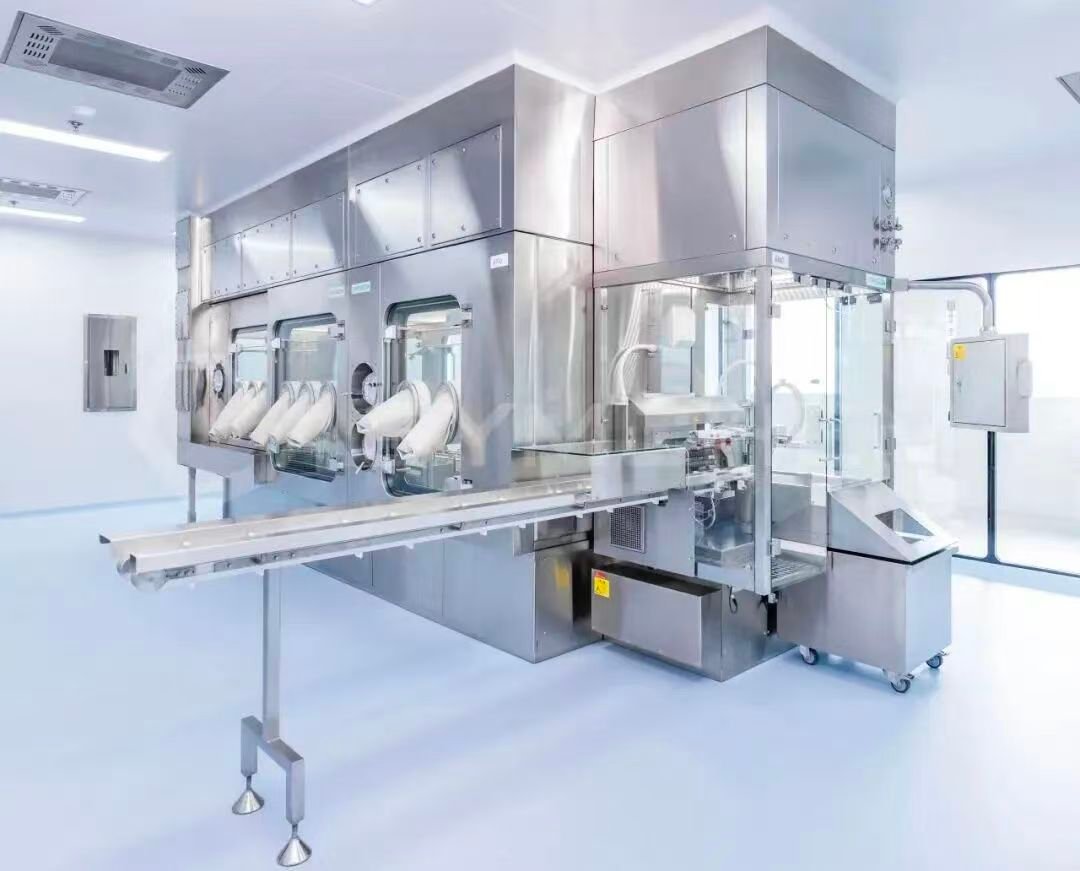
Adoption of Advanced Technologies: Deploy cutting-edge equipment and technologies to elevate contamination control performance. The NMPA draft explicitly recommends RABS, isolators and robotic systems to enhance product protection. Rapid microbiological detection technologies such as ATP bioluminescence and continuous real-time monitoring systems may also be implemented to enable rapid identification of potential contaminants.
Step 4: Establish Formal Documented CCS Management System
Document Architecture: Develop a complete hierarchical document system dedicated to CCS.
Document Governance Protocols: All CCS documents shall be incorporated into the corporate master document control system, with clearly defined responsible personnel and workflows for drafting, review, approval and revision.
Core Control Elements of Contamination Control Strategies
Plant and Facility Controls
Facility Design Specifications
Are construction materials smooth, non-permeable and crack-free? Are they amenable to cleaning and disinfection, and resistant to repeated exposure to detergents and sanitizers?
Is a rational differential pressure gradient established between cleanroom classifications to prevent cross-contamination? Are sufficient safeguards implemented to block airflow from lower-grade to higher-grade clean zones?
Are material transfer pass-throughs or airlocks deployed for material conveyance? Do transfer hatches incorporate air showers to protect higher-classification environments?
Are separate airlocks designated for personnel and material flows across cleanroom grades? If personnel and material routes are not segregated, what additional risk mitigation measures are implemented?
Are pest and rodent control provisions integrated into facility design? Are air curtains and insect light traps installed at building entry points?
Does the cleanroom HVAC system deliver adequate self-cleaning capacity? Have airflow visualization studies been completed for unidirectional airflow installations?
Facility Qualification, Operation, Maintenance and Repair
What routine controls maintain cleanroom classification standards during production? What contingency measures activate upon identification of contamination-inducing abnormalities? What recovery procedures restore cleanroom integrity following classification breaches?
How is personnel access to cleanrooms regulated? Are maximum occupancy limits enforced for each clean zone?
Is a comprehensive preventive maintenance schedule covering all production areas in place? Are maintenance items and frequencies justified via risk assessment?
Are formal workflows implemented to eliminate additional environmental contamination risks arising from facility maintenance or repair activities?
Do facility cleaning and disinfection procedures account for sanitizer efficacy against all contact surfaces and material compatibility? Is rotational use of multiple sanitizer chemistries incorporated? How frequently are cleaning and disinfection cycles executed, and is the overall efficacy of disinfection programs assessed periodically?
How are detergents and sanitizers selected? Are residual risks evaluated, and are residue removal steps embedded within cleaning workflows?
Are detergents and sanitizers sterile, matching the classification grade of the zones where they are deployed, with formal supporting assessments?
Where in-house dilution or preparation of detergents and sanitizers occurs, what controls prevent contamination during compounding? Are shelf-life limits for prepared solutions established and validated?
What ongoing pest monitoring and control protocols are active during routine production?
Facilities shall undergo periodic re-qualification. Re-qualification activities shall be performed following facility renovations, major maintenance, or material changes, guided by risk assessment.
Facility Monitoring Requirements
Are temperature and relative humidity setpoints tailored to product characteristics for critical process rooms?
Are critical differential pressure, temperature and humidity parameters continuously monitored and recorded with integrated alarm systems? Do alarms provide real-time alerts for out-of-limit deviations, with safeguards against unauthorized alarm suppression without formal assessment?
Are standardized response procedures documented and validated for excursions in differential pressure, temperature or humidity?
What testing frequency applies to unidirectional airflow velocity measurements? Does the working zone maintain uniform airflow within the guidance range of 0.36–0.54 m/s? If not, is supporting evidence including airflow visualization studies provided to justify deviations?
Is routine pest monitoring implemented, with defined sampling frequencies? What corrective actions trigger upon pest monitoring excursions?
Equipment Controls
Equipment Design Risk Assessment Criteria
Do equipment materials introduce particulate shedding risks? Are materials compatible with all deployed detergents and sanitizers?
Are equipment surfaces smooth, crevice-free and dead-space-free with simplified geometry to facilitate cleaning and disinfection?
What level of automation is integrated to minimize inherent aseptic intervention operations?
How is equipment assembly configured to reduce on-site assembly activities within aseptic core zones?
Are electrical and mechanical maintenance access points located outside aseptic zones to enable routine servicing without entry into sterile areas?
Is the internal geometry of RABS or isolator equipment engineered to avoid excessive stretching of operator gloves during routine handling?
Are anti-backflow devices installed on drain points of critical production equipment?
Equipment Qualification, Operation, Maintenance and Repair
Are standardized disassembly and assembly sequences documented to mitigate contamination hazards? Does aseptic zone equipment assembly follow a far-to-near, top-down sequence? If not, what alternative contamination prevention measures are deployed?
Are complete, validated cleaning, disinfection or sterilization methods defined for each equipment item, with evaluation of sanitizer surface efficacy and material compatibility?
Is a maximum hold time specified between production completion and equipment cleaning?
What controls protect cleaned, disinfected or sterilized equipment from recontamination? How are validated maximum hold times defined for sanitized equipment?
Are all product-contact and indirect contact equipment components supported by completed cleaning validation?
Are clear labeling and physical segregation measures implemented to distinguish cleaned/disinfected/sterilized equipment from unprocessed units, with confirmation that segregation and labeling systems themselves do not introduce contamination risks?
Are equipment alarm events fully risk-assessed, with dedicated mitigation controls for high-severity alarms that pose contamination risks?
Is a comprehensive preventive maintenance schedule established with fully justified maintenance items and frequencies?
What safeguards eliminate contamination risks originating from equipment maintenance and repair, with formal validation of these controls?
Are emergency response protocols in place for critical equipment during production disruptions such as power fluctuations?
What re-qualification frequencies and full scope of testing apply to equipment and systems subject to periodic revalidation?
In-Use Equipment Environmental Monitoring
Personnel Controls
Personnel Training Requirements
Personnel Health and Hygiene Governance
Are regularly updated formal personal hygiene regulations enforced, mandating regular bathing, nail trimming, prohibition of jewelry, cosmetics and personal belongings within clean zones?
Do sterile manufacturing staff undergo periodic occupational health examinations aligned with job requirements, with centralized health record retention?
Is a formal personnel decontamination workflow defined, covering handwashing and sequential gowning prior to cleanroom entry?
Cleanroom Garment Lifecycle Validation and Management
Garment materials shall exhibit low particle shedding characteristics, with stitching specifications limiting particulate penetration.
Validated laundering and sterilization protocols shall be established, with defined laundry cycles, sterilization frequencies and post-sterilization hold times fully supported by validation data.
Routine garment inspection shall confirm absence of damage, with standardized donning procedures eliminating contamination and cross-contamination risks during gown changeover.
Aseptic Behavioral Protocols for Clean Zones
Maximum occupancy limits shall be defined for core aseptic rooms.
Site-specific aseptic conduct rules shall be formulated matching product attributes, mandating slow, minimal-range movements. Non-work-related speech and extraneous activities are prohibited during production. All required interventions shall be executed via glove ports; opening barrier doors for direct manual intervention shall be restricted to absolute necessity, with every non-gloveport operation minimized or eliminated entirely.
Material Controls
Utility System Controls
Design Stage Contamination Controls
Water Systems (Purified Water, WFI, Pure Steam)
Piping, valves, instrumentation and auxiliary components shall utilize additive-free, non-absorbent, non-toxic and corrosion-resistant inert materials.
Hygienic design shall promote turbulent flow to eliminate dead legs and dead spaces, with optimized pipe slopes to prevent microbial proliferation from stagnant water.
Sampling points shall be representative of end-user quality, operable under live system circulation and fully drainable post-sampling.
Online continuous monitoring of pH, conductivity and Total Organic Carbon (TOC) shall be complemented by off-line laboratory testing.
Vent filters shall be installed to prevent environmental contamination ingress; thermal circulation water systems shall incorporate heating provisions to prevent condensate accumulation within vent filters.
Integrated online monitoring alarms and interlock control logic shall be deployed.
Clean Gas Systems
Utility System Qualification
Initial commissioning qualification prior to commercial operation, covering Design Qualification (DQ), Installation Qualification (IQ), Operational Qualification (OQ) and Performance Qualification (PQ).
Periodic re-qualification throughout service life, plus targeted testing and validation following any system modifications.
Utility Cleaning, Maintenance and Operational Governance
Are periodic flushing, sanitization, leak testing, component replacement, passivation and red rust removal activities scheduled?
Following out-of-specification water quality results exceeding alert or action limits, are root-cause investigations completed to implement corrective measures including sanitization, sterilization and enhanced monitoring?
Clean gas systems feature stable operation with simplified maintenance, primarily consisting of periodic filter integrity testing and cartridge replacement.
Historical data from all monitoring points shall undergo periodic retrospective review and statistical analysis, with alert and action limits revised as indicated by trending data.
Planned and unplanned shutdown recovery procedures shall be documented. Water systems typically operate continuously; following scheduled maintenance or unplanned outages, pipelines and equipment shall undergo full cleaning and disinfection prior to restart, with mandatory sampling and assessment to confirm compliance before resuming production. Clean gas systems shall undergo full pipeline purging to eliminate residual gas prior to reactivation after shutdown.
Routine Utility Monitoring
Water system testing items and acceptance criteria comply with the latest edition of the Chinese Pharmacopoeia. Clean gases shall meet the particulate and microbiological limits specified in Annex 1 of Chinese GMP for sterile manufacturing.
Sampling locations and testing frequencies shall align with regulatory standards and risk management principles based on criticality of each point. Monitoring programs shall separate microbiological and physicochemical testing schedules for critical and non-critical sampling points with differentiated frequencies.
Alert limits shall be established via statistical analysis, initially calculated from validation and commissioning historical data, and recalculated during periodic data review cycles.
Product and Process Controls
CCS Maintenance and Continuous Improvement
Case Study Analysis
Case Selection Rationale
Case Description
Post-Remediation Effectiveness Evaluation
Case Retrospective Review and Key Governance Takeaways
Core Investigation Considerations
Implement risk mitigation actions for completed batches, ongoing production runs and pending manufacturing campaigns.
Validate laboratory testing integrity to eliminate contamination introduction from laboratory environments, analyst handling or analytical equipment.
Audit water sampling protocols, sampling environments and sampling utensils; inspect dead leg geometry, equipment connections and mechanical layout of the high-bioburden sampling port.
Review water system pipeline routing, equipment maintenance records, structural defects, alarm logs, repair histories and electrical/mechanical faults; verify sanitization execution compliance and cross-reference system operational logs tracking conductivity, temperature and pressure trending data.
Correlate microbiological and physicochemical test results and analyze long-term trending data (excluding real-time online readings) to distinguish isolated single-point deviations from systemic widespread contamination. Activities include retesting the affected sampling point, cross-referencing data from all circulation loop sampling locations, and microbial speciation to trace contamination origins (waterborne, human skin or environmental).
Critical Water System Contamination Control Guidelines
Minimize use of elbows, tees and other complex fittings during pipeline design to eliminate dead zones. Piping slopes shall facilitate complete drainage to prevent stagnant residual water during shutdown or flushing cycles. All sampling ports shall comply with the 3D hygienic design standard to avoid dead-space microbial proliferation.
Enforce rigorous routine monitoring and maintenance: implement scheduled equipment servicing including filter cartridge replacement and storage tank internal cleaning; establish validated sanitization cycles with chemistry selection matched to target microorganisms.
Maintain a comprehensive facility microbial isolate library for accurate contamination source attribution: molds and bacilli typically originate from soil or airborne dust; Gram-negative organisms including Pseudomonas and Ralstonia correlate with stagnant water; Gram-positive cocci such as Staphylococcus indicate personnel-derived contamination. Speciation enables rapid targeted mitigation to prevent recurrence.
Establish formal microbial data trending review mechanisms to detect early warning signals of rising contamination risk and deploy preemptive control actions before excursions occur.
Conclusion and Industry Outlook
Summary
Data-Driven Risk Identification: Mandates integration of plant design records, process validation datasets, environmental monitoring and deviation investigations to build predictive contamination trending models.
End-to-End Man-Machine-Material-Method-Environment Control: Mandates scenario-based personnel training covering emergency equipment failure interventions; supplier audits extend to in-transit temperature and humidity monitoring.
Formal Continuous Improvement Mechanisms: Annual Product Review (APR) paired with rapid microbiological detection technologies enables dynamic iterative optimization of contamination control frameworks.
Industry Development Outlook
Digitalization and Intelligent Real-Time Monitoring: Continuous monitoring systems, IoT infrastructure and artificial intelligence predictive analytics will become integral CCS enablers. Real-time particle counters, automated validated gowning stations and machine learning contamination risk forecasting will strengthen proactive contamination prevention capabilities.
Adoption of Advanced Sterilization Technologies: Low-temperature hydrogen peroxide plasma sterilization, electron beam irradiation and other novel sterilization modalities will expand applications for heat-labile materials. Parametric release for sterilization cycles will gradually replace traditional end-product sterility testing as the primary release criterion.
Global Regulatory Convergence and PIC/S Alignment: Following China’s 2023 pre-accession application to PIC/S, domestic Chinese GMP specifications will continue harmonizing with international consensus standards.