

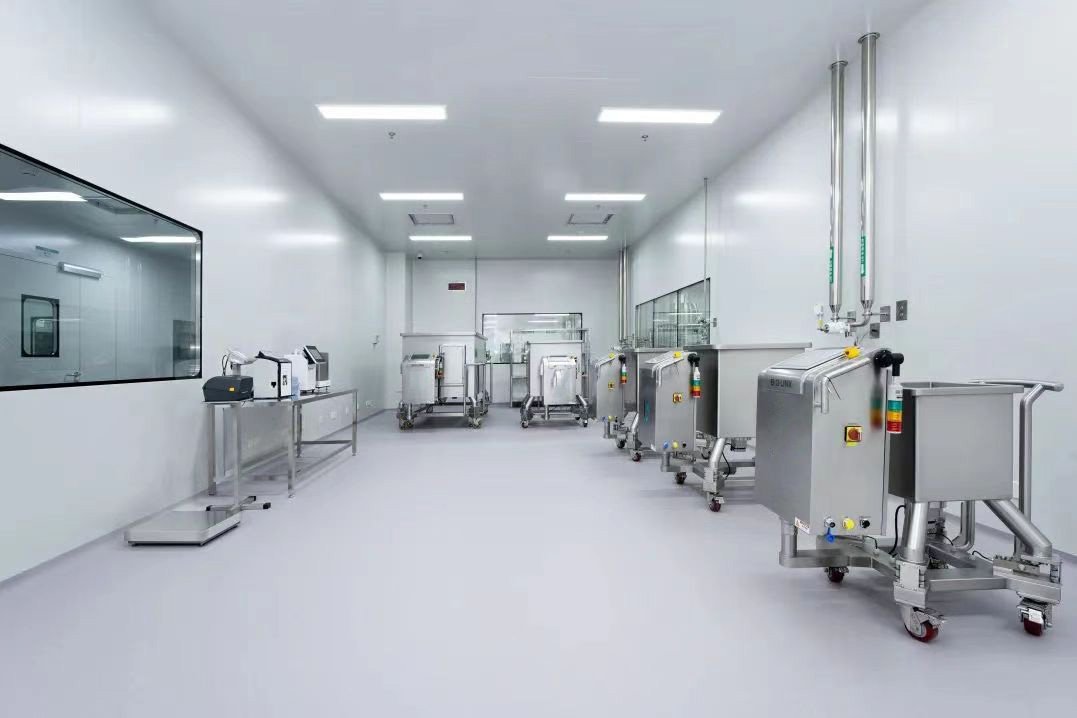
Overview and Classification of Cleanrooms
Distinction Between Sanitization and Sterilization
Sterilization: A process that kills or eliminates all microorganisms on medical devices, utensils and articles, including all vegetative bacteria, bacterial spores, fungi, fungal spores and viruses [4]. This is an absolute concept denoting the complete absence of surviving microorganisms. In the context of space treatment, “space sterilization” constitutes an idealized target extremely difficult to achieve in practice. The term generally refers to high-level disinfection capable of eliminating bacterial spores, targeting a Sterility Assurance Level (SAL) of 10⁻⁶, though validating this standard for an entire room poses formidable technical challenges.
Sanitization: A process that removes or kills pathogenic microorganisms on transmission vectors to render them innocuous [4]. It does not necessarily eliminate all microorganisms, and cannot fully inactivate bacterial spores. Based on microbial kill capacity, sanitization is categorized into high-level disinfection (kills all microorganisms except high loads of bacterial spores), intermediate-level disinfection and low-level disinfection.
In-Depth Analysis of Common Space Sanitization & Sterilization Methods
1. Formaldehyde Fumigation Sterilization
Mechanism of Action
Formaldehyde Vaporization Methods
Formalin heating method: Mix 37%–40% formaldehyde solution (formalin) with potassium permanganate in proportion. Heat released from their oxidation reaction rapidly vaporizes formaldehyde. This violent reaction risks splashing; strict safety precautions and removal of surrounding equipment are mandatory during operation.
Paraformaldehyde sublimation method: Heat solid paraformaldehyde powder via dedicated fumigation generators to depolymerize it into formaldehyde gas.
Formalin atomization and evaporation method: Utilize specialized equipment to atomize formalin solution followed by thermal evaporation.
Standard Fumigation Operation Protocol
Material Calculation: Compute required formaldehyde dosage based on room floor area and volume; deploy formaldehyde generation points rationally and prepare supporting materials and tools in accordance with room layout.
Preparation and Sealing: Remove non-essential articles from the cleanroom and apply protective coverings to equipment and retained materials. Seal all potential leakage points including doors, air supply vents and exhaust ducts with plastic film and adhesive tape to guarantee full spatial airtightness.
Environmental Conditioning: Adjust indoor temperature and relative humidity via HVAC or humidifiers to optimal reaction conditions (typically temperature >24°C, RH >60%). Elevated temperature and humidity significantly boost formaldehyde biocidal efficacy.
Vapor Generation and Diffusion: Generate formaldehyde gas via thermal or chemical reactions at pre-placed points, allowing free circulation throughout the room; commence timing once full vaporization is complete.
Concentration Hold (Exposure Phase): Maintain formaldehyde concentration at the preset target (typically 5–10 ppm or higher) for a defined duration (2–8 hours) to ensure full gas contact with all surfaces and complete microbial inactivation.
Residual Ventilation and Neutralization: Activate HVAC exhaust systems post-fumigation to purge high-concentration formaldehyde gas, a process requiring a minimum of 36–48 hours. Ammonia solution is commonly applied to accelerate residual clearance, reacting with formaldehyde to form non-toxic urotropine. Ventilation continues until residual formaldehyde concentrations drop below safe threshold limits (e.g., <0.5 ppm).
Advantages of Formaldehyde Fumigation
Broad-spectrum biocidal activity with reliable performance and robust sporicidal efficacy;
Strong gas penetration, reaching hard-to-access corners, crevices and internal pipeline structures;
Mature technical framework with relatively low raw material costs.
Disadvantages of Formaldehyde Fumigation
Occupational health and safety hazards: Classified as Group 1 carcinogen by the WHO, formaldehyde causes severe irritation to human eyes and respiratory tracts, with long-term exposure carrying carcinogenic risks; occupational exposure hazards persist throughout operation and residual purging stages.
Persistent residue risks: Formaldehyde readily adsorbs to wall, equipment and product surfaces, forming polymer residues difficult to eliminate completely and potentially contaminating subsequent production batches.
Complex, lengthy operational cycles: Full workflows from preparation, fumigation and hold to neutralization and purging may span 24–72 hours, severely disrupting production schedules.
Material incompatibility: Corrosive to certain metals and capable of damaging precision electronic devices.
Environmental pollution risks: Emitted formaldehyde and its neutralization byproducts impose environmental burdens.
Concentration monitoring limitations: Online monitoring systems suffer low utilization efficiency post-installation; handheld offline detectors expose operators to harmful high-concentration formaldehyde environments during sampling.
Application Scenarios
2. Vaporized/Aerosolized Hydrogen Peroxide Sterilization
Mechanism of Action
Hydrogen Peroxide Generation Modes
Vaporized Hydrogen Peroxide (VHP): Dedicated vaporizers instantaneously heat 35% liquid hydrogen peroxide to form dry, saturated hydrogen peroxide steam. This vapor is droplet-free, uniformly distributed, exhibits excellent penetration and avoids excessive surface wetting.
Dry Fog Hydrogen Peroxide: Dry fog generators utilize Venturi or ultrasonic technology to break hydrogen peroxide solution into ultra-fine aerosols (<10 μm, termed “dry fog”). These particles remain suspended in air for extended periods, diffusing uniformly like gaseous media.
Standard Sterilization Operation Protocol
Material Calculation: Calculate hydrogen peroxide dosage based on room dimensions and target fumigation concentration; prepare required chemicals, instruments and auxiliary tools.
Preparation and Sealing: Preparation workflows mirror formaldehyde fumigation yet demand less stringent sealing. For systems injecting hydrogen peroxide via HVAC air supply, only external door gaps and wall penetrations require blocking. For mobile generator recirculation fumigation, place one or multiple units within the cleanroom and maintain internal room doors open to facilitate gas circulation, while sealing external leakage points.
Equipment Layout and Parameter Setup: Define hydrogen peroxide injection rate, target concentration and total dosage based on space volume, layout and material adsorption characteristics. Place mobile generators at validated fixed positions to standardize routine fumigation workflows.
Environmental Conditioning: Pre-adjust cleanroom temperature and relative humidity to optimal biocidal ranges prior to aerosol/vapor injection.
Vapor/Fog Generation and Diffusion: Activate generators to introduce hydrogen peroxide vapor or dry fog into the space, with real-time monitoring of indoor hydrogen peroxide concentration and relative humidity.
Concentration Hold (Exposure Phase): Maintain hydrogen peroxide concentration at the preset target (hundreds of ppm) for a defined hold time ranging from 30 minutes to 3 hours.
Ventilation and Decomposition Post-Sterilization: Activate HVAC air circulation systems or leverage hydrogen peroxide’s natural decomposition pathway to rapidly break down into harmless water vapor and oxygen. No additional neutralizing agents are required; residual purging typically completes within 30 minutes to 1 hour.
Advantages of Hydrogen Peroxide Sterilization
High efficiency and broad-spectrum activity: Rapid inactivation of bacteria, spores, viruses and fungi with exceptional kill performance.
Safe and environmentally benign: Decomposition products are water and oxygen, leaving no toxic residues and minimizing risks to operators and ecosystems.
Short full-cycle duration: Complete sterilization workflows including residual purging generally last only 4–8 hours, enabling rapid production resumption.
Excellent material compatibility: Low corrosivity toward most metals, plastics and electronic devices under dry operating conditions.
Easy validation and automation integration: Interfacing with continuous concentration monitoring systems enables precise control and full digital recording of process parameters.
Disadvantages of Hydrogen Peroxide Sterilization
High upfront capital investment: Specialized vaporization/aerosolization generators carry substantial procurement costs.
Susceptibility to ambient temperature and humidity: Excessively high relative humidity impairs vaporization efficiency and biocidal performance.
Limited penetration capacity: While exhibiting good diffusion, penetration into highly complex, multi-layered stacked components is inferior to formaldehyde.
Diffusion limitations for mobile generators: Sterilization uniformity depends on free gas circulation, which is hindered by dense equipment layouts and complex room geometries. Fixed inline HVAC injection systems deliver superior uniformity yet consume higher hydrogen peroxide volumes.
Material incompatibility risks: High-concentration hydrogen peroxide may embrittle certain plastics and oxidize metals such as copper.
Concentration monitoring constraints: Online sensors struggle to identify the worst-case minimum concentration points within the space; calibration of portable high-concentration hydrogen peroxide detectors poses challenges, with very few qualified calibration laboratories nationwide.
Application Scenarios
3. Ozone Sanitization
Mechanism of Action
Standard Operation Protocol
Advantages of Ozone Sanitization
Generated on-site; no chemical storage or transportation required.
Rapid natural decomposition with zero persistent residues, eco-friendly.
Supplementary deodorization and air purification functionality.
Low routine operational costs.
Disadvantages of Ozone Sanitization
Moderate biocidal potency: Inferior sporicidal activity compared to formaldehyde and hydrogen peroxide, only achieving sanitization-grade performance rather than full sterilization.
Strong oxidative corrosivity: High-concentration ozone accelerates aging and degradation of rubber, metals and electronic components.
Occupational safety hazards: Ozone irritates human respiratory tracts at concentrations exceeding 0.1 ppm, requiring complete spatial sealing during operation and full residual purging prior to personnel entry.
Performance variability: Disinfection efficacy is heavily influenced by ambient temperature and humidity.
Application Scenarios
4. Ultraviolet Irradiation Sanitization
Mechanism of Action
Standard UV Sanitization Operation Protocol
1.Pre-operation UV intensity testing: Radiation intensity measured at 1 meter from UV lamps shall not be lower than 70 μW/cm² [4].
2.Lamp placement specifications: Ceiling-mounted fixtures shall be installed 1.8–2.2 m above floor level; mobile lamp carts shall be positioned centrally within rooms, with maximum 1-meter distance to target surfaces.
3.Irradiation duration: Minimum 30 minutes of UV exposure for airborne disinfection.
4.Post-treatment ventilation: Ventilate rooms for 20–30 minutes before personnel entry, as low-pressure mercury UV lamps generate ozone during irradiation which requires full dispersion to avoid respiratory irritation.
Common UV Sanitization Equipment for Spaces
1.Fixed ceiling-mounted UV lamps: Installed on cleanroom ceilings for unmanned space and surface disinfection; layout must ensure full UV radiation coverage of all target surfaces.
2.Mobile UV disinfection carts: Flexible, portable units for sequential treatment of separate zones.
3.Duct-mounted UV devices: Integrated within HVAC air ducts or coil surfaces for continuous disinfection of recirculating process air.
Advantages of UV Space Sanitization
Chemical-residue-free with favorable safety profiles; instant on/off operation with minimal preparation.
Low operational costs; rapid inactivation of airborne microorganisms and pathogens on smooth surfaces.
Disadvantages of UV Space Sanitization
Extremely limited penetration: UV radiation travels linearly, unable to penetrate standard glass or plastic; dust accumulation and shadow zones create persistent disinfection dead spots.
Restricted efficacy: Poor activity against fungal spores and no residual biocidal effect post-treatment.
Occupational safety risks: Direct exposure causes eye keratitis and skin burns.
Lamp lifespan and intensity decay: Routine UV intensity monitoring and periodic lamp replacement are mandatory.
Material degradation risks: Long-term irradiation induces discoloration of cleanroom color-coated steel panels.
Efficacy drift over service life: UV lamp intensity gradually declines post-validation, reducing disinfection performance. Comprehensive risk assessment shall define lamp replacement cycles or intensity threshold replacement criteria.
Application Scenarios
Other Space Sanitization & Sterilization Technologies
Validation of Sanitization & Sterilization Efficacy
Core Validation Principles
Standard Validation Workflow (VHP as Representative Example)
1. Installation Qualification (IQ)
2. Operational Qualification (OQ)
3. Performance Qualification (PQ)
1.Physicochemical Distribution Mapping: Deploy hydrogen peroxide chemical indicator (CI) strips and temperature/humidity probes at representative spatial locations, including corners, beneath equipment, air return vents and farthest diffusion points identified as worst-case sterilization zones. Confirm uniform achievement and sustained maintenance of effective disinfection concentrations and environmental conditions across the entire room.
2.Microbial Challenge Testing: Deploy highly resistant biological indicators (BIs), typically Geobacillus stearothermophilus spore strips or coupons, at the worst-case locations identified via distribution mapping. Recover and incubate BIs following full disinfection cycle completion to confirm complete microbial inactivation. A minimum 4–6 log reduction (99.99%–99.9999% kill rate) is required.
3.Surface Bioburden Testing: Conduct microbial sampling via contact plates or swab wipes on critical surfaces pre- and post-sterilization, comparing colony counts to verify sustained routine microbial control. This test is generally omitted if full microbial challenge testing is completed, yet incorporated into VHP validation when supplementary surface wiping sanitization is not implemented.
4.Hydrogen Peroxide Residual Testing: Measure environmental hydrogen peroxide concentrations immediately post-cycle completion to confirm residual levels drop below the 1 ppm safety threshold prior to personnel access.
5.Periodic Re-Validation: Validation constitutes a continuous lifecycle activity requiring annual re-qualification. Additional re-validation is mandatory following major equipment overhauls, substantial cleanroom layout modifications, disinfection cycle parameter revisions, hydrogen peroxide concentration changes or occurrence of quality deviations.
Selection Framework for Sanitization & Sterilization Technologies
Key Selection Evaluation Criteria
1.Cleanroom classification and product risk tier: High-risk Grade A/B zones typically mandate high-performance hydrogen peroxide sterilization; Grade C/D zones may adopt ozone or UV irradiation as auxiliary sanitization based on risk assessment outcomes.
2.Target microbial kill spectrum requirements: Sporicidal performance represents a decisive selection criterion.
3.Material compatibility: Evaluate corrosive or aging effects of disinfectants on cleanroom equipment, plastic gaskets/seals, wall panels and analytical instruments.
4.Operational cycle duration and production efficiency: Disinfection cycle length directly impacts equipment utilization rates.
5.Occupational safety and environmental compliance: Assess operator health hazards, residual toxicity and waste discharge impacts.
6.Full lifecycle cost: Encompass upfront equipment investment, consumable expenses, validation and maintenance labor overheads.
7.Regulatory conformity: Selected technologies must align with GMP, FDA, EMA and other global regulatory guidance documents.
Strategic Selection Guidance
Future Development Trends & Outlook
1.Automation and Digital Intelligence: Integration of IoT technology enables remote equipment monitoring, automatic data recording and traceability, and real-time fault early warning. Interfacing with Building Management Systems (BMS) delivers one-touch fully automated disinfection cycles with complete digital archiving of all process parameters.
2.Process Analytical Technology (PAT): Development of high-precision, durable online concentration, humidity and temperature sensors enables real-time full-spectrum monitoring and closed-loop feedback control to guarantee consistent disinfection cycle performance across all runs.
3.Advancement of Green Disinfection Technology: Harmless hydrogen peroxide-based processes will remain the dominant mainstream solution. Research priorities include novel disinfectant formulations and optimized cycles delivering equivalent efficacy at reduced concentrations and shorter durations.
4.Novel Physical Disinfection Technologies such as Pulsed Xenon Light: This technology emits broad-spectrum intense pulsed light covering UV, visible and infrared wavelengths with multi-modal microbial inactivation mechanisms and zero chemical residues, poised for expanded niche industry applications.
5.Robotics Integration: Autonomous disinfection robots equipped with modular UV and hydrogen peroxide aerosol subsystems enable standardized, dead-spot-free treatment of complex environments while minimizing human intervention and associated contamination risks.
Conclusion