





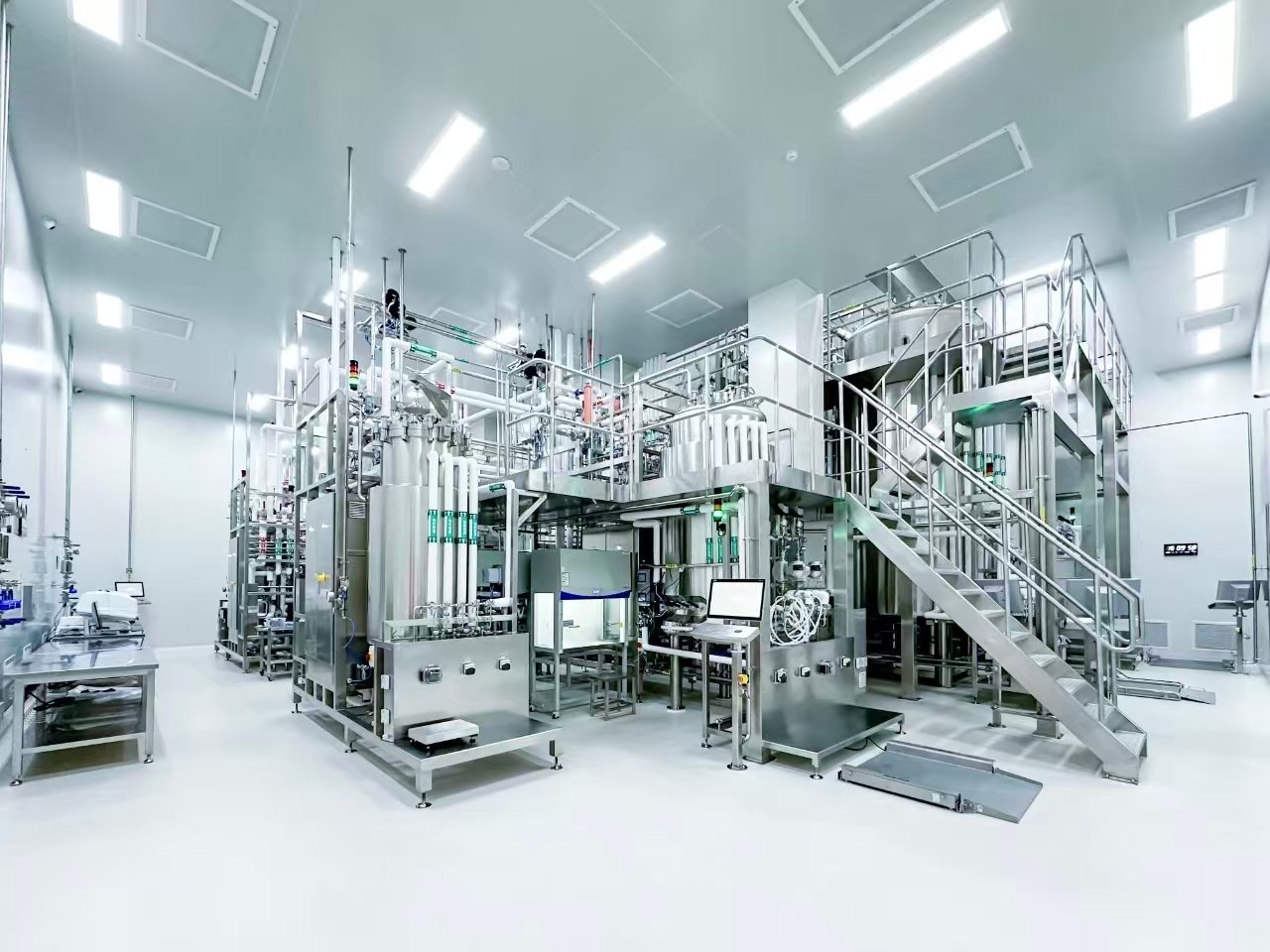
Radiopharmaceuticals refer to radionuclide preparations or radiolabeled compounds intended for clinical diagnosis and therapeutic applications. Distinct from conventional pharmaceuticals, radiopharmaceuticals contain radionuclides that emit ionizing radiation, which defines them as special pharmaceutical products. Currently, they have been widely applied in clinical scenarios including the diagnosis and treatment of thyroid diseases, renal function testing, myocardial imaging, dermatological treatment, adrenal imaging, and pulmonary tumor differentiation. According to national pharmaceutical standards of China, the 36 officially included radiopharmaceuticals are manufactured from 14 types of radionuclides, mainly phosphorus-32, gallium-67, iodine-125, iodine-131, mercury-203, technetium-99m, and other core nuclides. The construction of standardized and professional radiopharmaceutical manufacturing facilities is essential to protecting the occupational health of researchers and production staff, ensuring environmental safety, and guaranteeing the safety and efficacy of clinical radiopharmaceuticals.
In 1965, the Chinese Pharmacopoeia Commission established national standards for two radiopharmaceuticals for the first time. The Ministerial Standards for Radiopharmaceuticals of the People’s Republic of China was issued in 1975, followed by the formal national radiopharmaceutical standards in 1985. With the promulgation of the Pharmaceutical Administration Law of the People’s Republic of China, radiopharmaceuticals were legally classified as specially controlled pharmaceuticals. In accordance with the provisions of the Law, the former Ministry of Health, in conjunction with the Ministry of Nuclear Industry, launched official inspections, qualification assessments, and licensing for radiopharmaceutical production and operation enterprises, and issued supporting assessment guidelines as the regulatory basis. The full-scale national supervision and administration of radiopharmaceutical production and distribution has standardized industrial operation, and greatly promoted the development of nuclear medicine and medical radionuclide technology in China. Based on practical engineering project experience, this paper summarizes the core design points of radiopharmaceutical manufacturing facilities for industry reference and academic discussion.
Part 01 Site Selection Criteria for Radiopharmaceutical Manufacturing Facilities
The manufacturing site shall be located away from railways, wharves, airports, major traffic arteries, and industrial plants that generate massive dust and harmful gases. Areas with severe air or water pollution are strictly excluded. Priority shall be given to sites on the downwind side of the annual minimum frequency wind direction. In addition, production zones for radiopharmaceuticals involving different radionuclides shall be strictly and physically separated from the production areas of common pharmaceuticals to eliminate cross-contamination risks.
Part 02 Zoning Layout, Functional Configuration and Personnel & Material Flow Design
2.1 Functional Zoning of Production Areas
Most radiopharmaceuticals exist as ligand-radionuclide conjugates, with a small portion in the form of inorganic radionuclide compounds. The core production process mainly consists of three links: radionuclide preparation, ligand synthesis, and radionuclide radiolabeling. The partitioning of production work areas shall be determined based on risk assessment and actual process requirements, with flexible adjustment of functional zones according to production demands. Generally, the production system is divided into three core functional areas, supported by independent personnel and material flow channels, namely the radionuclide production area, ligand synthesis area, and ligand radiolabeling area.
(1) Radionuclide production area: Radionuclides used for pharmaceutical preparation are mainly sourced in two ways: on-site production via nuclear reactors or medical cyclotrons, and direct extraction from medical radionuclide generators.
(2) Ligand synthesis area: This area is dedicated to the synthesis of non-radioactive labeled precursors. Ligands vary significantly to meet diverse diagnostic and therapeutic clinical needs, covering biological products and common chemical drugs.
(3) Ligand radiolabeling area: This core functional area undertakes the conjugation reaction between radionuclides and ligands. Except for a few radiopharmaceuticals whose biological properties are solely determined by radionuclides, the efficacy of most products relies on professional radiolabeling technologies, mainly including biosynthesis, chemical synthesis, exchange reaction, and complexation. The radiolabeling area belongs to the radiation controlled area. Buffer rooms shall be installed between the radiation controlled area and the supervision area for isolation and buffered passage, preventing radiation diffusion. Independent changing and decontamination exit channels shall be configured for staff, with complete shower facilities installed in the decontamination passage. Meanwhile, dedicated independent channels shall be designed for the transportation of radioactive raw materials and radioactive waste to isolate radioactive and non-radioactive material flows.
Auxiliary peripheral rooms include lead-shielded intermediate storage rooms for radioactive sources and temporary storage rooms for radioactive waste. A dedicated utility zone is independently arranged to accommodate supporting systems such as HVAC equipment, power distribution facilities, water preparation systems, heat exchange stations, decay tanks, and wastewater treatment devices.
2.2 Core Functions of Key Production Rooms
Cyclotron room: The dedicated functional room for the production of medical radionuclides, serving as the core source of radioactive raw materials for production.
Preparation room: Used for pre-production preparation and post-production treatment. It undertakes material pretreatment for production operations, as well as overall cleaning and sterilization of clean area facilities. Workstations equipped with Grade A laminar flow devices are configured according to actual process requirements to meet sterile operation standards.
Operation room: The core area for formal production operations, where cyclotron-produced radionuclides are labeled with targeted ligands. All non-radioactive ligand labeling procedures are completed in hot cells or under Grade A laminar flow protection. Finished products are transferred to the packaging room through dedicated clean pass-through hatches.
2.3 Personnel and Material Flow Principles
Three independent flow systems shall be established in the factory: personnel access flow (including dedicated decontamination exit flow), non-radioactive material flow, and radioactive material flow, with complete isolation of each flow route.
Staff enter the controlled production area through standardized CNC changing procedures: first-level changing (shoe replacement and outer clothing removal), second-level changing (clean garment replacement), and buffer airlock transition before entering the clean corridor and each functional production room. A special decontamination exit channel is set for staff exiting the clean area, equipped with radiation monitoring rooms and shower facilities. Staff can only leave the controlled area after passing surface radiation detection to meet safety standards.
Part 03 Air Distribution and Pressure Gradient Control
The operational risks of radiopharmaceutical production are determined by radiation type, radiation energy and radionuclide half-life. The top priority of plant layout design is to avoid cross-contamination, and the scientific planar layout and precise pressure gradient control of production areas are the core means to achieve this goal.
A negative-pressure corridor layout is adopted for all radiopharmaceutical production areas. The standardized airflow direction for personnel changing areas is formulated as: airlock → secondary changing room → primary changing room; airlock → clean corridor → preparation/operation room. This directional airflow design effectively prevents radioactive pollutants from spreading to supervision areas and peripheral non-radiation areas with air flow. For negative-pressure operation areas, the air pressure decreases sequentially from buffer rooms to corridors and core operation rooms to form stable directional airflow. The negative pressure difference between pressure-controlled rooms and adjacent rooms shall be no less than 10 Pa, which can be stably maintained through exhaust systems and central HVAC systems.
Part 04 Ventilation and Air Conditioning System Design
To fundamentally avoid cross-contamination between production zones, the ventilation and air conditioning system adopts a partitioned and independent design. The production area is equipped with a centralized air supply system, while hot cells and independent functional rooms are configured with separate independent exhaust systems. The HVAC machine room for radioactive production areas is set up independently and shall not be shared with non-radioactive production areas to prevent cross-air pollution.
The air supply system adopts a full fresh air once-through system without air recirculation. Fresh air is treated by primary and medium-efficiency filtration, temperature and humidity regulation, and final high-efficiency filtration before being delivered to indoor functional areas. Constant air volume valves are installed on the air supply branch pipes of core negative-pressure rooms, and variable air volume valves are installed on exhaust branch pipes to dynamically adjust indoor pressure differentials. Full exhaust treatment is implemented for all areas with radioactive exposure risks. Specifically, exhaust gas from iodine-containing radioactive hot cells is purified by iodine adsorbers; exhaust gas from α-nuclide hot cells is filtered by BIBO high-efficiency filtration units; exhaust from other radioactive operation rooms is filtered by high-efficiency filters and discharged at high altitude on the roof.
The factory adopts a dual disinfection mode combining daily surface wiping disinfection and regular space disinfection. The ozone disinfection system is installed in the HVAC machine room, realizing automatic space disinfection through linkage control of air supply fans, disinfection exhaust fans and supporting valves.
Part 05 Water Supply and Drainage System Design
Water supply facilities are configured in key rooms such as changing rooms and preparation rooms of the production area, and complete shower facilities are installed in the staff decontamination exit channel. All wastewater generated in radiation controlled areas and supervision areas is discharged to special decay tanks on site. After radioactive decay treatment to meet discharge requirements, the wastewater is transferred to the factory sewage treatment station for centralized treatment, and finally discharged into the municipal sewage pipe network after reaching the standard. The exhaust gas of the sewage treatment system shall be filtered by high-efficiency filters before high-altitude discharge, and all discharge indicators shall strictly comply with local environmental assessment regulations.
Part 06 Electrical and Telecommunication System Design
The power supply load grade of core radiopharmaceutical production areas shall not be lower than Class II. Continuous power equipment related to production safety and environmental monitoring in radiation areas, including temperature and humidity monitoring devices, indoor radiation monitors, hot cell systems, biological safety cabinets and pass-through hatches, shall be equipped with uninterruptible power supply (UPS) devices to ensure stable operation.
Surveillance cameras are fully deployed in key production areas, and access control systems are installed at all entrances of radiation areas to restrict entry to authorized personnel only. Lockable security doors are configured for temporary storage rooms of lead-shielded radioactive sources, radioactive waste, unqualified products and finished products. For all areas storing radioactive materials, targeted access control and anti-theft measures shall be equipped to prevent illegal occupation and improper use of radioactive sources.
Part 07 Automatic Control System Design
Indoor positive pressure fluctuation and airflow reversal in radiopharmaceutical production areas will cause serious risks such as radioactive leakage, endangering staff health and environmental safety. To eliminate hidden dangers, the start-stop sequence and time difference of air supply and exhaust fans shall be scientifically optimized. A mechanical interlock mechanism is set for the ventilation system of negative-pressure rooms, ensuring that exhaust fans start prior to air supply fans and shut down later than air supply fans.
The exhaust system of hot cells follows the principle of “first start, last stop” to avoid the backflow of polluted air into the operating room. In addition, an automatic interlock control system is established for the whole production ventilation system to reduce manual operation intervention and avoid safety risks caused by human error.
Part 08 Process Piping and Utility System Design
The clean utility systems for radiopharmaceutical production cover purified water, water for injection, pure steam and process compressed air; the non-clean utility systems include instrument compressed air and industrial steam. All process piping in radiation production areas adopts independent circulating systems or is equipped with check valve anti-backflow structures to avoid cross-contamination and medium backflow.
Purified water system: Mainly used for cleaning production tools and equipment. Prepared from drinking water via reverse osmosis and other qualified processes, purified water adopts normal-temperature circulating transportation and regular pasteurization to inhibit microbial reproduction. All wetted parts of the pipeline system comply with 3D design specifications.
Water for injection system: Mainly applied in pharmaceutical compounding and core production processes. Using purified water as raw material, water for injection is prepared by distillation. The pipeline system adopts circulating heat preservation above 70°C and periodic superheated water sterilization. All wetted parts meet 3D design standards to ensure microbial control effect.
Pure steam system: Used for moist heat sterilization of production equipment and pipelines, as well as humidification of clean area air conditioning systems. Pure steam is generated by a pure steam generator with purified water as feed water, and its condensate quality meets the standard of water for injection. The pipeline layout is optimized to ensure timely and smooth discharge of condensate water.
Compressed air system: Divided into process compressed air and instrument compressed air. Oil-free air compressors (air-cooled or water-cooled) are adopted for air preparation. The compressed air sequentially passes through buffer tanks, pre-filters, freeze dryers, fine filters, ultra-fine filters and terminal sterilizing filters before delivery to usage points. Terminal sterilizing filters must be installed at all process compressed air usage points to guarantee gas purity.
Part 09 Conclusion
The final planar process layout of radiopharmaceutical production facilities shall be further optimized in combination with the review opinions of regulatory and certification authorities. Scientific and standardized facility design can not only fully meet national industrial specifications and GMP management requirements, but also realize long-term stable and safe operation of the production system, effectively reduce construction investment and operational costs, improve enterprise economic benefits, and provide reliable technical support for clinical nuclear medicine diagnosis and treatment and public health protection.
