Over the past decades, cell therapy products have achieved remarkable progress in core fields including tumor immunotherapy. As of June 2024, a total of 84 cell therapy products have obtained marketing approval worldwide, among which 16 are genetically modified cell therapeutics.
In China, 9 cell therapy products have been approved for commercialization to date, consisting of 8 chimeric antigen receptor T-cell (CAR-T) products and 1 stem cell product. Amid the rapid industrial expansion of cell therapy products, multiple deficiencies have been identified in the facility and production line design adopted by manufacturers, calling for further optimization and improvement.
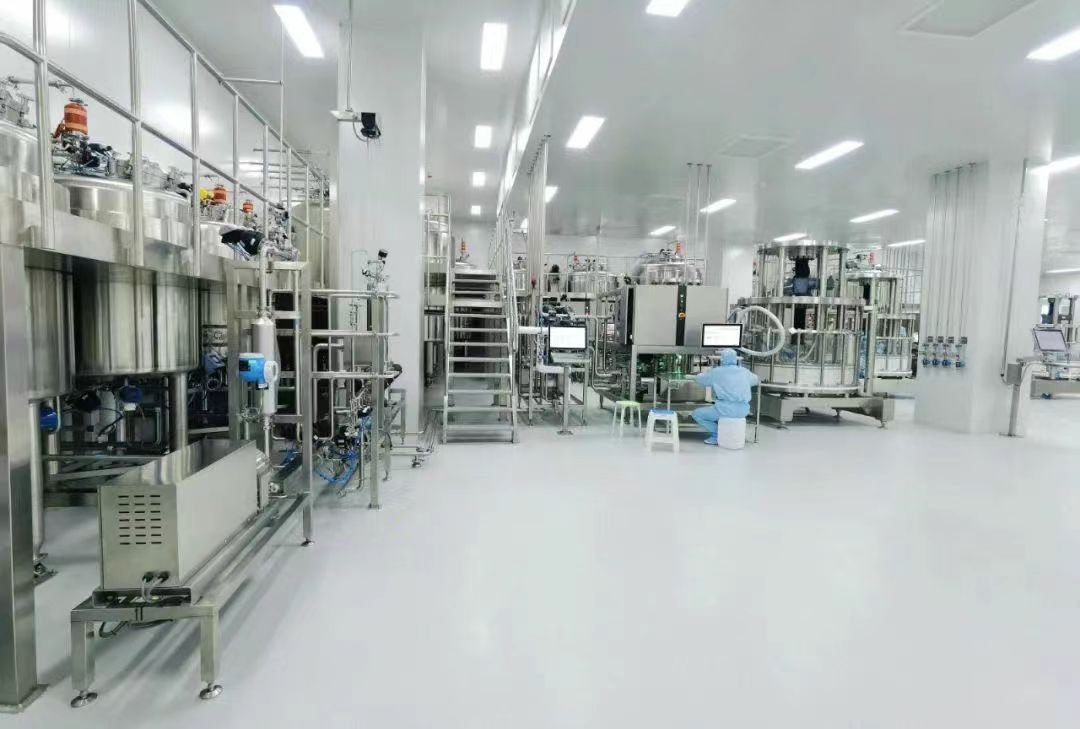
Distinct from conventional biologic manufacturing plant design, cell therapy production requires highly flexible layout schemes with unique design specifications driven by product attributes and manufacturing workflows. Certain manufacturers have constructed dedicated plants for the production of genetically modified vectors and functional auxiliary raw materials (e.g., viral vectors, plasmids). Guided by the Quality by Design (QbD) principle, plant design shall not only satisfy process execution and quality control requirements but also guarantee production flexibility and product safety. This paper analyzes core design considerations for cell therapy manufacturing facilities and elaborates on plant layout schemes through practical case studies.
Part 1 Characteristics of Cell Therapy Products and Selection of Production Line Modes
Cell therapy products refer to biological medicinal products manufactured using autologous or allogeneic donor cell materials subjected to sequential processing and manipulation, which are administered to patients for therapeutic purposes. Such products fall into two primary categories: immune cell therapeutics and stem cell therapeutics. Immune cell products cover CAR-T, dendritic cell (DC), tumor infiltrating lymphocyte (TIL) therapies, etc.; stem cell products include umbilical cord mesenchymal stem cells, adipose-derived mesenchymal stem cells and other varieties.
Cell therapy products differ drastically from traditional biologics in terms of product characteristics, batch scale, manufacturing workflows, process variability, as well as testing and sample retention protocols. Characterized by small batch sizes and high individualization, cell therapy production generally adopts task-based or order-driven manufacturing systems, which pose substantial challenges to the layout planning of plant infrastructure and the configuration of production lines.
Part 2 Analysis of Key Design Points for Cell Therapy Manufacturing Facilities and Production Lines
2.1 General Design Principles
For overall plant facility design, the Good Manufacturing Practice for Pharmaceuticals (Revised 2010) mandates design schemes that minimize contamination, cross-contamination, mix-ups and errors, while facilitating cleaning, operation and maintenance. The Guidelines for the Production Quality Management of Cell Therapy Products (Trial) provides specifications and illustrative examples for plant, facility and equipment management covering vectors and auxiliary biomaterials applied to cell products, manipulation of donor materials carrying infectious pathogens, and production operations performed in closed systems or equipment. Technical Report No. 81 issued by the Parenteral Drug Association (PDA) states that control strategies for cell therapy manufacturing plants, facilities and equipment shall incorporate design criteria for aseptic processing, product classification (autologous vs. allogeneic), and the inherent advantages of isolators and automated equipment (e.g., reduced human intervention and mitigated microbial contamination risks). The layout of manufacturing facilities shall align with process workflows, operational modes (open processing, closed processing, aseptic manufacturing), equipment implementation, material introduction strategies and designed production capacity. Accordingly, comprehensive evaluation across process flow, personnel and material movement routes, contamination control strategies, cleanroom HVAC systems, equipment configuration, biosafety classification and cleanroom grading shall be integrated into the design framework.
2.2 Product Manufacturing Workflows
Plant layout planning is intrinsically correlated with product manufacturing workflows. Taking the CAR-T production process as an example: post donor cell collection, the workflow encompasses cell isolation, T-cell selection, concentration and activation, genetic editing, expansion and cultivation, followed by harvesting, formulation filling and cryopreservation. Based on this intricate workflow, internal plant structures and production lines shall be optimized in layout and functional zoning in accordance with process specifications and equipment implementation modes. For instance, closed systems can be deployed for unit operations demanding stringent environmental control, such as cell manipulation and formulation filling; sterile connection technologies shall be adopted for liquid exchange and material transfer across vessels; open manipulations exposed to ambient air (e.g., magnetic bead addition for cell sorting and activation) shall be conducted under Grade A unidirectional airflow protection.
2.3 Biosafety Level (BSL) Design
Given the potential exposure to pathogenic microorganisms during cell therapy manufacturing, biosafety risk assessment and corresponding BSL design shall comply with national and regional biosafety and pharmaceutical production regulations. In China, biosafety control shall abide by the Biosafety Law of the People’s Republic of China, while the classification and risk evaluation of pathogenic microorganisms shall follow the List of Human Infectious Pathogens issued by the National Health Commission of the People’s Republic of China. For example, non-highly pathogenic lentiviruses are classified as Category III pathogens, and viral cultivation operations require Biosafety Level 2 containment. Stringent biosafety control measures shall be implemented for the processing of starting materials with potential pathogenic contamination (e.g., apheresis products, tissue samples), critical production raw materials (e.g., viral vectors) and finished cell therapeutics, such as inactivation of active biological substances prior to their transfer out of designated production zones. Workshops handling infectious pathogens shall feature dedicated facility design with differential pressure settings compliant with biosafety containment requirements.
2.4 Cleanroom Classification and HVAC System Design Considerations
Cell therapy products cannot undergo terminal sterilization or universal viral clearance steps; any exogenous contamination may result in full batch loss. Therefore, cleanroom classification design shall fully adhere to the clean grade standards stipulated in the Guidelines for the Production Quality Management of Cell Therapy Products (Trial). Cleanroom grades for distinct functional zones shall be rationally defined based on process risk levels and the impact on product quality. Even for production operations executed within closed systems in high-grade cleanrooms, continuous validation and routine monitoring of system tightness are mandatory to ensure contamination-free full-process manufacturing and eliminate cross-contamination risks. HVAC system design shall prioritize differential pressure configuration between functional zones and airlock deployment to mitigate cross-contamination and viral transmission risks, while delivering adequate protection for both products and operators.
2.5 Personnel and Material Flow Design
The core objective of material flow planning is to minimize cross-contamination risks. This requires in-depth dissection of full production workflows and granular decomposition of each unit operation to design optimized transfer routes for raw materials and consumables. Material flow evaluation shall comprehensively cover transfer duration, in-transit temperature control, disinfection protocols for cross-grade material transfer and necessary protective measures.
Personnel flow layout shall prioritize product protection, covering operator access routes from general areas to controlled clean zones, transition from non-active to active production zones, and exit pathways from clean and active areas, with full consideration of interactions between personnel, products and manufacturing environments. A unidirectional flow concept is recommended: operators and materials enter cell preparation suites or processing rooms via clean corridors, and exit via waste corridors upon operation completion. Where strict unidirectional flow cannot be achieved, comprehensive procedural controls shall be established, such as physical or temporal segregation between core process streams and waste streams to reduce cross-contamination hazards.
2.6 Production Capacity Planning
Hierarchical production relationships exist within plant facility design, leading to differentiated calculation methodologies for capacity planning. In general, plant design establishes the upper limit of maximum throughput, which can be adjusted via facility expansion or renovation.
Production capacity planning shall be closely aligned with market demand and product positioning, requiring holistic assessment beyond manufacturing workshops, including logistics, warehousing and shipment capacity, QC laboratory testing throughput, utility supply capacity and biosafety waste treatment capacity to ensure coordinated matching across all links. The Guidelines for the Production Quality Management of Cell Therapy Products (Trial) specifically stipulates that for cell therapeutics manufactured from autologous donor materials, worst-case production scenarios shall be fully evaluated via risk assessment. For example, if multiple identical production lines or isolators are deployed within a single manufacturing zone, the maximum number of simultaneously operated lines or isolators shall be clearly defined. Additional worst-case factors to be incorporated into evaluation include the maximum allowable number of on-site operators, testing throughput of analytical laboratories and raw material supply logistics. After defining overall designed throughput, detailed evaluation of each production stage shall be performed, supported by validation protocols to underpin production scheduling. Capacity design for each process step shall reserve sufficient time and production redundancy to avoid throughput bottlenecks caused by overlapping multi-batch manufacturing.
Part 3 Case Analysis of Production Workshop Layout Design
3.1 Dedicated Unit Processing Room Layout
The dedicated unit processing room design assigns a physically isolated cleanroom to the full production cycle of a single batch, with a Grade B background environment. Closed systems are adopted for routine manufacturing, while open manipulations are performed within biosafety cabinets when necessary. This layout requires extensive floor space, exhibits limited expandability and low space utilization efficiency, yet delivers the key advantage of minimized cross-contamination risks.
A workstation design shares similar core logic with dedicated unit processing rooms. However, workstation layouts lack physical partitioning barriers, resulting in intersecting personnel and material transfer routes that introduce risks of product mix-ups and operational errors. Such facilities require rigorous controls covering inter-batch cleaning, personnel/material flow rationality, differential pressure settings across clean grades, and standardized production management protocols. For multi-product switching, risk assessments shall be conducted in accordance with cell therapy co-production requirements outlined in the Guidelines for Quality Risk Management of Co-Manufacturing Pharmaceutical Products, with corresponding mitigation strategies formulated.
3.2 Ballroom-Style Plant Layout
The ballroom-style layout refers to a large integrated manufacturing zone equipped with closed processing systems, unfixed equipment and minimal physical partitioning. This design delivers outstanding layout flexibility for rapid equipment reconfiguration and elevated space utilization, while closed-system operations effectively reduce HVAC operational costs. The widespread adoption of ballroom layouts across the biopharmaceutical industry is driven by advances in single-use technologies and closed processing systems. Enhanced validation and monitoring controls are required to guarantee consistent equipment reliability and reproducible manufacturing performance. Nevertheless, reduced physical partitioning enables intersecting personnel and material movement within production zones, amplifying risks of product mix-ups and human operational errors.
A ballroom-style CAR-T production line layout (Figure 5) is taken as an illustrative example: the production zone contains eight independent processing stations operating within closed systems under a Grade B background, with all open manipulations executed in Grade A environments inside biosafety cabinets. Full batch manufacturing is completed within individual stations. Operators access the zone via gowning rooms at the upper left and exit via de-gowning rooms at the lower right; raw materials are transferred through pass-through hatches on the left side of the zone, while waste is discharged via hatches on the right. Although unidirectional flow logic is incorporated, the absence of absolute physical separation prevents fully segregated flow patterns, resulting in repeated material transfer and cross-traffic of operators between stations within the Grade B production zone.
This layout imposes minimal reliance on fixed plant partitions and achieves superior production flexibility via closed-system workflows, yet presents heightened challenges and risks for production management. Certain ballroom facilities mitigate cross-contamination risks and retain layout flexibility by deploying multiple isolators within a unified production zone. All manipulations are completed inside isolators or integrated closed systems (e.g., cell centrifugation, cell counting, RTP-connected bioreactor incubation systems). Compared with traditional dedicated suites (Grade B background + biosafety cabinets), risk-based evaluation allows appropriate downgrade of the background clean grade for isolator-based production, shortening operator gowning duration and accelerating product switching and inter-batch cleaning cycles. Meanwhile, ergonomic evaluation of isolator design is essential: isolator glove ports may compromise operational dexterity and the efficiency of precision instrument manipulation. Isolator-specific design considerations include differential pressure settings between separate chambers, system tightness verification and decontamination efficacy inside isolator enclosures.
3.3 Hybrid Plant Layout Design
The hybrid plant layout emerges as an innovative design solution integrating the merits of dedicated unit rooms and ballroom-style facilities. Subject to process characteristics, the manufacturing workflow of a single batch traverses spaces of identical or differentiated clean grades. As demonstrated in the layout illustrated in Figure 6, process steps requiring open manipulation are conducted in dedicated Grade B background processing rooms with local Grade A environments, while fully closed workflows (e.g., bioreactor incubation, cell cryopreservation) are deployed in independent functional rooms. This hybrid layout significantly improves overall space utilization and delivers superior flexibility and throughput efficiency relative to conventional dedicated unit processing room designs. However, its implementation requires in-depth comprehension of manufacturing workflows and precise space planning to maximize equipment functional utility. A notable limitation is restricted expandability for future capacity expansion, mandating thorough forward-looking evaluation during the initial plant design phase.
3.4 Other Innovative Layout Designs
Driven by rapid industrial growth, novel design concepts have been integrated into cell therapy manufacturing facility development. For instance, Cellares, a manufacturer of automated cell therapy production equipment, has launched the Cell Shuttle automated cell factory platform, which integrates end-to-end automated equipment and supporting consumable kits to realize full-process cell product manufacturing and testing. This design reduces capital construction costs, minimizes human operational errors and offers scalable production capacity, and has been successfully deployed for the manufacturing of multiple cell therapy candidates and commercial products.
3.5 Analysis of Typical Deficiencies in Cell Therapy Manufacturing Facilities
Based on review reports released by overseas pharmaceutical regulatory authorities and core quality management elements for cell therapy manufacturing systems, recurring critical non-conformities related to facility design, operational management and contamination control have been summarized, with major plant design defects categorized as follows:
1.Improper differential pressure configuration in HVAC systems: e.g., lower differential pressure in core cell processing zones compared to adjacent gowning/de-gowning areas, insufficient pressure gradients between distinct cleanroom grades.
2.Inadequate physical segregation for viral vector production zones, with supporting functional areas (formulation, sterilization suites) missing.
3.Mismatch between workshop spatial layout and designed production throughput.
From a management and contamination control perspective, common gaps include infrequent or ineffective differential pressure monitoring and environmental cleanroom surveillance, incomplete disinfection protocols for cross-grade material transfer, and potential air quality hazards generated by heat and gas emissions from operating production equipment. All aforementioned deficiencies pose substantial threats to the safety, efficacy and quality of cell therapy products.
Part 4 Conclusion and Outlook
Cell therapy manufacturing facilities adopt diverse layout schemes, including dedicated unit suites, ballroom-style integrated zones and hybrid configurations. Each layout carries distinct risk considerations, enabling manufacturers to adopt differentiated strategies balancing risk mitigation, throughput planning, production efficiency and capital & operational cost control. As the cell therapy pharmaceutical industry expands rapidly, automated technologies deeply integrated with manufacturing workflows (e.g., all-in-one production platforms, robotic systems) see accelerating industrial adoption, requiring continuously adaptable plant layout design to match evolving industrial demands, while introducing new compliance management and regulatory supervision challenges for manufacturers and authorities alike.
This paper dissects core design elements for cell therapy plant construction and explores potential product mix-up and cross-contamination risks associated with manufacturing workflows, personnel/material flow routes, equipment configuration, biosafety containment and cleanroom grading. Key takeaways derived from case analysis are summarized as follows:
1.Plant layout design requires multi-factor comprehensive evaluation covering process attributes and equipment specifications rather than isolated assessment of individual elements, enabling systematic identification and mitigation of potential risk points.
2.Forward-looking design philosophy shall be adopted to anticipate future new product introduction and capacity expansion requirements, delivering scalable schemes compatible with routine production execution.
3.No universal “one-size-fits-all” optimal layout solution exists for cell therapy plant planning; the most appropriate strategy shall be selected on a project-specific basis to support stable manufacturing while minimizing operational errors and contamination risks.
Regardless of the adopted facility and production line layout scheme, consistent overarching design principles aligned with industrial evolution shall be followed: guided by the QbD philosophy, manufacturers shall systematically analyze quality-impacting factors and core design parameters to establish tailored Contamination Control Strategies (CCS) matching facility configurations and process workflows. Supported by product-specific technical expertise, systematic risk identification and evaluation shall be implemented for plant layout planning and cleanroom environmental monitoring, followed by validation of design rationality to sustain continuous GMP compliance and safeguard the safety and efficacy of cell therapy medicinal products. Through in-depth analysis and discussion of core design considerations and engineering cases, this paper elaborates critical technical specifications for cell therapy manufacturing facility and production line design, delivering valuable technical references for industrial practitioners and pharmaceutical regulatory authorities.






