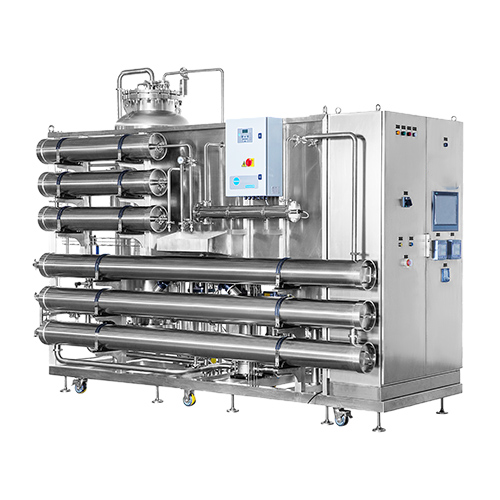
Water for Injection (WFI) is a critical raw material in parenteral pharmaceutical manufacturing, whose quality directly dictates product safety and regulatory compliance. Conventional multi-effect distillation (MED) and vapour compression distillation (VC) utilise purified water as feedstock and eliminate pyrogens and ionic contaminants via multi-stage high-temperature phase transition. Despite mature technical specifications, these distillation processes suffer from excessive energy consumption and high upfront capital expenditure, rendering them ill-suited for low-carbon green manufacturing under the national dual-carbon goals. Pharmaceutical facilities relying on traditional distillation technologies are predominantly burdened with exorbitant energy costs and rectification pressures arising from dual-carbon compliance mandates.
Since the 1990s, the global pharmaceutical industry has explored alternative non-distillation technologies for WFI manufacturing. In 2018, the U.S. FDA’s USP <1231> Pharmaceutical Water formally recognised the reverse osmosis-electrodeionization (RO-EDI) process as a valid WFI production route, subject to dynamic validation and continuous online monitoring. The subsequent 10th Edition of the European Pharmacopoeia (EP 10.0) further incorporated the integrated RO-EDI-ultrafiltration (UF) workflow into compliant manufacturing pathways with defined water quality specifications. Successive revisions to U.S. and European pharmacopoeias have solidified the regulatory legitimacy of membrane-based WFI production. In January 2025, the International Society for Pharmaceutical Engineering (ISPE) hosted a pharmaceutical water conference in Boston and released the technical document Membrane-Based WFI Production: Past, Present, and Future, which elaborates on the prospects and practical challenges of membrane WFI technologies. The document reports that nearly 100 sets of membrane-based water production systems have been installed across the United States, forecasting widespread industrial adoption within the next five years. The 2025 Edition of the Chinese Pharmacopoeia (ChP 2025) has also authorised non-distillation techniques as compliant WFI preparation methodologies, marking China’s alignment with international standards for WFI manufacturing. Against this backdrop, systematic research into the technical characteristics and industrial hurdles of non-distillation processes is pivotal to advancing high-quality sustainable development within the pharmaceutical sector.
Part 1 Process Principles and Comparative Analysis of Technical Routes
Current industrial WFI production technologies fall into two primary categories: phase-transition-based traditional distillation methods (MED, VC, pure steam distillation (PSD), etc.) and membrane separation-electrochemistry integrated non-distillation workflows, typified by RO-EDI combinations.
PSD exhibits low water yield and extreme energy intensity, and is mostly deployed for pure steam generation or small-batch manufacturing with limited scalability. MED and VC systems represent the two most prevalent industrial distillation technologies, each with distinct merits in energy efficiency, process validation and heat source compatibility. This paper therefore selects large-scale industrial MED and VC as benchmark distillation processes for systematic comparative evaluation against the RO-EDI non-distillation platform.
To ensure fair technical benchmarking, all comparisons adopt purified water as the feedstock and a uniform system throughput of 10 m³/h. Quantitative assessments cover energy costs, water quality control frameworks, microbial risk management and intelligent system adaptability across the three workflows, alongside regulatory compliance evaluations aligned with global pharmacopoeia standards: ChP 2025, USP 43-NF 38 <1231> and EP 11.0 <2.2.13>. The process fundamentals and core operational parameters of MED, VC and RO-EDI are detailed below.
1.1 Technical Characteristics of Conventional Distillation
1.1.1 Multi-Effect Distillation (MED)
MED is a widely accepted WFI manufacturing technology recognised by ChP 2025 and the European Pharmacopoeia. Its core operating principle relies on cascaded heat recovery through serially connected distillation columns to boost thermal efficiency and reduce unit energy consumption, making it suitable for production environments with stringent pyrogen removal requirements and well-established validation protocols.
Five-stage MED units recover approximately 35% of waste heat via feedwater preheating utilising residual thermal energy from downstream distillation cycles. Preheated purified water enters the heating chamber of the first-effect column, where industrial steam induces boiling. Generated secondary steam carries substantial latent heat to serve as the heat source for the second-effect column, while condensed effluent from the first effect constitutes preliminarily purified WFI. This cascaded heat reuse cycle repeats across all stages. The process achieves a non-volatile contaminant (inorganic salts, pyrogens) removal efficiency exceeding 99.9%, yet equipment construction must withstand sustained high-temperature (121 °C) and high-pressure operating conditions, incurring substantial initial capital investment. Over 60% of total input energy is lost via condensed wastewater streams. Field operation data indicate MED thermal efficiency ranges between 65% and 75%; steam supply pressure fluctuations exceeding ±0.05 MPa trigger a 10%–15% decline in thermal performance.
1.1.2 Vapour Compression Distillation (VC)
VC has emerged as a viable replacement for conventional MED in recent years. The technology recovers waste heat through mechanical steam compression, enabling single-column cyclic operation ideal for facilities constrained by footprint and spatial limitations. While VC delivers superior thermal efficiency, it features heightened system complexity and higher capital entry barriers.
VC systems comprise an evaporator, mechanical compressor and condenser. Low-temperature secondary steam is pressurised and superheated (0.1 MPa to 0.3 MPa, 100 °C to 120 °C) to generate recyclable thermal energy. Screw-type vapour compressors, the dominant industrial model, deliver a compression ratio of 3:1 and a coefficient of performance (COP) of 4.2, elevating overall system thermal efficiency to 85%–90%. Nevertheless, VC equipment capital costs exceed equivalent MED systems by 30%–40%, with compressor power consumption accounting for 50%–70% of total system energy demand.
1.2 Core Non-Distillation Processes and Integrated Combinations
Non-distillation WFI production eliminates phase-change purification, instead removing aqueous contaminants and pyrogens through membrane separation, electrochemical treatment and physical adsorption mechanisms. Driven by advances in membrane and EDI technologies, non-distillation workflows have evolved into commercially viable alternatives to distillation, with modular configurations combining RO, EDI, UF and nanofiltration (NF) demonstrating pronounced advantages in energy consumption, operational expenditure and upfront investment while sustaining stable water quality control [1].
1.2.1 RO-EDI Integrated Workflow
RO-EDI represents the most mainstream non-distillation WFI manufacturing process.
Reverse osmosis membranes efficiently reject inorganic ions, organic matter and the majority of aquatic microorganisms. EDI modules integrate continuous electrochemically regenerated mixed-bed ion-exchange resins; under a direct-current electric field, directional ion migration achieves deep removal of residual dissolved ions.
The RO-EDI combination generates pharmacopoeia-compliant WFI with zero industrial steam demand, and is formally approved under ChP 2025 and USP 43-NF 38. Key advantages include proven technical maturity, stable continuous operation and ultra-low energy intensity. Primary limitations include strict feedwater quality prerequisites and persistent membrane fouling control risks requiring rigorous mitigation.
1.2.2 UF-RO-EDI Integrated Workflow
Ultrafiltration membranes feature a nominal pore size of 0.01 μm, enabling effective rejection of colloids, microorganisms and high-molecular-weight organic compounds. Front-end UF integration upstream of RO-EDI enhances effluent purity and stability, extends RO membrane service life and strengthens microbial control performance, making the configuration suitable for feedwater with complex matrix composition or elevated microbial loads. The UF barrier reduces RO membrane fouling via robust pyrogen rejection. Drawbacks encompass increased system complexity and elevated upfront capital and routine maintenance expenses relative to standalone RO-EDI.
1.2.3 NF-RO-EDI Integrated Workflow
Nanofiltration membranes exhibit pore dimensions of 1–3 nm (material-dependent), an intermediate size spectrum bridging UF and RO separation cutoffs. NF media reject small-molecule organic contaminants and multivalent metal ions, reducing downstream RO operational loading and improving overall energy efficiency. NF pretreatment delivers superior elimination of trace organic pollutants, rendering this configuration ideal for feedstock rich in low-molecular-weight organics as an advanced pre-purification stage. Compared with UF-RO-EDI, NF-RO-EDI provides enhanced organic contaminant control and elevated process safety redundancy, offset by lower membrane flux and higher procurement costs. Furthermore, triple-unit integrated workflows demand sophisticated engineering coordination, driving up total system capital expenditure relative to dual-unit combinations.
Part 2 Techno-Economic Comparative Analysis
Amid the rollout of green manufacturing policies, carbon neutrality targets and industrial energy conservation standards, pharmaceutical operators now evaluate WFI production technologies not solely against regulatory compliance and microbial control performance, but also unit energy consumption, operational costs and carbon emission footprints.
2.1 Energy Consumption Benchmarking and Operational Cost Modelling
This analysis benchmarks energy efficiency and heat source compatibility across 10 m³/h MED, VC and RO-EDI systems, with energy and cost data compiled in Table 1 from published industrial datasets and standardised engineering calculations. Table 1 exclusively quantifies steam and electrical power consumption and associated expenses; auxiliary costs such as cooling water are excluded to isolate core equipment efficiency metrics.
2.2 Carbon Emission Reduction Potential
Conventional distillation systems rely predominantly on natural gas or electrically fired boilers, characterised by low thermal conversion efficiency and high carbon emission intensity. RO-EDI systems operate entirely on electrical power, enabling seamless integration with renewable clean energy sources including photovoltaic power and green electricity grids. This intrinsic compatibility aligns with national renewable energy strategies and dual-carbon objectives, delivering substantial energy savings and carbon abatement benefits alongside robust adaptability for industrial green transformation.
Part 3 Core Technologies and Critical Challenges in Water Quality Control
3.1 Fundamental Framework of Water Quality Assurance
Water quality governance for non-distillation WFI relies on a tripartite technical architecture: targeted selective separation, synergistic multi-stage purification and real-time dynamic monitoring. Taking the UF-RO-EDI platform as a representative example, membrane separation achieves directional rejection of ions, organics and microorganisms; electrochemical EDI treatment eliminates trace residual contaminants; and intelligent online monitoring systems continuously regulate critical water quality parameters.
Front-end UF modules act as a primary physical barrier, intercepting microorganisms, colloids and macromolecular organics to prevent downstream membrane fouling. Published research confirms UF pretreatment reduces aquatic microbial loads by over 90% and colloidal contaminants by 95%, establishing a stable feed matrix for subsequent deep purification. Reverse osmosis constitutes the core purification stage, with standard polyamide (PA) thin-film composite membranes delivering a minimum salt rejection rate of 99.5%. The selective separating layer exhibits exceptional chemical stability, achieving 99.8% divalent ion rejection and 95.0% monovalent ion rejection under standard operating conditions [5], effectively suppressing effluent conductivity and inorganic contaminant concentrations. EDI modules utilise electric-field-driven continuous resin regeneration to further elevate effluent resistivity to ≥ 1 MΩ·cm, enabling ultra-trace ionic impurity removal.
3.2 Microbial Control Architecture
3.2.1 Multi-Tiered Contamination Mitigation Strategy and Pharmacopoeia Compliance
Microbial control frameworks for non-distillation WFI must fully satisfy specifications outlined in ChP 2025, USP 43-NF 38 <1231> and EP 11.0 <2.2.13>. System design incorporates integrated front-end feedwater pretreatment, in-line membrane biostatic treatment, automated online sanitisation and post-treatment storage & distribution infrastructure, forming a hierarchical contamination prevention matrix: upstream interception, mid-process suppression and downstream terminal sterilisation.
For feedwater pretreatment, 254 nm ultraviolet irradiation disrupts microbial DNA to inhibit reproductive viability. A UV dose of 40 mJ/cm² achieves 99% lethality against Escherichia coli under field operating conditions. Membrane biostatic protection employs polytetrafluoroethylene (PTFE)-silver composite membranes, leveraging silver ion biostatic activity to suppress microbial colonisation and biofilm formation on membrane surfaces. Laboratory characterisation demonstrates 99.8% growth inhibition against Staphylococcus aureus for this composite medium. Precise ozone concentration regulation is critical for in-line sanitisation: programmable logic controller (PLC) systems dynamically modulate ozone generator output via real-time online ozone sensor feedback, maintaining a stable aqueous ozone concentration of 0.1–0.3 × 10⁻⁶ to achieve consistent microbial eradication.
Key regulatory mandates across global pharmacopoeias are outlined below:
1.ChP 2025: Facilities shall implement risk-based microbial monitoring protocols, with formalised biofilm sampling regimens specifying sampling locations, testing frequencies and analytical methodologies at pre-membrane, post-membrane and fluid interface critical control points to enable timely detection and remediation of latent microbial contamination risks.
2.USP 43-NF 38 <1231>: Establish scientifically justified alert and action limits for microbial loads in RO permeate streams, with automated sanitisation trigger mechanisms activated upon threshold exceedance to dynamically contain contamination propagation. Compliance mandates high-precision real-time microbial monitoring instrumentation hardwired to sanitisation control systems.
3.EP 11.0 <2.2.13>: Mandate dual-mode sanitisation (thermal + chemical) for storage and distribution loops to provide operational redundancy against biofilm accumulation and dead-zone contamination during prolonged continuous operation. System design must accommodate integrated heating assemblies and chemical sanitisation delivery systems, paired with validated standard operating procedures (SOPs) for periodic sanitisation efficacy verification.
3.2.2 Emerging Sanitisation Technology Deployment
Beyond conventional UV-ozone synergistic sanitisation, innovative disinfection modalities have gained traction within non-distillation WFI workflows.
Photocatalytic oxidation utilises titanium dioxide (TiO₂) photocatalysts under UV excitation to generate highly oxidising hydroxyl radicals (·OH), which rapidly mineralise microorganisms and organic pollutants. The technology achieves 99.9% removal efficacy against Bacillus subtilis spores, demonstrating promising industrial applicability. Pulsed electric field disinfection applies high-frequency alternating electric fields (10–100 kHz) to compromise microbial membrane integrity for non-thermal sterilisation, characterised by ultra-short treatment durations and minimal energy input, rendering it uniquely suited for temperature-sensitive aqueous purification applications.
3.3 Management of Chemical Contaminants
3.3.1 Ionic and Organic Contaminant Rejection
Ionic and organic contaminant control within RO-EDI systems relies on synergistic separation by RO membranes and EDI modules. Reverse osmosis media reject dissolved ions and high-molecular-weight organics via size-exclusion and solution-diffusion transport mechanisms, removing over 90% of organics with molecular weights exceeding 100 Da. However, conventional PA membranes exhibit limited rejection efficiency for low-molecular-weight polar organics including ethanol and acetone, representing a prominent technical limitation of current RO separation technology.
EDI modules deliver definitive trace ionic removal performance: synergistic interactions between ion-exchange resins and applied electric fields continuously drive cation and anion migration into concentrated waste chambers for purging. Under industrial operating conditions, EDI effluent sodium and chloride concentrations are controlled below 1 μg/L and 2 μg/L respectively [7], ensuring WFI conductivity and resistivity metrics meet pharmacopoeia thresholds.
3.3.2 Advanced Adsorbent Material Integration
Novel high-performance adsorbent materials represent a leading research frontier for mitigating low-molecular-weight organic contaminant breakthrough inherent to standard RO membranes. To address insufficient polar small-molecule rejection by conventional PA membranes, selective hydrophilic adsorbent media are integrated as supplementary polishing treatment upstream or downstream of RO units.
Activated carbon fibre (ACF) exhibits ultra-high specific surface area and rapid adsorption kinetics, with adsorption capacities for ethanol and acetone 2–3 times greater than granular activated carbon. Composite UF-ACF membranes simultaneously reject macromolecular impurities and adsorb trace low-molecular-weight organics to enhance overall purification performance. Metal-organic frameworks (MOFs) possess tunable porous architectures and surface functionalisation, delivering exceptional selective adsorption affinity for targeted organic pollutants and emerging as promising next-generation materials for trace organic abatement.
3.4 Primary Water Quality Control Difficulties and Mitigation Strategies
Membrane fouling constitutes the predominant technical barrier compromising effluent quality stability and operational efficiency for non-distillation WFI systems, categorised into organic fouling, biological fouling (biofilm formation) and inorganic scaling. Organic fouling arises from adsorption of humic acids, proteins and macromolecular organics onto membrane surfaces, forming dense permeation-resistive cake layers that reduce membrane flux. Biological fouling occurs via microbial colonisation on membrane substrates, with metabolic byproducts further occluding membrane pores and degrading separation performance. Inorganic scaling originates from precipitation of concentrated divalent cations (calcium, magnesium) forming crystalline deposits including calcium carbonate and calcium sulfate.
Multi-pronged mitigation strategies are implemented across the full process flow:
1.Pretreatment Optimisation: Deploy surface-modified polyvinylidene fluoride (PVDF) UF membranes functionalised with grafted polyethylene glycol or hydrophilic blending additives [10]. Modified membranes reduce surface contact angles to 40°, lowering organic protein adsorption by over 40% and suppressing cake layer formation. Supplementary coagulation-flocculation pretreatment utilises polyaluminium chloride and polyacrylamide dosing to aggregate colloidal and particulate feed contaminants for sedimentary removal, reducing downstream membrane fouling loading.
2.Hybrid Membrane Cleaning Protocols: Combine periodic chemical and physical cleaning cycles to regenerate membrane performance. Per GB/T 23954–2009 Technical Specification for Reverse Osmosis Membrane Element Cleaning, 2% citric acid solution (pH < 3, ≤ 35 °C) delivers optimal dissolution of inorganic carbonate scales; 0.1% sodium hydroxide paired with 0.025% sodium dodecylbenzene sulfonate decomposes organic protein fouling and eliminates embedded microorganisms. Physical cleaning modalities include backflushing and air-water scouring to minimise chemical sanitiser consumption.
3.Fundamental Material Innovation: Develop inherently anti-fouling membrane substrates as a long-term definitive solution to fouling degradation.
3.4.2 Mitigation of WFI Effluent Quality Fluctuations
Non-distillation separation performance exhibits high sensitivity to minor shifts in operational parameters, with subtle deviations in feed temperature, operating pressure and influent pH capable of triggering significant effluent quality variability. Standardised control frameworks are implemented to stabilise critical operating variables:
Temperature Regulation: Maintain influent feed temperature within a 20–25 °C target band via plate heat exchangers with recirculating hot/cold coolant loops for precise thermal modulation.
Pressure Stabilisation: Variable-frequency drive (VFD) pumps dynamically adjust rotational speed to sustain constant inlet pressure, paired with real-time pressure transducers triggering automated alarm and corrective actions upon pressure deviation thresholds.
pH Closed-Loop Control: Automated acid/base dosing systems deliver hydrochloric acid or sodium hydroxide to stabilise influent pH between 6.5 and 7.5, with continuous online pH sensor feedback enabling closed-loop proportional-integral-derivative (PID) regulation.
Real-time sensors continuously acquire multi-dimensional operational datasets including temperature, pressure, pH, conductivity and volumetric flow, transmitting signals to the central PLC control system. Pre-programmed control logic autonomously modulates pump speed, valve actuation, chemical dosing and heat exchanger loading to maintain all process parameters within validated acceptable ranges. Advanced predictive analytics leveraging machine learning further enhance stability: long short-term memory (LSTM) neural network models analyse 24-hour historical operational datasets to forecast effluent conductivity trends up to six hours in advance. Predictive outputs enable pre-emptive corrective interventions including elevated chemical dosing or scheduled membrane cleaning cycles prior to measurable water quality deterioration, strengthening overall system reliability and robustness.
Part 4 Systemic Technical Barriers and Targeted Remedial Strategies
4.1 Bottlenecks and Breakthroughs in Membrane Material Technology
Membrane substrate performance represents the core technical determinant governing non-distillation WFI system reliability. Current industrial PA thin-film composite membranes suffer inherent limitations in low-molecular-weight organic rejection, capturing only 60%–70% of polar small organics [8]. This deficiency poses quality risks for parenteral manufacturing workflows relying on organic solvent-based API synthesis, where stringent trace organic limits must be maintained in process WFI. Additional operational pain points include progressive flux decline during continuous production, recurrent fouling episodes and periodic conductivity excursions, necessitating frequent chemical cleaning cycles and constraining long-term operational stability.
Three primary material innovation pathways address these performance deficits:
Composite Polyamide Membranes: Graphene-PA hybrid membranes leverage π-π conjugated intermolecular interactions to elevate low-molecular-weight organic rejection efficiency above 90%. Ethanol rejection improves from 65% (standard PA) to 92%, while acetone rejection rises from 68% to 94%.
Multilayer Ceramic Membranes: Triple-layer Al₂O₃-SiO₂-ZrO₂ ceramic membrane substrates [13] tolerate extreme pH (0–14) and high-temperature in-line sanitisation (130 °C), reducing biofilm colonisation potential by 80%. Current commercial ceramic membrane production costs remain three times higher than polymeric alternatives; scaled sol-gel manufacturing optimisation has delivered a 20% unit cost reduction, targeting further cost compression to 1.5× polymeric membrane pricing for broad industrial uptake.
4.2 Global Regulatory Compliance Frameworks and Implementation Roadmaps
Full cross-jurisdictional regulatory approval for non-distillation WFI production systems mandates adherence to harmonised specifications across Chinese, U.S. and European pharmacopoeias. Core compliance requirements are consolidated below:
ChP 2025 Mandates: Non-distillation workflows require equivalent performance validation benchmarked against conventional distillation processes, supported by a minimum of three months of side-by-side comparative data encompassing microbial enumeration, endotoxin concentration, total organic carbon (TOC) and conductivity to demonstrate ≥ 99.9% pyrogen removal equivalence.
FDA Compliance Criteria: Comprehensive pharmaceutical quality system audits verifying robust real-time in-process release testing capabilities for continuous water quality verification.
European Union EP Compliance: Conformity to EP <2.2.13>, with fully validated membrane cleaning protocols specifying a minimum fluid flow velocity of 1.5 m/s and cumulative sanitisation contact time ≥ 30 minutes.
Practical Implementation Roadmap: Source process equipment from suppliers certified to ASME BPE–2022 (International Standard for Bioprocessing Equipment) to guarantee fluid contact surfaces meet GMP requirements for cleanability, full drainability and validated sanitisation performance. Conduct periodic gap analyses aligning ICH Q7 Good Manufacturing Practice Guide for Active Pharmaceutical Ingredients, Chapter 4 Buildings and Facilities with regional pharmacopoeial deviations to generate harmonised technical documentation packages supporting multi-market pharmaceutical registration.
Non-distillation WFI manufacturing workflows deliver definitive advantages over conventional distillation platforms across energy consumption, capital payback periods and intelligent automation capability. Integrated technologies including PTFE-silver biostatic composite membranes, LSTM predictive water quality modelling and multi-stage tiered sanitisation architectures enable consistent adherence to water quality specifications defined in Chinese, U.S. and European pharmacopoeias. While widespread industrial deployment is hindered by persistent technical hurdles including insufficient anti-fouling membrane performance and elevated validation complexity, non-distillation WFI’s intrinsic green manufacturing and intelligent control attributes align with long-term pharmaceutical industry development trajectories. Future research and industrialisation priorities shall centre on high-performance fouling-resistant membrane material development, end-to-end digitalised process validation and cross-border regulatory harmonisation to accelerate global industry adoption. Sustained technical advancement positions non-distillation membrane-based WFI production to emerge as the dominant industrial manufacturing technology, enabling high-efficiency, low-carbon and sustainable growth across the global pharmaceutical sector.






