

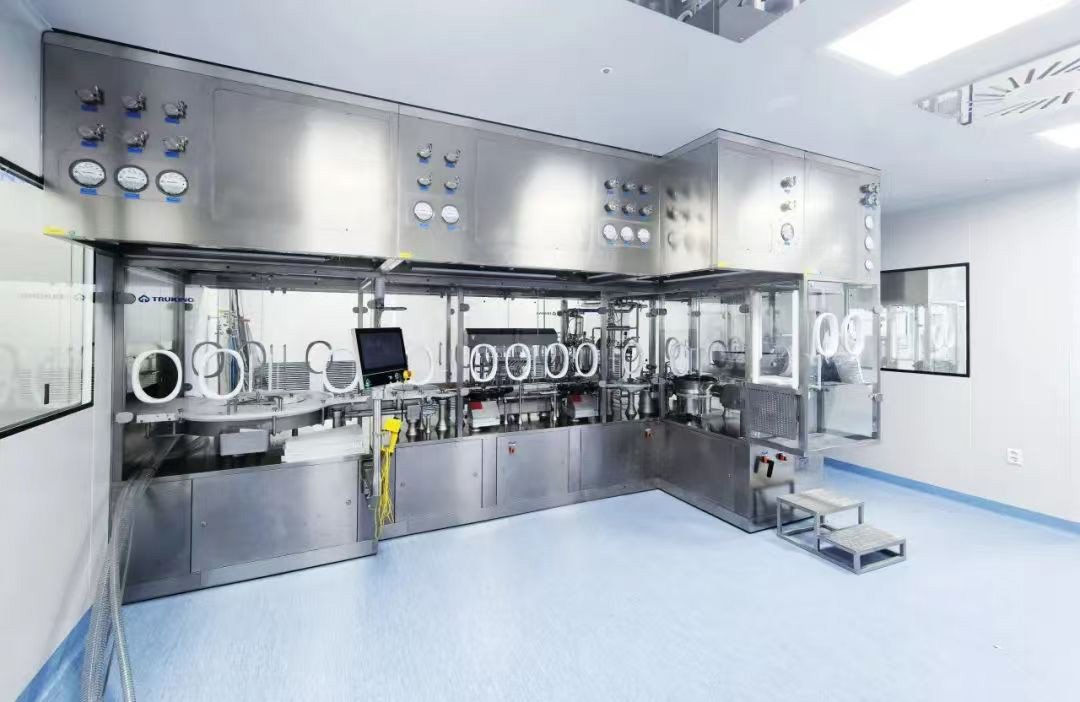
Sterile products are medicinal products whose manufacture must ensure freedom from viable microbial contamination, encompassing high-risk dosage forms such as parenteral preparations, ophthalmic products, and implantable devices. In accordance with Good Manufacturing Practice (GMP), together with international standards promulgated by WHO, FDA, and the European Union, the manufacture of sterile products must be conducted within a controlled cleanroom environment to minimize contamination risk. In practice, however, the complete elimination of human interventions is not achievable; operations including aseptic assembly, equipment adjustment, in-process sampling, troubleshooting, cleaning, and sterilization all constitute interventions. When inadequately managed, such interventions can readily compromise the aseptic barrier and introduce contamination, with profound implications for sterility assurance. The establishment of a scientific, systematic lifecycle management framework for interventions is therefore of critical importance to product quality and regulatory compliance.
1 Interventions
1.1 Definition and Classification
An intervention is any operation within an aseptic process that breaches, or has the potential to breach, the aseptic barrier. Interventions are conventionally categorized as inherent and corrective. As defined in EU GMP Annex 1 Manufacture of Sterile Medicinal Products (2022):
Inherent interventions are interventions integral to the aseptic process that must be performed during assembly, routine operation, and/or monitoring (e.g., aseptic assembly, container replenishment, environmental monitoring sampling). Such interventions are mandated by the procedures or work instructions governing aseptic process execution.
Corrective interventions are interventions undertaken to rectify or adjust the aseptic process during execution. These may not occur at a predefined frequency during routine processing; examples include clearing component blockages, recalibrating sensors, and replacing equipment components.
Interventions may additionally be classified as:
Planned interventions — including routine cleaning, equipment calibration, and periodic sampling — for which risk assessment and operator training can be completed in advance.
Unplanned interventions — including equipment malfunction and alarm response — which are sudden in onset, carry elevated risk, and necessitate a formal emergency response mechanism.
1.2 Risk Profile
During sterile products manufacture, the entry of personnel into the Grade A zone to perform interventions may introduce viable and particulate contamination, potentially resulting in loss of environmental control within the critical area. Contamination risk escalates with intervention duration, as prolonged exposure of the product to a potentially compromised environment increases the probability of contamination ingress. Interventions impose exacting requirements on operator technique; frequent interventions are susceptible to errors arising from non-conformance, inadequate training, or operator fatigue, further amplifying contamination probability. FDA inspection reports document numerous instances of sterility failure attributable to deficient intervention management [5]. In one case, a manufacturer recalled multiple batches because the needle replacement operation during filling had not been subjected to adequate validation. Additional observations included operators obstructing first air during aseptic interventions, repeatedly passing hands over open sterile containers, and contacting product-contact surfaces during manipulation.
1.3 Regulatory Framework
Regulatory authorities worldwide have articulated explicit principle-based requirements governing intervention management in aseptic manufacture. Key provisions include:
EU GMP Annex 1 (2022): mandates the classification, assessment, and control of all interventions, and enshrines the principle of intervention minimization.
FDA Guidance for Industry — Sterile Drug Products Produced by Aseptic Processing (2004): requires the inclusion of all routine interventions within Aseptic Process Simulation (APS).
WHO TRS 1025: recommends risk assessment of interventions and documentation of all intervention events.
China GMP (2010 Revision) Annex 1: stipulates that aseptic operations should minimize interventions wherever practicable, and that the impact of necessary interventions should be validated. Manufacturers are required to integrate intervention management into their quality management systems to assure compliance.
2 Lifecycle Management of Interventions
Where the aseptic state must inevitably be compromised, a systematic control strategy is required to maximize protection of the aseptic environment and assure the safety and compliance of the finished product. To this end, the lifecycle of aseptic interventions should be managed across five phases: identification, risk assessment, qualification, periodic review, and continuous improvement.
2.1 Identification and Design
Intervention design is governed by the overarching principle of minimizing aseptic risk. Control measures may include the deployment of support personnel, use of pre-sterilized implements, disinfection of contacted surfaces, and equipment self-decontamination. The selected control measures must be embedded within the intervention procedure and translated into instructive operational descriptions for operator reference. The intervention category (inherent or corrective) must be explicitly defined, and the frequency and duration of each intervention should be established on the basis of historical data and/or manufacturing experience. The acceptability of an intervention must not be justified by challenging unreasonable intervention scenarios. The definition of an intervention is anchored in three key attributes:
1.The operation or activity occurs within the critical zone (Grade A environment);
2.The operation or activity is executed by personnel;
3.The operation occurs during the preparation and execution phases of the aseptic process.
2.2 Risk Assessment
All interventions are subject to formal risk assessment to delineate the potential hazards and specific impact of each intervention on the aseptic process. The assessment must clearly articulate the risk points, the rationale underpinning risk scoring, and the methodology for determining the overall risk rating. In accordance with the intervention risk assessment paradigm presented in PDA TR 22 (2025), intervention risk is evaluated across multiple dimensions: complexity, duration, proximity to the product and product-contact surfaces, execution frequency, airflow visualization findings, and the degree of protection afforded by the barrier system. Each risk factor is independently scored, and the aggregate score determines the overall risk level of the intervention, ensuring a comprehensive and scientifically defensible assessment.
Following establishment of the risk assessment methodology, a detailed assessment is conducted for each intervention identified in the manufacturing process, and a risk level is assigned accordingly.
Interventions deemed high-risk following assessment are subjected to further optimization to reduce risk to an acceptable level. In one illustrative case, a manufacturer optimized a high-risk open-door assembly operation by transitioning to closed-door assembly, and during the intervention, customized pre-sterilized tooling was employed to eliminate obstruction of first air.
2.3 Qualification
Appropriately designed interventions are qualified through airflow visualization studies, which verify conformance with good aseptic manipulation practice and the first-air principle. Concurrently, interventions are simulated and evaluated during Aseptic Process Simulation (APS), and those meeting acceptance criteria are incorporated into the approved intervention list. The APS protocol must define an intervention simulation plan ensuring coverage of all aseptic manipulations actually performed during routine manufacture. The risk level assigned to each intervention further determines the simulation frequency and number of repetitions within the APS, informing the development of the intervention simulation plan.
Personnel executing aseptic interventions represent a potential source of microbial contamination, and the associated risk varies by job function. Accordingly, interventions during routine aseptic manufacture must be performed by personnel holding valid aseptic operation qualifications — including maintenance and environmental monitoring (EM) personnel — in strict accordance with documented procedures. Aseptic qualification is typically attained through four sequential stages: theoretical instruction, practical operation drills, formal qualification assessment, and ongoing qualification maintenance.
2.4 Periodic Review
Intervention reviews comprise two modalities: pre-APS review and periodic review. The pre-APS review is conducted prior to each APS campaign and updated concurrently with the APS protocol. Its scope encompasses, but is not limited to, the intervention record of all manufacturing batches since the preceding APS campaign, maximum intervention frequency, and intervention duration. The periodic review and assessment may build upon the pre-APS review, or may be integrated with analysis of intervention-related abnormal events, deviations, and change controls within the review cycle; a formal periodic review report is required. A two-year review cycle is recommended, during which intervention execution is consolidated and evaluated to update intervention management documentation. The review scope includes, but is not limited to, maximum intervention frequency, duration range, operational description, classification, and unplanned interventions arising from in-cycle abnormalities. Based on the review findings regarding the appropriateness of interventions, frequencies, and durations observed during routine manufacture, a determination is made — supported by reasoned assessment — regarding the removal, addition, or adjustment of interventions, followed by re-qualification of the revised intervention content.
2.5 Continuous Improvement
A formal continuous improvement mechanism should be embedded within intervention management, implemented through the following pathways: systematic review of intervention events with analysis of deviations, Out-of-Specification (OOS) results, and environmental monitoring trends; conduct of Root Cause Analysis (RCA) to refine Standard Operating Procedures (SOPs) and training curricula; adoption of emerging technologies including robotic automated intervention systems and AI-driven behavior recognition to mitigate human factors; and evaluation of intervention management effectiveness through the Annual Product Quality Review (APQR).
3 Conclusion
Interventions in the manufacture of sterile products constitute a principal source of quality risk and must be governed by a comprehensive lifecycle management approach. Through systematic identification, rigorous risk assessment, robust qualification, effective periodic review, and sustained continuous improvement, manufacturers can materially reduce contamination risk attributable to interventions and safeguard product safety and efficacy. Looking ahead, as intelligent manufacturing and digital technologies advance, intervention management will evolve toward greater automation and intelligence, further enhancing the reliability and regulatory compliance of aseptic manufacture. Pharmaceutical manufacturers should regard intervention management as an indispensable component of the sterility assurance framework, sustaining investment and process optimization to ensure that every intervention is executed under controlled conditions — thereby delivering safe, effective sterile products to patients.
4 Outlook
Notwithstanding substantial advances in the institutionalization, standardization, and risk control of intervention management, significant challenges persist.
Human factors remain incompletely controllable: Despite systematic training, operators may exhibit technique deviations under high-pressure conditions, prolonged operations, or fatigue, with attendant contamination risk.
Unplanned interventions are inherently unpredictable: Unforeseen events — including sudden equipment failure, material anomalies, and process excursions — occur with regularity, compounding the complexity of intervention management.
Data integration remains inadequate: Critical data streams — intervention records, environmental monitoring results, and deviation reports — are frequently siloed across disparate systems, precluding unified correlation analysis and trend mining and thereby constraining risk early-warning and continuous improvement capabilities.
These challenges notwithstanding, intervention management is advancing toward the deep convergence of intelligence, automation, and digitalization, progressively enabling “human-free intervention” for critical operations and fundamentally reducing human-derived contamination risk. As enabling technologies gain widespread adoption, intervention management will transition from a paradigm of reactive response to one of proactive prevention, propelling aseptic manufacture into a new era of higher efficiency, enhanced safety, and intelligent, high-quality development.