Within the landscape of modern biopharmaceuticals, if mRNA and viral vectors are the frontline vanguard charging into battle, plasmids serve as the robust rear supply depot furnishing critical genetic payloads. Plasmids are autonomously replicating circular DNA molecules segregated from host chromosomal DNA, naturally occurring in bacteria such as Escherichia coli, where they confer survival advantages including antibiotic resistance. Today, these diminutive native genetic elements stand as the cornerstone of recombinant DNA technology.
Smaller in size than host chromosomes and characterized by high copy numbers, plasmids enable straightforward isolation and purification. More crucially, they possess exceptional structural malleability: scientists can replace their non-essential genetic segments with therapeutic transgenes of interest. Presently, plasmid DNA (pDNA) finds widespread deployment in DNA vaccines and gene therapies, while functioning as an indispensable starting raw material for mRNA vaccines, viral vector vaccines, and gene therapeutic modalities. This article delivers a comprehensive dissection of this vital biopharmaceutical foundational building block, spanning its molecular fundamentals, developmental timeline, modular architecture, manufacturing workflows, and commercial applications.
I. Molecular Fundamentals and Topological Conformations of Plasmids
Plasmids are compact, covalently closed circular double-stranded DNA molecules with autonomous replication capability, predominantly harbored by prokaryotes, fungi, and a narrow subset of plant cells. As extrachromosomal genetic material, they are non-essential for host cellular viability yet replicate in tandem with chromosomal DNA and stably transmit to daughter cell progeny.
Spatially, plasmid DNA predominantly exists as compact supercoiled covalently closed circular structures, with a minor fraction adopting linearized conformations. Based on replication regulatory mechanisms, plasmids fall into two categories: stringent plasmids (low copy number, tightly controlled by host cellular machinery) and relaxed plasmids (high copy number, unconstrained by host protein synthesis). Relaxed plasmids are the preferred chassis for genetic engineering to maximize DNA yields.
Topological isoforms represent a critical analytical metric for downstream purification and quality control workflows, encompassing three primary canonical morphologies:
Supercoiled conformation (Covalently Closed Circular DNA, CCC): A tightly compacted topology with the highest biological activity, the gold-standard form for clinical-grade pharmaceutical plasmids.
Open-circular conformation: Single-strand nicking of the DNA duplex unwinds the supercoiled tertiary structure.
Linear conformation: Double-stranded cleavage at an identical locus generates linear DNA fragments.
Beyond these core isoforms, plasmid aggregates readily form during extraction and long-term storage. For gene therapy and mRNA drug development, distinct plasmid topologies directly govern cellular transfection efficiency and clinical safety profiles. Regulatory authorities enforce stringent thresholds for supercoiled plasmid content in pharmaceutical-grade material: the U.S. FDA mandates a minimum purity threshold of >80%, while China’s NMPA requires ≥90%. The industry has established mature quantitative analytical platforms to resolve and quantify discrete plasmid conformations, including agarose gel electrophoresis, high-performance liquid chromatography (HPLC), and capillary electrophoresis (CE).
II. Milestones in the Evolution of Plasmid Therapeutics
Biomedical exploration of plasmids originated in 1990. Wolff and colleagues delivered saline solutions of plasmids encoding reporter genes—chloramphenicol acetyltransferase, luciferase, and β-galactosidase—via direct intramuscular injection into live murine models. Successful transgene expression within skeletal muscle cells marked a paradigm-shifting breakthrough, inaugurating the era of plasmids as gene delivery vehicles for therapeutic applications.
The subsequent decade delivered successive landmark technological innovations for plasmid platforms:
1991: In vivo electroporation emerged as a viable modality for intracellular plasmid delivery.
Mid-to-late 1990s: Co-expression of cytokines and target transgenes was realized; immunostimulatory CpG motifs were integrated into plasmid backbones; nanoparticle delivery platforms were engineered to drastically boost transfection efficiency; large-volume hydrodynamic injection enabled systemic administration of plasmid DNA.
These early technical advances laid a robust translational foundation for the clinical advancement of plasmid therapeutics. Recent years have witnessed transformative leaps in plasmid manufacturing technology: in 2025, a research team at North Carolina State University deployed a directed controllable evolution strategy to engineer E. coli strains yielding 8.7-fold higher pAAV plasmid titers relative to original isolates. Even p15A plasmids, historically recalcitrant to large-scale production, demonstrated a 44% yield improvement. Plasmid DNA has long suffered prohibitive production costs, reaching upwards of USD 100,000 per gram; this technological milestone carries profound potential to drive down the overall cost of gene therapy interventions.
III. Decoding the Modular Architecture of Engineered Plasmids
A canonical engineered plasmid predominantly exists as a compact supercoiled topological isoform, designed as a precision molecular assembly. Minimal functional plasmid backbones comprise three core modules: an origin of replication, selectable resistance markers, and multiple restriction endonuclease cleavage sites. Clinical-grade therapeutic plasmids integrate an expanded suite of synergistic functional elements (Figure 3):
Prokaryotic origin of replication: Dictates plasmid copy number and volumetric yields within microbial hosts such as E. coli.
Antibiotic resistance markers: Genes conferring resistance to ampicillin, kanamycin, or analogous antibiotics facilitate selective screening of host bacterial cells successfully transformed with target plasmids during fermentation.
Multiple Cloning Site (MCS): A polylinker array of unique restriction enzyme cleavage loci, serving as the insertion hub for therapeutic transgenes of interest.
Promoter elements: Eukaryotic or prokaryotic promoter sequences governing transcriptional initiation of the cargo transgene within specified target cell populations.
Therapeutic transgene cargo: The core functional payload of the plasmid, deployed as DNA templates for in vitro transcription (e.g., SARS-CoV-2 spike protein sequences for mRNA vaccines), genetic templates for AAV viral packaging, or gene cassettes for CAR-T cell therapy workflows.
Selection markers & polyadenylation (polyA) tails: PolyA sequences enhance mRNA stability and translational output, while selection markers enable post-transfection screening of successfully modified mammalian cells.
Vector design necessitates holistic consideration of multifaceted parameters: in vivo plasmid stability, transgene expression kinetics, immunogenic risks posed by residual prokaryotic backbone sequences, and off-target immune reactivity triggered by host cellular defense pathways.
IV. Lab to Commercial Manufacturing: Plasmid Process Development and Scale-Up
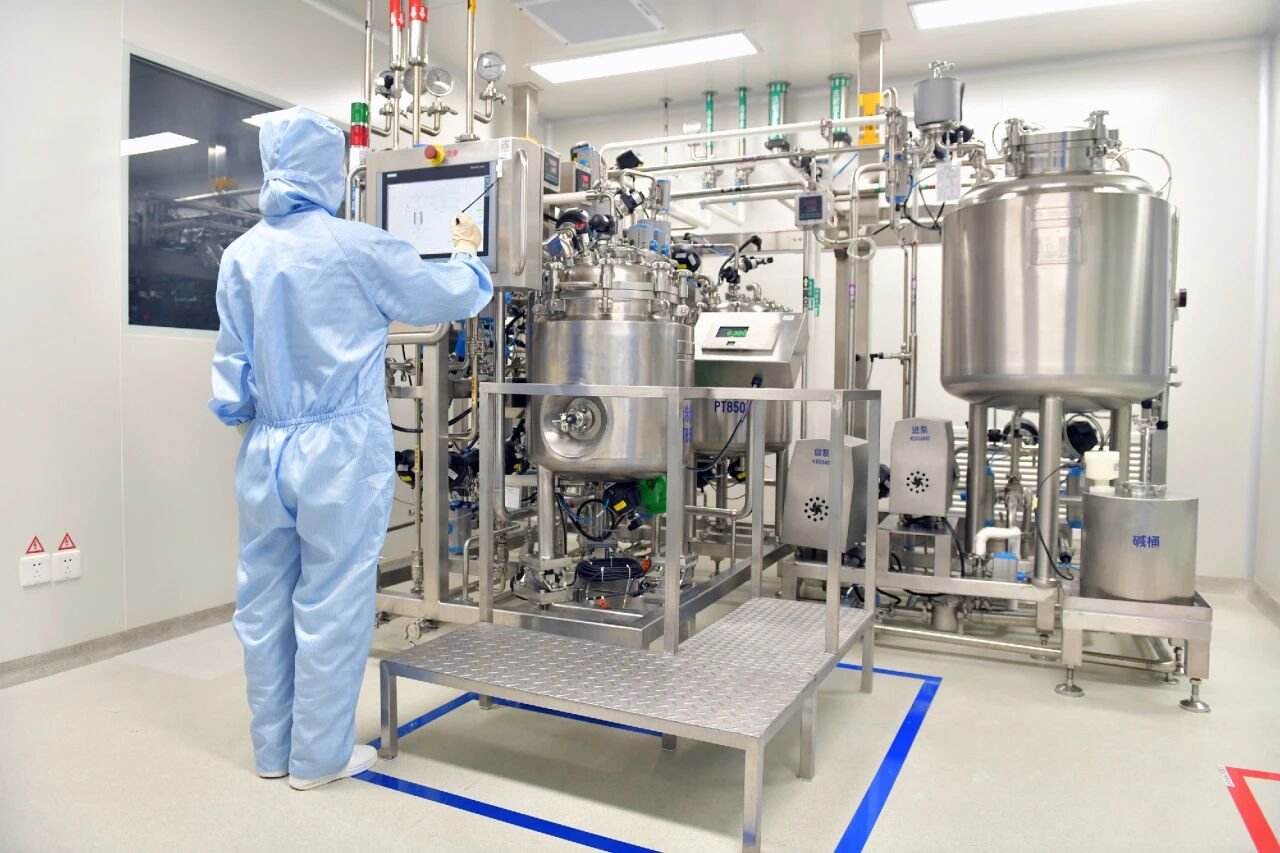
Plasmid process development constitutes a parallel, systematic engineering workflow intertwined with therapeutic product development. Standard plasmid manufacturing pipelines bifurcate into two core segments: upstream fermentation and downstream purification.
Upstream Processing: High-Density Fermentation and Cell Bank Establishment
Clinical-grade plasmids are amplified using E. coli host strains including DH5α and JM109. Manufacturing commences with the construction of regulatory-compliant Master Cell Banks (MCB) and Working Cell Banks (WCB), paired with rigorous raw material characterization testing. Optimizations of basal culture media, fed-batch feeding regimens, and fermentation control parameters (dissolved oxygen, pH, temperature) drive high-density microbial cultivation to maximize volumetric plasmid productivity.
Downstream Processing: Polishing and Impurity Clearance
Downstream purification workflows aim to recover intact plasmid DNA while eliminating host-derived contaminants (genomic DNA [gDNA], RNA, host cellular proteins, endotoxins) to meet pharmaceutical purity specifications, executed in three sequential stages:
Primary Capture & Clarification: Tangential flow microfiltration harvests intact bacterial biomass, followed by alkaline or thermal lysis to liberate intracellular plasmid DNA.
Intermediate Purification: Clarified lysates undergo tangential flow filtration (TFF), salting-out precipitation, or affinity adsorption to substantially reduce contaminant loads and concentrate crude plasmid pools.
Final Polishing Chromatography: Size-exclusion chromatography, anion-exchange chromatography (AEX), or hydrophobic interaction chromatography (HIC) are deployed to selectively remove recalcitrant impurities including residual gDNA and aberrant plasmid topological isoforms.
V. Expansive Application Landscape and Tiered Quality Specifications for Plasmids
Plasmids operate dual functional roles: standalone pharmaceutical active pharmaceutical ingredients (APIs), and critical starting materials enabling next-generation therapeutic platforms. Key application verticals include:
Direct therapeutic APIs: DNA vaccines: Intramuscular administration drives in vivo antigen expression to elicit protective adaptive immune responses.
Viral vector vaccine & gene therapy workflows: Serve as transfer plasmids or helper plasmids for lentiviral (LV) and adeno-associated viral (AAV) vector packaging.
mRNA vaccine and therapeutic production: Act as linear DNA templates for in vitro transcription (IVT) reactions generating mRNA drug substrates.
Market analytics firm Research and Markets forecasts the global viral vector and plasmid DNA market to surge from USD 2.2 billion in 2020 to USD 8.6 billion by 2028, with plasmid DNA capturing approximately 25% of total market share. The Chinese domestic market exhibits exceptional growth momentum: domestic plasmid DNA sales reached CNY 40 million as early as 2020, with consistent expansion catalyzed by the industrial boom in mRNA therapeutic development over subsequent years.
Stringently tiered purity and quantity benchmarks apply to plasmids across distinct end-use cases. Plasmids utilized as IVT templates demand exceptional purity and high supercoiled isoform ratios to preserve full-length mRNA transcript integrity. In contrast, DNA vaccines intended for direct human administration impose zero-tolerance safety limits on endotoxin and residual host nucleic acid contaminants.
Thirty years of preclinical research and clinical trial datasets corroborate that plasmid-mediated gene therapy represents a transformative therapeutic modality for combating infectious diseases, monogenic hereditary disorders, and oncology malignancies. While plasmid therapeutics remain in an upward developmental trajectory with outstanding clinical risk considerations—including the theoretical risk of random genomic integration of plasmid fragments and autoimmunity triggered by anti-DNA antibody formation—extensive preclinical and human clinical data validate plasmids’ favorable tolerability and overall safety profile.
Continuous iteration of rational plasmid vector design, breakthroughs in lipid nanoparticle (LNP) and alternative delivery platforms, and maturation of scalable cGMP manufacturing pipelines will unlock the full therapeutic potential of plasmids, this invisible foundational engine powering the impending era of genetic medicines.






