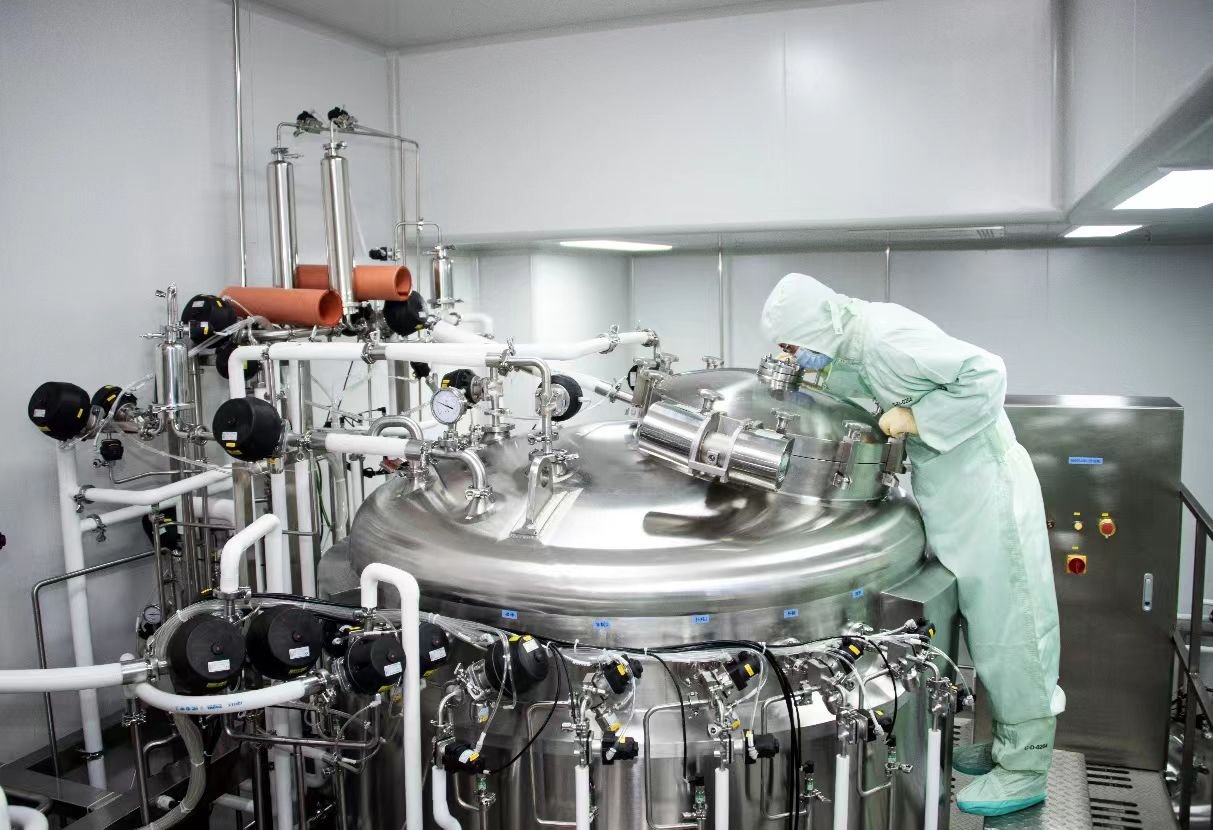
I. Research Background: Devastating Epidemics Driving Technological Innovation
Severe animal infectious diseases, including African swine fever (ASF), highly pathogenic avian influenza (HPAI), and porcine reproductive and respiratory syndrome (PRRS), inflict staggering economic losses on global livestock industries each year. The 2018 ASF outbreak in China serves as a stark lesson: nearly one million pigs were culled, triggering a precipitous decline in pork output nationwide.
Conventional vaccine platforms, namely inactivated and live attenuated vaccines, exhibit prominent limitations when confronting rapidly mutating pathogens, including insufficient immunogenicity, weak cross-protective efficacy, and delayed strain updates, rendering them inadequate for modern epidemic prevention and control.
Against this backdrop, nanoparticle adjuvants have emerged as a transformative technology. Leveraging unique size-dependent effects, precise targeted antigen delivery, superior stability and sustained-release properties, they drastically boost antigen presentation efficiency and trigger robust cellular and mucosal immune responses, establishing themselves as a core technical platform for next-generation vaccine design.
II. Major Classes of Nanoparticle Adjuvants and Their Veterinary Applications
A diverse spectrum of nanomaterials has been validated for human and veterinary vaccine formulations. Compared with traditional adjuvant formulations, nanoparticle adjuvants deliver marked improvements in safety and potency, categorized into nanoemulsions, natural/synthetic polymeric nanoparticles, lipid nanoparticles, immunostimulating complexes (ISCOMs), and engineered protein nanocages.
Emulsion systems are divided into oil-in-water (O/W) and water-in-oil (W/O) types, both of which have been commercialized in veterinary vaccines. Nevertheless, O/W emulsions suffer from poor stability and short-lived immune persistence, while W/O emulsions feature high viscosity and elevated risks of local inflammatory adverse reactions. To resolve these drawbacks, researchers are developing novel water-in-oil-in-water (W/O/W) multiple emulsions as advanced vaccine adjuvants.
Nanoemulsions fall into three categories: O/W, W/O/W, and W/O, distinguished from conventional emulsions by droplet sizes ranging from 50 to 300 nm. They offer multiple advantages including facile manufacturing, sustained antigen release, low viscosity, robust thermodynamic stability, and inherent tissue targeting. AS03 and MF59 represent two benchmark nanoemulsion adjuvants that amplify antigen-specific immunity via dual mechanisms: activating local innate immune signaling and facilitating the migration of antigen-presenting cells (APCs) to draining lymph nodes.
2.2 Natural Polymeric Nanoparticle Adjuvants
Chitosan and its derivatives are widely deployed as mucosal vaccine adjuvants for livestock and poultry to counter bacterial and viral pathogens.
Quaternized chitosan exhibits enhanced water solubility, and its cationic surface confers strong mucoadhesive capacity. For instance, N-2-HACC nanoparticles loaded with Newcastle disease virus antigens elicit high levels of systemic IgG and mucosal secretory IgA (sIgA) in chickens. Mannose-functionalized chitosan enables targeted binding to dendritic cell (DC) surface receptors, and when incorporated into swine influenza vaccines, it significantly reduces respiratory viral loads post-challenge.
Notwithstanding their merits, chitosan-based adjuvants face practical constraints: uneven molecular weight distribution causes poor batch-to-batch reproducibility, and toxic chemical residues may remain post-derivatization.
2.3 Synthetic Polymeric Nanoparticle Adjuvants
Synthetic polymers boast favorable biocompatibility, complete biodegradability, and low raw material costs. Poly(ε-caprolactone) (PCL) and poly(lactic-co-glycolic acid) (PLGA), two pivotal polyester biomaterials, are extensively applied in drug delivery and antigen carrier systems.
Mannose-modified PLGA nanoparticles encapsulating ASF p54 antigen induce potent humoral and cellular immunity in murine models. PLGA also serves as a versatile delivery vehicle for DNA vaccines; combined with electroporation, it amplifies T cell responses elicited by PRRS DNA vaccines. However, high production costs remain a major bottleneck restricting large-scale veterinary adoption of synthetic polymeric adjuvants.
2.4 Inorganic Nanoparticles
Inorganic nanocarriers such as aluminum hydroxide and calcium phosphate are recognized as low-risk adjuvants capable of potentiating immune responses and mediating targeted antigen delivery. Traditional aluminum salt adjuvants fail to elicit robust cellular immunity and carry risks of local tissue reactions, yet nanoscale modification provides a viable strategy to overcome these flaws. Studies demonstrate that 1–20 nm alumina nanorods activate the NLRP3 inflammasome and stimulate interleukin-1β (IL-1β) secretion, delivering a 40% improvement in immunogenicity relative to conventional bulk aluminum adjuvants. Gold nanoparticles exert size-dependent immunomodulatory effects: 20 nm gold particles significantly elevate antibody titers when formulated with foot-and-mouth disease peptide antigens.
2.5 Lipid Nanoparticles (LNPs)
Composed of cholesterol, ionizable lipids, PEGylated lipids and phospholipids, lipid nanoparticles constitute non-viral lipid delivery platforms and rank among the most widely adopted vaccine carrier technologies to date. Research confirms LNPs encapsulating mRNA encoding the spike (S) protein of porcine epidemic diarrhea virus (PEDV) induce robust neutralizing antibodies and cellular immunity in piglets. Immunized sows confer passive protective immunity to neonatal piglets via colostrum. LVRNA001, a rabies mRNA-LNP vaccine candidate, achieves 100% protective efficacy in canine challenge models, far outperforming conventional inactivated rabies vaccines under identical experimental conditions.
2.6 Immunostimulating Complexes (ISCOMs)
Canonical ISCOM formulations consist of three indispensable components: cholesterol, phospholipids (e.g., phosphatidylcholine), and saponins (Quil A or QS-21).
Cage-structured ISCOMs (~40 nm) loaded with influenza antigens trigger tissue-resident memory T cells in the lung following intranasal administration, conferring broad cross-protection against divergent viral strains. Equine influenza ISCOM vaccines induce sustained interferon-γ (IFN-γ) secretion, providing the first large-animal proof-of-concept that ISCOMs drive potent type 1 T helper (Th1) immune responses.
2.7 Engineered Protein Nanoparticles
Protein nanocages represent bioengineered self-assembling platforms capable of encapsulating exogenous antigens, with broad utility across biotechnology and translational medicine. Virus-like particles (VLPs) and ferritin nanoparticles are two archetypal protein nanocage carriers.
A bivalent vaccine constructed by fusing influenza M2e antigen onto porcine circovirus type 2 (PCV2) VLPs delivers full protection against cross-species influenza viral challenge in mice. Ferritin nanoparticles self-assembled to display PRRSV GP5 antigen elicit robust Th1-skewed immune responses in swine and markedly reduce in vivo viral loads post-infection.
III. Impacts of Physicochemical Properties of Nanoparticle Adjuvants
Nanoparticle adjuvants fabricated from distinct raw materials possess divergent physicochemical traits and immunomodulatory mechanisms, which directly govern antigen stability and controlled release kinetics. Fine-tuning key physicochemical parameters—including material composition, geometry, particle size, hydrophilicity, surface functionalization and surface charge—enables precise modulation of immune response magnitude and polarization.
Particle size effects: Particles ranging from 200–600 nm preferentially drive robust humoral immunity (exemplified by HBsAg-loaded PLGA nanoparticles), while 220 nm cationic nanoparticles skew immune responses toward cellular immunity.
Surface charge: Amine-functionalized cationic PLGA nanoparticles exhibit 10-fold higher binding affinity to dendritic cells than anionic counterparts, drastically enhancing mucosal immune potency.
Shape and hydrophobicity: Rod-shaped nanoparticles prolong gastrointestinal retention time; hydrophobic PLGA nanoparticles demonstrate a 3-fold increase in macrophage phagocytosis efficiency.
IV. Summary and Future Perspectives
Emerging and re-emerging infectious pathogens, including ASF virus, PRRSV, PEDV, classical swine fever virus (CSFV), and avian influenza virus, continuously threaten global public health and food security. This review systematically summarizes the current landscape and unmet challenges of veterinary vaccine adjuvants, highlighting the urgent demand for innovative nanoparticle adjuvant technologies.
Collectively, nanoparticle adjuvants have transitioned from laboratory research to translational veterinary applications, with mRNA vaccine delivery emerging as their most promising frontier. Despite persistent hurdles such as cost optimization, scalable manufacturing workflows, and regulatory approval frameworks, veterinary vaccines feature shorter preclinical and clinical development timelines than human vaccines. This advantage positions nanoparticle adjuvant veterinary platforms for accelerated commercial rollout, meriting sustained industry investment and research prioritization.






