





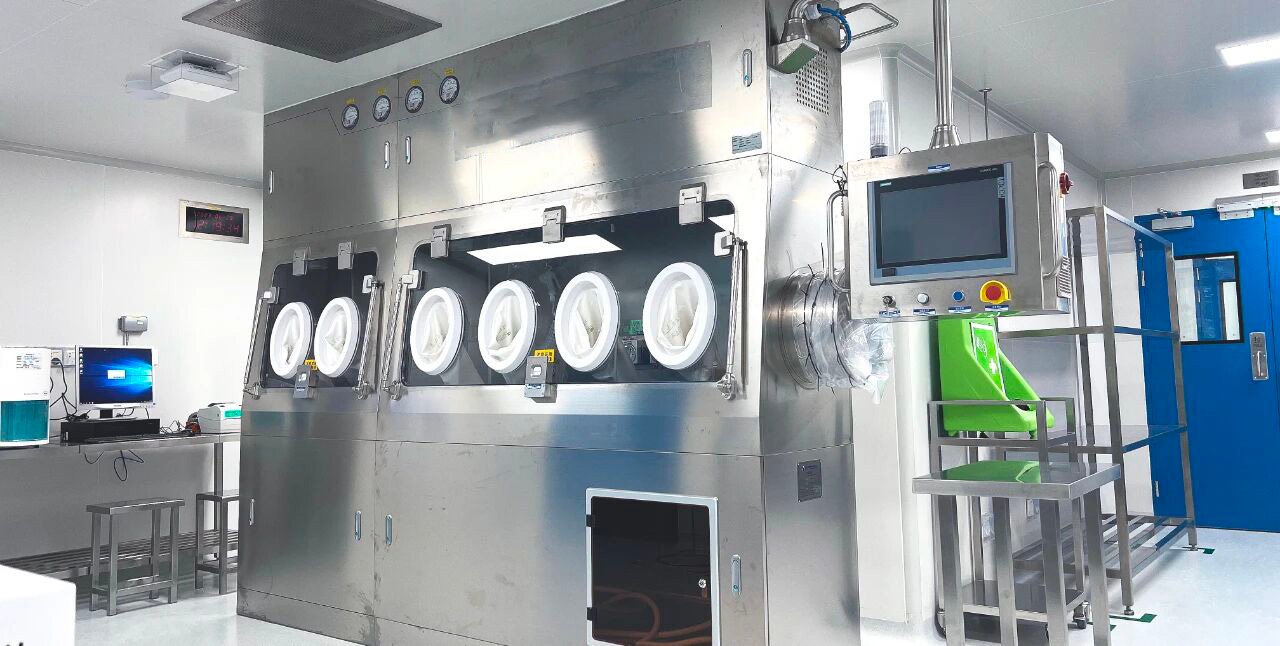
As a core component of quality control, in-process monitoring enables timely detection and rectification of potential quality deviations. Annex 1 to EU GMP — Manufacture of Sterile Medicinal Products, issued and implemented in August 2023, further elevates Quality Risk Management (QRM) and Contamination Control Strategy (CCS) to a central position, establishing a clear scientific framework for Blow-Fill-Seal (BFS) technology. Characterised by high automation and minimised human intervention, BFS has become a preferred manufacturing solution for sterile preparations. Nevertheless, its in-process control faces new challenges, particularly with respect to sampling testing and batch release.
Against this backdrop, the Acceptable Quality Limit (AQL), a widely adopted statistical tool in quality control and assurance, plays a vital role. AQL defines the maximum permissible number of defective or non-conforming units within a batch or sample that allows acceptance of the whole batch. Its primary objective is to help manufacturers strike a balance between the necessity of comprehensive quality control and practical constraints on production and testing costs. At present, AQL sampling schemes are generally established in accordance with ISO 2859-1, with sample sizes determined via look-up tables depending on the selected inspection level. Level II inspection was selected in this study to balance accuracy in quality assurance and cost-effectiveness. The study also indicates that although AQL-based strategies remain valuable, they must be aligned with enhanced process understanding and innovations in testing methodologies to optimise resource utilisation while safeguarding product quality and patient benefits.
1. BFS Process
BFS technology represents a highly integrated aseptic filling process. Its core feature is “in-situ moulding and integrated aseptic processing”: three sequential steps — blow moulding of containers, aseptic filling and heat-sealing closure — are completed on a single machine. Leveraging precision mechanical design and built-in aseptic barrier systems, BFS effectively mitigates microbial contamination risks.
1.1 Blow Moulding — One-step Container Formation
Medical-grade polymer pellets (e.g., PE, PP) are fed into an extruder through a closed system. Under high temperature (160–200 °C) and high pressure (approximately 200 bar), the molten polymer is extruded to form a parison, which is continuously protected by aseptic air from the point of extrusion. This extrusion process has been validated as aseptic to guarantee parison sterility. The high temperature and pressure inherent to extrusion also exert an inherent sterilising effect, capable of inactivating most contaminants including microorganisms, endotoxins and particulate matter.
1.2 Filling — Aseptic Dosing of Liquid Product
The formulated solution is metered into the formed containers via a cleaned and sterilised closed transfer circuit comprising tanks, tubing, filters and filling nozzles. Time-pressure dosing is the most common feeding method; pump delivery or volumetric metering systems may also be adopted. The entire product contact path remains fully enclosed to eliminate exposure risks. All critical product-contact components undergo sterilisation prior to production.
1.3 Sealing — Hermetic Heat Sealing
Upon completion of filling, the upper mould half is heated to the set temperature and pressed down. The inherent thermoplastic properties of the polymer enable fusion sealing. Once the fused region cools, the container neck is fully closed to form the final sterile packaging unit. Key control parameters for this stage include heat-seal temperature, seal strength and subsequent container integrity testing.
In terms of process risk control aligned with EU GMP Annex 1 requirements, blow moulding is mainly confronted with risks of parison exposure to ambient air, parison collapse or incomplete blow moulding. Corresponding control measures include maintaining a Class A environment or equivalent enclosed containment in the blow moulding zone, verifying airflow conditions and HEPA filtration in the parison formation area, validating parison length and stability with QP review, and ensuring all product-contact components are subject to validated cleaning and sterilisation. During filling, major risks arise from exposure caused by nozzle insertion and contamination of the filling circuit. Manufacturers shall document the aseptic integrity of the enclosed filling path supported by biological indicator challenge testing, calibrate filling accuracy and carry out on-line quality monitoring. In the sealing phase, inadequate sealing may lead to leakage and microbial ingress. Relevant control measures consist of validating setpoints of heat-seal temperature and pressure with ongoing trend monitoring, conducting Container Closure Integrity Testing (CCIT), and implementing AQL sampling inspection on seal quality before batch release.
2. Quality Risk Management
Within BFS implementation, quality risk management focuses on protecting patient safety and ensuring consistent product quality. Conducted in strict compliance with ICH Q9 throughout the entire product lifecycle, it aims to guarantee consistency of Critical Quality Attributes (CQAs).
2.1 Risk Management Workflow
The risk management workflow consists of three key phases:
2.1.1 Risk Identification
Systematic identification of potential quality threats. For BFS processes, emphasis is placed on equipment design deficiencies (e.g., imperfect mould closure), lapses in environmental control (airflow disturbance within Class A zones) and fluctuations in raw material bioburden. Studies demonstrate that over 70% of BFS process deviations stem from variable microbial quality of raw materials and compromised process stability following equipment shutdown and restart.
2.1.2 Risk Analysis
A combination of qualitative and quantitative approaches (e.g., risk matrix) is adopted to assess occurrence probability, severity and detectability of risks. Failure Modes and Effects Analysis (FMEA) is utilised to scientifically define Critical Process Parameters (CPPs): melt temperature of polymer pellets associated with thermal degradation risks; validation of mould sterilisation via biological indicator challenges; filling accuracy monitored through weight variation analysis; and assessment of microstructural characteristics at the container-seal interface for seal integrity. Risk analysis traces root causes and simulates potential scenarios, with depth determined by data availability and resource constraints.
2.1.3 Risk Evaluation
Analysis outcomes are compared against predefined acceptance criteria. Decision-making shall take into account the impact of data reliability on conclusions, with full disclosure of sources of uncertainty (e.g., gaps in process knowledge or limitations of analytical methods). Evaluation results are quantified as risk scores or categorised qualitatively (high/medium/low), providing a basis for subsequent control measures.
2.2 Specialised Control Strategies
Specialised control strategies centre on dynamic in-process monitoring. First, periodic testing is implemented at key production milestones (e.g., batch initiation and termination) to detect anomalies at an early stage and prevent large-scale generation of non-conforming units, thereby substantially reducing quality losses. Second, advanced real-time monitoring technologies are deployed, including on-line particle monitoring systems, dynamic environmental microbial monitoring and non-contact seal quality inspection, enabling instant identification and interception of process deviations. Furthermore, continuous validation of control measure effectiveness is fundamental to ensuring batch-to-batch consistency and sustained aseptic status. It should be highlighted that inadequate implementation of these in-process monitoring activities may directly undermine product uniformity and lead to unmanageable contamination risks.
3. AQL Sampling Strategy
Notwithstanding the high automation and enclosed aseptic nature of BFS, finished products must still undergo scientifically designed sampling testing to meet regulatory requirements and safeguard patient safety. AQL and attribute sampling represent internationally recognised quality control tools, supporting rational batch release without compromising operational efficiency.
3.1 Principle of Attribute Sampling
Attribute sampling is a statistical method built upon binary conformity judgements (conforming / non-conforming). The defect rate observed in samples is used to infer overall batch quality to support accept/reject decisions. Selection of sampling plans is influenced by sample size, acceptance number (Ac) / rejection number (Re), batch size, inspection level, AQL value, inspection type, and shall also be evaluated against product CQAs and process risk profiles.
3.2 Setting of Inspection Levels
ISO 2859-1 defines three general inspection levels (Level I, II, III) and four special inspection levels (S-1 to S-4). Level II serves as the default general inspection level applicable to most routine scenarios unless otherwise specified. Defects are typically classified into three severity categories: critical, major and minor, with dedicated AQL values assigned to each category. The AQL value represents the maximum acceptable percentage defective in sampling inspection. For BFS processes, inspection levels shall be dynamically selected based on product characteristics and process maturity.
In accordance with EU GMP Annex 1, stricter standards apply to sterile products: critical defects such as loss of sterility adopt an AQL of 0.01% with an acceptance number Ac=0, meaning no critical defects are permitted; major defects including visible particles shall comply with AQL ≤ 0.65%; minor defects such as cosmetic imperfections shall meet AQL ≤ 1.5%.
3.3 Switching of Inspection Levels
ISO 2859-1 also establishes switching rules to adjust inspection stringency automatically based on quality performance of consecutive batches, enabling transitions between normal inspection, tightened inspection and reduced inspection. This mechanism relies on switching scores or cumulative batch results to reflect quality trends, rendering it highly suitable and sensitive for continuous manufacturing such as BFS.
4. Conclusion
BFS technology is driving the shift in sterile pharmaceutical manufacturing from “finished product testing-oriented control” to “full-process quality control”, emphasising the assurance of product sterility and consistency via process design and risk control. Future development will leverage intelligent control, green manufacturing and digital traceability to build more efficient, safe and sustainable production systems. Key directions include intelligent closed-loop control that dynamically optimises core parameters using machine learning to reduce downtime risks; real-time quality traceability enabled by blockchain to precisely link data with individual products and improve traceability efficiency; and eco-compliant design involving biodegradable materials that satisfy aseptic requirements alongside sustainability objectives. Only through deep integration of process innovation, risk-based thinking and statistical control can the industry transition away from over-reliance on end-product testing towards full-lifecycle quality assurance, delivering more reliable medicines to patients.
