





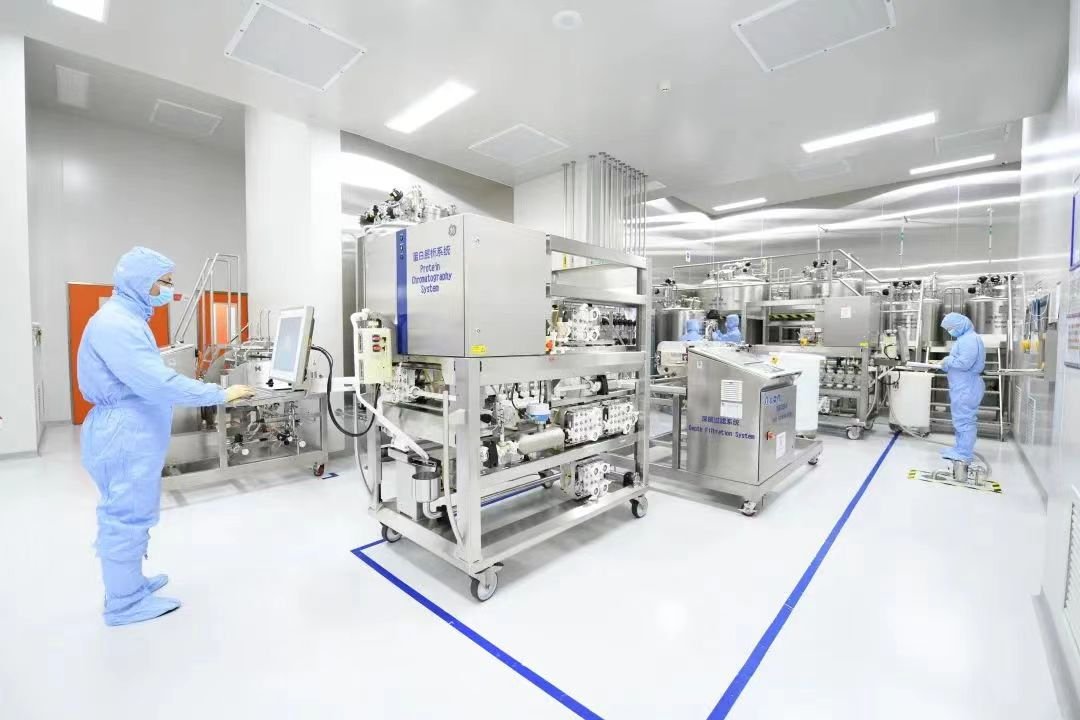
Filtration technology constitutes an indispensable unit operation across biopharmaceutical manufacturing, serving to remove process-related impurities and contaminants—including particulates and adventitious viruses—while maintaining microbial bioburden within controlled thresholds. The efficiency of filtration operations directly governs the manufacturability and quality assurance of biotherapeutic products. As biopharmaceutical science advances, therapeutic molecules exhibit increasingly intricate physicochemical profiles, imposing commensurate demands on filtration platform capabilities. Optimizing filtration unit operations to enhance throughput and product recovery, while preserving process economic viability, has emerged as a persistent engineering challenge. Collaborative innovation among filtration suppliers, biopharmaceutical manufacturers, and regulatory authorities continues to drive the development and adoption of advanced solutions to address these constraints.
Introduction to Sterile Filtration
With respect to the selection of sterilization modalities, the European Medicines Agency (EMA) published a guideline on sterilization processes in 2019, which delineates a decision framework for sterilization method selection applicable to solvent-based products.
As articulated in the decision tree, terminal steam sterilization at temperatures exceeding 121 °C for a minimum of 15 minutes is preferred when the drug substance and formulation are thermally stable. Where such high-temperature exposure is incompatible with product stability, lower-temperature steam sterilization may be employed, contingent upon achieving an F₀ value greater than 8 and a sterility assurance level (SAL) below 10⁻⁶. When neither criterion can be satisfactorily met, sterile filtration is mandated as the terminal sterilization alternative.
Within the biopharmaceutical industry, the initial sterile filtration step conventionally utilizes 0.45 μm-rated filters to remove yeasts, molds, and vegetative bacteria from process solutions. Retention efficacy is historically verified through bacterial challenge testing employing Serratia marcescens. However, the seminal observation by Bowman that Pseudomonas diminuta—subsequently reclassified as Brevundimonas diminuta—is capable of traversing nominally rated 0.45 μm “sterilizing-grade” filters catalyzed the development and industry-wide adoption of 0.2 μm sterilizing-grade filtration media.
Membrane pore size represents a principal determinant of bacterial retention efficiency. Fungi, typically 5–7 μm in diameter and capable of extending to several millimeters in filamentous length, are comparatively amenable to removal. Unicellular microorganisms, with diameters ranging from approximately 0.5 to 2 μm, present substantially greater removal challenges. Submicroscopic entities—including viruses and bacteriophages, spanning 0.04–1 μm—constitute the most recalcitrant class of contaminants. Given that microbial dimensions may fluctuate under process conditions and a significant proportion of microorganisms exceed 0.2 μm in physical size, sterilizing-grade filters are universally engineered with a nominal pore rating of 0.2 μm (or 0.22 μm; the two designations are functionally interchangeable in industrial practice). Beyond geometric sieving, bacterial surface charge and adsorptive interactions with the membrane matrix materially influence retention performance.
Critically, sterilizing-grade filters are classified not by nominal physical pore dimensions, but by their empirically demonstrated bacterial retention capacity under standardized challenge conditions.
Modalities-Specific Filtration Challenges
Monoclonal Antibodies (mAbs)
Notwithstanding the maturity of monoclonal antibody manufacturing platforms, filtration operations have encountered progressively intensified challenges in recent years. Innovations in cell culture engineering have elevated volumetric titers from 1–2 g/L a decade ago to contemporary levels of 5–10 g/L and beyond. These productivity gains are invariably accompanied by elevated peak cell densities—reaching up to 40 × 10⁶ cells/mL in fed-batch regimes—increased harvest turbidity, and substantially higher loads of process-related impurities, notably host cell proteins (HCPs) and host cell DNA (hcDNA).
Bispecific Antibodies
In addition to the challenges inherent in conventional mAb processing, bispecific antibody modalities introduce distinct complications in viral clearance filtration. These molecules exhibit a pronounced propensity for aggregation, which markedly diminishes the effective throughput capacity of nanofiltration media. Furthermore, their hydrodynamic dimensions typically exceed those of canonical monoclonal antibodies, further compounding filtration complexity. Consequently, achieving economically viable throughput for these challenging feedstreams remains a critical process development objective.
Antibody-Drug Conjugates (ADCs)
Antibody-drug conjugates occupy a distinctive niche within the biopharmaceutical landscape by virtue of their enhanced therapeutic potency. Accordingly, the primary process consideration shifts toward safeguarding personnel and the manufacturing environment from potential exposure to cytotoxic payloads. In contradistinction to conventional biopharmaceutical operations—wherein the principal concern is protection of the product from environmental contamination—ADC manufacturing prioritizes containment of the product to protect operators. This paradigm introduces unique facility and equipment constraints, as the availability of high-integrity closed processing systems capable of delivering adequate operator protection remains limited.
Viral Vectors
Viral vectors, and lentiviral vectors (LVs) in particular, present exceptional challenges for viral clearance filtration aimed at removing adventitious viral contaminants. Owing to their physical dimensions—approximately 20 nm for adeno-associated virus (AAV) and 120 nm for lentivirus—these therapeutic entities cannot be processed through the parvovirus-retentive nanofiltration platforms routinely deployed in monoclonal antibody manufacturing. The resultant elevated risk of adventitious viral contamination necessitates heightened reliance on closed single-use processing architectures and other preventive control strategies. Additionally, viral filtration should be systematically applied to all process fluids entering the manufacturing stream, including cell culture media and buffer preparations.
Risk Assessment of Critical Process Parameters in Sterile Filtration
Sterile filtration represents a critical unit operation underpinning product quality and patient safety. A structured risk assessment of key influencing parameters is presented below.
Pre-Filtration Bioburden
Risk: Inadequate control of upstream bioburden may overwhelm filter retention capacity and result in product contamination.
Control Strategy: Strict adherence to regulatory requirements and established bioburden action limits shall be maintained throughout all pre-filtration process stages.
Differential Pressure
Risk: Excessive transmembrane pressure may compromise the structural integrity of filter elements and invalidate post-use integrity test results.
Control Strategy: Continuous monitoring of differential pressure shall be implemented to prevent excursions beyond the manufacturer’s maximum rated operating pressure. All deviations shall be subjected to root cause investigation and documented.
Flow Rate
Influencing Factors: Filter media design, fluid rheology, and formulation properties.
Risk: Operation outside validated flow rate ranges may compromise filtration efficiency and product quality attributes.
Control Strategy: Flow rate shall be regulated via differential pressure control to ensure operation remains within the validated design space.
Filter throughput is defined as the total volume of filtrate processable per unit of effective filtration area under specified process conditions. Throughput capacity is governed by an interrelated set of parameters: membrane porosity, nominal pore size, non-specific adsorptive capacity, pore geometry, effective filtration area, applied differential pressure, extent of membrane fouling, and solute concentration of the feedstream.
Temperature
Temperature exerts a profound influence on both filtration system integrity and drug solution behavior. Elevated operating temperatures reduce the maximum allowable differential pressure across the filter assembly. A significant disparity exists between the maximum rated pressures for forward and reverse flow configurations; reverse flow operation is therefore not recommended. As process temperature increases, the pressure-bearing capacity of polymeric filtration assemblies diminishes, necessitating vigilant monitoring of pressure drop dynamics.
Beyond mechanical considerations, elevated temperatures may exacerbate product adsorption onto filter media and accelerate chemical degradation. Fundamental chemical kinetics establishes that reaction rates approximately double with every 10 °C increment in temperature. Concurrently, polymeric membranes exhibit increased susceptibility to hydrolytic and oxidative degradation at elevated temperatures. For most Newtonian fluids, temperature elevation reduces viscosity, thereby enhancing flux characteristics. Conversely, higher-viscosity formulations require proportionally greater differential pressure to achieve target flow rates, imposing more stringent monitoring requirements to prevent overpressure conditions.
Filtration Duration
Filtration duration is defined as the cumulative elapsed time required to complete filtration of a single process batch, inclusive of all preparation and interruption intervals. Published studies have demonstrated that, under defined conditions, Serratia marcescens is capable of penetrating 0.3 μm membrane filtration systems within a 96-hour timeframe (refer to supplementary data tables). Given the potential for adsorbed bacteria to exhibit time-dependent penetration behavior, filtration duration must be rigorously bounded.
Process validation shall conclusively demonstrate that filter retention performance is maintained throughout the maximum validated filtration duration. Should actual processing duration exceed validated limits—based on formulation-specific considerations—revalidation of filter performance is mandatory. Risk assessment shall be conducted for all simulated filtration durations. Batch records shall be comprehensively reviewed to establish the worst-case total process duration, encompassing pre-filtration preparation activities and any unplanned process interruptions, thereby ensuring the ongoing safety and efficacy of the filtration operation.
Validation of Sterile Filtration
Qualification of sterile filtration encompasses two complementary domains: qualification of the sterile filtration equipment and qualification of the sterile filtration process. Filtration assemblies sourced from different manufacturers invariably require independent qualification documentation. Even identically specified filters from the same manufacturer cannot presume interchangeable qualification status unless supported by appropriate technical justification and documented evidence. Where multiple filter assemblies—whether from different manufacturers, of differing materials of construction, or manufactured via distinct membrane-casting technologies—are deployed in the same process, separate qualification shall be performed for each configuration.
Equipment qualification is conventionally executed by the filter manufacturer and typically encompasses, without limitation: microbial retention testing, integrity testing, biocompatibility evaluation (including cytotoxicity and endotoxin assessment), flow rate characterization, hydraulic pressure testing, repeated sterilization cycle validation, extractables profiling, particulate release testing, and fiber shedding evaluation.
Process qualification is conducted using the specified filter media under defined process conditions and generally comprises: bacterial retention validation, chemical compatibility assessment, extractables and leachables characterization, adsorption evaluation, toxicological safety assessment, and integrity testing (including product-specific integrity testing where the drug product serves as the wetting fluid). For redundant filtration architectures, qualification of the sterile inter-stage space between the two filter elements is recommended as an integral design requirement. Where pre-filtration flushing—utilizing buffer or drug product—is implemented, the qualified flushing volume shall be validated and documented.
Re-qualification
Subsequent to successful initial process qualification, periodic reassessment of product characteristics and process conditions shall be conducted to determine the necessity for re-qualification. Any modification to the drug product, filtration assembly, or critical process parameters triggers a formal change assessment. At minimum, the following scenarios shall be evaluated for re-qualification requirements:
1.Periodic review of product quality attributes and process operating conditions
2.Unit-area flux exceeding validated limits
3.Transmembrane differential pressure exceeding validated limits
4.Filtration duration exceeding validated limits
5.Increased batch throughput with unchanged filtration area
6.Deviations in operating temperature
7.Formulation composition modifications
8.Alterations to filter sterilization methodology or cycle parameters
9.Change of filter supplier
10.Modifications to filter manufacturing processes
11.Alterations to membrane material composition or structural architecture
