
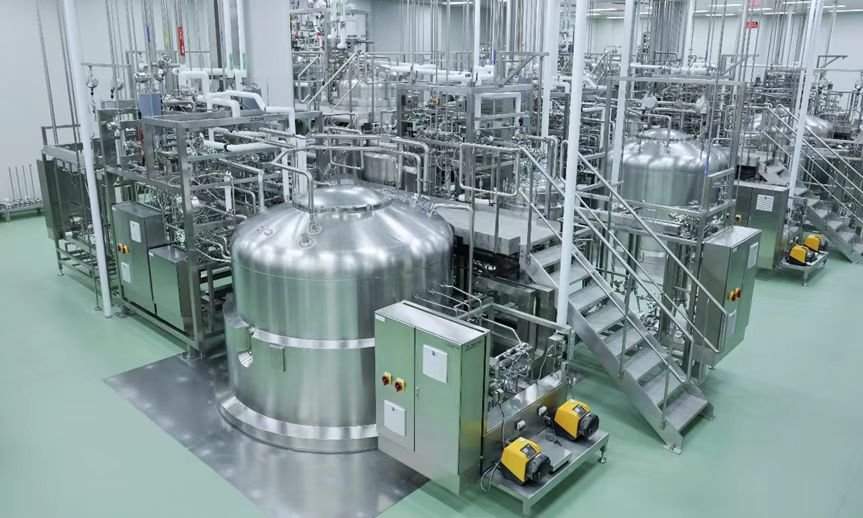

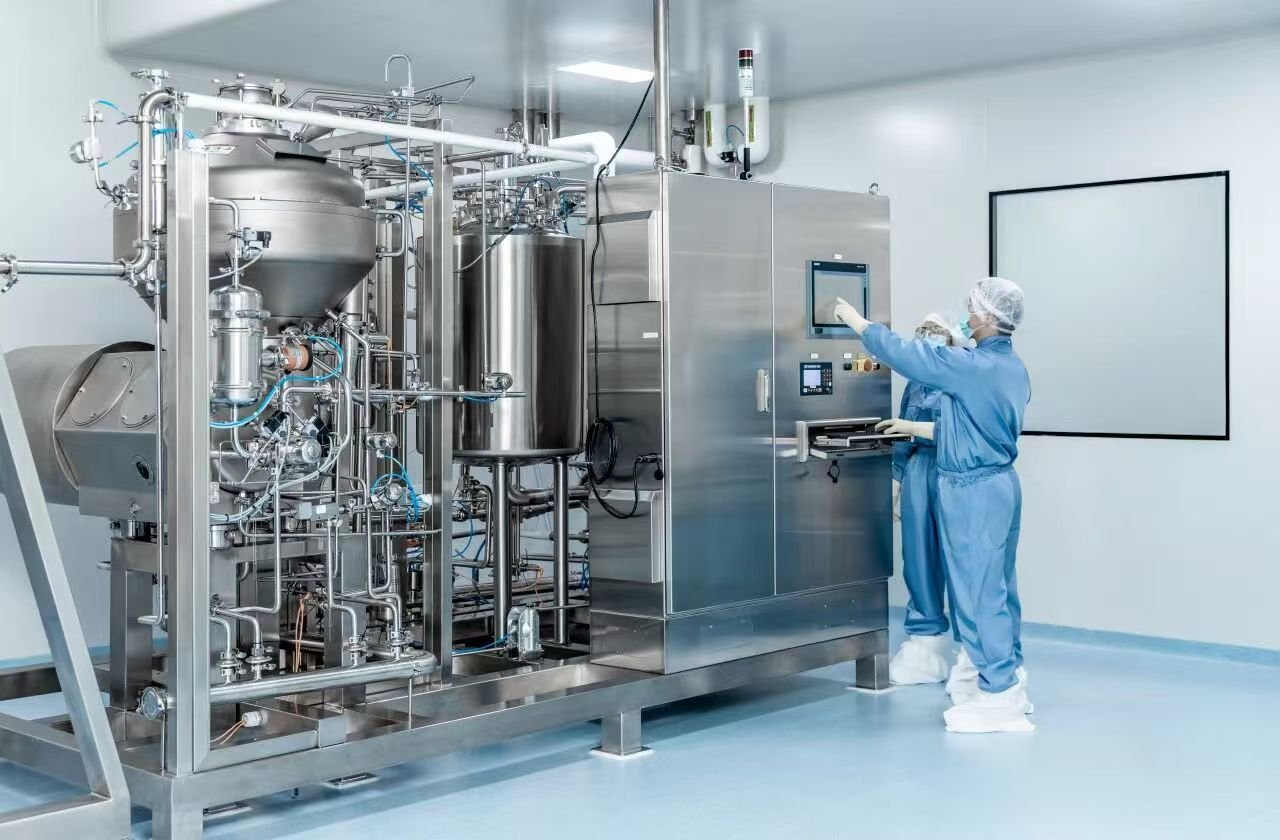
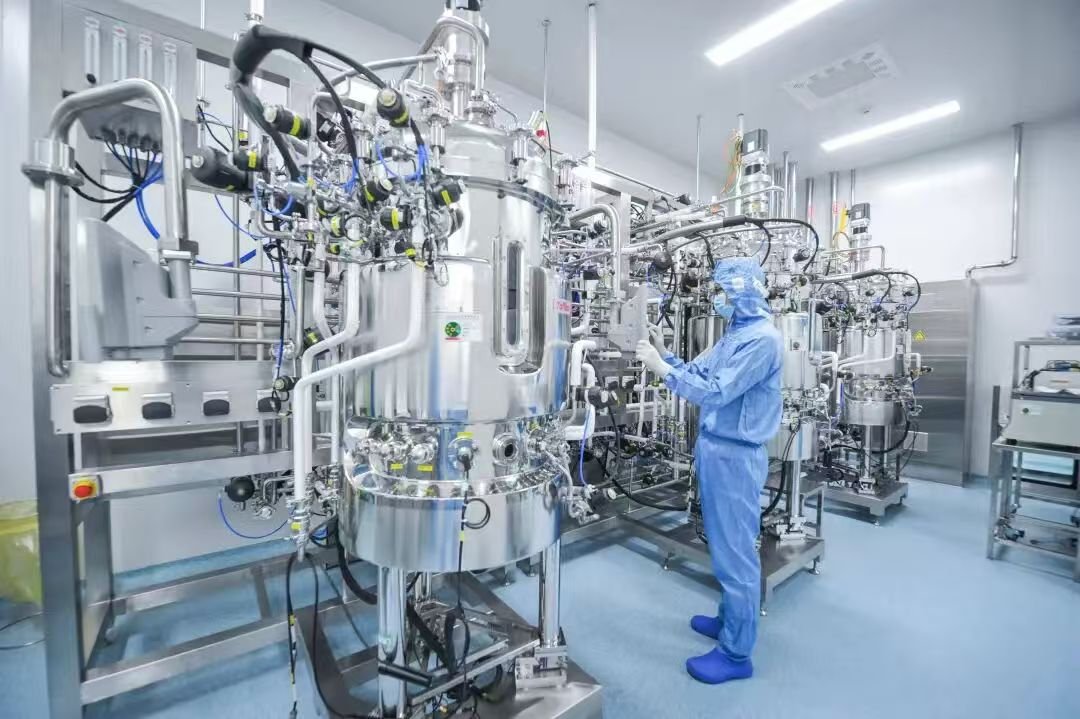
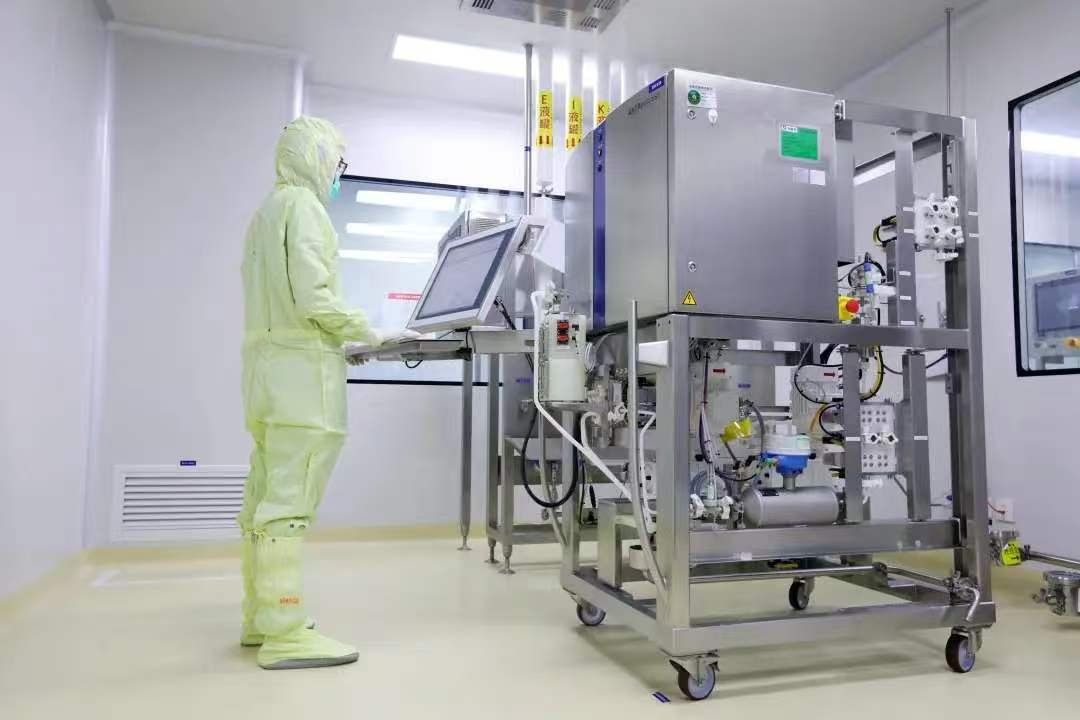
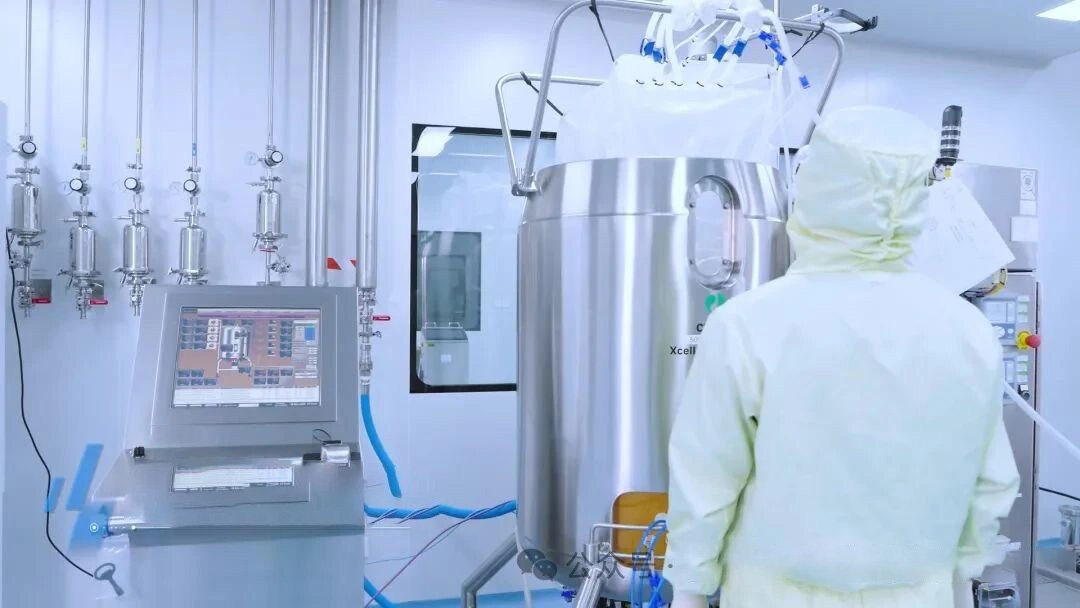
As the biopharmaceutical industry transitions toward large-scale manufacturing, multi-product campaigns, and continuous processing, closed systems have emerged as the foundational infrastructure safeguarding aseptic process integrity. The effective realization of system closure, however, is contingent to a large degree on the selection and execution of connection strategies between functional units.
I. Rationale for Closed-System Adoption
The proliferation of closed systems in bioprocessing reflects a deliberate optimization of safety, efficiency, and cost economics across the production lifecycle.
Mitigation of Extrinsic Contamination Open manipulations—uncontrolled transfer, pour-off from vessel necks—constitute the principal route for microbial and particulate ingress. Closed systems interpose a physical barrier between process fluids and the ambient environment, thereby attenuating contamination risk at its source.
Facilitation of Process Scale-Up The laminar-flow protection footprint and headcount demanded by open operations scale non-linearly with production volume. Closed systems leverage standardized components such that scale-up translates into proportional adjustments in working volume and conduit bore, materially improving the portability of process parameters.
Elimination of Cumbersome Weighing Protocols Conventional media preparation frequently depends on bench-scale gravimetric quantification, each weighing event entailing container tare, calibration, and manual data capture. Closed systems may integrate inline metrology—flow meters, load cells—or adopt pre-weighed disposable reservoirs, circumventing the latency inherent to discrete weighing operations.
Enhanced Operational Throughput Within a closed architecture, sterilization and assembly can be consolidated upstream of process initiation, with sterility preserved through the labeled shelf-life, enabling connect-and-use deployment and accelerating batch-to-batch turnaround.
Favorable Economics of Large-Scale Manufacture Single-use closed assemblies obviate cleaning validation, autoclave capital depreciation, and the substantial Water for Injection (WFI) consumption associated with reusable hardware. For multi-product, low-batch paradigms, they further eliminate changeover cleaning downtime, elevating Overall Equipment Effectiveness (OEE).
Occupational Safety In processes involving high-titer live viral vectors or cell lysates, closed systems serve as a primary engineering control, curtailing occupational exposure and reducing dependence on personal protective equipment (PPE) as the sole barrier.
Operational Simplicity The interaction model approximates plug-and-play coupling; standardized connectors frequently incorporate color coding or keyed geometries to preclude misconnection, compressing the onboarding curve for new personnel and diminishing process variability attributable to operator technique.
Reduced Facility Capital Expenditure Open processing mandates a Grade A zone within a Grade B background. Closed systems permit the core operation envelope to be downgraded to Grade C, reducing laminar-flow hood distribution and lowering both cleanroom capital outlay and ongoing energy consumption.
Automation Readiness Once conduit routing is fixed and fluid pathways are deterministic, pumps, valves, and sensors can be integrated into closed-loop control architectures, enabling sequential unit-operation orchestration and parametric data capture—prerequisites for continuous manufacturing and digital traceability.
II. Design Challenges Inherent to Closed Systems
The deployment of closed systems extends well beyond the procurement of single-use bioprocess bags and tubing. Inadequate process comprehension during the design phase can, paradoxically, transform closed systems into a novel source of process failure.
Topological Optimization of Fluid Pathways Closed systems interconnect all unit operations into a contiguous fluidic circuit; conduit length, bore transitions, and valve manifold geometry must align rigorously with process sequencing. Suboptimal design precipitates excessive hold-up volume and concomitant product loss, or elevated hydraulic resistance that degrades pumping efficiency and filtration flux.
Integrity Assurance of Closed Assemblies Closed systems are not intrinsically sterile; their microbiological integrity is predicated on whether every interface, weld, and conduit wall sustains physical barrier performance throughout its service life. Design must interrogate the seal reliability of each connection point under freeze-thaw cycling, peristaltic compression, and pressure transients. Certain configurations appear hermetic yet may develop micro-clearances under thermal cycling—the most insidious and frequently overlooked failure mode.
Modularity Versus Process Specificity Process requirements diverge across molecular modalities; over-standardization erodes operational ergonomics, whereas full customization incurs protracted lead times and elevated cost. Achieving flexible configuration atop a standardized component library remains a persistent design challenge.
Extractables and Leachables (E&L) Risk Profiling All polymeric materials in contact with process fluids possess the potential to liberate extractable species. During design, a risk-assessment matrix must be constructed spanning material selection, contact duration, and downstream purification clearance capacity—a critical, often latent, determinant of regulatory acceptability.
III. Connection Methodologies
Connection methodologies constitute the critical translational layer between closed-system design and physical implementation. Based on whether conduit severing and re-engagement are required, they bifurcate into interface coupling and sterile tube welding.
1. Interface Coupling
Interface coupling achieves engagement via prefabricated terminations at conduit ends, characterized by straightforward operation and immediate serviceability.
Reducer Fittings Employed to reconcile conduit diameter mismatches. The principal consideration is whether turbulence induced at the cross-sectional discontinuity compromises shear-sensitive products; progressive tapered geometries are preferred over abrupt step transitions to preclude dead-leg formation and particle entrapment. Related fittings include equal-diameter couplers, tees, and crosses, used to join two conduit segments of identical bore—irrespective of whether the materials are congruent or dissimilar.
Quick-Connect Couplings (CPC) These couplings integrate integral shut-off valves that auto-seal upon disconnection, arresting drip loss and preserving sterility. They are especially suited to applications demanding repeated disconnect–reconnect cycles, such as sequential feed delivery from a single reservoir to multiple bioreactors. Selection criteria include valve-core elastomer resilience and seal-ring fatigue life under cyclic engagement. Standard MPC-series connectors maintain low bioburden; truly aseptic coupling requires execution within a Class II biological safety cabinet.
Luer Connectors Borrowed from medical device practice, Luer connectors serve predominantly low-flow, low-pressure auxiliary circuits—cell cryopreservation bag interfaces, sampling branch closures. Their merits include minimal unit cost, mature supply chains, and freedom from specialized tooling; their limitation is restricted bore, rendering them unsuitable for high-viscosity or high-volume transfers.
Single-Use Sterile Connectors The enabling design achieves coupling between two independently sealed membranes; rotational or compressive actuation punctures the membranes to establish a sterile conduit, with the fluid pathway remaining unexposed to the environment throughout. This permits connections conventionally requiring Grade A conditions to be executed in Grade C or even Grade D backgrounds. The principal limitation is elevated per-unit cost.
2. Sterile Tube Welding
When both conduit segments are fluid-laden or permanently affixed to immobile, high-value equipment, interface coupling becomes infeasible. Sterile tube welding effects connection or replacement by thermally fusing conduit walls, without exposing process contents.
PVC Conduit: Sterile Welding and Heat-Seal Disconnection A tube welder secures two PVC segments on opposing faces of a heating element; upon reaching melt temperature, the segments are compression-fused into a monolithic joint. The complementary heat-seal disconnection employs radio-frequency or resistive heating to locally melt and crimp the conduit, achieving hermetic separation typically within seconds.
Thermoplastic Elastomer (TPE) Conduit: Sterile Welding and Disconnection TPE materials (e.g., C-Flex, AdvantaFlex) offer reduced extractables profiles, broader thermal tolerance, and superior compression-set recovery relative to PVC. The welding mechanism is analogous; however, TPE exhibits a narrower melt-temperature window, necessitating purpose-built equipment and optimized process parameters. The principal challenge is thermal uniformity across the fusion interface of large-bore conduit, where the core may over-melt and generate flash that impairs flow. Disconnection of TPE generally requires proprietary heat-sealing apparatus.
In bioprocessing practice, the two methodologies are frequently deployed in tandem: high-frequency routine connections (e.g., sampling loops) favor PVC conduit for rapid heat-seal disconnection and operational dexterity, whereas low-frequency critical interfaces (e.g., bioreactor harvest-to-downstream module coupling) are better served by TPE sterile welding, whose larger bore delivers substantially higher transfer throughput.
IV. Conclusion
The performance of closed systems is governed centrally by design integration and connection strategy.
The design phase must reconcile constraints spanning fluidic architecture, cleanliness classification, modular configuration, and material compatibility. Connection methodologies may be selected contextually: sterile interface coupling (reducers, CPC, Luer, single-use sterile connectors) delivers operational agility and suits high-frequency, pre-terminable scenarios, with single-use sterile connectors representing the prevailing technology trajectory; sterile thermal welding (PVC/TPE) requires no prefabricated terminations and is compatible with fluid-in-line operation, enabling aseptic connection in Grade C environments and conferring substantial operational flexibility.
The prudent strategy is a tiered, combined-deployment framework, with final selection informed by holistic process evaluation.
First, conduit material should be selected by bore dimension: fine-bore applications such as sampling prioritize PVC for facile heat-seal disconnection and maneuverability; high-volume transfer requiring elevated throughput should employ larger-bore TPE conduit to maximize transfer efficiency.
Second, upstream–downstream interface compatibility must be safeguarded—in cell therapy processing, for instance, upstream and downstream consumables are predominantly PVC-fitted, and culture bag design should accordingly specify PVC conduit to avert material-mismatch connection failures. Connection methodology should further be tailored to site conditions, integrating cleanroom classification, available workspace, and manual ergonomics to determine whether a sterile tube welder or prefabricated connector is preferable.
Finally, seal integrity testing should be embedded in batch release criteria, elevating closed systems from a design construct to a validated engineering practice.