

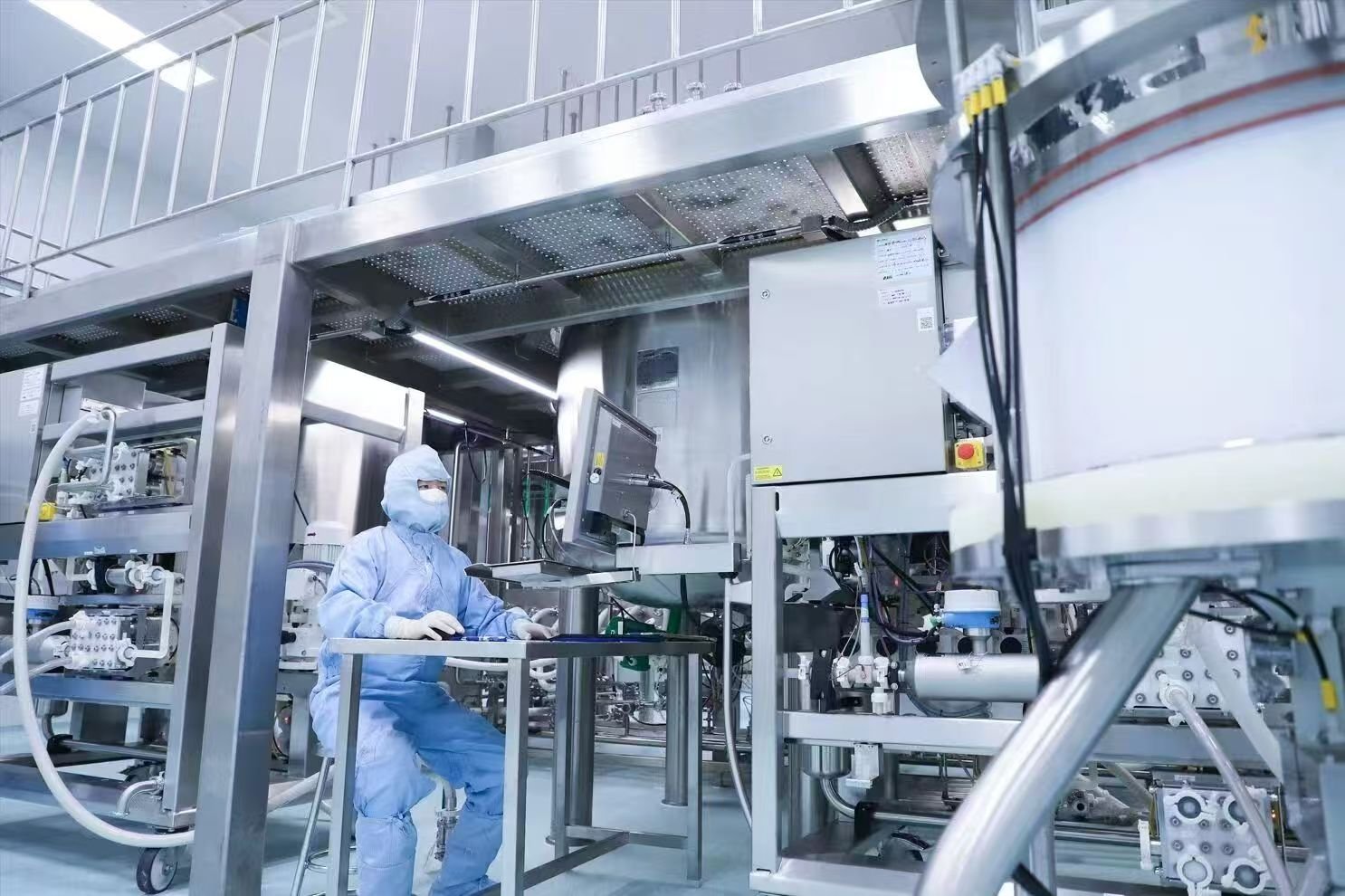
Competition in the biologics sector is, to a decisive extent, a competition in manufacturing efficiency and cost of goods. From early-stage molecular discovery through clinical development to commercial launch, the robustness, cycle time, and consumable cost of downstream purification often determine whether an innovative therapeutic can reach the market on schedule and with sustainable commercial viability. Addressing the industry-wide bottleneck in downstream purification throughput, radial chromatography—a high-throughput downstream processing technology—offers a pragmatic and deployable pathway for biologics manufacturing upgrade. Grounded in actual industrialization pain points, this article examines the core business value proposition of radial chromatography and presents empirical validation data to inform process iteration strategies for client programs.
01 Three Critical Challenges in Downstream Chromatography
In core downstream unit operations such as Protein A affinity capture, many programs expose process limitations upon transitioning to pilot and commercial scale, constraining development timelines and inflating overall manufacturing costs:
1. Escalating Overpressure Risk at Production Scale
Conventionally employed soft-gel resins based on dextran or agarose matrices exhibit limited pressure tolerance, typically rated below 5 bar, with certain media falling short of 3 bar. At commercial scale, operators contend with complex feedstreams characterized by elevated column bed heights, high viscosity, and turbidity- and precipitation-prone materials—conditions under which operating backpressure frequently exceeds design limits. Manufacturing is consequently forced to reduce linear velocity, directly extending batch cycle time and eroding productivity. Sustained operation under high backpressure additionally accelerates resin degradation; in extreme scenarios, bed collapse may occur, introducing significant production risk. This challenge scales non-linearly with production volume.
2. Suboptimal Resin Utilization and Elevated Cost of Goods
Protein A resin represents one of the highest-cost critical consumables in downstream purification. A substantial proportion of programs terminate during early clinical stages and never progress to late-stage or commercial manufacturing, meaning the full economic value of the resin is never realized. This underutilization constitutes significant waste and directly inflates per-batch manufacturing costs.
3. Difficulty in Scaling High-Resolution Chromatography Media
Polishing steps depend on small-particle resins to achieve target purity specifications; however, such media inherently generate high backpressure and are rarely amenable to direct scale-up to commercial production volumes, creating a persistent disconnect between laboratory-scale processes and GMP manufacturing.
Collectively, these challenges underpin the widely observed phenomenon in which innovative drug programs “demonstrate exceptional performance at laboratory scale yet encounter insurmountable barriers during industrialization.”
02 Radial Chromatography: A Process Strategy for Step-Change Productivity Gains
In contrast to capital-intensive retrofit strategies requiring entirely new equipment or proprietary resin platforms, the enabling principle of radial chromatography resides in the patented geometric design of the chromatography column. It is fully compatible with commercially available chromatography systems and the overwhelming majority of commercial chromatography resins, permitting existing in-production systems and media to be directly repurposed—thereby substantially reducing the barrier to process adoption. Whereas conventional axial chromatography directs feed longitudinally through the column bed from top to bottom, radial chromatography conveys feed radially across the resin bed (from periphery to core, or core to periphery).
Capitalizing on a high-surface-area outer annular chamber and a reduced resin bed depth, radial chromatography inherently establishes a process foundation characterized by high throughput and low backpressure, delivering six core value drivers:
1. Materially Compressed Manufacturing Cycle Time
Under equivalent quality performance, chromatography throughput increases by more than 3-fold, and residence time can be reduced to one-third or less of conventional axial chromatography—substantially accelerating development timelines and clinical material delivery.
2. Resolution of Scale-Up Overpressure Constraints
Reduced backpressure effectively mitigates overpressure issues encountered during scale-up in certain programs. It further enables the deployment of 30 μm or finer particle-size resins, facilitating high-resolution purification and establishing a seamless pathway from laboratory development to commercial-scale manufacturing.
3. Dramatically Enhanced Resin Utilization
Resin consumption is reduced to approximately one-third of conventional processes; within an equivalent operating window, a 3-fold increase in cycle count is achievable, thereby maintaining comparable production capacity. The rated service life of the resin is fully exhausted, eliminating waste associated with premature resin disposal.
4. Robust Performance with Complex Feedstreams
Against high-viscosity, turbidity-prone, and precipitation-prone feed materials, radial chromatography exhibits superior fouling resistance and can sustain high linear velocities—adapting reliably to the heterogeneous feed conditions inherent in large-scale industrialization.
5. Low Process Migration Cost Without Major Change
Axial-to-radial process bridging requires no resin substitution; process transfer can be effected on the basis of equivalent residence time. In contrast to membrane chromatography, no major process change is mandated prior to pivotal clinical batches—significantly attenuating regulatory filing risk.
6. Robust and Predictable Process Scale-Up
Scale-up consistency is demonstrably strong; as production volume increases, equipment footprint remains compact, facilitating GMP facility layout optimization and manufacturing infrastructure planning.
03 Case Validation: Balancing Throughput and Quality Across Multi-Mode Chromatography
Internal Validation Study:
At matched residence time, inter-column pressure differential of radial chromatography columns was substantially lower than that of axial chromatography columns, enabling significant increases in linear velocity, reduced process duration, and improved overall process efficiency.
Across multiple molecules evaluated in radial affinity, anion exchange, and cation exchange chromatography at a residence time of 3 min—compared against axial chromatography at 6 min residence time—chromatographic profiles were essentially superimposable. Affinity chromatography step yield differed by 4%–7%, while anion and cation exchange yields were essentially equivalent. Product quality was broadly consistent across both affinity and ion-exchange modalities, process duration was reduced by a minimum of 50%, and throughput doubled.
At a 200 L pilot scale (actual bioreactor working volume 180 L), with a clarified harvest step yield of 95%, comparative cost analysis across chromatography modes demonstrated a 65% reduction in affinity chromatography-associated costs.
For innovative biopharmaceutical companies, the ultimate objective of downstream process iteration is not technological novelty but measurable economic returns: compressed program timelines, reduced cost of goods, robust scale-up, minimized regulatory exposure, and dependable supply throughout clinical and commercial lifecycle stages. As a compelling lever for cost reduction and efficiency enhancement in downstream purification, radial chromatography delivers over 50% reduction in single-cycle process time and over 50% reduction in resin cost, while requiring no major process change prior to pivotal clinical manufacturing—providing a fully deployable solution for biologics industrialization.
Sino Bioengineering leverages comprehensive process engineering capabilities spanning R&D, pilot scale, and commercial large-scale manufacturing. Drawing on proven delivery experience and a rigorous quality management system, the company continuously integrates innovative process technologies into the full spectrum of biopharmaceutical engineering services, empowering clients to overcome industrialization bottlenecks and accelerate the translation of innovative therapeutics from pipeline to market.