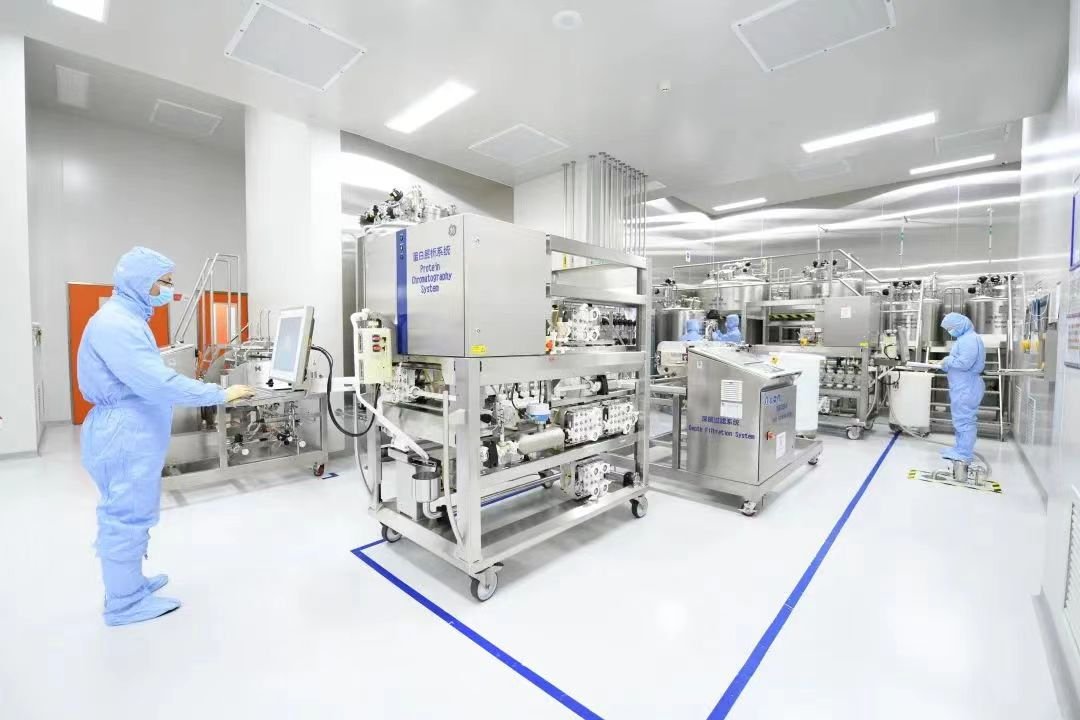
Across the full manufacturing landscape of modern biopharmaceuticals, breakthrough therapies ranging from life-saving monoclonal antibodies (mAbs) to cutting-edge gene and viral vector medicines are all produced within living cellular “biofactories”. Cellular cultivation inherently drives constant protein synthesis and metabolic turnover.
Even after multi-stage downstream purification workflows, trace quantities of unintended cellular proteins originating from production hosts frequently persist in final drug substances and drug products—these species are collectively defined as residual host cell proteins (HCPs).
Despite their ultra-low concentrations, residual HCPs constitute a critical quality attribute (CQA) that dictates both the safety and therapeutic efficacy of biologic medicines. This article systematically unpacks residual HCP risks and outlines the rigorous control frameworks adopted industry-wide to mitigate such contaminants.
1. Distinct HCP Hazards Across Four Major Biopharmaceutical Modalities
HCP risk profiles and corresponding mitigation strategies vary drastically depending on the therapeutic platform:
Recombinant protein therapeutics: HCP contaminants primarily derive from engineered expression cell lines, most notably Chinese Hamster Ovary (CHO) cells used for mAb and recombinant protein production.
Viral vectors (e.g., recombinant AAV, rAAV): HCP impurities stem from packaging cell lines deployed for viral vector amplification.
Note: HCP residuals originating from E. coli used for plasmid DNA seed stock manufacturing are tightly controlled and cleared prior to plasmid release testing.
Cell-free non-viral vectors (e.g., mRNA): In vitro transcription (IVT) workflows for mRNA production operate under cell-free conditions, eliminating HCP generation during mRNA synthesis. As noted above, HCP impurities carried over from upstream E. coli plasmid feedstocks are fully cleared in preceding unit operations.
Ex vivo gene-modified patient cells (e.g., CAR-T cells): Final transduced autologous patient cell products contain no HCP contaminants. Any HCP residuals present in upstream viral vector raw materials are stringently eliminated during vector release testing.
2. Gold-Standard Quantification: HCP Sandwich ELISA
Enzyme-Linked Immunosorbent Assay (ELISA), predominantly the sandwich format, serves as the global standard analytical technique for quantifying trace residual HCPs.
In principle, capture antibodies with pan-HCP reactivity are immobilized onto microplate wells. When sample matrix is loaded, residual HCP analytes bind specifically to the capture antibodies. A labelled detection antibody is subsequently introduced to bind captured HCPs, generating a colorimetric signal proportional to total HCP concentration—higher absorbance readouts correspond to elevated HCP levels.
HCP matrices exhibit extreme compositional complexity that is uniquely tied to host cell lineage and upstream cultivation processes, characterized by:
1.Broad isoelectric point (pI) distribution spanning pH 3 to 11
2.Wide molecular weight spectrum ranging from ~5 kDa to a minimum of 250 kDa
3.Heterogeneous populations comprising hundreds to over a thousand distinct protein species in crude upstream harvest material
Given this complexity, the European Pharmacopoeia monograph EP 2.6.34 and United States Pharmacopeia general chapter USP <1132> establish stringent regulatory requirements for HCP ELISA reagent production and full method validation, ensuring polyclonal antibody panels deliver comprehensive, consistent coverage of the complete HCP proteome from a given host system.
3. Mandatory HCP Mitigation: Core Safety and Quality Risks
Uncontrolled residual HCPs pose two well-documented critical threats to patient safety and drug product integrity:
3.1 Immunogenicity Risk: Induction of Anti-Drug Antibodies (ADAs)
The primary safety concern associated with HCP residuals is their potential to elicit endogenous immune responses in patients. HCPs may trigger anti-HCP antibody formation and, more critically, stimulate production of neutralizing anti-drug antibodies against the therapeutic active ingredient.
Case Study 1: Omnitrope (recombinant human growth hormone): Early clinical trials of this product observed anti-growth hormone seroconversion in 60% of trial subjects. Root-cause analysis confirmed elevated HCP levels acted as an adjuvant, amplifying the immune response directed against the therapeutic protein. The sponsor implemented additional polishing purification steps to reduce HCP concentrations to levels matching approved comparator products, which normalized the incidence of treatment-induced antibodies.
Case Study 2: Lebrikizumab (Ebglyss) and PLBL2: Clinical testing of the approved anti-IL-13 mAb lebrikizumab identified a co-purified CHO-derived HCP known as Phospholipase B-Like 2 (PLBL2). Approximately 90% of trial participants developed measurable anti-PLBL2 antibodies; however, comparable immune response rates were observed in placebo cohorts, and PLBL2 exhibited no adjuvant activity to potentiate anti-drug antibody formation. This lack of clinical safety liability did not block marketing authorization approval.
3.2 Catalytic Degradation of Drug Product Matrix
Certain co-eluting enzymatic HCPs, including lipases and esterases, catalyze the breakdown of formulation excipients such as polysorbate. Degradation of polysorbate generates insoluble particulate matter visible within finished drug product solutions, compromising product quality and shelf-life stability.
4. Regulatory Thresholds, Industry Specifications and Clinical Development Reagent Roadmap
4.1 Absence of Universal Global Regulatory HCP Limits
Notably, no global regulatory authority has established a single, universal mandatory HCP residual specification applicable to all biotherapeutics. HCP proteomes vary substantially in composition and abundance across products, manufacturing platforms and production batches, precluding a universally applicable reference standard for spike recovery testing.
To address this gap, consensus industry action limits (Not More Than, NMT) have been widely adopted across biomanufacturing:
1.Recombinant protein therapeutics: NMT 100 ng HCP per mg total protein (100 ppm)
2.Plasmid DNA seed stocks: NMT 2% HCP per mg plasmid DNA
4.2 ELISA Reagent Progression Throughout Clinical Development
Early clinical phases: Commercially available generic off-the-shelf HCP ELISA kits are commonly deployed for screening and process characterization.
Late-stage clinical and commercialization: Sponsors are required to develop product-specific, custom proprietary HCP ELISA methods, or utilize platform ELISAs fully matched to their proprietary production cell line proteome.
The European Medicines Agency (EMA) reiterates in its Q&A guidance that routine batch release testing for HCP residuals cannot be eliminated solely based on process validation datasets. HCP quantitation represents a mandatory safety parameter within all drug product specification limits.
4.3 Regulatory Consequences of Inadequate HCP Control: Ixinity Case Failure
Failure to implement robust HCP clearance controls results in severe regulatory pushback, including marketing application rejection:
Ixinity (recombinant human Factor IX): The CHO-derived coagulation factor IX product received joint negative review outcomes from EMA and FDA upon initial Marketing Authorization Application (MAA) and Biologics License Application (BLA) submission. Deficiencies in downstream purification yielded unacceptably high HCP residuals, leading anti-CHO protein antibody development in 23% of treated clinical patients. FDA issued a complete response letter mandating full redesign of the purification platform. Following three years of process reengineering and implementation of higher-sensitivity HCP detection assays, the product ultimately secured FDA marketing approval.
5. Cutting-Edge Orthogonal Technology: LC-MS/MS-Based HCP Profiling
Beyond conventional ELISA, liquid chromatography coupled with tandem mass spectrometry (LC-MS/MS) has emerged as a powerful orthogonal analytical technique for comprehensive HCP characterization.
Peptide mass spectra generated via LC-MS/MS are aligned against proteomic databases encompassing amino acid sequences from CHO, human, E. coli, yeast and insect host cell lines. This workflow enables definitive identification of individual trace HCP species present within biologic matrices.
The USP has formally codified this technology within general chapter USP <1132.1> Determination of Residual Host Cell Proteins in Biopharmaceuticals Using Liquid Chromatography–Mass Spectrometry, establishing a standardized regulatory framework for high-resolution HCP identification and quantitation.
From microplate colorimetric ELISA readouts and harmonized pharmacopoeial compliance standards to high-definition proteomic mass spectrometry workflows, the multi-layered industry controls governing residual HCPs represent an uncompromising commitment to patient safety. Within the complex value chain of modern biotherapeutic manufacturing, rigorous management of these invisible trace impurities forms the foundational safety barrier protecting patients receiving life-changing biologic treatments.






