





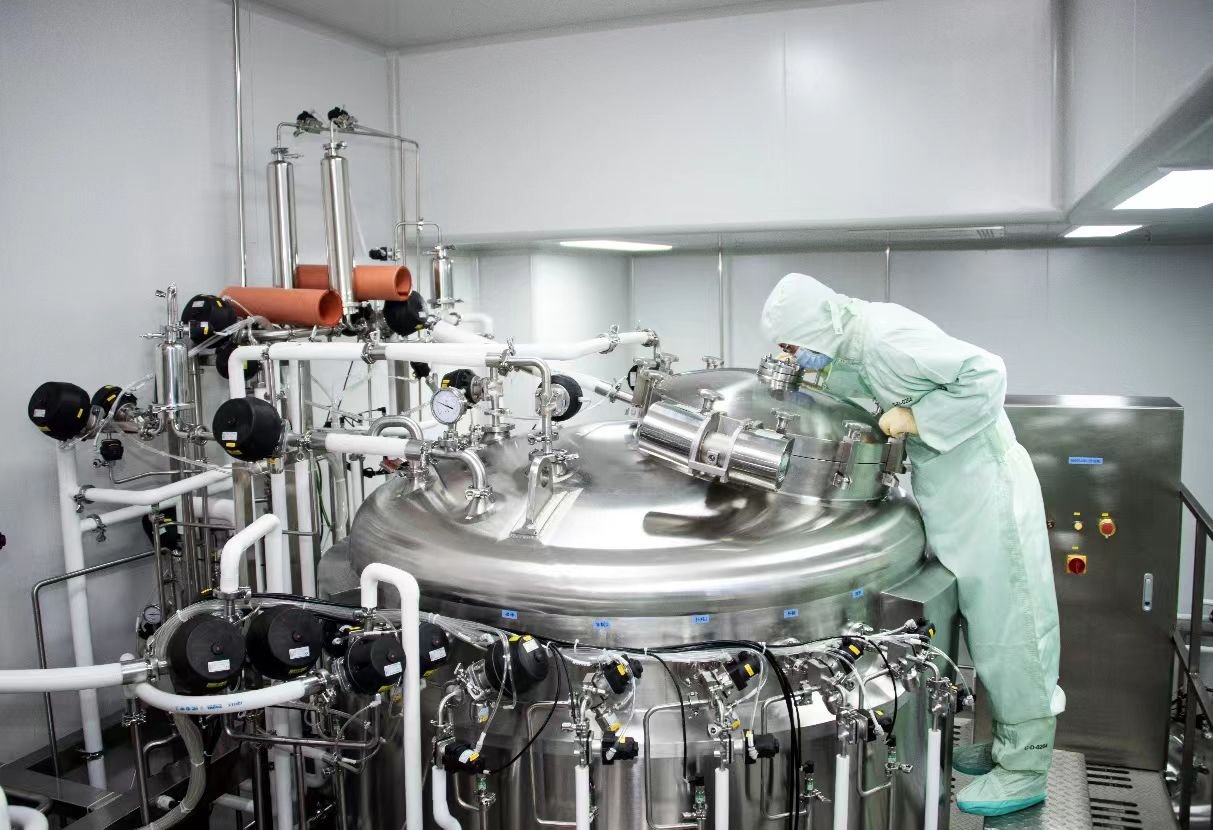
As a category of “living medicines”, cell therapy products exhibit markedly higher complexity and variability compared with conventional pharmaceuticals. A risk-based quality control approach shall be implemented to define the Quality Target Product Profile (QTPP) and potential Critical Quality Attributes (CQAs). Corresponding holistic quality control strategies shall be established covering four dimensions: Critical Process Parameter (CPP) control, Critical Material Attribute (CMA) control, in-process control, and testing control.
Part 1 Overview of Cell and Gene Therapy Products
1.1 Definition of Cell Therapy Products
1.2 Classification of Cell Therapy Products
1.2.1 Unmodified Cell Therapy Products
Stem cell products: Mesenchymal stem cells exert immunomodulatory and tissue repair effects, applicable to the treatment of osteoarthritis, graft-versus-host disease (GVHD), etc. Hematopoietic stem cells are used for hematological disease treatment and immune reconstitution, such as hematopoietic stem cell transplantation for leukemia. Pluripotent stem cell-derived products cover retinal cells, cardiomyocytes and other cell types differentiated from induced pluripotent stem cells (iPSCs) or embryonic stem cells (ESCs).
Immune cell products: Tumor-infiltrating lymphocytes (TILs) isolated from tumor tissues, expanded ex vivo and reinfused into patients.
1.2.2 Genetically Modified Cell Therapy Products
Chimeric Antigen Receptor T (CAR-T) cells: Multiple approved products have been launched globally, marking landmark achievements in cell therapy. T cells are genetically engineered to express tumor-targeting chimeric antigen receptors for oncology treatment.
T Cell Receptor T (TCR-T) cells: Genetically modified T cells capable of recognizing intracellular tumor antigens.
Genetically modified hematopoietic stem cells: Normal functional genes are transduced into patients’ autologous hematopoietic stem cells (HSCs) to treat monogenic disorders such as thalassemia and severe combined immunodeficiency (SCID).
Other genetically modified cells: Gene-edited and differentiated cells derived from iPSCs, among others.
1.3 Unique Quality Management Challenges of Cell Therapy Products
1.Diverse sources of starting donor materials, including autologous and allogeneic origins;
2.Complex workflows for cell collection (e.g., leukapheresis, TIL isolation from tumor tissue) and manufacturing (cell sorting and purification, antigen priming, ex vivo activation, genetic modification/editing);
3.Multi-step production processes including cell purification, transduction and washing, with distinct cellular compositions and characteristics across unit operations, rather than simple expansion of a single cell bank;
4.Concurrent multi-batch manufacturing, carrying high risks of mix-ups with severe clinical consequences; production delays or failures may deprive subjects of scheduled therapeutic administration;
5.Highly personalized autologous products manufactured in small batches tailored to individual patients. Sufficient bulk samples for testing and retention are unavailable, imposing stringent timelines for sampling and testing;
6.High temperature sensitivity of cellular samples with limited ambient storage stability, requiring rigorous control over sampling operations, post-sample processing and preservation.
Part 2 Establishment of QTPP, CQA, CPP and CMA
1.Drug product design: Broadly referring to descriptions of physical product attributes;
2.Drug product quality attributes: Product characteristics correlated with pharmaceutical quality, covering safety, identity, assay, purity, potency and other quality-related features.
Part 3 Formulation of Quality Control Strategies
3.1 Process Parameter Control
Cell collection parameter control at clinical sites: Standardized cell collection protocols shall be formulated aligned with product development workflows to ensure collected cellular materials meet downstream manufacturing requirements.
Manufacturing process control at production facilities: Magnetic bead dosage ratios during cell sorting; multiplicity of infection (MOI) or equivalent metrics for viral transduction; incubation temperature and CO₂ concentration for cell expansion culture; washing program parameters designed for process impurity clearance.
Logistics and transportation control: Donor starting materials shall be transported under temperature specifications defined by manufacturing protocols (e.g., leukapheresis products maintained under 2°C–8°C cold chain transport). Final formulated drug products shall be shipped under product-specific temperature regimens (e.g., deep cryopreservation via dry ice or liquid nitrogen)[4].
3.2 Raw Material Attribute Control
Control of starting donor materials: Cell therapy manufacturing workflows generally lack dedicated viral clearance steps; pathogenic infectious agents originating from donor materials cannot be eliminated via standard cell production processes. Therefore, a pathogen screening framework shall be implemented for all cell donors[2,5]. Clinics shall employ authorized diagnostic kits for infectious pathogen testing, with screening results complying with raw material acceptance criteria defined by manufacturing processes.
Control of manufacturing raw materials: Genetic transduction and modification systems represent critical raw materials[6], whose process stability and quality controllability directly determine cell product safety and efficacy. Quality audits shall be conducted on Contract Development and Manufacturing Organizations (CDMOs) supplying such systems to verify full GMP compliance across their production lifecycles. Extraneous agent safety risks associated with all manufacturing raw materials shall be identified and assessed to eliminate TSE/BSE and adventitious agent contamination risks for biologically derived materials. For biologically sourced culture supplements such as fetal bovine serum, comprehensive adventitious agent safety evaluations shall be completed to safeguard final product safety.
Control of single-use sterile consumables: Driven by the fully sterile manufacturing requirements of cell therapy products, compatibility between consumable materials in direct contact with products, validation of consumable sterilization processes, and manufacturing environments for consumable production shall be verified to meet product specifications for sterility, endotoxin, visible particles and subvisible particulate matter.
3.3 In-Process Control
Personnel management for manufacturing staff: Mandatory training and qualification assessments for all personnel with direct production exposure, including Aseptic Gowning Qualification (AGQ) and Aseptic Operation Qualification (AOQ).
Segregated production zones for infectious donor materials: Manufacturing operations involving donor materials positive for infectious pathogens shall be conducted within dedicated independent production suites equipped with isolated HVAC systems, maintaining negative pressure within zones with exposed cell products.
Cross-contamination prevention for autologous cell products: Autologous products are manufactured as single-patient single batches with concurrent multi-batch production scenarios. Facility design and production management shall incorporate risk-based cross-contamination and microbial contamination mitigation measures. For parallel identical production lines within a single manufacturing suite, environmental monitoring strategies shall be defined for background areas and individual lines based on formal risk assessment.
Facility layout and equipment configuration aligned with process workflows: Manufacturing batch scales vary drastically between autologous and allogeneic products (single-patient batches vs. multi-patient batches). Facility layouts and production equipment shall be configured according to process requirements (closed vs. open processing systems).
Cleanroom classification matching open/closed processing workflows: Manufacturing operations shall be executed within cleanrooms of appropriate classification corresponding to open or closed processing workflows, securing controlled production environments.
Environmental monitoring programs: Periodic cleanroom classification monitoring; surface microbial testing for all staff performing direct cell manipulation per batch; simultaneous viable and non-viable particle monitoring for Grade A open operations under Grade B background environments.
Aseptic process management: Regular Aseptic Process Simulation (APS) trials covering all full-length aseptic manufacturing workflows; sterility validation for media preparation processes used in production.
3.4 Testing Control
1.Testing items and analytical methodologies shall comply with product quality specifications, ensuring representative samples are selected for corresponding test parameters. Sterility testing, bacterial endotoxin testing and other compendial assays shall preferably be performed on final formulated drug products post-compounding to meet regulatory mandates[7].
2.Sampling points shall be embedded within manufacturing workflows via risk assessment and quality research validation, confirming samples collected at defined unit operations adequately reflect final product characteristics to fulfill quality control objectives.
3.Sampling quantities shall be standardized based on analytical methodology requirements and product/process characteristics while adhering to regulatory thresholds. For scenarios with limited available sample volume, high-sensitivity low-volume analytical platforms such as quantitative real-time PCR (qPCR) may be developed where feasible.
4.Sampling operations shall be conducted within cleanrooms of specified classification to minimize contamination and cross-contamination risks.
5.All collected samples shall bear unambiguous traceable labeling to eliminate mix-up risks, including cross-sample confusion within a single batch and cross-batch sample misidentification.
6.Sampling utensils and sample containers shall be selected to match product and process properties. Sampling operations, post-sample handling, preservation and testing shall strictly adhere to defined storage conditions. Closed sampling systems are recommended, with validation confirming sample representativeness and accounting for dead volume interferences.
Part 4 Conclusion
