





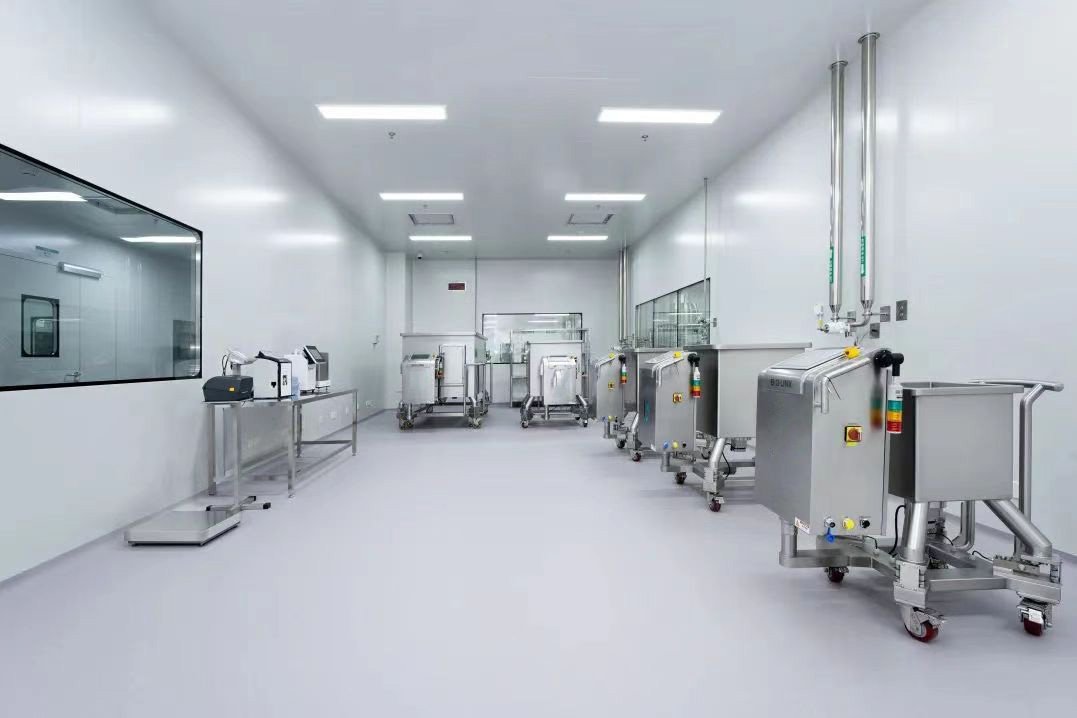
In the vast landscape of modern biopharmaceuticals, from life-saving monoclonal antibodies and cutting-edge gene viral vectors to a broad spectrum of innovative medicines, an invisible, elusive “microscopic foe” lurks ubiquitously, constantly endangering patient safety: bacterial endotoxin.
What exactly is endotoxin, and why is it omnipresent? Amid increasingly stringent pharmaceutical regulation, how do scientists outmaneuver this hazard? Today we explore the hard-core science behind residual endotoxin and the well-known Low Endotoxin Recovery (LER) phenomenon in biopharmaceuticals.
01 The Persistent Pyrogen: What Is Endotoxin?
Endotoxin refers to lipopolysaccharide (LPS), a component of the outer membrane of the cell wall in Gram-negative bacteria. It is a potent pyrogen. Once it enters the human bloodstream, it may trigger fever and chills in mild cases, or severe sepsis and septic shock in severe instances.
Compounding the challenge, endotoxin exhibits exceptional stability and ubiquity. It can be found in raw materials and upstream culture media, chromatographic columns, process buffers, and even final container closures. Rigorous endotoxin monitoring throughout the manufacturing process and ensuring residual levels in finished products remain below safety thresholds form a core baseline for patient safety.
1. Classic Detection Tool: Limulus Amebocyte Lysate (LAL)
The industry’s gold-standard endotoxin assay is the Limulus test, or LAL test. This assay leverages a cascade clotting reaction triggered when endotoxin interacts with lysate extracted from horseshoe crab amebocytes. Readout formats include gel-clot, turbidimetric, and chromogenic methods.
Pharmacopoeias worldwide, such as USP <85> and EP 2.6.14, define detailed requirements for LAL test performance and system suitability. The European Pharmacopoeia has also incorporated assays using recombinant Factor C (rFC) as an animal-free alternative to LAL, enabling sustainable testing aligned with animal welfare principles.
2. Regulatory Safety Thresholds
What level of residual endotoxin is tolerable in humans? Per globally accepted regulatory guidance:
1. Parenteral medicines (excluding intrathecal and intraocular administration): 5 EU/kg body weight per hour
2. Intrathecal products (directly delivered to the central nervous system): a stricter limit of 0.2 EU/kg body weight per hour
3. Intraocular injections or implants: ≤ 2.0 EU per dose; ophthalmic irrigation products: ≤ 0.5 EU/mL
In commercial manufacturing, biopharmaceutical firms typically control endotoxin levels well below these regulatory limits to build additional safety margins.
02 Elusive Non-Endotoxin Pyrogens and Alternative Assays
Is LAL testing alone sufficient to guarantee safety? The answer is no.
A key limitation of LAL is its specificity for endotoxin only; it cannot detect a wide range of non-endotoxin pyrogens (NEPs). NEPs include peptidoglycan, lipoteichoic acid and lipoproteins from Gram-positive bacteria, capsular polysaccharides from fungi, and viral particle components from myxoviruses.
To close this safety gap:
1. EP 5.1.13 mandates verification of the absence of non-endotoxin pyrogens during manufacturing and in finished products.
2. The traditional rabbit pyrogen test can capture all pyrogens, yet ethical concerns and low throughput have largely phased it out in Europe, replaced by the Monocyte Activation Test (MAT). MAT quantifies cytokine release from human monocytes upon exposure to pyrogens in vitro, enabling concurrent monitoring of both endotoxin and non-endotoxin pyrogens.
03 A Scientific Conundrum: What Is Low Endotoxin Recovery (LER)?
Within endotoxin testing, the Low Endotoxin Recovery (LER) phenomenon has emerged in recent years as a critical concern for global regulators and drug developers.
1. Definition of LER
Simply stated, LER describes the observation that when spiking known quantities of reference endotoxin into biopharmaceutical samples, conventional LAL assays recover little or none of the spiked endotoxin over time.
The public health risk is substantial: if a drug product is contaminated with endotoxin in reality, LER may produce false-negative laboratory results. Administration of such contaminated product to patients can lead to catastrophic outcomes.
2. Root Causes of LER
Large-scale collaborative studies organized by industry consortia such as BioPhorum (involving 14 companies and 21 laboratories) have elucidated the underlying mechanism:
1. LER typically arises in specific product formulations, most notably systems containing surfactants (e.g., polysorbates) paired with chelating agents (e.g., EDTA, citrate, phosphate, histidine).
2. Research demonstrates that purified LPS analytes become masked when combined with these buffer matrices, rendering them undetectable by LAL reagents. Naturally occurring endotoxin (NOE) exhibits different behavior in certain matrices.
In response, the Parenteral Drug Association (PDA), together with FDA experts, published Technical Report No. 82 (TR82), which provides guidance on LER study design and recommends Naturally Occurring Endotoxin (NOE) as a reference material that better mimics real-world contamination.
04 Regulatory Enforcement: Compliance Mandates for LER
Given the risks posed by LER, global regulators including EMA and FDA now require sponsors to submit LER study data as part of Marketing Authorization Applications (MAA) and Biologics License Applications (BLA):
1.Test conditions must reflect real manufacturing scenarios: LER studies shall not be performed on diluted samples. Undiluted final product is tested at actual manufacturing temperatures and hold times with endotoxin spiking.
2. Rigorous acceptance criteria: Industry consensus requires a minimum of four time points for evaluation. If recovery falls below 50% (the pharmacopoeial lower limit) at two consecutive time points, the product is deemed to exhibit LER.
3. Mitigation strategies and specification setting: Where LER is identified, applicants must propose appropriate mitigation measures, including assay optimization or alternative test methods. Regulators strongly recommend setting bacterial endotoxin specifications for finished products at an as-low-as-reasonably-achievable (ALARA) level supported by manufacturing data to establish robust safety margins.
4. CTD dossier placement: LER study reports are generally included under section 3.2.P.5.3 (Analytical Procedure Validation) or 3.2.P.2.3 (Manufacturing Process Development) of the CTD.
Conclusion
From Gram-negative bacterial cell wall components to the sophisticated biochemical reaction in horseshoe crab lysate; from the legacy rabbit pyrogen test to the modern Monocyte Activation Test; and now the ongoing investigation into the Low Endotoxin Recovery phenomenon — the biopharmaceutical industry has built an increasingly robust defense line against pyrogens and endotoxin.
In this perpetual battle against microscopic hazards, rigorous investigation of anomalous phenomena and adherence to regulatory standards collectively forge the gold standard safeguarding patient safety worldwide.
