





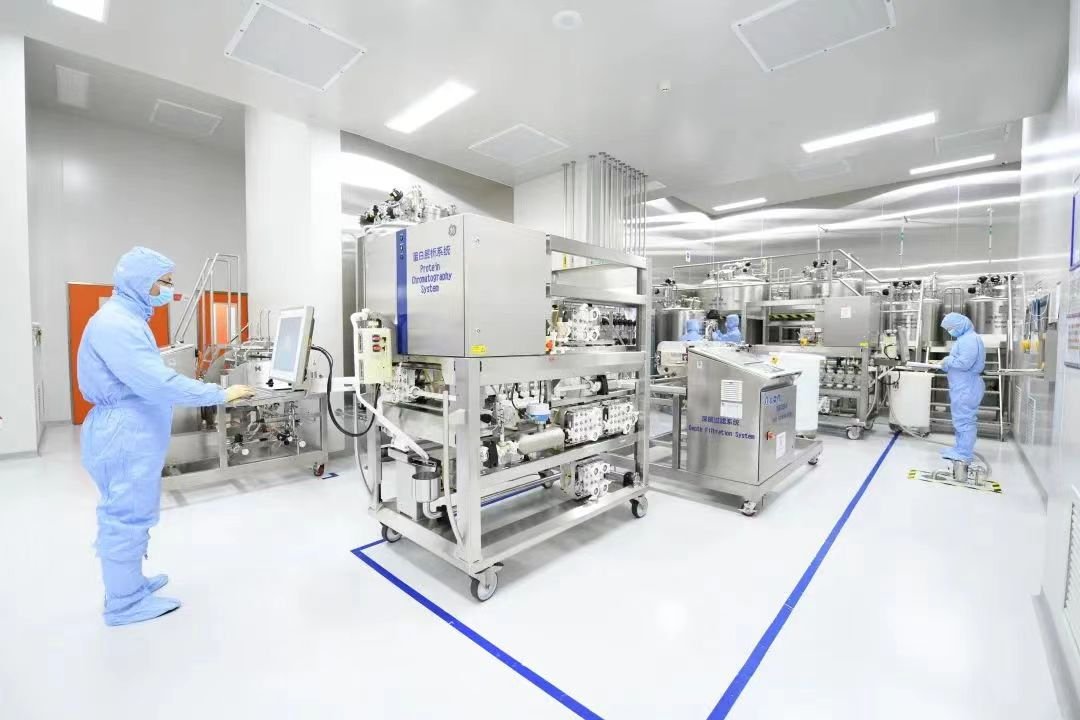
In the vast landscape of modern biopharmaceuticals, the purification process for monoclonal antibodies (mAbs) has already achieved relative maturity and standardization. However, when we turn our attention to recombinant adeno-associated virus (rAAV) — the core viral vector for modern in vivo gene therapy — the overall difficulty of downstream purification rises exponentially.
Viral vectors feature a large particle size (approximately 2.5 times the diameter of a monoclonal antibody) and a far more complex structure: a protein capsid encapsulating a transgene sequence with infectious activity. More critically, host cells generate substantial quantities of genome-free “empty capsids” during upstream production. Separating these empty capsids from “full capsids” loaded with therapeutic transgenes represents a world-class challenge for bioprocess engineers.
This article provides an in-depth review of core unit operations in rAAV downstream purification, as well as the precise control of critical process parameters (CPPs) to manufacture safe and potent gene medicines.
01 Four Core Unit Operations of rAAV Downstream Purification
Similar to mAb production, rAAV purification aims to remove host cell proteins (HCP), host cell DNA, endotoxins and other process-related impurities. Nevertheless, its operational workflow is uniquely tailored to the biological properties of viral particles.
Step 1: Harvest and Pretreatment — Cell Lysis and DNA Degradation
At the end of bioreactor cultivation, the first task is to release and clarify viral particles. Chemical-induced cell lysis: Surfactants are added to disrupt HEK293 cell membranes and release intracellular rAAV. (Not all viral vectors tolerate surfactants; for example, lipid-enveloped lentivirus (LV) cannot. In addition, due to safety concerns over residual traditional surfactant Triton X-100 in final drug products, the industry is accelerating its phase-out.) Nuclease-mediated DNA degradation: Massive amounts of naked DNA and chromatin released upon cell death increase purification burden. Nucleases are therefore supplemented to degrade these contaminants selectively.
Operational workflow: Predetermined concentrations of surfactant and nuclease are dosed into the bioreactor, followed by incubation under agitation at 37°C for several hours. Depth filtration is then performed to remove intact cells and cell debris, yielding clarified lysate.
Step 2: Affinity Chromatography — High-Efficiency Capture and Enrichment
The clarified lysate proceeds to affinity chromatography. Immobilized resins with ligands derived from recombinant camelid heavy-chain antibodies are used to specifically bind AAV capsid proteins, enabling efficient capture and enrichment of rAAV from impurities. Host cell proteins, DNA and small-molecule impurities are washed away in flow-through or wash fractions. Bound rAAV is subsequently eluted using low-pH buffer.
Note: Extensive process development is required for this step. Optimization is highly dependent on upstream harvest loading and AAV serotype.
Step 3: Anion Exchange Chromatography — Overcoming the Bottleneck of Empty/Full Capsid Separation
This is the most challenging and sophisticated stage in the entire downstream train, operated in either bind-elute or flow-through mode. In bind-elute mode, rAAV binds to the resin while HCP, DNA, endotoxins and, most importantly, empty capsids pass through the column. A salt step gradient or linear gradient is then applied to elute transgene-containing full capsids. The optimization of this step balances viral recovery and purity (i.e., clearance of empty capsids).
Step 4: Ultrafiltration/Diafiltration (UF/DF) — Final Concentration and Buffer Exchange
The final unit operation uses a dedicated UF/DF system. Ultrafiltration membranes with molecular weight cutoffs that retain viral vectors while permitting passage of small buffer components concentrate rAAV to the target titer. Once the target concentration is achieved, continuous diafiltration is carried out to exchange the virus into the final formulation buffer, ready for filling and cryopreservation.
02 Fine Control of Critical Process Parameters (CPPs)
To ensure consistent viral vector quality across batches, biopharmaceutical manufacturers must implement digitalized, granular control over process parameters. Per industry consensus and guidelines published by the Alliance for Regenerative Medicine (ARM) and major bioprocess vendors, the following parameters require evaluation via Design of Experiments (DoE) during process development:
Critical Parameters at Harvest Stage
1. Final surfactant concentration: Typical evaluation range ~0.25% (w/v). Insufficient concentration leads to incomplete cell lysis and poor viral release.
2. Final nuclease concentration: Typical evaluation range ~10 U/mL. Suboptimal nuclease loading fails to efficiently degrade viscous DNA impurities.
3. pH control: Maintained at 7.0 ± 0.2, the optimal pH window for nuclease digestion.
4. Bioreactor hold conditions (temperature, hold time, agitation power): Temperature controlled at 37 ± 2°C, hold time ~5 ± 1 h, agitation power ~7.0 ± 0.2 W/m³. Excessively high temperature or prolonged hold may compromise rAAV capsid structural stability; insufficient agitation impairs uniform cell lysis.
Critical Parameters for Anion Exchange Chromatography
1. Loading capacity: Significantly impacts product quality and process performance.
2. pH and conductivity: Recommended evaluation range pH 8.3 ± 0.5, conductivity 20 ± 6 mS/cm. These parameters directly govern separation efficiency between empty and full capsids.
Publicly available process data specifically for rAAV purification remains limited. Each manufacturer must conduct in-depth DoE studies for its dedicated workflow to distinguish critical process parameters (CPPs) that affect product quality from key performance parameters (KPPs) that impact process yield. Global development teams continue to explore alternative chromatography media and operating conditions to advance the manufacturing platform for gene therapies.
03 Conclusion
From complex cell lysis and precise affinity capture to the technically demanding separation of empty and full capsids, rAAV downstream purification is both a science and a refined engineering discipline. With advances in analytical techniques and stringent control of process parameters, the manufacturing of gene medicines is becoming safer, more predictable and scalable, laying a solid foundation for treating intractable human diseases.
