





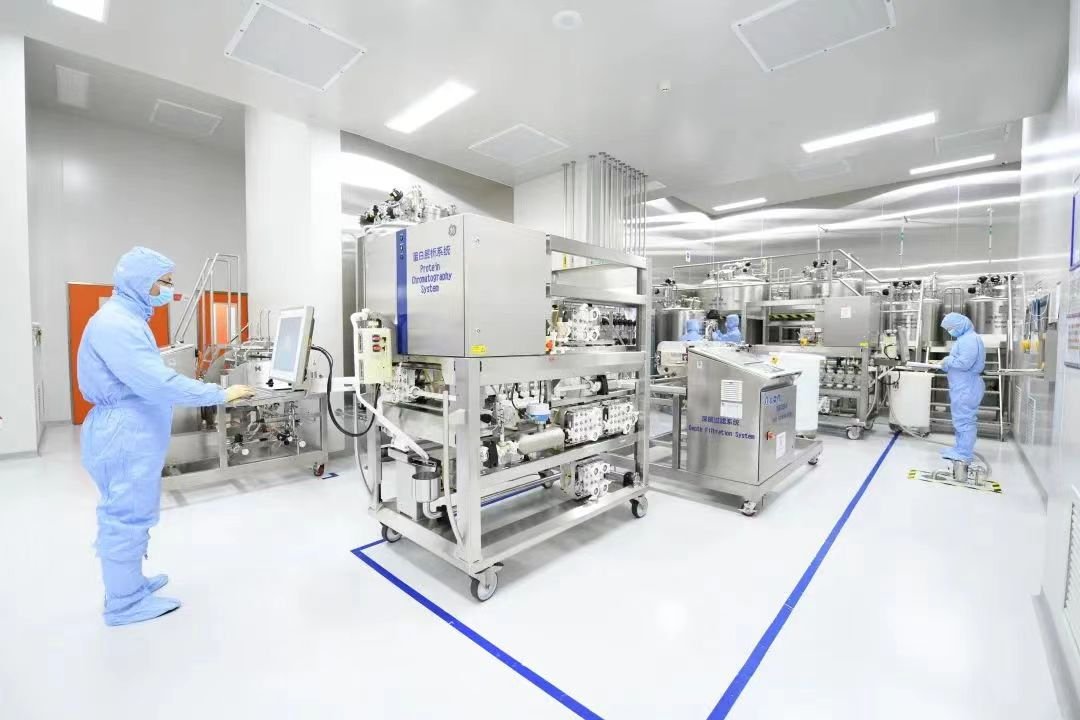
PART 1 Introduction
Vaporized Hydrogen Peroxide (VHP), a high-efficiency low-temperature biodecontamination technology, was discovered by American researchers in the 1980s for its potent sporicidal effect upon vaporization. It has since been widely adopted for cleanroom decontamination in pharmaceutical manufacturing, healthcare facilities, biosafety laboratories and other sectors. Its primary advantages include effective sterilization at low temperatures (4–80 °C) with a low concentration of 1–2 mg/L; its sporicidal activity is approximately 200 times that of liquid hydrogen peroxide. Furthermore, it decomposes into non-toxic water and oxygen after decontamination, rendering it environmentally benign.
Nevertheless, the corrosive nature of VHP during decontamination remains a critical bottleneck restricting stable deployment in cleanrooms. Cleanrooms feature concentrated precision equipment and a complex mix of materials. VHP-induced corrosion may lead to equipment damage, material degradation, compromised cleanroom tightness and destabilized aseptic conditions. Accordingly, in-depth research on VHP corrosion mechanisms, risk classification, material compatibility and mitigation strategies during VHP fumigation is practically significant for safeguarding reliable cleanroom operation.
PART 2 Mechanisms of Hydrogen Peroxide Corrosion
VHP corrosion arises from its intrinsic chemical properties and dual synergistic reaction pathways: condensation-induced degradation corrosion and redox oxidation corrosion, which jointly impair the structure and functional performance of materials.
From the perspective of condensation degradation, VHP decontamination relies on vaporization (not atomization), achieved by breaking hydrogen bonds between hydrogen peroxide molecules. The stability of hydrogen bonds makes VHP susceptible to liquefaction under varying ambient conditions. When VHP vapor contacts material surfaces with temperatures below the dew point, microcondensation occurs and forms a thin film of liquid hydrogen peroxide. Liquid hydrogen peroxide possesses strong oxidizing capacity and weak acidity, triggering chemical reactions with substrate surfaces. For metallic materials, condensed liquid breaks surface passivation films and initiates electrochemical corrosion. For non-metallic materials, it may cause swelling, aging or leaching of constituents. For example, PVC foam readily adsorbs condensed hydrogen peroxide with slow desorption, aggravating corrosion over prolonged exposure. Notably, dry fog systems are frequently misused as VHP decontamination equipment; they generate large droplets that readily condense on surfaces and constitute a major corrosion trigger.
In terms of redox mechanisms, VHP decontamination is inherently a strong oxidation process. Vaporized hydrogen peroxide decomposes into reactive species including hydroxyl radicals (HO·) and peroxyl radicals (HOO·). While these radicals disrupt microbial DNA and RNA to achieve sterilization, they also undergo oxidation reactions with cleanroom construction materials. For metals, radicals accelerate metal ion oxidation: mild steel develops rust, and copper and zinc within brass undergo chemical reactions leading to obvious surface discoloration. For polymeric materials, radicals break molecular chains, resulting in aging, embrittlement or discoloration; polyurethane, for instance, exhibits slight discoloration under VHP exposure. In addition, certain metals such as copper and brass act as catalysts for hydrogen peroxide decomposition, accelerating radical generation and forming a self-reinforcing corrosion cycle.
PART 3 Corrosion Risks of Dry VHP, Wet VHP and Dry Fog Systems
Differences in parameter control and vapor state among VHP fumigation modalities lead to distinct corrosion risk profiles. All modalities share core risks originating from condensation and oxidation, differing only in corrosion manifestation and severity.
(3.1 Corrosion Risks of Dry VHP
Dry VHP is defined by vapor saturation <100% (not relative humidity <100%), designed to avoid condensation. Nonetheless, non-negligible risks persist in practical applications. First, cleanrooms feature complex spatial layouts. Poor vapor circulation in equipment dead zones and air duct elbows may trigger localized saturation exceeding 100% and form microcondensation environments. Second, improper temperature control may result in material surface temperatures below the dew point, causing localized condensation even if the overall space maintains unsaturated vapor conditions. Moreover, the strong oxidizing property of dry VHP remains unattenuated. Long-term exposure enables continuous oxidative erosion by radicals, especially affecting sensitive components such as sensors and metal connectors on precision instruments, potentially reducing equipment accuracy or causing malfunction.
(3.2 Corrosion Risks of Wet VHP
Wet VHP generally refers to fumigation with saturation ≥100%, presenting substantially higher corrosion risks than dry VHP. Under high saturation conditions, VHP vapor readily forms continuous liquid films on all material surfaces. Liquid hydrogen peroxide directly exerts corrosive effects: severe electrochemical corrosion occurs on metals, e.g., cold-rolled steel rapidly develops surface rust or pitting corrosion. For non-metallic materials, immersion in condensed liquid accelerates swelling and aging; vulcanized rubber flooring may suffer elasticity loss after prolonged contact with condensate. In addition, high humidity under wet VHP conditions accelerates redox reaction rates and increases radical concentration, creating superimposed material damage and significantly shortening service life of cleanroom materials.
(3.3 Corrosion Risks of Dry Fog Systems
Dry fog systems are not authentic VHP fumigation technology. They produce hydrogen peroxide droplets far larger than VHP vapor molecules and essentially deliver atomized liquid. The primary risk stems from high susceptibility to condensation: fog droplets absorb moisture to form larger droplets during dispersion and condense directly upon contact with surfaces, leading to locally excessive hydrogen peroxide concentrations. Compared with wet VHP, condensate distribution from dry fog is highly uneven, accumulating on equipment surfaces and cleanroom wall gaps and causing localized severe corrosion. In addition, fog particles are highly adhesive and tend to attach to circuit boards and sensors of precision instruments, resulting in irreversible damage. Dry fog systems are often incorrectly deployed in cleanrooms requiring strict humidity control; the elevated humidity disrupts dry operating conditions and indirectly exacerbates corrosion.
PART 4 Current Status of VHP Corrosion Issues
VHP-induced corrosion is universal and inevitable. No material is fully immune; only varying degrees of VHP resistance exist. In cleanroom environments, corrosion constitutes a primary bottleneck limiting VHP deployment, manifested in two major aspects:
First, cleanrooms adopt a wide range of materials, and corrosion impacts extensive areas. Materials include metals (stainless steel, aluminum, brass, cold-rolled steel, etc.), non-metals (plastics, elastomers, sealants, coatings, etc.) and precision instrument components (sensors, circuit boards, gaskets, etc.) with drastically different VHP compatibility. For example, brass and copper undergo rapid surface discoloration and corrosion under VHP exposure; coatings on metal tiled flooring and brush-coated mild steel blister and peel. In contrast, stainless steel, silicone and PTFE demonstrate superior corrosion resistance. In practice, equipment housings, air ducts, flooring and gaskets are all susceptible to corrosion. Beyond aesthetic degradation, corrosion may trigger seal failure, loss of structural integrity and even breakdown of cleanroom aseptic conditions.
Second, precision instruments face particularly prominent corrosion hazards. Temperature and humidity sensors, VHP concentration probes, smoke detectors and other precision components sustain long-term exposure to strongly oxidizing VHP environments and are prone to corrosion-induced failure. For example, capacitive components inside VHP concentration probes suffer oxidation leading to measurement drift; metal contacts on temperature sensors develop poor contact from oxidation. Furthermore, circuit boards and metal connectors of precision instruments are highly sensitive to condensate and radicals; minor corrosion can trigger equipment failure and raise maintenance costs and downtime risks.
PART 5 Compatibility Assessment of Common Cleanroom Materials with VHP
To systematically evaluate VHP resistance of typical cleanroom materials and establish scientific criteria for material selection, standardized testing was implemented. Specimens sized 12 × 5 cm were placed in triplicate within a test chamber with VHP concentration ≥1000 ppm. Sufficient airflow ensured uniform contact between specimens and VHP vapor. After 140 hours of exposure, visual inspection and mechanical property testing were performed to classify compatibility into three tiers: Compatible (Grade A), Conditionally Compatible (Grade B), Incompatible (Grade C).
(5.1 Non-metallic Material Compatibility
Compatible (Grade A): ABS, unmodified rigid PVC, PTFE, PE, acrylic glass, Viton fluoroelastomer, PP, surface-cured rigid PVC, vulcanized rubber flooring, silicone, textile tape. No visible surface discoloration, transparency loss or degradation of mechanical properties after testing. PP maintains smooth surface morphology, and silicone retains transparency and elasticity. These materials are directly applicable to VHP fumigation environments.
Conditionally Compatible (Grade B): Neoprene, PVC foam, black PVC foam gaskets, Desmopan polyurethane. Minor adverse reactions are observed yet do not impair functionality after proper handling. Neoprene develops slight surface blooming removable by cleaning; PVC foam adsorbs hydrogen peroxide with slow desorption. When used as gaskets with limited exposed surface area, corrosion risks can be mitigated via optimized decontamination parameters. Polyurethane exhibits slight discoloration without mechanical performance loss.
Incompatible (Grade C): Coated metal floor tiles. Surface coatings undergo obvious irreversible changes after testing. Corrosion risks cannot be eliminated through parameter adjustment; usage in VHP fumigation zones is prohibited.
(5.2 Metallic Material Compatibility
Compatible (Grade A): Anodized aluminum, 316 stainless steel. Anodized aluminum shows no visible discoloration or loss of mechanical strength. Polished 316 stainless steel may develop minor surface discoloration without further corrosion, making it the preferred metallic material for cleanrooms.
Conditionally Compatible (Grade B): Unfinished aluminum, epoxy-coated mild steel, high-temperature coated steel, polyester powder-coated aluminum, coated aluminum. No obvious changes occur under short-term exposure, yet surface oxidation or discoloration may emerge over long-term service. Unfinished aluminum develops oxide spots without powdering or mechanical failure. Epoxy-coated mild steel performs adequately in short cycles but will likely discolor over time; regular maintenance can extend service life.
Incompatible (Grade C): Brass, copper, cold-rolled steel, brush-coated mild steel. Brass presents significant surface discoloration; copper exhibits pronounced surface changes; cold-rolled steel develops rust or pitting corrosion; brush-coated mild steel suffers severe coating blistering. Direct exposure of these materials to VHP fumigation environments should be avoided.
Test results demonstrate that VHP compatibility is closely related to material composition and surface finishing. Proper material selection and parameter control enable safe application of most commonly used cleanroom materials.
PART 6 Mitigation Strategies against VHP Corrosion
Based on the root causes of VHP corrosion and material compatibility characteristics, an integrated prevention and control system covering material selection, parameter tuning, process optimization and probe maintenance must be established to minimize corrosion risks.
(6.1 Selection of VHP-compatible Materials
Material selection constitutes the foundation of corrosion control. The core principle is prioritizing compatible materials, rationally deploying conditionally compatible materials and eliminating incompatible materials.
1.Structural materials: Prefabricated cleanroom panels shall adopt PE/PET/PVDF/PVC coated variants or brushed stainless steel surfaces. PVC flooring is preferred; epoxy flooring shall adopt high chemical resistance grades. Air ducts preferably use 304 stainless steel (with condensate control) or foil-faced phenolic pre-insulated panels; galvanized steel shall be evaluated for susceptibility to zinc oxide staining.
2.Sealing and elastomeric components: Neoprene is applicable for air duct gaskets. EPDM, silicone or PTFE are preferred for equipment gaskets. PVC foam gaskets should be avoided due to adsorption behavior. Fluoroelastomer or polyurethane-based compatible sealants are recommended.
3.Equipment and components: Surfaces, electrical assemblies and sensors of precision instruments shall receive anti-corrosion treatment. Capacitive elements inside temperature and humidity sensors require corrosion protection; PT100-type temperature sensors are recommended. Smoke detectors shall be protected from direct VHP exposure. Metal surfaces shall be passivated or anodized. Powder coating, epoxy coating and cured polyester coating are preferred; brush coating is prohibited.
(6.2 Precise Control of Decontamination Parameters
Parameter control targets the prevention of VHP condensation and suppression of oxidation intensity by optimizing saturation, concentration, temperature and humidity. First, strictly regulate saturation and concentration. Dry fumigation shall maintain saturation <100%. The contribution of VHP to saturation shall be calculated in conjunction with temperature-dependent saturated moisture content to define appropriate VHP concentrations (typically controlled within the effective sterilization range of 1–2 mg/L). The dosing rate of hydrogen peroxide solution shall be adjusted according to cleanroom volume and air exchange conditions to ensure uniform vapor distribution.
Second, optimize temperature, humidity and airflow. Dew point and VHP half-life shall be considered to maintain material surface temperatures above dew point. Airflow shall be regulated to avoid stagnant dead zones with high local concentrations. Real-time relative humidity monitoring coupled with temperature feedback enables dynamic adjustment to stabilize fumigation conditions.
Finally, develop optimized flow patterns. Mobile equipment airflow control and improved vapor diffusion enable homogeneous VHP distribution. Multi-point monitoring shall be deployed to track concentration and saturation across zones and prevent localized condensation and over-decontamination.
(6.3 Avoid Excessive Decontamination
Excessive decontamination leads to elevated VHP concentrations and extended cycle duration, amplifying corrosion risks alongside unnecessary resource consumption. Decontamination cycles shall be defined based on contamination risk classification and sterilization requirements to avoid overkill.
1.Biological indicators shall be used to determine the minimum effective decontamination parameters targeting the required log reduction of target microorganisms, rather than pursuing excessive lethality.
2.Differentiated fumigation schedules shall be formulated according to cleanroom usage frequency and contamination status to avoid fixed high-intensity cycles.
3.Decontamination shall terminate immediately once the target log reduction is achieved, followed by aeration.
(6.4 Service Life Management of Monitoring Probes
VHP concentration, temperature and humidity probes are highly susceptible to corrosion, and reliable operation directly determines parameter control accuracy.
1.Prevent condensation on probes: Probes may be equipped with local heating to raise surface temperatures above dew point. Saturation control reduces vapor accumulation surrounding probes to avoid supersaturated microenvironments.
2.Implement periodic calibration: Oxidation by VHP causes measurement drift in hydrogen peroxide probes. Calibration cycles shall be defined according to operational frequency and ambient conditions, generally every 3–6 months.
3.Optimize probe installation locations: Mount probes in well-ventilated zones away from direct vapor jets and dead zones to reduce direct exposure to corrosive media.
PART 7 Conclusion
VHP fumigation delivers substantial value for cleanroom decontamination, yet corrosion remains a key challenge limiting stable operation. Research confirms that VHP corrosion arises from combined condensation degradation and redox oxidation mechanisms. Dry VHP, wet VHP and dry fog systems all carry corrosion risks driven by condensation and oxidation, with condensation serving as the primary trigger. Material compatibility tests verify that stainless steel, silicone, rigid PVC and PP exhibit favorable VHP resistance, while brass, copper and cold-rolled steel are incompatible.
VHP corrosion mitigation relies on an integrated framework: material selection, parameter control, process optimization and probe maintenance. The core principle for all fumigation modalities is rigorous control of temperature, humidity and VHP saturation to eliminate localized condensation at the source. Complementary measures include informed selection of structural and component materials based on compatibility data, avoidance of over-decontamination and enhanced maintenance of monitoring probes.
Looking ahead, advances in material science and process control will drive VHP corrosion prevention toward precision and intelligence. Real-time monitoring coupled with dynamic parameter adjustment will achieve optimal balance between decontamination efficacy and corrosion control, supporting safe and stable cleanroom operation.
