





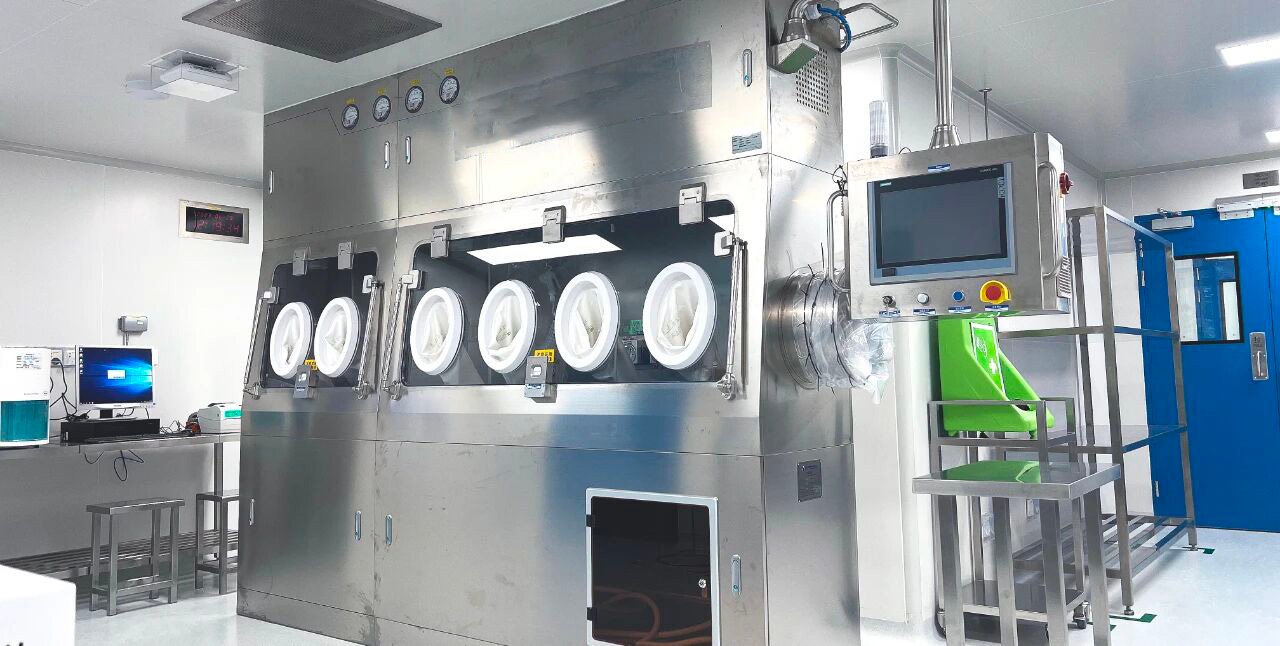
Against the backdrop that global leading regulatory frameworks including the 2026 Draft Annex on Sterile Products of China GMP, EU GMP Annex 1 and PIC/S have comprehensively strengthened the Contamination Control Strategy (CCS), the manufacturing of sterile pharmaceutical products is undergoing an in-depth transformation from the traditional model of “cleanrooms with manual interventions” to “physical barriers + high-level automation + closed-loop full-process control”. As core hardware carriers for CCS implementation, isolators and Restricted Access Barrier Systems (RABS) are evolving beyond merely providing physical segregation. Instead, they are deeply integrated with automation, intelligent and digital technologies to form a new-generation sterile manufacturing system centered on “zero/minimal human intervention, dynamic risk control and data-driven compliance”. Combined with the full-chain, closed-loop dynamic logic and reinforced key elements of CCS, this paper systematically elaborates on the development trends of isolators/RABS and automation.
I. Regulatory Drivers: Mandatory CCS Upgrade Establishes the Central Role of Isolators/RABS and Automation
The draft Annex on Sterile Products of the 2026 China GMP explicitly prioritizes barrier technologies (isolators/RABS) for operations with high contamination risks, requiring physical segregation to maximally reduce contamination risks posed by personnel and ambient environments to sterile products. This aligns closely with the core philosophy of CCS, namely full-process risk control and elimination of contamination at the source. Meanwhile, mandatory regulatory requirements for dynamic monitoring, airflow visualization studies, data integrity and continuous improvement directly drive the upgrade of isolators/RABS from passive protection to active control supported by automated execution, making them critical hardware and data carriers for CCS deployment.
1. Core CCS Requirements for Isolators/RABS Stipulated by Regulations
Isolators: The working zone shall maintain Grade A cleanliness; the background environment shall be no worse than Grade D for closed isolators and Grade C for open isolators. Glove systems shall undergo periodic integrity testing. Simulated airflow visualization validation is required for door-opening operations to ensure positive pressure airflow flows outward and prevents ingress of external contaminants.
RABS: Unidirectional airflow and first-air design shall guarantee Grade A environments, with a background environment no worse than Grade B. Personnel door-opening interventions shall be restricted, and operations via glove ports shall be prioritized. All intervention activities shall be incorporated into CCS risk assessment and dynamic monitoring.
Common Requirements: Both isolators and RABS shall adopt CCS design covering the full workflow of material transfer, environmental control, sterilization and disinfection, and operational interventions. All Critical Control Points (CCPs) shall be interlocked with automated systems to realize a closed loop of “monitoring – alert – corrective action – documentation”.
2. Regulatory Binding Between Automation and CCS
Regulations mandate that CCS must be dynamic, closed-loop and traceable, and automation serves as the sole pathway to achieve such objectives:
Continuous online monitoring of viable and non-viable particles is enforced, with real-time data uploaded to MES/SCADA systems as evidence for evaluating CCS effectiveness;
Airflow visualization studies, pressure differentials, temperature & humidity, VHP sterilization parameters and other data shall be automatically collected for trend analysis and out-of-specification alarming, eliminating errors arising from manual recording;
Changes, deviations and CAPA shall be linked to automated systems to ensure traceability and compliance for continuous CCS improvement.
II. Technological Evolution: Isolators/RABS Transformed from Physical Barriers to Automated Closed-Loop Systems
1. Isolators: From Closed Containment to Fully Automated Sterile Islands
Boasting complete physical separation between personnel and products, isolators stand as the preferred solution for high-risk sterile pharmaceutical products such as injectables, biopharmaceuticals and Cell and Gene Therapy (CGT) products. Advances in automation focus on full-process unmanned operation, intelligent sterilization and high-precision monitoring:
Automated material transfer and handling: Rapid Transfer Ports (RTP) paired with automated transport systems enable sterile, enclosed transfer of materials and utensils to replace manual door-opening operations. Supporting automatic depackaging, sterilization and handling robots deliver full-process unmanned workflows from material intake to finished product output, minimizing personnel-induced contamination risks to near zero.
Fully automated VHP sterilization: New-generation isolators integrate online Vaporized Hydrogen Peroxide (VHP) sterilization systems supporting one-click automated cycles of “sterilization – dehumidification – aeration – monitoring”. Automatic readings of temperature, humidity, hydrogen peroxide concentration and Biological Indicators (BI) guarantee sterilization compliance with CCS requirements without manual intervention and subjective judgment.
Automated management of gloves and barriers: Online periodic glove integrity testing systems (e.g., pressure decay method) trigger automatic alerts and operational lockouts upon detection of failures. Dual-door interlocking and automatic sealing technology prevent accidental door opening and subsequent contamination. All barrier status data is transmitted in real time to the CCS master file.
Automated control of background environments and airflow: Internal unidirectional airflow velocity, pressure differential, temperature and humidity inside isolators are automatically adjusted dynamically to match production conditions. Integrated real-time airflow simulation systems monitor the impact of operational interventions on airflow to preserve first-air integrity and provide dynamic data for CCS risk assessment.
2. RABS: Evolving from Restricted Intervention to Semi-Automation with Intelligent Monitoring
As a mainstream transitional solution between traditional cleanrooms and isolators, RABS automation prioritizes intervention minimization, enhanced monitoring and partial automation, balancing CCS compliance with cost-effectiveness and operational flexibility:
Intelligent monitoring and restriction of interventions: AI vision monitoring systems automatically identify unauthorized door opening, non-compliant glove operations and other personnel violations, triggering real-time audible and visual alerts together with event logging. Automatic locking systems secure doors during non-authorised periods and enforce glove-port operations, enabling quantitative CCS management of intervention frequency and risks.
Partial process automation: Core procedures including filling, stoppering and crimping are linked to automated equipment to reduce manual operations. Integrated Clean-in-Place/Sterilize-in-Place (CIP/SIP) systems inside RABS facilitate online automated sterilization of product-contact surfaces, meeting mandatory CCS requirements for equipment cleaning and sterilization.
Automated assurance of dynamic environments and first air: Real-time monitoring of unidirectional airflow and first air within the Grade A zone of RABS supports automatic fan frequency adjustment when airflow velocity or particle concentration deviates. Continuous monitoring of pressure differential and bioburden in the Grade B background zone forms a dual-layer CCS control network together with isolators.
3. Technological Integration of Isolators and RABS: Flexible Barriers + Modular Automation
New-generation sterile production lines break the boundary between isolators and RABS to form modular, scalable barrier systems. For different process stages (e.g., compounding, filling, lyophilization), a hybrid design of “isolator core zones + RABS auxiliary zones” is adopted, balancing absolute segregation in high-risk zones and operational flexibility in auxiliary zones. All barrier modules share a unified automation control platform to coordinate material flow, airflow and sterilization workflows, constructing an integrated CCS control system covering the entire production line.
III. In-Depth Automation Integration: Robots, PAT and Digitalization Empower Closed-Loop CCS Management
1. Industrial Robots: Realizing Zero-Intervention Sterile Operations to Mitigate Personnel Risks under CCS
Personnel constitute the greatest contamination risk in sterile manufacturing. CCS requires maximum reduction of human interventions, and sterile robots serve as the core enabler:
Filling and dispensing robots: Aerodynamically optimized sterile robots replace manual labour for filling, stoppering and vial sorting, avoiding direct human contact with products and critical surfaces. Automatically planned robot motion trajectories prevent disruption to Grade A unidirectional airflow and first air, complying with CCS airflow control specifications.
Material handling robots: Sterile grippers and automated transport robots execute material transfer, utensil arrangement and waste disposal to achieve “zero ground contact of materials and zero human contact”, eliminating personnel contamination risks at the source.
Interconnection between robots and barrier systems: Robots access isolators/RABS via RTPs or dedicated passages with interlocking links to doors and sterilization systems. All operational movements are continuously monitored, and relevant data is incorporated into the CCS traceability framework.
2. Process Analytical Technology (PAT): Real-Time Monitoring to Enable CCS “In-Process Control in Lieu of End-Product Testing”
Both the revised GMP and CCS emphasize that sterility cannot be verified solely by end-product testing and must be secured through full-process control. Integration between PAT and isolators/RABS becomes a key enabler:
Online viable and non-viable particle monitoring: Real-time particle counters and microbial samplers are installed at critical zones of isolators/RABS (e.g., filling points and material transfer ports) for continuous, non-intrusive automated data acquisition, replacing traditional off-line grab sampling.
Online detection of critical parameters: PAT equipment delivers real-time measurement of Critical Quality Attributes (CQAs) including pH, osmolality, endotoxin levels and fill volume. Data feedback to automated control systems supports automatic tuning of process parameters to stabilize product quality and fulfil the preventive control principle of CCS.
PAT interconnection with CCS: All PAT data is compiled into the CCS master file for trend analysis, out-of-specification alerting and root cause analysis, establishing a closed loop of “monitoring – analysis – adjustment – validation”. This drives the shift of sterile manufacturing from compliance-oriented production to Quality by Design (QbD).
3. Digitalization and Intelligence: Data-Driven Continuous CCS Improvement
Deep digital integration of isolators/RABS and automation systems provides full-process data support for CCS, enabling dynamic assessment and continuous optimization:
Deep integration with MES/SCADA: Environmental parameters, equipment status, operational records, sterilization data and deviation information from isolators/RABS are automatically uploaded to MES, achieving seamless connection with production scheduling, material management and quality control modules to build a fully traceable digital CCS system.
AI and big data analytics: AI algorithms support risk early warning, predictive maintenance and trend forecasting for CCS data, enabling advance identification of risks such as filter failure, airflow abnormalities and inadequate sterilization, with automatic CAPA triggering. Big data analytics optimizes process parameters, monitoring frequency and intervention strategies to facilitate ongoing CCS enhancement.
Remote monitoring and maintenance: Remote access, real-time surveillance and fault diagnosis reduce the need for technical staff to enter cleanrooms for commissioning, parameter adjustment and troubleshooting, minimising disruptions to sterile environments and improving CCS management efficiency.
IV. Expanded Application Scenarios: Coverage of High-End and Emerging Formulations to Strengthen Full-Spectrum CCS Implementation
1. High-End Sterile Pharmaceutical Products: Isolators with Full Automation Become Standard Configuration
For high-risk products including injectables, lyophilized powders and ophthalmic preparations, newly constructed production lines widely adopt the solution of “isolators + sterile robots + full-process automation” to achieve 100% human-free operation, fully satisfying the stringent control requirements of CCS for high-risk activities. Statistics indicate that over 75% of newly built biopharmaceutical projects in China select isolator technology to replace conventional manufacturing models.
2. Emerging Sectors: CGT, ADC and Radiopharmaceuticals Drive Automation Upgrade for Specialised Isolators
Cell and Gene Therapy (CGT): CGT products impose stringent requirements for sterility, absence of pyrogens and cross-contamination prevention. BSL-2/3 grade sterile isolators integrated with automated cell culture, filling, sealing and liquid nitrogen transport systems are deployed to deliver full-process closed automation, meeting both biosafety and CCS requirements.
Antibody-Drug Conjugates (ADCs) and radiopharmaceuticals: Negative-pressure isolators paired with automated containment systems are developed for highly toxic and radioactive products to realise triple segregation covering products, personnel and environments. Supporting automated dosing, shielded transport and waste handling equipment controls contamination risks while safeguarding operator safety, consistent with CCS special risk management provisions.
3. Continuous Manufacturing (CM): Isolators and Automation Support Uninterrupted, Closed-Loop Production
As a future direction of sterile manufacturing, continuous manufacturing relies heavily on deep integration between isolators and automation. Modular isolator units coupled with continuous automated equipment enable uninterrupted production from raw material feeding to finished product output, eliminating batch-to-batch contamination risks. All process and environmental parameters are monitored continuously under full CCS closed-loop control to significantly boost production efficiency and product quality consistency.
V. Development Challenges and Future Directions: Aligning Compliance, Cost and Technology to Facilitate CCS Rollout
1. Core Challenges
Balancing compliance and capital expenditure: Isolator-based full automation solutions require high upfront investment, creating pressure for small and medium-sized enterprises. Optimised design and increased localisation of components are required to lower costs while meeting mandatory CCS requirements.
High complexity of technological integration: Interconnection of isolators/RABS, robots, PAT and MES poses challenges including data interoperability, coordinated control and validation compliance, demanding robust technical capabilities from manufacturers.
Workforce transformation and validation activities: Automation-driven reduction of manual operations requires training of interdisciplinary personnel competent in automated equipment operation, data analytics and CCS governance. Meanwhile, validation, qualification and sustained compliance of automated systems must align with GMP and CCS specifications.
2. Future Directions
Accelerated localisation: Higher domestic production rates of core components (HEPA filters, PLCs, sensors and sterile robots) will reduce equipment costs and popularise automated isolator/RABS technologies.
Intelligent upgrading: Deep embedding of AI into CCS governance will enable autonomous risk evaluation, automatic process optimisation and predictive maintenance, advancing isolators/RABS from automated execution platforms to intelligent decision-making systems.
Standardisation and integrated solutions: Industry standards governing the design, validation and maintenance of automated isolators/RABS will be established, promoting integrated solutions covering equipment, process, quality and compliance to reduce implementation barriers for enterprises deploying CCS.
Conclusion
As CCS becomes a core compliance requirement for sterile pharmaceutical manufacturing, the integrated development of isolators/RABS and automation represents an inevitable pathway to achieve full-process contamination control, zero/minimal human intervention and data-driven compliance. The sterile pharmaceutical industry is undergoing a revolutionary shift: from physical containment to automated closed loops, from manual operations to intelligent governance, and from isolated compliance measures to full-chain CCS coverage. Going forward, continuous technological iteration and evolving regulatory frameworks will enable isolators/RABS and automation to further support CCS implementation, drive the high-quality, intelligent and internationalised development of China’s sterile pharmaceutical industry, and ultimately safeguard patient safety and consistent product quality.
