





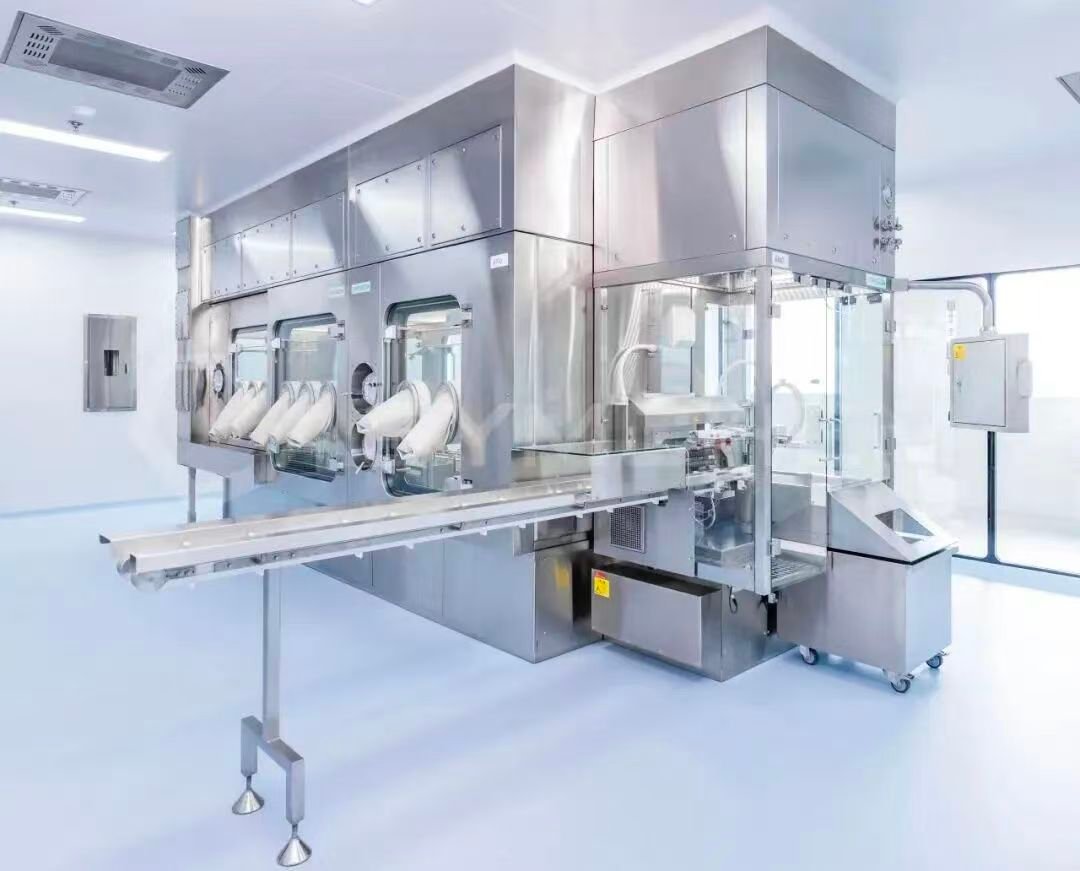
As core aseptic production equipment in the pharmaceutical and biological product sectors, lyophilizers directly determine the moisture content, biological activity, appearance and shelf life of finished products through the stability of lyophilization processes and precise parameter control. They serve as critical guarantees for pharmaceutical quality compliance and process consistency. Lyophilizer validation covers the full lifecycle including Installation Qualification (IQ), Operational Qualification (OQ) and Performance Qualification (PQ), involving coordinated verification of multiple systems such as temperature control, vacuum, refrigeration, water capture, cleaning and sterilization. Featuring complicated workflows and strongly coupled parameters, lyophilizer validation is affected by multiple factors in practical implementation, including equipment structural characteristics, environmental interference, process compatibility, testing methodologies and compliance management. It frequently leads to parameter deviations, distorted validation data and poor batch consistency, becoming a key bottleneck restricting the compliant implementation of lyophilization processes and passing regulatory inspections. In accordance with GMP, FDA and industrial validation standards, this paper systematically analyzes core challenges throughout the whole validation workflow of lyophilizers, explores root causes, and proposes standardized, implementable countermeasures. It provides technical support for standardized lyophilizer validation, stable product quality and mitigation of compliance risks.
1. Introduction
Vacuum freeze-drying technology boasts core advantages of low-temperature operation, oxygen-free environment and effective preservation of biological activity, and is widely applied in sterile powder for injection, biological vaccines, protein pharmaceuticals and high-end foodstuffs. The operational performance of lyophilizers directly correlates with end-product quality. Good Manufacturing Practice (GMP) explicitly mandates that lyophilizers must complete full-scale validation to confirm compliant installation, controllable operational parameters and stable process performance before commercial production. Distinct from validation of ordinary standalone equipment, lyophilizer validation is a comprehensive task covering multiple coupled systems, namely mechanical structure, refrigeration system, vacuum system, control system, and CIP/SIP system. Parameters of each module interact and restrict one another, making validation far more complex than that of conventional production equipment.
Lyophilizer validation across the industry suffers from prevalent common challenges: uneven temperature distribution, excessive vacuum leakage rate, biased validation of condenser water capture capacity, incomplete sterilization via CIP/SIP, significant performance gaps between no-load and fully loaded conditions, failed process scale-up validation, and non-compliant data integrity. Statistics on FDA Form 483 observations over the years show that validation defects related to lyophilization equipment and processes account for more than 30% of all observations in sterile product inspections. Major non-conformities include insufficient validation, biased parameter control and inadequate data documentation, which directly trigger corrective actions, product rework or even production shutdowns. Therefore, systematically sorting out lyophilizer validation difficulties and establishing scientific validation solutions carry vital engineering application value for improving lyophilization process stability, guaranteeing product quality and meeting compliance requirements.
2. Core Validation Framework and Logic for Lyophilizers
Lyophilizer validation follows the full-lifecycle quality management philosophy of equipment, strictly adopting the three-stage validation framework of IQ, OQ and PQ. The three phases progress sequentially and are indispensable, jointly forming the core basis for compliant equipment operation.
Installation Qualification (IQ) constitutes the foundation of validation. Its primary objective is to verify that lyophilizer selection, installation location, supporting utilities, technical documentation and hardware configuration comply with design requirements and GMP specifications. Key verification items include equipment material quality, shelf flatness, sealing structure, configuration of refrigeration and vacuum components, electrical control system, and layout of CIP/SIP pipelines, so as to eliminate inherent hardware defects. Operational Qualification (OQ) focuses on no-load equipment performance. It verifies parameter controllability under rated and extreme operating conditions, including shelf temperature uniformity, vacuum system tightness, temperature rise/fall rate, condenser cooling performance and control system accuracy, confirming stable standalone equipment operation and adjustable, controllable parameters. Performance Qualification (PQ) represents the core of validation. It simulates actual production conditions and verifies process adaptability under real production load, batch-to-batch consistency, water removal efficiency and uniform product quality through lyophilization trials with fully loaded materials. PQ links equipment performance to specific production processes to achieve precise matching between equipment capability and product technology.
Unlike general equipment validation, lyophilizer validation is characterized by strong parameter coupling and variable working conditions: refrigeration efficiency directly impacts pre-freezing and primary drying temperatures; vacuum level governs sublimation rate; condenser water capture capacity limits the final moisture content of products. Temperature, vacuum and water removal parameters interact dynamically, and deviation in a single parameter may trigger overall process abnormalities. Furthermore, lyophilizer performance varies drastically under no-load, half-load and full-load conditions, and scale-up deviations exist between pilot-scale and industrial-scale equipment, further raising validation complexity. Subsequent chapters break down core challenges and propose targeted countermeasures covering the entire validation workflow.
3. Core Difficulties and Root Cause Analysis of Lyophilizer Validation
3.1 Large Deviations in Validation of Shelf Temperature Uniformity and Stability
Shelf temperature acts as the core control parameter for lyophilization processes, governing pre-freezing, primary drying and secondary drying. Industrial standards stipulate that shelf temperature uniformity deviation shall be ≤ ±1 °C and single-point temperature stability deviation ≤ ±0.5 °C. Temperature validation constitutes a key OQ item and is also the most frequently failed test.
Two major problems arise in practical validation: first, substantial temperature differences between different positions on the same shelf, with excessive temperature deviation between edge and central points; corners generally exhibit abnormally high or low temperatures. Second, obvious temperature drift occurs during prolonged lyophilization, failing stability requirements. Four primary root causes are identified:
1.Hardware defects: uneven distribution of heat transfer medium pipelines inside shelves, insufficient flatness of shelf welding and excessive thickness deviation, leading to inconsistent heat exchange efficiency;
2.Commissioning defects: inadequate calibration of shelf horizontal level and uneven material placement resulting in uneven heat transfer;
3.Operating condition interference: convective heat transfer is suppressed under vacuum, with heat transfer relying solely on conduction; edge shelves dissipate heat faster and easily form temperature gradients;
4.Non-standard testing: uncalibrated temperature probes, insufficient sampling points and non-representative probe positions lead to validation data failing to reflect actual shelf temperature distribution.
Moreover, most enterprises only conduct no-load temperature validation while ignoring full-load testing. This results in qualified parameters under no-load conditions yet out-of-spec temperature deviations during actual manufacturing.
3.2 Unacceptable Vacuum System Leakage Rate and Poor Operational Stability
Vacuum level controls sublimation rate and guarantees uniform product drying, and vacuum system tightness determines lyophilization stability. Industrial standards require the lyophilizer chamber vacuum leakage rate ≤ 0.025 mbar·L/s, a mandatory validation indicator. Main vacuum system validation challenges include excessive leakage rate, rapid static vacuum decay and severe vacuum fluctuations under varying working conditions.
Leakage features concealed and compound root causes:
1.Degraded sealing components: chamber O-rings undergo alternating high/low temperature exposure and vacuum tensile stress, causing deformation, cracking and hardening; wear of valve gaskets leads to minor internal leakage, the dominant source of vacuum leakage;
2.Microscopic defects in pipelines and chambers: micron-level gaps exist at weld seams, vacuum pipeline joints and sanitary connections, undetectable by conventional testing and expanding during long-term operation;
3.Mismatched vacuum system configuration: improperly sized two-stage Roots pump + oil-sealed rotary vane pump combinations, aging vacuum pumps and reduced exhaust efficiency result in failure to reach ultimate vacuum;
4.Non-standard validation practices: insufficient vacuum holding duration, incomplete temperature stabilization of the chamber before testing and ambient temperature/humidity interference distort validation results.
In addition, lyophilizers cycle between atmospheric and vacuum conditions, subjecting sealing components to repeated mechanical stress and triggering intermittent leakage. Conventional one-off validation cannot capture dynamic leakage, resulting in passing validation yet abnormal vacuum fluctuations during production.
3.3 Insufficient Accuracy of Condenser Water Capture Validation and Risk of Out-of-Spec Product Moisture Content
The condenser serves as the core water removal component of lyophilizers. It traps water vapor generated during sublimation via low-temperature adsorption and prevents vapor backflow into the chamber, which would impair product drying. Its cooling rate, ultimate low temperature and water capture capacity directly determine final product moisture content. The key validation challenge for condensers is passing no-load validation yet failing full-load production. Many enterprises achieve acceptable condenser cooling rate and ultimate temperature in OQ, yet encounter insufficient water capture, retained vapor and excessive product moisture content during full-load PQ trials.
Root causes fall into equipment and validation categories: Equipment aspects: uneven frost formation on condenser coils with multiple heat exchange dead zones; inconsistent frost thickness reducing heat exchange efficiency; insufficient condenser ultimate temperature (some equipment only reaches -70 °C), failing to meet water removal requirements for high-moisture and high-activity pharmaceuticals; scale and oil contamination on coil surfaces after long-term operation lowering low-temperature adsorption capacity. Validation aspects: most validation only tests no-load condenser performance without simulating full water vapor load under actual production; the impact of accumulated frost during continuous lyophilization on water capture capacity is not assessed. In addition, quantitative validation methods for water capture efficiency are lacking. Reliance solely on final product moisture content to judge performance prevents early identification of potential condenser performance decay. One pharmaceutical company suffered a 30% over-limit moisture content in bulk products due to omitted full-load condenser water capture validation, incurring severe production losses.
3.4 Inadequate CIP/SIP Cleaning and Sterilization Validation and Compromised Aseptic Assurance
For lyophilizers deployed in sterile pharmaceutical manufacturing, the cleanliness and sterility of chambers, shelves and pipelines directly affect product aseptic quality. Validation of Clean-in-Place (CIP) and Steam-in-Place (SIP) represents a high-priority GMP inspection focus and a frequent source of validation deficiencies across the industry. Primary challenges include incomplete cleaning coverage, uneven sterilization temperature, imprecise residue validation and residual contamination within dead legs.
Root causes:
1.Structural dead zones: dead spaces exist between shelves, chamber corners, vacuum pipeline terminals and drainage low points; limited coverage of CIP spray balls prevents 100% dead-leg-free cleaning;
2.Uneven SIP sterilization parameters: temperature disparities between chamber locations during sterilization lead to substandard F₀ values at cold spots, failing aseptic sterilization requirements;
3.Simplified validation approaches: most manufacturers rely on visual inspection and routine microbial testing to judge sterilization effectiveness, without adopting precise verification methods such as riboflavin spray coverage testing and quantitative residue analysis, failing to detect hidden residual contamination;
4.Missing validation scenarios: CIP/SIP validation is not performed under worst-case conditions (post-production of high-viscosity materials and full-load operation). Acceptable results under routine conditions cannot cover extreme production scenarios and introduce aseptic risks.
Furthermore, unstable pressure and flow of CIP cleaning water and inadequate steam dryness during SIP cause fluctuations in cleaning and sterilization effectiveness, leading to poor repeatability of validation data.
3.5 Failed Process Scale-Up Validation and Significant Deviations Between Pilot and Industrial Production
Lyophilization process development typically involves parameter screening on small pilot-scale equipment before scale-up to large industrial lyophilizers. Process scale-up validation links R&D and commercial manufacturing and constitutes a widespread industrial challenge. Many manufacturers observe product collapse, excessive moisture content and poor batch consistency after scale-up, even with mature pilot-scale parameters. The fundamental cause lies in omitted validation of performance mismatches between lyophilizer units.
Key root causes:
1.Lack of quantitative verification of equipment parameter differences: pilot and industrial equipment differ greatly in chamber volume, shelf spacing, vacuum pumping rate, condenser water capture capacity and heat transfer coefficient (Kv). Direct replication of process parameters inevitably creates production deviations;
2.Varied nucleation mechanisms: small-scale equipment features fast cooling rates and uniform nucleation, whereas large-scale equipment forms temperature gradients and delayed local nucleation. Differences in ice crystal morphology alter sublimation drying efficiency;
3.Absence of formal scale-down verification models: most enterprises adjust process parameters empirically without scale-down validation to assess equipment impacts on processes;
4.Insufficient batch consistency validation: differentiated testing for varying loading volumes and material placement is not implemented, making drying deviations of vials at edge positions undetectable in advance.
3.6 Non-standard Sensor Calibration and Data Integrity Validation Elevating Compliance Risks
Core lyophilizer parameters including temperature, vacuum, pressure and duration rely on sensor acquisition. Sensor accuracy determines the authenticity and validity of validation data, and data integrity remains a central focus of regulatory inspections. Major validation challenges include non-standard sensor calibration, distorted data acquisition and incomplete documentation.
Common issues:
1.Expired calibration cycles: temperature, vacuum and pressure sensors are not calibrated every six months as required, leading to parameter deviations. Some manufacturers only calibrate sensors under no-load conditions without verifying accuracy under low-temperature and negative-pressure environments;
2.Improper probe placement: insufficient sampling points, failure to cover critical locations and improper probe fixation introduce temperature measurement bias;
3.Data integrity deficiencies: handwritten alterations, missing signatures and poor traceability in validation records; offline test data is not correlated with equipment system logs, creating risks of incomplete or falsified data;
4.Unverified alarm thresholds and parameter access privileges: unrestricted modification of process parameters and ineffective abnormal condition alarms compromise parameter controllability during manufacturing.
Statistics show that data integrity deficiencies account for 27% of lyophilizer validation observations cited by the FDA, representing the most prevalent compliance issue.
4. Standardized Countermeasures for Core Difficulties in Lyophilizer Validation
4.1 Optimize Temperature Distribution Validation Protocols to Ensure Precise and Uniform Temperature Control
To address deviations in shelf temperature uniformity and stability, implement corrective actions covering equipment modification, validation protocol optimization and full working condition coverage. First, conduct pre-validation equipment conditioning: calibrate shelf horizontal level to ensure flatness error ≤ 0.5 mm/m; inspect the integrity of heat transfer pipelines and replace aged heat transfer medium to eliminate hardware-induced heat exchange deviations. Optimize chamber thermal insulation to reduce heat loss at edge positions and narrow shelf temperature gradients.
Second, standardize temperature probe placement and testing: deploy temperature probes in compliance with GMP validation specifications. A minimum of 9 sampling points are required for small lyophilizers and at least 15 points for large industrial units, covering shelf centers, four corners, edges and inter-shelf gaps. All temperature probes must be within valid calibration intervals with calibration accuracy of ±0.1 °C; perform cross-comparison of probes before testing to eliminate equipment errors. Validation shall be executed sequentially under no-load, half-load and full-load conditions simulating actual material arrangement to avoid discrepancies between no-load and full-load performance.
Finally, standardize validation parameter settings: adopt rated production process rates for temperature rise and fall. Hold duration shall be no less than 4 hours, with temperature data collected every 10 seconds. Calculate maximum temperature difference, average deviation and temperature drift across all points to ensure full-process temperature uniformity ≤ ±1 °C and single-point stability ≤ ±0.5 °C. Investigate heat exchange pipelines and shelf contact conditions for locations with out-of-spec temperature deviations and repeat validation upon completion of corrective actions.
4.2 Establish Hierarchical Leak Detection Framework to Eliminate Excessive Vacuum Leakage
To tackle concealed leakage and dynamic vacuum fluctuations, build a closed-loop management system covering pre-validation screening, precise leak localization, multi-condition validation and routine maintenance.
1.Pre-validation screening: fully replace all chamber, valve and pipeline O-rings and gaskets before validation. Sealing components are recommended for complete replacement every 1–2 years to prevent aging-induced leakage. Reinforce microscopic gaps at weld seams, pipeline joints and sanitary connections.
2.Precise leak localization: abandon rough pressure decay testing and adopt helium mass spectrometer leak detection for full-range screening. Test high-risk locations including the chamber, vacuum valves, vacuum pumps, pipeline connections and probe interfaces to pinpoint micron-scale leakage risks. Repeat leak testing after maintenance and modification.
3.Standardized vacuum validation workflow: preheat and stabilize equipment before vacuum pumping. After reaching ultimate vacuum, shut down vacuum pumps and maintain pressure for 30 minutes. Record pressure rise rate to calculate vacuum leakage rate, ensuring compliance with the limit ≤ 0.025 mbar·L/s. Conduct dynamic testing simulating the full lyophilization cycle of pre-freezing and drying to assess vacuum stability under varying temperatures and loads and identify intermittent leakage.
4.Long-term maintenance mechanism: implement routine pre-production vacuum hold tests after successful validation. Conduct comprehensive helium leak testing every quarter and replace full sets of sealing components during annual overhaul, fundamentally mitigating vacuum leakage and sustaining long-term vacuum system stability.
4.3 Quantify Condenser Water Capture Validation to Prevent Full-Load Water Removal Failure
To resolve performance discrepancies between no-load and full-load condenser operation and insufficient water capture assessment, establish a three-dimensional validation framework covering basic limit parameter testing, simulated full vapor load and quantitative efficiency evaluation. First, execute basic condenser performance validation: test ultimate low temperature, cooling rate and temperature stability. The condenser cooling rate shall be ≥ 1 °C/min and ultimate temperature ≤ -80 °C to satisfy water removal requirements for various pharmaceuticals. Inspect coil flatness, remove scale and oil contamination to eliminate heat exchange dead zones and achieve uniform frost formation.
Second, perform validation under simulated full vapor load: use purified water to simulate water vapor released by lyophilized materials according to the maximum equipment loading capacity. Run complete pre-freezing, primary drying and secondary drying cycles. Continuously monitor condenser temperature, chamber vapor concentration and pressure fluctuations to quantify unit-time water capture and total water holding capacity, verifying water removal efficiency under full-load conditions and preventing pass results under no-load conditions. Conduct cumulative frost testing simulating continuous batch production to assess the impact of thickening frost on water capture capacity and define the maximum number of consecutive production batches before condenser defrosting.
Finally, establish a performance decay monitoring system: record condenser ultimate temperature and water capture efficiency data in each validation to build trend analysis logs. Initiate coil cleaning and refrigeration system maintenance when performance decay exceeds acceptable limits, sustaining stable water removal capability and fundamentally controlling risks of excessive product moisture content.
4.4 Improve CIP/SIP Validation System to Achieve Full-Range Aseptic Control
To address cleaning dead zones, uneven sterilization effectiveness and insufficient validation of CIP/SIP, optimize equipment structure, upgrade verification methodologies and define worst-case conditions to guarantee aseptic compliance.
1.Equipment structural optimization: verify coverage of CIP spray balls, add auxiliary spray points and adjust spray angles to eliminate cleaning dead zones inside the chamber, between shelves, in pipelines and at drainage low points. Optimize SIP steam piping layout and install temperature equalization devices to improve chamber temperature distribution and eliminate cold sterilization spots.
2.Adopt standardized validation methods: implement riboflavin coverage testing for CIP cleaning; UV fluorescence inspection confirms complete surface coverage without blind spots. Conduct quantitative analysis of residual active pharmaceutical ingredients and cleaning agents to ensure residues remain below compliant limits. Deploy multi-point temperature probes for SIP sterilization at dead zones, inter-shelf gaps and pipeline terminals. Continuously monitor sterilization temperature and F₀ value to guarantee F₀ ≥ 12 minutes at all locations and meet aseptic sterilization requirements.
3.Execute validation under defined worst-case conditions: prioritize full-load operation post-production of high-viscosity, high-residual materials as the worst-case scenario for CIP/SIP validation. Define parameter ranges for cleaning water pressure, flow rate, flushing duration, sterilization steam pressure, temperature and holding time to stabilize cleaning and sterilization outcomes.
4.Establish periodic revalidation for CIP/SIP: mandatory revalidation is required following equipment modification, pipeline replacement and process changes to sustain aseptic assurance capability.
4.5 Develop Hierarchical Process Scale-Up Validation Model to Eliminate Inter-Batch Production Deviations
To mitigate failed lyophilization scale-up and deviations between pilot and commercial manufacturing, establish a standardized scale-up validation system consisting of parameter benchmarking, model verification and batch confirmation. First, complete equipment parameter benchmarking and calibration: quantify differences in core parameters including chamber volume, shelf heat transfer coefficient, vacuum pumping rate and condenser water capture capacity between pilot and industrial equipment, and build parameter correction models. Adjust commercial process parameters according to equipment disparities and avoid direct replication of pilot recipes.
Second, conduct scale-down verification: simulate pilot-scale operating conditions on industrial lyophilizers to optimize pre-freezing rate, nucleation temperature, sublimation vacuum and resolve uneven cooling and delayed nucleation in large-scale equipment. Optimize material placement for edge-vial drying deviations, define effective drying zones and specify maximum loading volume and density standards.
Finally, implement multi-batch PQ confirmation: conduct a minimum of three consecutive full-load commercial production trials. Test moisture content, appearance, biological activity and stability of finished products, and analyze batch-to-batch consistency to ensure stable product quality after scale-up.
4.6 Standardize Sensor Calibration and Data Governance to Reinforce Compliance Foundations
To address inadequate sensor accuracy and non-compliant data integrity, implement a full-lifecycle calibration control framework and standardized data management system.
1.Enforce periodic sensor calibration: temperature, vacuum and pressure sensors shall undergo third-party calibration every six months with required accuracy of ±0.1 °C, ±1 Pa and ±0.5 kPa respectively. Implement dedicated calibration under low-temperature and negative-pressure lyophilization conditions to guarantee accurate parameter acquisition under extreme operating environments. All test probes and inspection equipment used for validation shall be included in calibration registers, and out-of-calibration instruments shall be prohibited.
2.Standardize data acquisition and documentation: unify data sampling frequency, probe placement standards and record formats. All validation data shall be automatically collected and archived to prevent manual alteration and post-hoc data entry. Complete the validation documentation package including protocols, raw data, deviation records, summary reports and approval signatures to ensure full traceability.
3.Strengthen system access control: implement tiered operational privileges to restrict unauthorized modification of process parameters. Enable parameter change logs and abnormal alarm functions to automatically record all parameter adjustments and equipment malfunctions, achieving full traceability of validation and production activities.
4.Conduct regular data integrity self-inspections to identify missing data and non-standard documentation in advance and mitigate regulatory inspection deficiencies.
5. Quality Control and Long-Term Assurance Strategy for Lyophilizer Validation
Lyophilizer validation is not a one-time activity. Equipment aging, process changes, environmental fluctuations and component replacement may lead to performance drift. Therefore, a permanent validation control mechanism must be established to sustain stable equipment performance over the full lifecycle. First, implement a validation deviation management system. Any out-of-spec parameters, data anomalies and performance deviations identified during validation shall undergo root cause analysis, with corrective and preventive actions formulated. Validation shall be repeated upon completion of remediation, and all deviation records shall be incorporated into the equipment quality management register.
Second, standardize revalidation arrangements: full revalidation shall be conducted annually under normal operating conditions. Special revalidation is mandatory after equipment modification, replacement of core components, production process changes and restart following prolonged shutdown. Targeted performance review shall be completed prior to annual GMP inspections to maintain continuous equipment compliance.
Third, strengthen personnel competency management: deliver specialized training for validation engineers and operators on validation workflows, operational standards and data recording requirements to prevent human-induced validation errors.
Finally, establish an equipment performance trend analysis mechanism: aggregate historical validation data, routine production parameters and fault records. Perform trend analysis on core indicators including temperature accuracy, vacuum leakage rate and condenser water capture efficiency to predict performance decay in advance and enable proactive troubleshooting and optimization, sustaining long-term lyophilization process stability and consistent product quality.
6. Conclusion
Lyophilizer validation represents systematic, full-lifecycle and high-precision technical work. Its core challenges stem from five dimensions: multi-system parameter coupling, variable equipment operating conditions, insufficient validation accuracy, inadequate process matching and non-standard compliance management. Uneven temperature distribution, excessive vacuum leakage, insufficient full-load water removal capacity of condensers, incomplete aseptic validation of CIP/SIP, process scale-up deviations and data integrity non-conformities constitute primary industrial pain points and frequent regulatory inspection findings.
This article analyzes the root causes of each challenge and proposes actionable, standardized technical solutions covering equipment modification, validation protocol optimization, working condition expansion, documentation management and long-term quality monitoring. The recommended framework can help pharmaceutical enterprises formulate scientific lyophilizer validation plans, reduce regulatory risks, improve lyophilization process robustness and support consistent product quality throughout commercial manufacturing.
