





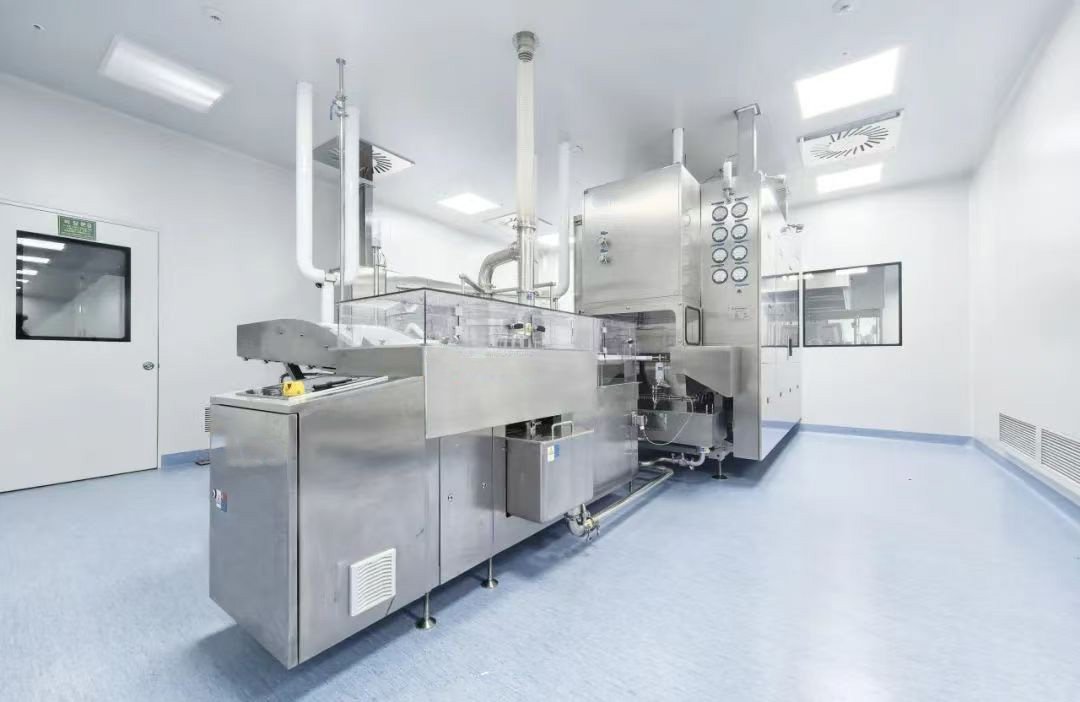
Steam sterilization is the most widely applied and highly reliable terminal sterilization process in pharmaceutical, medical device, biologic product and food industries. It relies on the latent heat penetration of saturated steam to inactivate microorganisms and achieve sterility assurance for products, utensils and dressings. As core sterilization equipment, the performance of steam sterilizers directly bears on product quality safety and regulatory compliance. In accordance with GB 18278.1, ISO 17665, Pharmaceutical GMP and the Quality Management Standards for Medical Device Production, steam sterilizers must undergo systematic end-to-end validation. A complete validation evidence chain shall be established through Installation Qualification (IQ), Operational Qualification (OQ) and Performance Qualification (PQ), to ensure stable equipment operation, controllable sterilization parameters and compliant, reliable sterilization outcomes.
Validation of steam sterilizers is more than simple equipment commissioning and one-off testing. It constitutes a systematic quality activity covering equipment hardware, medium quality, load conditions, environmental conditions, measurement systems and human operations. In practical validation activities, multiple influencing factors including fluctuating steam quality, uneven chamber temperature distribution, deviations in cold spot identification, complex load configurations, measurement system errors and non-standard microbiological challenge tests commonly lead to low validation pass rates, significant data deviations, poor repeatability and insufficient compliance. Many enterprises adopt simplified validation workflows and loose parameter control with inadequate risk identification, introducing hidden risks in sterilization processes. Such issues may readily trigger non-conformity of sterility, process deviations and deficiencies identified during regulatory inspections.
Based on industrial practical experience and the latest regulatory standards, this paper systematically sorts out core difficulties throughout the IQ, OQ and PQ stages of steam sterilizer validation, analyzes the mechanisms and influencing factors of various problems, and puts forward implementable, compliant and reusable countermeasures. It provides technical references for enterprises to improve their steam sterilizer validation systems, mitigate sterilization quality risks and meet requirements of regulatory inspections.
1 Overview of Core Validation of Steam Sterilizers
1.1 Core Definition and Compliance Basis for Validation
Validation of steam sterilizers refers to the whole-process quality confirmation activity that proves, via scientific testing, data acquisition, data analysis and risk assessment, that sterilization equipment can operate continuously, stably and accurately in accordance with predefined process parameters, and can consistently achieve predetermined sterilization efficacy under specified load, environmental and medium conditions. Its core objectives are to define process boundaries of sterilization, identify equipment operational risks, guarantee attainment of target F₀ values, and sustain stable sterility assurance.
Major prevailing compliance references include GB 18278 series Requirements for the Development, Validation and Routine Control of Moist Heat Sterilization Processes for Medical Products, ISO 17665 for moist heat sterilization of medical products, Annex on Sterile Products of Pharmaceutical GMP, PDA Technical Report No. 1 on Pure Steam Quality, and PDA Technical Report No. 30 on Parametric Release. These standards explicitly require validation to cover all dimensions including equipment installation, no-load operation, full-load performance, medium quality and biological effectiveness, and prohibit one-sided and formalistic validation.
1.2 Core Components of End-to-End Validation
Validation of steam sterilizers consists of three progressive and indispensable phases that jointly form a complete validation system. The first phase is Installation Qualification (IQ), which focuses on verifying whether equipment selection, installation environment, supporting pipelines, instrument configuration and safety systems meet design and compliance requirements. It confirms qualified hardware foundation without installation defects or layout risks. The second phase is Operational Qualification (OQ). Tests under no-load and partial-load conditions are performed to verify the accuracy, stability and repeatability of operational parameters (temperature, pressure, duration, exhaust rate). Equipment malfunctions, parameter drift and control deviations are identified and resolved. The third phase is Performance Qualification (PQ), the core segment of validation. Temperature distribution mapping, heat penetration testing, pure steam quality testing and microbiological challenge tests are conducted under full-load conditions to characterize steady-state equipment performance, determine sterilization cold spots, and confirm that actual sterilization lethality meets specifications, so as to guarantee compliant sterilization efficacy in routine production.
Compared with validation of general equipment, steam sterilizer validation features strong medium dependence, prominent condition-related impacts, stringent requirements on data precision and mandatory biological validation. These characteristics result in numerous challenges and high control complexity in validation practice.
2 In-depth Analysis of Core Difficulties in Steam Sterilizer Validation
Statistics from practical validation cases of thousands of pharmaceutical and medical device manufacturers as well as regulatory inspection deficiencies indicate that difficulties in steam sterilizer validation concentrate on seven dimensions: pure steam quality control, chamber temperature uniformity, cold spot identification, load simulation, measurement systems, biological validation and data compliance. These difficulties interact and interrelate, serving as primary contributors to validation failures and process deviations.
2.1 Substandard Pure Steam Quality: Inherent Defects of Sterilization Medium
Saturated steam acts as the primary heat transfer medium for moist heat sterilization. Steam quality directly determines heat penetration efficiency and uniformity of sterilization, constituting the fundamental prerequisite for validation, yet it is most frequently overlooked by enterprises. PDA TR01 specifies that three key indicators of pure steam for sterilization – non-condensable gases, dryness and superheat – must be strictly controlled. Non-compliance of any indicator will directly invalidate validation.
Three typical practical problems exist: First, excessive non-condensable gases. Air, nitrogen and other non-condensable gases mixed with steam attach to the surface of sterilized items to form a thermal barrier, hindering latent heat release and resulting in insufficient local heat penetration and low F₀ values, which is a major cause of sterilization cold spots. Most enterprises lack routine steam monitoring mechanisms and only conduct ad-hoc testing during validation, failing to detect persistent residual gas accumulated in pipelines. Second, inadequate steam dryness. Wet steam carrying abundant condensate causes dampness and contamination of sterilized articles and reduces heat transfer efficiency, leading to severe chamber temperature fluctuations. By contrast, excessively dry superheated steam loses the sterilization properties of saturated steam and exhibits substantially reduced microbial lethality. Third, excessive steam superheat. Poor insulation of steam delivery pipelines or abrupt pressure changes can lead to superheated steam. Heat transfer of superheated steam resembles dry heat sterilization and fails to satisfy core process requirements of moist heat sterilization.
The core pain point of this difficulty lies in the systemic and highly concealed nature of steam quality issues. Conventional temperature and pressure monitoring cannot detect such problems. Routine parameter validation therefore fails to identify root causes, eventually leading to contradictory scenarios where physical parameters meet criteria while biological validation fails.
2.2 Uneven Chamber Temperature Distribution: Difficulties in Stabilizing Temperature Field
Temperature uniformity is a key assessment indicator in the OQ and PQ phases of steam sterilizer validation. Standards require that temperature deviation of all monitoring points within the effective sterilization zone shall be controlled within ±1 °C. Nevertheless, uneven chamber temperature, localized low temperature and inconsistent heating/cooling rates frequently occur in practice, making this one of the most common causes of validation failure.
Root causes for abnormal temperature distribution are complicated:
1.Equipment structural defects. Improper layout of steam inlet, exhaust and drain ports creates dead zones for steam circulation at chamber corners and interlayers. Blocked filters and fouled air ducts in aged equipment further exacerbate uneven steam distribution.
2.Accumulated condensate. Condensate generated within the chamber, on materials and trays cannot be drained timely, consuming substantial heat locally and lowering temperature. Backflow of condensate also distorts thermocouple measurement data.
3.Out-of-control parameters during heating and cooling. Uneven steam injection at the initial heating stage delays temperature rise in certain regions; excessively fast exhaust during cooling triggers abrupt drops in chamber pressure and temperature and induces global temperature fluctuations.
A prominent issue is the condition-dependent nature of temperature non-uniformity. Temperature distribution may be acceptable under no-load conditions yet show localized low temperature under partial or full-load scenarios, resulting in passed OQ but failed PQ, which greatly increases validation costs and cycle time.
2.3 Deviations in Sterilization Cold Spot Identification: Incomplete Recognition of Core Risk Points
A sterilization cold spot refers to the location with the lowest temperature, weakest heat penetration and poorest microbial lethality within the sterilization chamber, representing the core risk of the entire sterilization process. Accurate identification of cold spots is the core task in PQ validation and directly affects process safety. In practice, mispositioning, omission and erroneous judgment of cold spots are prevalent challenges.
Firstly, cold spots are dynamically variable and not fixed. Their positions shift with load type, loading pattern, loading volume and sterilization cycle. Regions with porous materials, sealed containers and densely stacked goods tend to form new cold spots. Many enterprises identify cold spots merely under no-load or fixed full-load conditions without covering all production scenarios, leaving hidden sterilization risks in routine manufacturing. Secondly, unscientific sensor placement. Some enterprises simplify operations by arranging thermocouples only in open areas of the chamber instead of penetrating into material interiors, stacking gaps and container bottoms where sterilization is most difficult, failing to capture genuine low-temperature zones. Thirdly, non-standard data acceptance criteria. Some enterprises judge cold spots based solely on instantaneous temperature rather than comprehensive evaluation of full-cycle F₀ values and heat penetration data, leading to biased cold spot identification and the phenomenon of “qualified temperature but insufficient lethality”.
According to GMP inspection statistics, non-standard cold spot identification and incomplete risk recognition rank among the most frequent deficiencies observed during inspections, which may invalidate sterilization process validation and compromise sterility assurance of products.
2.4 Non-standard Load Simulation: Disconnection between Validation Conditions and Actual Production
The principles of moist heat sterilization determine that load conditions directly affect steam penetration, temperature distribution and sterilization efficacy. PQ validation requires simulation of the maximum load and worst-case sterilization conditions consistent with actual production to ensure validation results cover all routine manufacturing scenarios. A prevailing difficulty for enterprises is distorted load simulation, where validation conditions are decoupled from real production, rendering validation data of limited practical value.
Problems are mainly reflected in three aspects:
1.Insufficient loading volume. To improve validation pass rates, some enterprises deliberately reduce loading quantity and density and adopt sparse loading, which cannot simulate steam penetration resistance under dense full-load stacking. Optimistic validation data cannot cover extreme production conditions.
2.Non-standard loading patterns. Materials are placed arbitrarily without following actual stacking layers, spacing and container orientation, avoiding worst-case stacking dead zones and enclosed areas that are difficult to sterilize.
3.Improper selection of Process Challenge Devices (PCDs). PCDs are core tools for simulating worst-case sterilization conditions. Some enterprises select PCDs without considering product structure, material and porosity characteristics. If PCD challenge severity is lower than that of actual products, the ultimate sterilization capacity cannot be effectively verified. In addition, many enterprises lack controlled product family classification and apply validation results of a single product to all products, introducing severe process risks.
The fundamental hazard of this difficulty is formalistic validation: equipment passes validation while sterilization cannot meet requirements in real production. This constitutes a high-risk compliance issue prioritized by regulatory auditors.
2.5 Significant Measurement System Errors: Insufficient Precision of Validation Data
Steam sterilizer validation is data-driven. Accuracy of temperature, pressure, F₀ value and duration data is a prerequisite for valid validation. However, inadequate precision of measurement instruments, improper installation and data interference often lead to distorted validation data and poor repeatability, undermining the reliability of validation outcomes.
On the one hand, multiple errors exist in thermocouple measurement systems: thermocouples failing to meet required accuracy class or without valid calibration introduce basic temperature measurement deviations; offset installation, poor contact between probes and materials, or probe immersion in condensate cause data drift and instantaneous fluctuation; unreasonable thermocouple routing subjected to extrusion and pulling easily damages equipment and results in interrupted or distorted monitoring data. Moreover, condensate backflow from thermocouple sheaths to data acquisition modules frequently triggers equipment faults and data anomalies in practice.
On the other hand, non-standard data acquisition and calculation occur. Some enterprises adopt excessively low data sampling frequency and cannot capture transient temperature fluctuations and F₀ variations during heating and cooling stages. F₀ values are calculated using terminal estimates instead of continuous real-time cumulative data throughout the cycle, leading to inaccurate lethality quantification. Furthermore, inconsistency between equipment control system data and validation measurement data creates dual data standards, failing to satisfy requirements of data traceability and regulatory inspection.
2.6 Non-standard Microbiological Challenge Tests: Invalid Biological Effectiveness Validation
Physical parameter verification only proves that equipment operates within specified parameters. Microbiological challenge tests represent the ultimate means to verify genuine sterilization efficacy. They constitute mandatory rigid requirements in PQ validation and are key yet challenging components of validation work. In practice, widespread non-conformities render biological validation ineffective.
Common irregularities include: inappropriate selection of Biological Indicators (BIs) without adopting standard heat-resistant strains matching the sterilization process, with spore population and D-value failing to meet challenge requirements; improper placement of BIs not positioned at pre-identified sterilization cold spots, making challenge tests meaningless; non-standard incubation, enumeration and result interpretation of BIs, with uncontrolled incubation temperature and duration leading to false positive or false negative results; insufficient replicate testing without completing three parallel validations as required by standards, failing to demonstrate repeatability and stability of sterilization efficacy.
Meanwhile, many enterprises prioritize physical parameters while neglecting biological validation. They mistakenly believe that satisfactory temperature and F₀ values justify omitting or simplifying microbiological challenge tests, which violates core requirements of ISO 17665 and GMP and creates fundamental defects in the validation system.
2.7 Incomplete Validation System: Deficiencies in Process and Document Compliance
Beyond technical challenges, inadequate validation management systems, non-standard workflows and incomplete documentation are universal difficulties for enterprises.
1.Lack of risk assessment in validation protocols. Testing items fail to cover sufficient parameter boundaries without risk analysis based on equipment characteristics, production conditions and historical deviations.
2.Poor control of validation intervals. Routine revalidation, revalidation triggered by changes and deviation-driven revalidation are not performed as required. Timely revalidation is omitted after equipment modification, pipeline replacement or process adjustment.
3.Non-standard validation records and reports. Incomplete data records, missing deviation analysis and insufficient traceability prevent formation of a complete validation evidence chain and hinder regulatory inspections.
3 Targeted Countermeasures and Compliance Implementation Plans
Aiming at the above difficulties throughout steam sterilizer validation, systematic and implementable solutions are formulated covering medium control, equipment optimization, condition simulation, calibration of measurement systems, biological validation and system development, in accordance with the latest regulatory standards and mature industrial technical practices. These measures help improve validation pass rates and overall compliance.
3.1 Establish Comprehensive Control System for Pure Steam to Eliminate Medium-related Risks
Qualified pure steam serves as the foundation for successful sterilization validation. A full-process control mechanism combining routine testing, pipeline optimization and real-time monitoring shall be established in compliance with PDA TR01. First, standardize steam quality testing. Conduct routine testing quarterly and complete full-compliance testing annually, focusing on three core indicators: non-condensable gases, dryness and superheat. Complete test data and reports shall be retained. Automated steam quality analyzers can replace traditional manual testing to realize automatic continuous data acquisition and precise calculation, eliminating human-induced errors. Second, optimize steam delivery pipelines. Design pipeline gradient, drain valves and steam traps reasonably. Regularly inspect pipeline leakage, water accumulation and trapped gas, and timely discharge condensate and non-condensable gases. Pipeline insulation renovation shall be implemented to avoid steam superheat and heat loss. Third, implement pre-operation pipeline purging. Purge residual gas and condensate in pipelines before each sterilization cycle to ensure standard saturated steam entering the chamber, eliminating medium defects at the source.
3.2 Optimize Equipment Structure and Process Parameters to Stabilize Chamber Temperature Field
Three approaches including equipment modification, parameter optimization and in-process control shall be adopted to resolve uneven chamber temperature distribution and ensure a stable temperature field.
1.Equipment structural optimization. Regularly clean inlet filters, air ducts and exhaust channels of sterilizers to remove fouling and blockages. Adjust layout of steam inlet, exhaust and drain ports to eliminate steam circulation dead zones. Auxiliary circulation air ducts can be installed on aged equipment to improve steam circulation efficiency within the chamber.
2.Optimize heating and cooling process parameters. Adopt gradient heating and uniform exhaust programs to avoid temperature fluctuations caused by rapid heating or excessive exhaust speed. Adjust draining frequency of steam traps to timely remove condensate inside the chamber and prevent localized low temperature induced by accumulated condensate.
3.Introduce a temperature stabilization phase. Add a constant temperature equilibration stage prior to the start of sterilization holding time to ensure consistent temperature across the entire chamber before timing commences, greatly reducing temperature deviation risks.
3.3 Standardize Cold Spot Identification Procedures to Precisely Locate Core Sterilization Risks
Formulate standardized workflows for dynamic, full-condition cold spot identification to eliminate misjudgment, omission and fixed cold spot assumptions. First, define standardized sensor placement principles. Arrange monitoring points across the upper, middle, lower, left, central and right zones of the chamber in accordance with standards. High-risk areas including stacking gaps, container interiors, chamber corners and regions near exhaust ports shall be prioritized to avoid monitoring blind spots. Second, conduct cold spot screening under all operational conditions. Perform temperature distribution mapping under no-load, partial-load and full-load conditions with different loading patterns. Record low-temperature locations under various conditions and define the worst-case cold spot covering all scenarios, which shall be selected as primary positions for microbiological challenge tests. Third, optimize cold spot acceptance criteria. Abandon judgment based solely on instantaneous temperature. Integrate three indicators: full-cycle temperature stability, minimum F₀ value and heat penetration efficiency to identify cold spots consistent with actual microbial lethality and avoid misleading data. Cold spot screening and cold spot inventory updates shall be performed again after equipment modification, pipeline replacement or adjustment of loading procedures.
3.4 Standardize Load Simulation and PCD Selection to Realize Condition Matching with Actual Production
Adhere strictly to the worst-case validation principle to ensure 1:1 matching between validation loading conditions and real production and improve the practical value of validation data.
1.Standardize loading specifications. Develop written SOPs for sterilization loading, specifying loading quantity, stacking layers, spacing and container orientation for different products. Validation shall be performed under maximum production load and densest stacking conditions; simplified loading scenarios to facilitate validation are prohibited.
2.Scientifically select PCDs and implement product grouping. Conduct risk assessment based on product structure, material, thickness and porosity to establish sterilization product families. Select appropriate high-challenge PCDs for each product category, ensuring that PCD challenge severity is no less than that of actual products. Embedded dedicated PCDs shall be adopted for complex, hard-to-sterilize products to simulate sterilization resistance within product interiors.
3.Standardize loading accessories. Uniform sterilization trays, supports and fixtures shall be adopted to prevent deviations in steam penetration caused by inconsistent accessories, ensuring complete consistency between validation conditions and routine production.
3.5 Improve Calibration and Measurement Systems to Ensure Accurate and Traceable Validation Data
Establish a standardized full-lifecycle control system for measurement instruments to eliminate measurement errors and guarantee authentic, accurate and traceable validation data. First, enforce calibration requirements. All thermocouples, pressure sensors and temperature data loggers shall be calibrated by accredited laboratories periodically and can only be used for validation after passing calibration. Instruments with expired calibration are prohibited from validation activities. Conduct pre-validation self-inspection to identify probe damage, circuit faults and data drift. Second, standardize thermocouple installation and protection. Probes shall be closely attached to monitoring positions; probes for internal material measurement shall be fully embedded into core regions of materials. Optimize wiring layout and install drainage structures outside the chamber to drain condensate in thermocouple sheaths, preventing moisture intrusion into data acquisition modules and subsequent equipment damage and data distortion. Cables shall be protected against extrusion, pulling and abrasion. Third, standardize data acquisition specifications. Unify sampling frequency between validation measurement equipment and the control system to achieve data synchronization and consistency. Adopt continuous real-time cumulative F₀ calculation and record temperature and lethality data every second throughout the cycle to eliminate errors from terminal estimation and ensure data integrity and precision.
3.6 Standardize Microbiological Challenge Tests to Reinforce Biological Validation Baseline
Implement microbiological validation workflows strictly in line with GB 18278 and ISO 17665 to ensure authentic and effective challenge tests that verify genuine sterilization lethality. First, standardize selection and management of BIs. Select standard Geobacillus stearothermophilus BIs matching the sterilization process. Strictly control spore population, D-value and shelf life; expired or non-conforming BIs are prohibited. Second, standardize test operations. Place BIs precisely at pre-identified worst-case cold spots with sufficient parallel samples at each cold spot. Execute sterilization, incubation, enumeration and result interpretation following standardized procedures, with precise control of incubation temperature and duration to avoid false positive or false negative results caused by operational errors. Third, fulfill parallel validation requirements. Complete a minimum of three parallel microbiological challenge tests for each loading condition. All tests shall yield acceptable results with good data repeatability before biological validation can be deemed successful. Establish BI usage logs to achieve full traceability. Simplification of biological testing or substitution of biological validation with physical parameter testing is strictly forbidden.
3.7 Establish Full-lifecycle Validation Management System to Sustain Long-term Compliance
Develop a risk-based full-lifecycle validation management system to realize standardized workflows, routine control and standardized documentation for validation. First, optimize validation protocol design. Conduct comprehensive risk assessment prior to validation to identify potential risks related to equipment, media, operating conditions and operations, and design targeted testing items and parameter boundaries to cover all risk points. Second, implement routine revalidation. Define fixed annual revalidation cycles. Initiate change-driven revalidation and deviation-driven revalidation upon equipment modification, pipeline replacement, process parameter adjustment, product portfolio change or major deviations to avoid expired validation and decoupled operating conditions. Third, standardize validation document management. Adopt unified templates for validation protocols, raw data records, data analysis, deviation handling and validation reports. Retain complete validation data, conduct root cause analysis for parameter deviations and data anomalies encountered during validation, formulate corrective and preventive actions to achieve closed-loop management, and build a complete, traceable validation evidence chain satisfying regulatory requirements.
4 Closed-loop Control and Optimization Recommendations for Common Validation Deviations
Deviation management is critical to improving validation quality in steam sterilizer validation practice. A rapid closed-loop mechanism shall be established for three most frequent deviations: insufficient F₀ values, uneven temperature distribution and failed microbiological challenge tests. For deviations with insufficient F₀ values, prioritize investigation of steam quality, cold spot positions and loading density to verify residual non-condensable gases, accumulated condensate and excessively dense material stacking, and implement targeted optimization of medium control and loading procedures. For deviations with uneven temperature distribution, focus on inspection of equipment air ducts, steam trap systems and exhaust systems, followed by equipment cleaning and parameter optimization. For failed biological validation, comprehensively review PCD selection, BI placement, cold spot identification and steam quality to identify loopholes across the whole workflow and avoid single-point failure.
Meanwhile, enterprises shall establish continuous improvement mechanisms. Summarize and analyze validation data on a regular basis, compare parameter variations and deviation types across successive validation activities, identify potential risks including equipment aging, process drift and non-standard operations, and carry out preventive maintenance, process optimization and personnel training in advance to sustain stable sterilization processes. In addition, strengthen professional training for personnel to ensure validation operators and quality management personnel master regulatory standards, validation workflows and deviation handling protocols, and prevent validation failures induced by human errors.
5 Conclusion
Validation of steam sterilizers constitutes core process validation for quality control of sterile products. Its difficulties span medium quality, equipment performance, load simulation, measurement systems, biological validation and management workflows, characterized by concealment, correlation and systematic nature. For most enterprises, validation failures and compliance deficiencies usually stem not from hardware malfunctions, but from inadequate refined control systems, non-standard validation workflows, insufficient risk identification and unrealistic load simulation.
Enterprises should abandon the traditional validation mindset of “valuing results over processes” and “valuing parameters over systems”. Centered on GB 18278, ISO 17665, PDA standards and GMP regulations, a full-process control model featuring controllable media, stable equipment, realistic loading conditions, precise measurement, valid biological testing and closed-loop management systems shall be established. Through standardized steam quality control, precise cold spot identification, realistic load simulation, standardized calibration, mandatory biological validation and systematic management, various challenges in steam sterilizer validation can be fully addressed.
A mature steam sterilizer validation system not only guarantees stable sterilization processes, qualified product sterility and mitigates quality and compliance risks, but also provides solid technical support for process parametric release, routine manufacturing and successful regulatory inspections, realizing triple improvements in product quality, production efficiency and regulatory compliance.
