





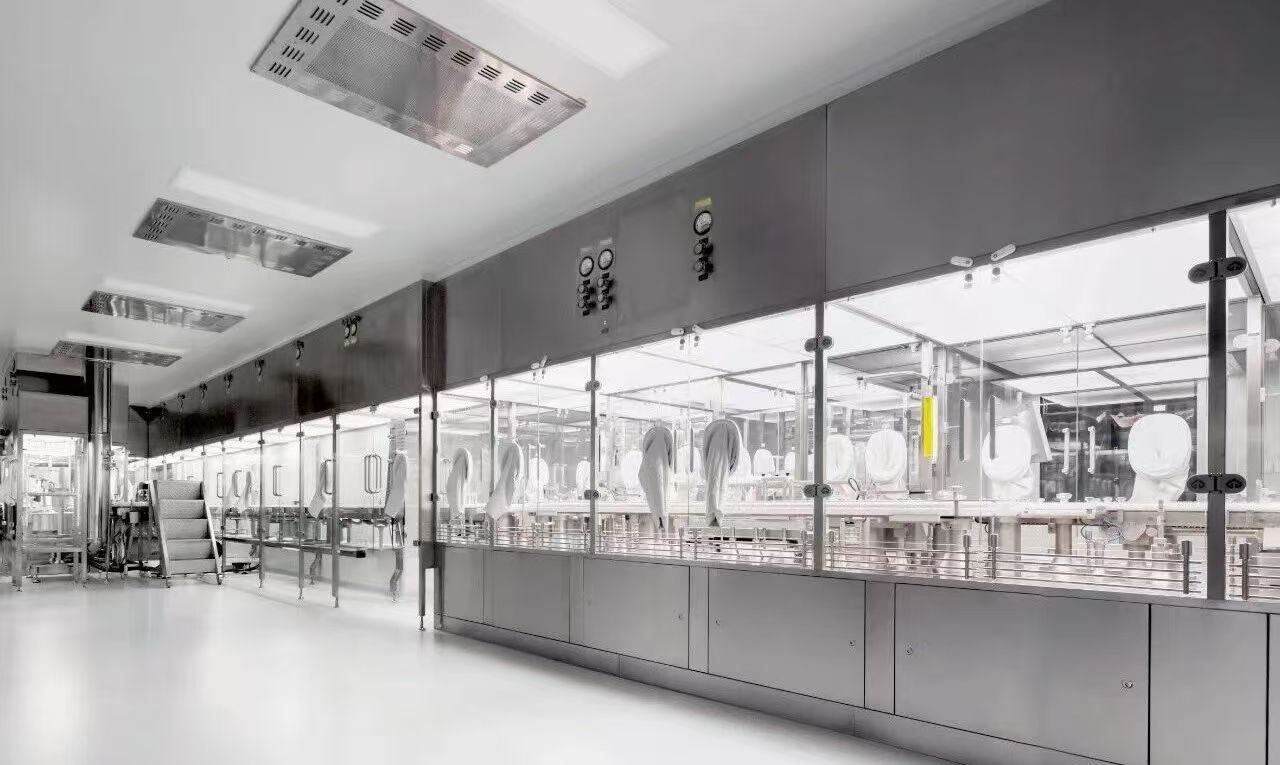
Good Manufacturing Practice (GMP) for pharmaceuticals is underpinned by contamination and cross-contamination control, alongside error prevention. Environmental Monitoring (EM) constitutes an integral component of the Contamination Control Strategy (CCS). It enables assessment of CCS effectiveness within aseptic manufacturing operations and facilitates timely identification of non-conformities associated with manpower, equipment, materials, procedures and surrounding environments. Driven by technological advancement and continual updates to national pharmaceutical GMP regulations and international standards including ISO 14644, control requirements for aseptic manufacturing environments have become increasingly stringent. Accordingly, robust Performance Qualification (PQ) for aseptic manufacturing environments and Environmental Monitoring Performance Qualification (EMPQ) are prerequisites for effective environmental monitoring within aseptic pharmaceutical production. In accordance with latest regulatory expectations, this article elaborates on the EMPQ implementation framework and routine EM applications based on qualification activities of a newly constructed manufacturing facility. It aims to provide actionable references for continuous optimisation of aseptic environmental monitoring and mitigation of contamination risks.
EMPQ Implementation Framework for Cleanrooms
Clean manufacturing facilities are designed and constructed in compliance with pharmaceutical process specifications. For newly commissioned production sites, a comprehensive EM workflow shall be established, and appropriate qualification shall be executed for cleanrooms of different classified zones, as stipulated by GMP regulations. EMPQ serves as the foundational activity. Data generated throughout EMPQ substantiates the efficacy of cleaning and disinfection regimes, and verifies sustained environmental control across all production stages, including material transfer and operator activities.
EMPQ implementation commences with the formulation of an EMPQ execution plan, which defines risk assessment-derived sampling locations, sampling methodologies and frequencies under static and dynamic conditions, alongside the establishment of alert and action limits for sampling datasets. The full lifecycle spanning EMPQ to routine EM comprises five sequential phases: method study, PQ and EMPQ, dynamic EM qualification, ongoing qualification, and routine monitoring.
1.1 Method Study
Method study is essential for newly built cleanrooms or facilities undergoing major refurbishment. Prior to formal performance qualification, a dedicated period of observation and analytical investigation shall be conducted to identify potential operational risks and latent deficiencies. The method study phase may involve simulated operations or simulated water filling trials; manpower allocation and material preparation shall mirror formal production configurations.
1.1.1 EMPQ Protocol Development Procedure
Firstly, establish a validation assessment team composed of representatives from Quality, Validation, Production and Equipment Maintenance departments with clear role delineation. Secondly, define representative operating conditions, prioritising worst-case scenarios characterised by complex workflows, intensive manual operations, large batch volumes, extensive material handling, frequent personnel movement and maximum production duration. The full production sequence covering all critical unit operations shall be simulated in formal production mode, with appropriate sampling implemented throughout the process. Thirdly, conduct process evaluation. Iterative observation and analysis of simulated operations generate intuitive and accurate data to support identification and assessment of personnel flow patterns, activity boundaries, operational complexity, frequency and hazard severity of dynamic interventions, exposure points of product packaging materials, material transfer routes, zones with suboptimal airflow characteristics, and cleaning and disinfection performance. Observations shall be documented on a facility layout drawing overlaid with grid partitions. Each grid unit is assessed and scored against predefined risk factors to quantify relative contamination probability. The potential impacts of proposed sampling locations and sampling protocols on routine operations and ambient conditions are also evaluated. Lastly, develop static and dynamic EMPQ protocols; dynamic qualification shall incorporate all critical production operations.
1.1.2 Risk Assessment Methodology
EMPQ fundamentally relies on a comprehensive, risk-based sampling plan to ensure sampling locations cover key activities and critical zones, achieving uniform and representative coverage across the cleanroom. Reassessment shall be triggered upon any modification to facilities, equipment, processes or cleaning procedures. Grid analysis is adopted for risk evaluation: grids of differentiated dimensions are marked on facility layouts according to risk classification and cleanroom grades, with finer segmentation applied to higher-risk zones.
Sampling locations for EMPQ are defined based on risk assessment scores prior to routine monitoring. For systematic evaluation of all cleanroom areas, differentiated grid dimensions are recommended for each cleanliness grade (e.g., 0.5 m² for Grade A zones). In addition, grouping grids by functional modules (e.g., filling zones) supports the definition of practically meaningful sampling points.
Following layout gridding, six risk factors associated with process activities within each grid are assessed: (A) Cleaning and disinfection routes; (B) Presence and movement of personnel; (C) Material logistics; (D) Proximity to open products or product-contact surfaces; (E) Operator interventions, operational activities and complexity; (F) Intervention frequency.
The severity of potential hazards and existing control measures within each grid are reviewed, and scoring is assigned to the six risk factors. The Risk Priority Number (RPN), calculated as the product of scores assigned to the six factors, is utilised to evaluate the occurrence probability of hazards of varying severity. Within this study, RPN values range from 1 to 8192, and risk tiers are classified according to resultant RPN scores.
1.2 PQ and EMPQ
PQ verifies that cleanrooms maintain controllable levels of airborne particles, microbial bioburden, temperature, relative humidity, differential pressure and other parameters consistent with specified cleanliness grades. It also validates cleaning and disinfection efficacy to sustain a state of controlled environment. Prerequisites for PQ include completion of Installation Qualification (IQ) and Operational Qualification (OQ) of the Heating, Ventilation and Air Conditioning (HVAC) system, installation qualification of cleanroom manufacturing equipment, validation of analytical methods and procedures, selection of microbiological culture media for environmental monitoring, and confirmation of maximum occupancy limits as well as facility cleaning and disinfection protocols for all zones.
1.2.1 PQ
PQ encompasses mechanical performance qualification and classification qualification of the HVAC system. Mechanical performance qualification of HVAC includes High-Efficiency Particulate Air (HEPA) filter integrity testing, cleanroom recovery time testing, airflow pattern visualisation, air velocity or air change rate measurement, differential pressure, temperature, relative humidity, noise and illuminance measurement. Pre-classification testing covering airborne particle and microbiological monitoring is also performed.
Cleanroom classification qualification consists of static and dynamic classification. Static sampling for pharmaceutical cleanrooms generally complies with sampling principles specified in ISO 14644‑1. Sampling locations are not limited to geometric centres of designated zones but preferentially positioned at high-risk sites. Where two or more high-risk points exist within a single zone in Grade A/B areas, additional sampling points may be incorporated following risk assessment. Dynamic classification is implemented during simulated production. Sampling principles align with static classification, while sampling locations are adjusted or supplemented to address risks arising from personnel activities, manual interventions and material exposure. Testing shall follow a sequential order: Grade A/B zones first, followed by Grade C/D zones.
1.2.2 EMPQ
(1) Static EMPQ Static EMPQ involves monitoring key risk points under static conditions to evaluate cleanroom contamination status and the performance of cleaning and disinfection regimes. Test parameters include airborne particles, microbiological indicators, temperature, relative humidity, air velocity and differential pressure, with one round of sampling executed. Sampling locations are selected from the top 50% sites with elevated readings obtained during classification testing, ensuring coverage of every functional cleanroom and corridor. At each sampling location, at least one sample shall be collected for airborne particle testing and each category of microbiological sampling. Upon completion of static EMPQ, the top 50% locations with elevated airborne particle and microbial counts are designated as permanent static monitoring points, covering all functional rooms and corridors; these sites also serve as mandatory sampling locations for subsequent dynamic qualification. Dynamic qualification activities can only commence after static EMPQ achieves satisfactory outcomes and formal approval.
(2) Dynamic EMPQ Dynamic EMPQ is carried out during simulated production or trial manufacture to assess the influences of equipment operation and personnel activities on manufacturing environments, confirming all parameters satisfy requirements for dynamic production operations.
Sampling points for dynamic EMPQ are selected from high and medium-risk locations ranked by RPN scores, covering material exposure zones and intervention sites, supplemented by locations recording high readings during static testing. If sampling locations are excessively concentrated on one side of a room, supplementary sampling points shall be arranged on the opposite side to demonstrate overall compliance. Data collected from these temporary supplementary points may be excluded from subsequent monitoring if results remain satisfactory. Monitoring shall cover all production shifts and incorporate simulated breakdown maintenance activities.
Sampling periods and frequencies shall comply with GMP requirements to cover the full spectrum of critical process sequences including equipment assembly, supported by risk analysis. Relevant considerations comprise product type and manufacturing workflow, extent and frequency of operator interventions, terminal sterilisation status of products, historical monitoring datasets, and seasonal microbial fluctuations (e.g., mould proliferation during humid seasons, differentiated microbial growth trends across zones in different months). Sampling protocols defined in risk assessment shall be strictly implemented, covering sampling height, flow rate and sampling volume.
Test parameters include airborne particles, microbiological indicators, temperature, relative humidity and differential pressure, with continuous testing across three complete cycles. A minimum of three sampling datasets shall be arranged across shifts and calendar dates under maximum occupancy conditions to guarantee consistency, validity and reproducibility of test results. Comparative verification between offline sampling and online monitoring systems is also conducted via simultaneous sampling at identical locations. Upon satisfactory comparison results, corresponding offline sampling locations may be converted to online monitoring stations. Dynamic EMPQ further validates the suitability of sampling locations and procedures, confirming that sampling activities do not disrupt routine operations, airflow patterns or material transfer processes. Qualified sampling locations identified in this phase form the foundation for dynamic EM monitoring.
Upon successful completion and approval of PQ and EMPQ, HVAC system qualification activities are concluded, and the project progresses to EM qualification.
1.3 Dynamic EM Qualification
Dynamic EM qualification is implemented under non-commercial production conditions, such as media fill trials or trial production. Its objective is to generate empirical data confirming that sampling activities do not introduce contamination or exert adverse impacts on production and products, alongside accumulating monitoring datasets.
Worst-case operating conditions shall be adopted, including large batch sizes, maximum staffing levels, shift handovers, various manual interventions and breakdown maintenance; formal commercial production shall not be conducted during this phase. Monitoring covers critical operations such as equipment assembly and filling within Grade A zones. Sampling locations prioritise sites with elevated readings identified during dynamic EMPQ, including exposure zones and intervention points. Measured indicators include airborne particles, viable airborne microorganisms and settle plates.
The qualification activity delivers comprehensive monitoring of equipment assembly and personnel interventions within Grade A zones, with detailed assessment of potential contamination risks introduced by sampling operations. Culture media utilised during simulated filling shall be labelled to facilitate subsequent contamination investigation. Surface microbial monitoring targets operators in Grade A/B zones, implemented after critical interventions and upon personnel exit at shift end. Sampling is also performed on high-risk critical equipment surfaces and floor areas.
Online monitoring instrumentation is deployed at applicable locations to replace offline sampling. Increased sampling frequency shall be considered if adverse trends emerge at specific sampling points. Dynamic EM qualification further evaluates the suitability of sampling procedures and the associated risk of product contamination. Upon successful completion of dynamic EM qualification, activities advance to ongoing qualification.
1.4 Ongoing Qualification
Ongoing qualification spans an extended period (8–10 months). It aims to demonstrate the sustained capability of air handling systems to maintain parameters within acceptable limits amid seasonal environmental variations. Specifically, it verifies that EM data, in particular microbial fluctuation trends, remain under control throughout production across different seasons. This phase is executed during formal commercial production, with monthly data reviewed in trend analysis reports. Once the phase is completed with consistent satisfactory results, the full HVAC system validation and environmental qualification package can be closed, transitioning to routine monitoring.
1.5 Routine Monitoring
Formal routine EM procedures and sampling plans are established based on EMPQ outcomes. Regular periodic review shall be implemented throughout operation. Reassessment and requalification shall be initiated in response to abnormal seasonal trends, revised production operations, disinfectant replacement and other relevant changes.
2 Practical Implementation of EMPQ
EMPQ execution is illustrated using a Grade B formulation cleanroom as a case study. In accordance with risk assessment scores, high-risk grids are marked red on facility layout drawings. During PQ, EMPQ and routine monitoring, at least one test item shall be selected from airborne particles, viable airborne organisms, settle plates and surface microbial sampling for high-risk grids. Medium-risk grids are marked yellow: at least one test item is required during PQ and EMPQ, while sampling points for routine monitoring may be retained or removed based on qualification results. Low-risk grids are marked green, with sampling optional and non-mandatory.
2.1 Validation Team Composition and Responsibility Allocation
Roles and responsibilities are clearly defined, covering protocol and validation report approval, organisation, coordination and emergency response of validation activities, on-site supervision of qualification execution, decision-making for changes emerging during qualification, sampling, testing as well as review and confirmation of analytical data. Relevant personnel shall receive adequate training; testing equipment shall remain within valid calibration cycles, and analytical methods and microbiological culture media shall be fully validated.
2.2 Risk Assessment
2.2.1 Grid Partitioning
The target area is divided into grid units with differentiated dimensions corresponding to varying cleanliness grades.
2.2.2 Operation Identification and Risk Tier Classification
Process activities within each grid are identified, and risk levels are quantified for every grid unit.
2.2.3 Definition of Test Items
Test items are specified for high and medium-risk zones. Testing programmes for zones of different risk tiers are summarised in Table 4. Assessment integrated with process operations better reflects the impacts of manufacturing activities on ambient environments. This methodology enables accurate identification and tier classification of zone risks, supporting targeted testing and qualification aligned with risk severity.
2.3 Test Items and Analytical Methods during PQ and EMPQ
Differentiated test items are implemented according to the objectives of each qualification phase. EU GMP references the ISO 14644 series for cleanroom qualification, and GB/T 25915 is formulated based on ISO 14644; both standards can be adopted as technical references.
2.4 Establishment of Alert and Action Limits within EMPQ
For newly constructed facilities lacking historical operational data, alert limits implemented during EMPQ enable early detection of potential deviations or adverse trending. Alert limits can be set at 50%–60% of action limits. Regulatory guidelines specify principles for establishing action limits, which shall be differentiated by sample type, cleanroom grade and occupancy state. Action limits may be defined at 60%–80% of specification thresholds.
For facilities that have completed EMPQ and accumulated sufficient historical datasets, statistical analysis of historical data can be performed to revise alert and action limits.
2.5 Routine Monitoring Frequency
Key cleanroom parameters shall be monitored periodically or continuously during commercial operation, including temperature, relative humidity, differential pressure, air velocity, airborne particles and microbial bioburden. Monitoring strategies vary according to cleanroom classification, product category and operational risk level.
Conclusion
Within the global pharmaceutical GMP regulatory framework, significant disparities exist across manufacturers in EMPQ implementation. Notably, many newly commissioned facilities completely substitute PQ for EMPQ, resulting in omission of critical validation activities. Classification testing within PQ adopts uniform sampling layouts under static and dynamic conditions, whereas EMPQ deploys sampling based on risk assessment aligned with production processes and operational activities. The two activities feature fundamental differences and cannot be mutually substituted. Manufacturers shall therefore emphasise appropriate linkage and seamless transition between PQ and EMPQ.
Although HVAC PQ includes dynamic qualification under worst-case maximum occupancy simulations, it lacks alignment with actual manufacturing workflows and operations. Consequently, sampling locations defined during PQ may lack scientific representativeness, and the derived routine monitoring points often fail to reflect real-world worst-case operational conditions. For newly built facilities without baseline historical data, defining sampling strategies and locations purely via theoretical assessment is insufficient. EMPQ therefore utilises empirical test data to validate risk assessment outcomes.
EM itself cannot improve cleanroom environmental conditions or reduce contamination loads; sampling activities may even introduce additional contamination risks. Accordingly, EM efficacy is not enhanced by increasing sampling density, but by targeting critical, necessary locations confirmed via EMPQ to form the routine EM sampling network.
The dynamic EM qualification described in this article targets aseptic pharmaceutical manufacturing environments. Manufacturers producing other pharmaceutical categories may selectively implement this activity. Dynamic EM qualification for aseptic processing is conducted during media fill trials to investigate whether EM sampling introduces contamination risks to products, and shall be completed prior to commercial production. Worst-case conditions during media fill activities can generate relatively high EM readings, supporting data accumulation and trend analysis for enhanced risk control.
The core value of EMPQ lies in evaluating the potential environmental impacts of simulated manufacturing processes and operator activities. Based on PQ and EMPQ outcomes, the routine EM sampling programme is established. Long-term accumulated datasets can be further analysed to evaluate and adjust sampling locations, sampling types, sampling quantities and monitoring frequencies.
EMPQ follows a full lifecycle management philosophy. The development, application and maintenance of environmental monitoring procedures run through the entire service life of the facility and manufacturing processes. Material modifications to buildings, facilities, production processes, batch sizes or operational modes require redesign and re-qualification of EMPQ, so as to sustain process consistency and ensure ongoing applicability.
Both cleanroom classification and EM measure airborne particle and microbial levels. Classification testing adopts uniform sampling layouts and constitutes a one-off qualification activity. In contrast, EM delivers continuous monitoring of high-risk critical locations throughout the facility lifecycle. Comprehensive performance testing is conducted for newly constructed facilities, with classification testing as a core component. Such testing shall be undertaken by third-party institutions possessing valid engineering inspection qualifications to guarantee objective and scientifically sound results.
