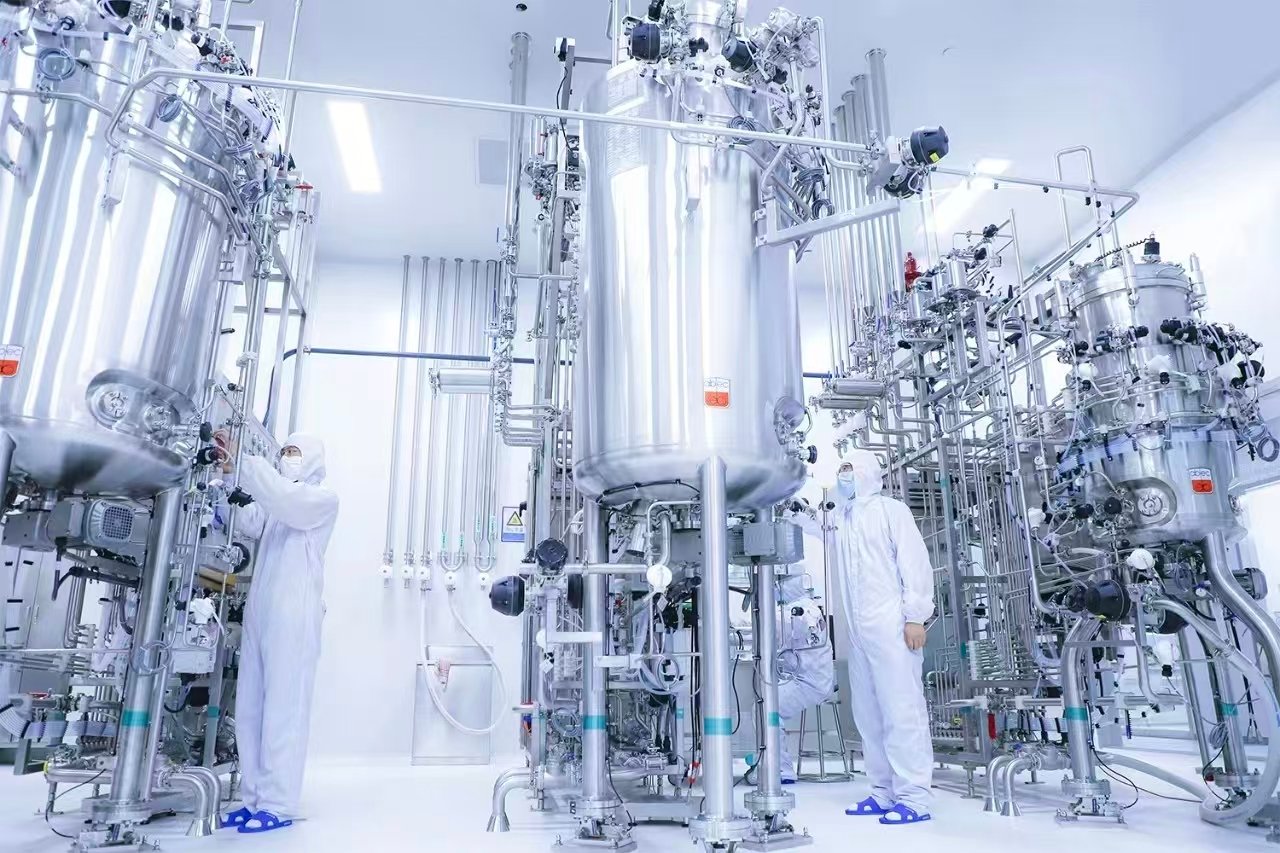
In biopharmaceutical manufacturing, stirring and mixing are essential unit operations that underpin homogeneous reaction environments and efficient heat and mass transfer within multiphase systems. As the core functional component of stirring assemblies, the structural design, impeller selection, and operational parameter configuration fundamentally govern the overall efficiency and operational outcomes of biomanufacturing processes. Within the multi-dimensional performance evaluation framework of stirring systems, mass transfer enhancement and shear force induction constitute two core yet inherently conflicting criteria. A rigorous understanding of the coupling mechanisms between mass transfer and shear stress, alongside precise parametric modulation, is pivotal to the rational design and industrial-scale optimization of stirring-based process systems.
Mass Transfer Effects of Stirring Impellers: Interfacial Barrier Mitigation and Multiphase Mass Transfer Intensification
Mass transfer describes the interphase transport of chemical species across phase boundaries, encompassing gas-liquid dissolution, solid particle solvation in liquid media, and solute exchange between immiscible liquid phases. The primary functional rationale for mechanical agitation lies in the intensification of interphase mass transfer efficiency in complex multiphase reaction systems.
1.1 Mechanisms of Mass Transfer Intensification
Stirring enhances mass transfer performance via multi-scale hydrodynamic regulation. At the macroscopic scale, impeller rotation drives bulk fluid motion in axial and radial flow regimes, facilitating full-scale material circulation within reactors. This eliminates system-wide concentration and temperature gradients, achieving bulk homogenization of reaction media. At the microscopic scale, high-speed impeller rotation generates fine turbulent vortices in the tip proximal flow field. These turbulent structures continuously stretch, shear, and fold fluid domains, fragmenting macroscopic gas bubbles and liquid droplets into microscale dispersed phases and substantially augmenting specific interfacial areas. Furthermore, intensive turbulent fluctuation enables continuous renewal of phase interfaces, suppresses the formation of saturated mass transfer boundary layers, sustains stable and high-efficiency mass transfer driving forces, and prevents progressive decay of mass transfer performance during prolonged reaction operations.
1.2 Dominant Factors Governing System Mass Transfer Performance
Impeller configuration represents the primary structural determinant of flow field distribution and mass transfer characteristics. Axial-flow impellers, including pitched-blade and hydrofoil impellers, generate stable vertical circulating flow with high volumetric throughput and uniform flow field homogeneity. These configurations are well-suited for homogeneous mixing and solid-liquid suspension systems, optimizing global mass transfer performance through macroscopic material recirculation. In contrast, radial-flow impellers, typically Rushton disk turbines, produce high-intensity radial jet flows and localized shear fields capable of efficient fragmentation of gas and liquid dispersed phases. Such impellers exhibit superior performance in gas-liquid mass transfer processes (e.g., fermenter aeration) and liquid-liquid emulsification, delivering distinct advantages in interfacial area amplification.
Operational parameters, predominantly rotational speed, serve as critical tunable variables for mass transfer modulation. The volumetric mass transfer coefficient exhibits a power-law correlation with rotational speed, with typical exponents ranging from 1.5 to 2.0. Rational elevation of rotational speed amplifies turbulent fluctuation and interfacial renewal kinetics, thereby enhancing overall system mass transfer capacity. Additionally, intrinsic fluid properties, including viscosity, density, and interfacial tension, dictate turbulent flow development resistance and dispersed phase fragmentation difficulty, imposing inherent upper limits on achievable mass transfer efficiency.
1.3 Quantitative Metrics for Mass Transfer Performance Evaluation
For conventional gas-liquid bioreaction systems, the volumetric oxygen mass transfer coefficient (kLa) is adopted as the definitive quantitative index for characterizing oxygen transfer efficiency and gas-liquid mass transfer capability. For heterogeneous liquid-liquid systems, the Sauter mean diameter of dispersed droplets and system-specific interfacial area serve as core evaluation parameters for quantifying dispersion uniformity and mass transfer efficacy.
Shear Force Effects of Stirring Systems: Dual-Characterized Hydrodynamic Energy Requiring Precise Modulation
Fluid shear force is defined as the interlayer frictional stress induced by velocity gradients within continuous fluid media. Stirring flow fields exhibit pronounced spatial heterogeneity in shear distribution, with extreme shear intensity concentrated in impeller tip regions and relatively mild shear levels prevailing in bulk circulation zones. Shear stress exerts dual facilitative and detrimental effects on reaction systems, with particularly pronounced restrictive impacts on shear-sensitive biopharmaceutical and biomolecular processes.
2.1 Beneficial Regulatory Effects of Controlled Shear Stress
Moderate shear stress is a prerequisite for high-efficiency multiphase dispersion and mass transfer intensification. Localized high shear at impeller tips effectively fragments gas bubbles, liquid droplets, and solid agglomerates to form microscale dispersed phases, providing extensive specific interfacial areas for interphase mass transfer and chemical reactions. Meanwhile, controlled shear turbulence counteracts gravitational sedimentation of fine solid particles, maintaining homogeneous solid-liquid suspension and eliminating localized material accumulation and system inhomogeneity. For fast interfacial reaction systems, shear-driven interfacial renewal and dispersion intensification effectively accelerate reaction kinetics and enhance overall process throughput.
2.2 Detrimental Impacts of Excessive Shear on Sensitive Process Systems
Excessive shear stress constitutes the predominant adverse factor responsible for performance deterioration in shear-sensitive bioprocesses and high-value biomaterial manufacturing. In mammalian cell culture and filamentous microbial fermentation, ultra-high shear intensity induces mechanical damage to cellular structures, triggers physiological stress responses, retards cell growth and metabolic activity, and may lead to cellular apoptosis, ultimately compromising target product expression levels and fermentation yields.
In polymer solution processing and protein biopharmaceutical manufacturing, sustained high shear force cleaves long-chain macromolecular architectures of polymers and bioactive proteins, resulting in altered molecular weight distribution, diminished biological activity, and reduced solution viscosity, which severely undermines final product quality and stability. In industrial crystallization workflows, excessive shear disrupts intact crystal morphologies, generates abundant fine grains, deteriorates particle size distribution uniformity, and impairs downstream filtration and purification performance. Additionally, aberrant shear intensity may cause over-refinement of emulsion droplets, hindering subsequent demulsification and phase separation, or disrupt stable foam architectures, reduce effective gas holdup, and destabilize continuous gas-liquid reaction processes.
2.3 Quantitative Characterization of Shear Intensity
Average shear rate, which demonstrates a linear positive correlation with impeller rotational speed, is widely employed for preliminary assessment of bulk system shear levels in industrial practice. Impeller tip speed, calculated as the product of impeller diameter, rotational speed, and pi, represents the most intuitive and industrially prevalent indicator for quantifying localized shear strength. Shear-sensitive materials possess distinct tolerance thresholds: mammalian cell culture systems require tip speed control below 1.5 m/s to eliminate cellular damage, whereas conventional chemical processes can sustain tip speeds exceeding 5 m/s. From a hydrodynamic perspective, the Kolmogorov microscale of turbulent vortices defines the minimum spatial scale of fluid interaction with micro-particles and biological cells, whereby a smaller microscale corresponds to intensified localized shear stress and enhanced turbulent action.
Balanced Modulation of Mass Transfer and Shear Stress: The Core Paradigm of Stirring System Optimization
In industrial process development and scale-up, mass transfer intensification and shear stress mitigation represent inherently conflicting optimization objectives. Advanced process optimization abandons unilateral pursuit of single-parameter extremum, instead achieving optimal matching between mass transfer efficiency and shear intensity based on process characteristics and material shear sensitivity, so as to maximize process throughput while eliminating shear-induced system degradation and product impairment.
3.1 Systematic Optimization Strategies for Dual-Parameter Balancing
Customized impeller selection serves as the foundational strategy for reconciling mass transfer performance and shear output. For processes demanding high-intensity phase dispersion and mass transfer (e.g., high-load gas-liquid reactions and fine emulsion fabrication), radial-flow Rushton turbines are preferred. Coupled with optimized elevated rotational speeds, such impellers generate robust localized shear fields to facilitate efficient phase fragmentation and interfacial renewal, satisfying stringent mass transfer requirements. For shear-sensitive processes including mammalian cell culture and macromolecular solution reactions, large-diameter high-efficiency axial-flow hydrofoil impellers are optimal. These configurations deliver powerful macroscopic circulating flow at low rotational speeds, enabling high-efficiency homogenization and mass transfer within a low-shear hydrodynamic environment.
For high aspect-ratio deep-tank reactors, multi-impeller composite configurations enable zoned functional optimization. Lower-stage high-shear impellers undertake gas dispersion and phase fragmentation duties, while upper-stage axial-flow impellers dominate macroscopic material recirculation and system homogenization. The synergistic operation of multi-impeller assemblies integrates the advantages of shear-driven dispersion and circulating mixing, optimizing the overall flow field structure and mass transfer performance of reactor systems.
Precise parametric tuning enables dynamic and refined process optimization. Combined experimental validation and computational fluid dynamics (CFD) numerical simulation facilitate accurate determination of the minimum rotational speed required to achieve target mass transfer coefficients, minimizing redundant shear generation while satisfying process mass transfer specifications. Auxiliary process modification further reduces reliance on impeller-derived shear stress: high-efficiency gas distributors realize pre-dispersion of inlet gas to alleviate impeller dispersion load; airlift and bubble column reactor configurations partially or completely eliminate mechanical shear input, fundamentally resolving shear-induced damage in ultra-sensitive bioprocesses.
Each impeller category exhibits distinct application-specific hydrodynamic characteristics. Radial-flow impellers deliver prominent localized shear and high kLa values, suitable for shear-dependent dispersion processes but with moderate gas distribution uniformity. Axial-flow impellers prioritize circulating homogenization with moderate shear intensity and superior gas-liquid distribution uniformity, demonstrating excellent adaptability for homogeneous mixing, solid suspension, and shear-sensitive processes, while maintaining superior unit-power mass transfer efficiency under conventional operating conditions. Novel composite impellers integrate the structural merits of radial and axial-flow configurations, achieving balanced mass transfer and shear regulation across heterogeneous flow field regions, and are particularly applicable to high-viscosity pseudoplastic fluid systems such as polysaccharide fermentation. Self-priming specialized impellers operate without external gas supply, with gas holdup and mass transfer performance highly correlated with rotational speed and submergence depth, making them widely applicable to high-efficiency gas-liquid contact processes including hydrogenation and oxidation reactions.
3.2 Logical Framework for Stirring System Design and Decision-Making
Rational stirring system design follows a hierarchical, targeted decision-making framework based on inherent process attributes. Initially, core process objectives and material shear sensitivity are defined to identify the dominant restrictive factor of the reaction system. For shear-sensitive processes represented by mammalian cell culture and macromolecular solution preparation, shear risk mitigation is prioritized as the primary design principle. Large-diameter low-shear axial-flow impellers are preferentially deployed, with rotational speed calibrated within safe tip speed thresholds to maintain a mild hydrodynamic environment. Subsequent validation verifies whether system mass transfer efficiency meets process specifications; substandard performance necessitates iterative optimization via multi-impeller configuration, enhanced gas distribution modules, or alternative reactor architectures such as airlift designs.
For mass transfer-dominated processes including high-intensity gas-liquid reactions and rapid liquid-liquid extraction, mass transfer efficiency enhancement serves as the core optimization target. High-shear radial-flow impellers are preferentially configured, with rotational speed adjusted to attain target kLa values or dispersed phase particle size specifications. Upon meeting mass transfer requirements, system shear levels quantified by tip speed are further evaluated. Where shear intensity exceeds material tolerance limits, iterative optimization of process parameters and reactor configurations is implemented to establish a technically feasible, balanced process scheme.
Conclusion
Stirring systems are sophisticated hydrodynamic coupling devices rather than simplistic mechanical rotating equipment. Mass transfer performance defines the upper boundary of process reaction efficiency and production capacity, while shear stress characteristics establish the bottom-line constraints for system operational stability and final product quality. Driven by the rapid advancement of modern biopharmaceuticals and high-value fine chemical industries, industrial stirring technology has evolved from conventional passive mixing operations to precise, customizable, and flexible hydrodynamic regulation. Rigorous comprehension of the coupling mechanisms between mass transfer and shear stress, coupled with proficient mastery of dual-parameter balanced optimization strategies, is critical for enabling high-efficiency, low-damage, and high-stability operation of advanced biomanufacturing and fine chemical production processes.