

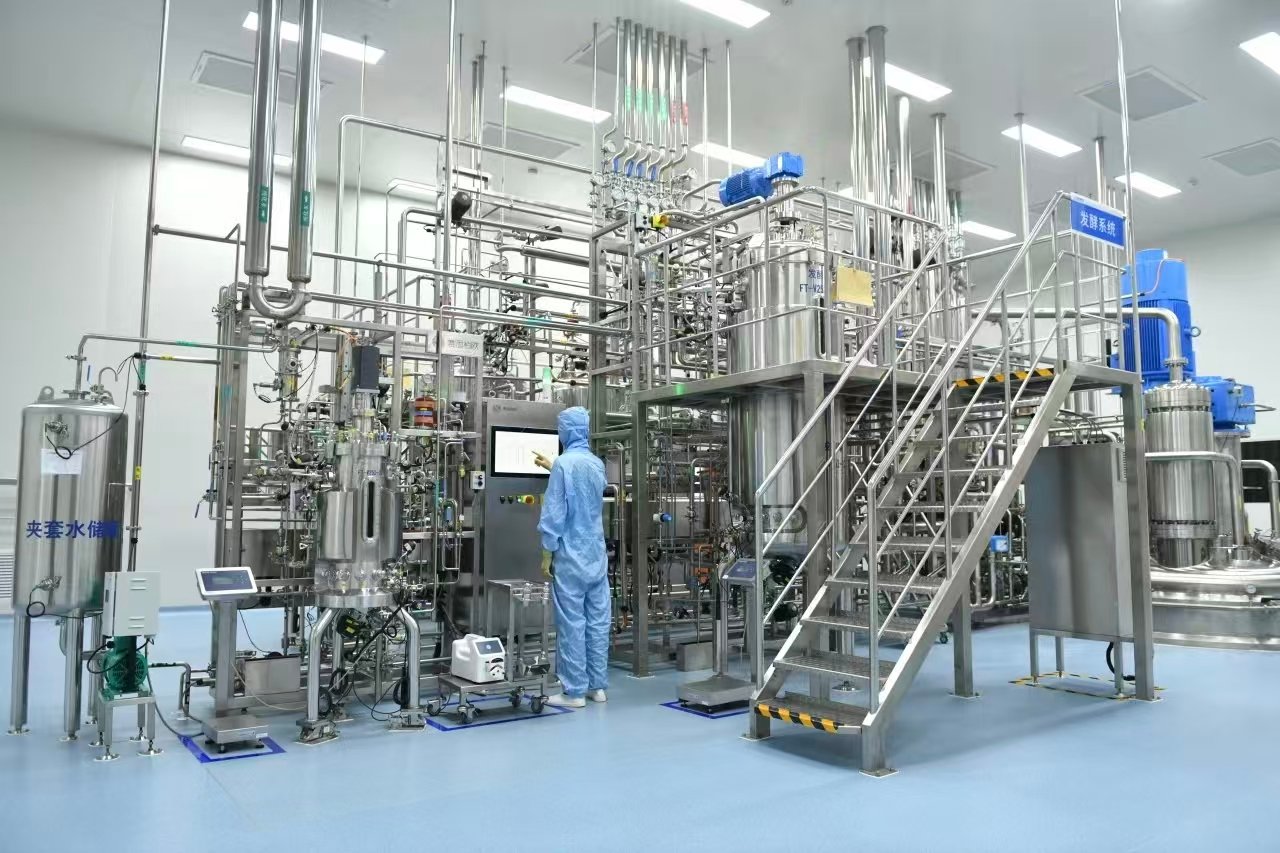
At the frontier of biopharmaceuticals, gene therapies and novel vaccines (e.g., mRNA vaccines, viral vector vaccines) are transforming humanity’s fight against diseases at an unprecedented pace. Behind these revolutionary therapeutics, however, lies a major industrial challenge: how to purify large, structurally fragile biomacromolecules efficiently, reliably and at scale. As the core delivery vehicles for gene therapy, viral vectors such as adeno-associated virus (AAV) and lentivirus (LV) determine the productivity and final cost of drugs directly via the performance of their downstream purification processes. This article provides an in-depth breakdown of tangential flow filtration (TFF), a pivotal technology in viral vector purification, and examines how it streamlines manufacturing to drive process accessibility and scalable production.
1 What is Tangential Flow Filtration (TFF)?
In conventional dead-end filtration, fluid flows perpendicularly toward the membrane surface. Particulates are retained and rapidly accumulate to form a filter cake, triggering a sharp decline in filtration flux and rapid membrane fouling. This is highly problematic for processing high-value, dilute viral vector feedstocks.
Tangential flow filtration (TFF) operates on an entirely different principle: fluid travels parallel to the membrane surface (tangential flow). Driven by pressure, only small molecules and solvent pass through the membrane as permeate. Macromolecules such as viral vectors are retained by the membrane and continuously swept away by the cross-flowing retentate. This constant scouring minimizes particle accumulation at the membrane surface (concentration polarization), sustaining stable filtration flux.
2 Two Core Stages for TFF in Viral Vector Manufacturing
Acting as a versatile unit operation, TFF serves two critical stages within viral vector production workflows:
Pre-Chromatography Capture (Volume Concentration & Pre-Chromatography Diafiltration)
Harvested viral vectors are typically present at low concentrations within large volumes of cell culture supernatant. TFF enables rapid multi-fold volume concentration alongside buffer conditioning to adjust salinity and pH. This significantly reduces column loading pressure for subsequent capture chromatography, eliminates process bottlenecks and shortens overall run duration.
Pre-Sterile Filtration Polishing (Formulation and Final Concentration)
At the late purification stage, TFF concentrates viral vectors to the target therapeutic concentration and exchanges the material into the final formulation buffer, preparing the bulk for subsequent sterile filtration and fill-finish operations.
3 Critical Best Practices for TFF Process Design for Viral Vectors
Viral vectors differ substantially from traditional biotherapeutics such as monoclonal antibodies (mAbs). They exhibit larger particle sizes, complex architectures (with or without envelopes) and extreme sensitivity to environmental stressors. Process engineers must exercise meticulous control over four key parameters when developing TFF workflows:
Characterization of target biomaterial Process development begins with defining the molecular size and isoelectric point (pI) of the viral vector. It is equally important to evaluate how critical process variables (temperature, shear stress, recirculation flow rate) impact viral stability. For instance, lentivirus (LV) is highly shear-sensitive; excessive flow velocities can cause viral particle rupture.
Membrane material selection Polyethersulfone (PES) and regenerated cellulose (RC) are the dominant industrial membrane materials for TFF.
Regenerated cellulose (RC): Features exceptionally low non-specific biomolecule adsorption, making it the preferred option for many viral vector applications prone to product loss.
Polyethersulfone (PES): Delivers outstanding chemical compatibility and mechanical robustness.
No material offers universal suitability. Interactions between membrane chemistry and viral vectors must be verified via scaled-down process studies at early development stages.
Scalability and tailored sizing A robust process must demonstrate consistent performance from laboratory-scale (milliliter scale) to commercial large-scale biomanufacturing. Hardware and filter cassette design must support linear scalability. Engineers also need to characterize the system’s minimum working volume upon scale-up, ensuring sufficient liquid availability during high-fold concentration and mitigating yield loss caused by excessive system hold-up volume.
Operating control strategy: Transmembrane Pressure (TMP) Control vs. Permeate Flux Control The selection of operating control strategy directly governs purification outcomes. Traditional ultrafiltration (UF) workflows for antibody purification (typically using 30 kDa membranes) commonly adopt TMP control. Open-format microfiltration (MF) applications such as cell harvesting feature high inherent flux and often rely on permeate flux control to prevent premature membrane compaction.
Viral vectors including AAV and LV occupy an intermediate size range, generally requiring 100 kDa to 300 kDa ultrafiltration membranes. This creates an ongoing industry debate regarding the optimal control mode. A quantitative study comparing the two control strategies was conducted for TFF processing post-clarification and prior to capture chromatography:
Transmembrane Pressure (TMP) control (single-pump configuration): A single feed pump drives circulation; permeate flows freely. Operators regulate transmembrane pressure by adjusting the retentate valve.
Permeate flux control (dual-pump configuration): In addition to the feed pump, a dedicated permeate pump actively limits permeation rate, constraining operation below the theoretical maximum flux.
A standard UF/DF target was defined for the trial: 4-fold batch concentration, constant-volume diafiltration using 5 diavolumes (5 DV) of HEPES buffer, followed by an additional 2.5-fold concentration to achieve an overall 10× volume concentration factor (VCF).
Side-by-side testing revealed distinct performance profiles:
Process throughput and efficiency (advantage: TMP control) Under TMP control, the system operates near maximum attainable flux. In 300 kDa membrane trials, average flux under TMP control reached twice that achieved with permeate flux control. This allows a 50% reduction in required membrane area, cutting consumable costs and shortening production durations.
Impurity clearance (advantage: permeate flux control) While sacrificing throughput, permeate flux control limits flow velocity and alleviates concentration polarization (the buildup of impurities and viral particles adjacent to the membrane surface). The milder hydrodynamic environment facilitates passage of small impurities such as host cell protein (HCP) and host cell DNA (hcDNA) across the membrane, delivering superior impurity removal.
Viral recovery (case-dependent) Results vary by vector type. For structurally robust AAV2, comparable recoveries were observed under both strategies. In model studies using bacteriophages, the gentler shear environment associated with permeate flux control frequently yielded higher product recovery.
4 Conclusion: Selecting the Appropriate Process Workflow
Ongoing advances in tangential flow filtration (TFF) are democratizing access to complex manufacturing workflows for gene therapies and novel vaccines. There is no universal process solution for industrial development; strategy selection must align with core project priorities. Choose transmembrane pressure (TMP) control if process throughput, shortened production timelines and minimized membrane hardware/consumable expenditure are top priorities.
Opt for permeate flux control if feed streams contain high impurity loads that create downstream purification challenges, or if the viral vector exhibits extreme structural fragility. Despite the added system complexity of a dual-pump setup, the enhanced purity and mild processing conditions deliver tangible benefits.
Through thorough understanding of membrane material properties, module geometry and hydrodynamic control mechanisms, biopharmaceutical manufacturers can strike a precise balance between process efficiency and product purity — accelerating the translation of life-science innovations to patients worldwide.