

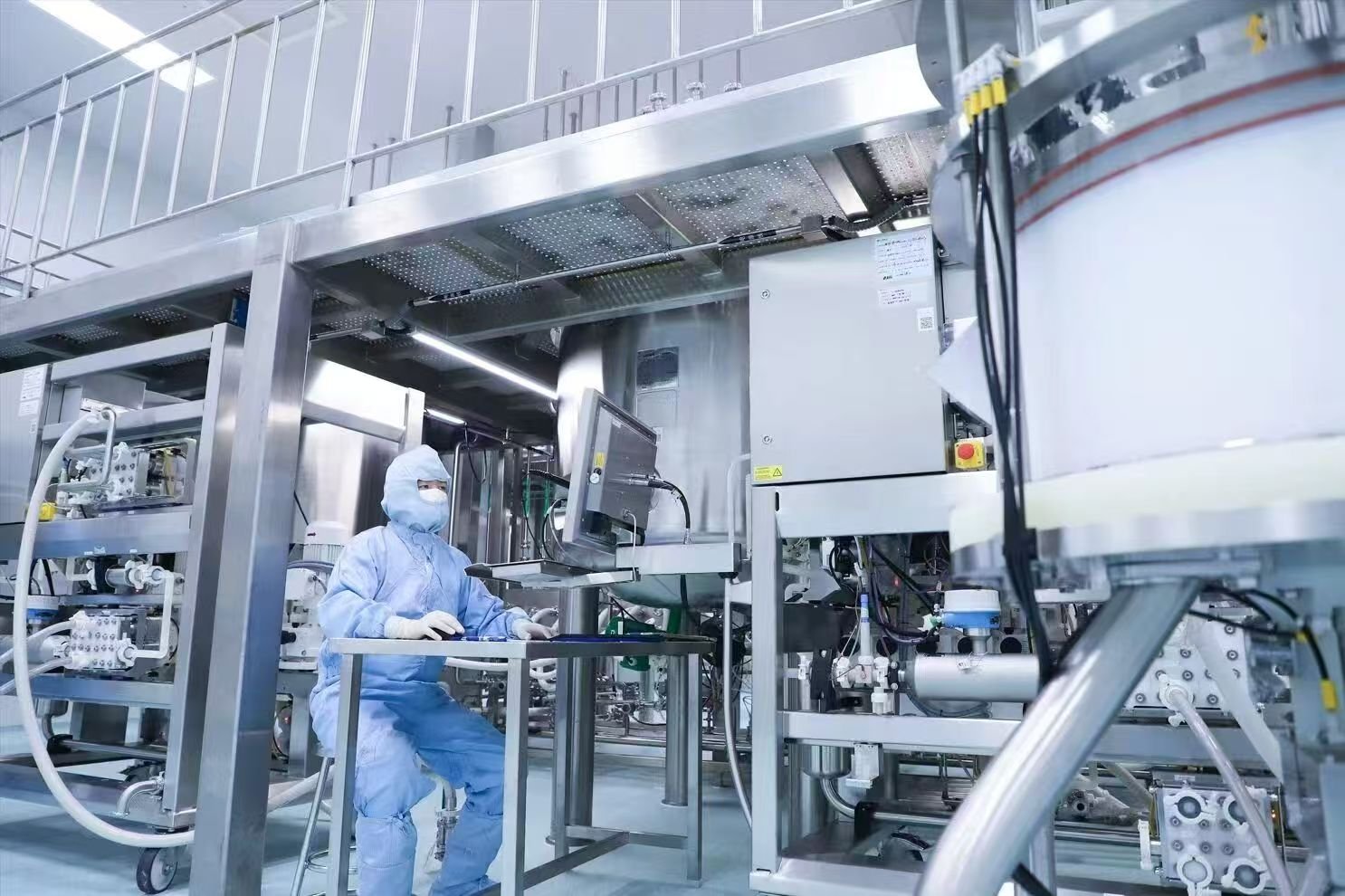
In the biopharmaceutical industry, driven by the explosive growth of gene therapies and mRNA vaccines, plasmid DNA (pDNA) as a critical raw material requires continuous optimization of its manufacturing processes.
Within the downstream purification workflow of plasmid DNA, tangential flow filtration (TFF), also commonly referred to as ultrafiltration/diafiltration (UF/DF), serves as an indispensable unit operation. It undertakes concentration and buffer exchange, and acts as a vital barrier for impurity removal and preservation of plasmid integrity. This document elaborates on the core principles, key parameter settings and prevalent process challenges associated with plasmid TFF operations.
1 Why TFF Is the Standard Platform for Plasmid Purification
Plasmid DNA extraction starts from complex cell lysates. Following initial precipitation or clarification, a process capable of handling large feed volumes while safeguarding fragile molecular conformation is required.
Efficient Concentration and Diafiltration: Plasmid concentrations in starting feedstock are generally far lower than those of monoclonal antibodies or recombinant proteins. TFF enables effective plasmid concentration prior to costly chromatographic steps, reducing process volume, substantially improving downstream purification efficiency and cutting operational costs.
Excellent Scalability: Compared with conventional centrifugation and dead-end filtration, TFF systems support straightforward linear scale-up, covering scales from laboratory R&D to large-scale commercial manufacturing.
Precise Impurity Separation: Based on molecular weight cutoff (MWCO) differentiation, TFF separates target plasmids from small-molecule impurities present in lysate, including RNA fragments, endotoxins, linear DNA and residual salts.
2 Core Parameters: The Control Panel Determining Process Success
A robust TFF process relies on precise modulation of hydrodynamic parameters.
2.1 Selection of Molecular Weight Cutoff (MWCO)
Despite the ultra-high molecular weight of plasmid DNA, its supercoiled conformation confers significant flexibility. Typical MWCO selection ranges from 30 kDa to 300 kDa.
Rule of thumb: The membrane pore size should be 3–5 times tighter than the hydrodynamic diameter of the target product.
Industry benchmark: For common plasmids ranging from 5–20 kbp, 100 kDa represents the widely adopted optimal balance point.
2.2 Flux and Pressure Control
Transmembrane Pressure (TMP): Low TMP (typically ≤ 10 psi) is recommended for plasmid processing. Excessively high pressure forces flexible plasmid strands into membrane pores and causes product loss.
Permeate Flux: Controlled within 20–50 LMH as general guidance. Studies confirm full plasmid retention under low-flux conditions, while elevated flux exacerbates sieving effects and leads to product breakthrough.
2.3 Shear Force and Crossflow Velocity
Plasmids are long-chain macromolecules highly susceptible to shear-induced damage.
Crossflow velocity: Maintained at 4–6 LMM (L/min/m²) to mitigate shear stress.
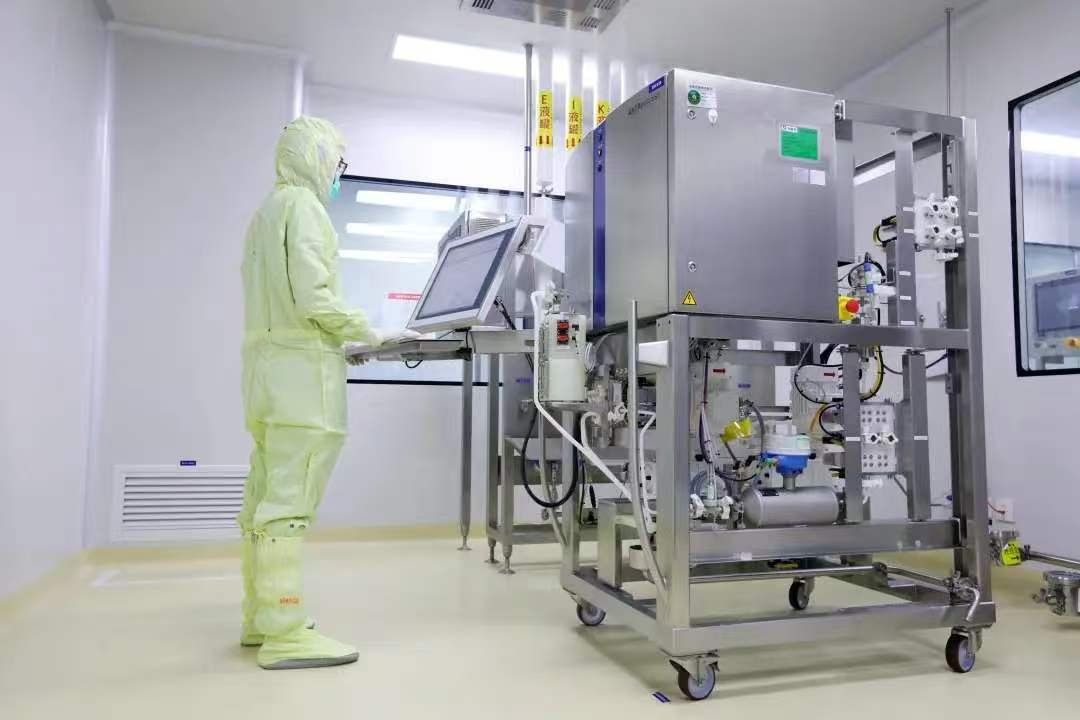
Pump configuration: Dual-pump setup (retentate feed pump + permeate pump) is preferred, enabling decoupled, independent regulation of TMP and permeate flux.
3 Three Major Process Challenges: Mitigating Product Breakthrough and Molecular Denaturation
Plasmid TFF operations face inherent technical hurdles in routine manufacturing. The three most critical challenges for process developers are outlined below:
3.1 Sieving Effect
Owing to the long helical structure of plasmids, DNA strands may penetrate membrane pores smaller than their apparent molecular weight, analogous to eels slipping through gaps. Influencing factors: Increased flux aggravates sieving; ionic strength is another decisive variable. High salt concentration compresses the electrical double layer surrounding plasmids, compacting molecular conformation and lowering effective hydrodynamic radius, which facilitates membrane breakthrough. Mitigation strategy: Pre-polarization. Prior to formal filtration, conduct full recirculation (permeate returned to the feed tank) to form a stable polarization layer on the membrane surface. This dynamic protective layer effectively improves product retention throughout the process.
3.2 Shear Sensitivity
Larger plasmids exhibit greater susceptibility to shear forces. Once shear damage occurs, supercoiled isoforms convert into open circular or linear DNA, directly compromising biological activity. Optimization strategy: Flow channel design adjustment. As concentration rises (especially above 10 mg/mL), feed viscosity increases sharply. Under such conditions, cassettes with tight mesh screens should be avoided; cassettes with loose mesh or open channel geometry are favored to reduce physical friction and localized shear.
3.3 Balance Between Loading Capacity and Viscosity
With well-optimized pressure and flux parameters, high-performance membrane cassettes can achieve high loading capacity ranging from 70 to 140 L/m². Nevertheless, when concentration factors reach 30–50×, viscosity management becomes the primary constraint on system pressure stability.
4 Process Optimization Checklist for Plasmid TFF Process Development
The following items must be addressed during process development:
Buffer matrix: Optimize salt concentration of the base buffer. Moderate salinity maintains native plasmid conformation, whereas excessive salt reduces retention efficiency.
Residual impurities: Monitor RNA removal. Residual RNA drastically elevates feed viscosity and disturbs plasmid behaviour at the membrane surface.
Equipment configuration: For systems using 100 kDa or higher MWCO membranes, permeate-side control is strongly recommended. This prevents excessive membrane surface compaction and sustains stable long-term flux.
5 Summary
Plasmid DNA TFF processing combines scientific principles with empirical balancing. Achieving the optimal trade-off between processing speed (flux), product recovery (retention) and product quality (molecular integrity) requires in-depth understanding of fluid physics and membrane technology.
With continuous advancement in downstream bioprocessing, novel low-shear, high-retention membrane materials and automated control systems are emerging. Optimizing the TFF unit operation removes bottlenecks in plasmid manufacturing and lays a solid foundation for subsequent gene therapy applications.